
Leptogenys elzasoares
- Nom. cient.
- Leptogenys elzasoares
- Tribu
- Ponerini
- Subfamilia
- Ponerinae
- Autor
- Tozetto <i>et al.</i>, 2022
- Distribución
- Encontrado en 0 países
Introducción
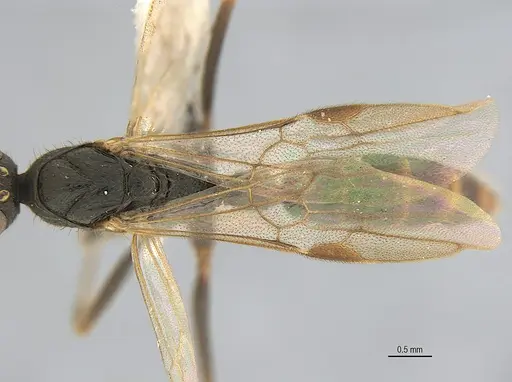
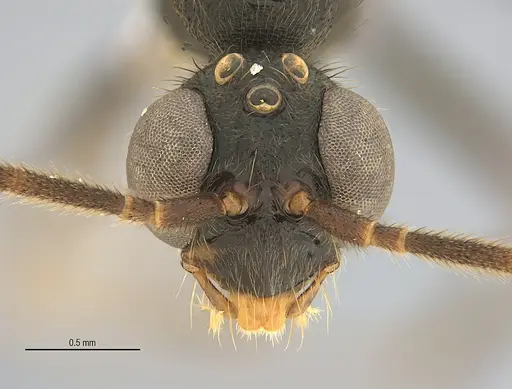
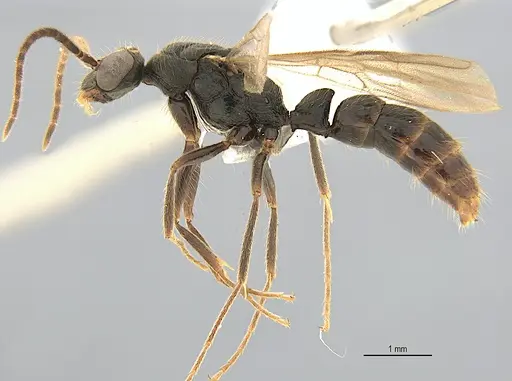
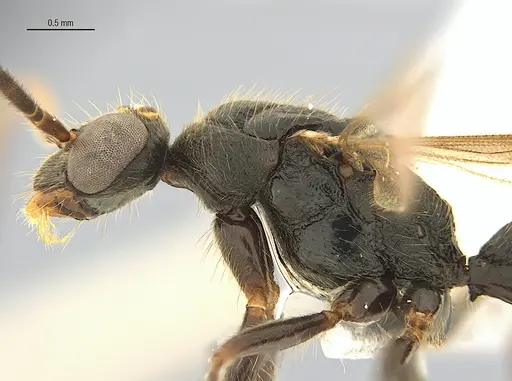
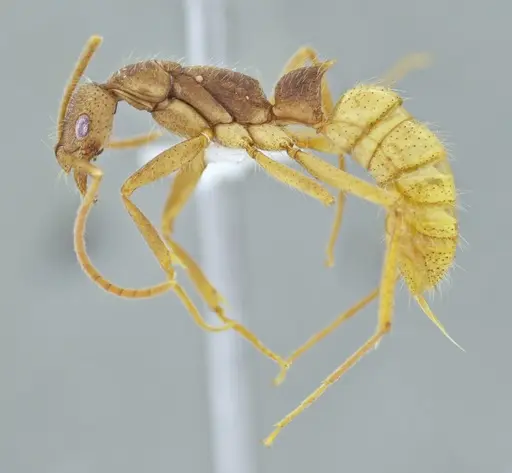
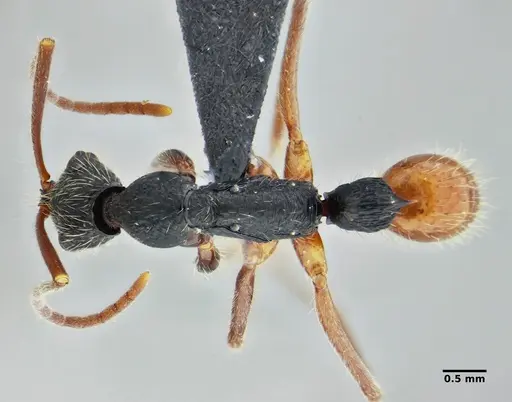
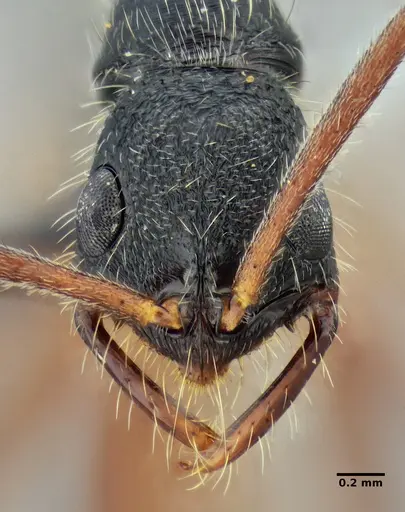
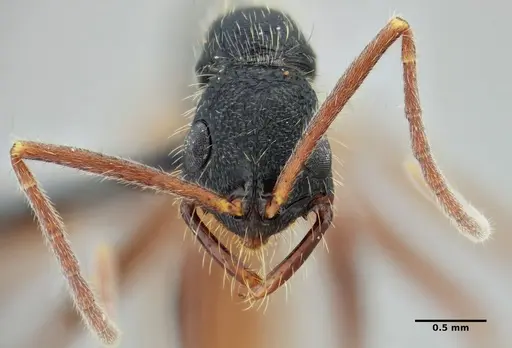
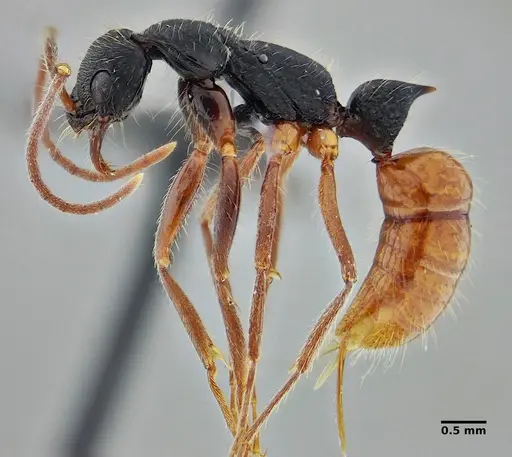
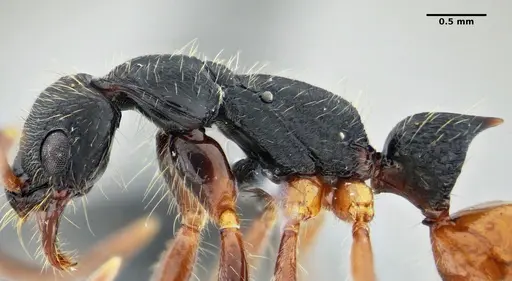
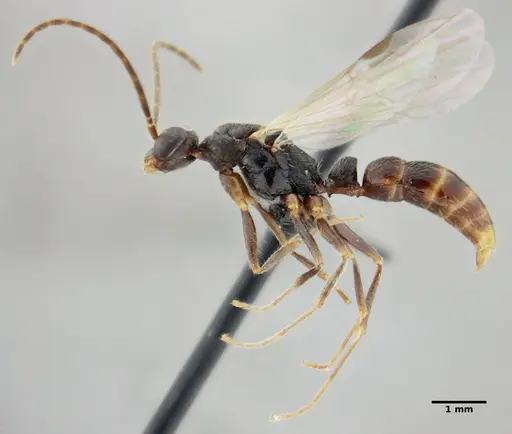
Leptogenys elzasoares is a recently described predatory ant species from the Brazilian Amazon near Manaus. Workers are medium-sized ants with a striking bicolored appearance - the head, mesosoma, and petiole are black while the antennae, legs, and gaster (abdomen) are a bright ferruginous (rusty orange) color . They have large eyes occupying about one-third of the head's lateral margin, and a distinctive feature is the median clypeal lobe with 12 stout setae (chaetae), which helps separate them from similar species like Leptogenys bohlsi . This species was named after Elza da Conceição Soares (1930-2022), a famous Brazilian singer known as 'voice of the millennium' .
Quick Summary
- Difficulty: Unknown, newly described species with limited data
- Origin & Habitat: Brazilian Amazon (Manaus, Amazonas), primary rainforest environment [1]
- Colony Type: Unknown, no colony structure data available for this newly described species
- Size & Growth:
- Queen: Undescribed, queen caste not yet documented [1]
- Worker: ~4-6mm, inferred from Leptogenys genus patterns (no total length measurement available)
- Colony: Unknown, no colony size data available
- Growth: Unknown, no development data available
- Development: Unknown, no development timeline documented for this species (No data on egg-to-worker development. Related Leptogenys species typically take 2-3 months at tropical temperatures.)
- Antkeeping:
- Temperature: Likely 24-28°C based on Amazonian habitat, provide warm, stable conditions
- Humidity: High humidity (70-85%) expected, Amazon rainforest environment
- Diapause: No, tropical species from Amazon basin does not require hibernation
- Nesting: No specific nesting data, likely prefers humid, shaded areas in captivity. A naturalistic setup with moist substrate or Y-tong/plaster nest works well for Leptogenys species.
- Behavior: No specific behavior data for this species. Leptogenys genus members are predatory ants that hunt other ants and small invertebrates. Workers are likely fast-moving and may show raiding behavior. Their large eyes suggest good vision. Escape prevention should be moderate, workers are medium-sized but can be quick.
- Common Issues: newly described species, limited care information available, no documented colony structure or founding behavior, no confirmed temperature or humidity requirements, predatory diet may require live prey, difficult for beginners, Amazonian species may not tolerate temperature drops
Discovery and Identification
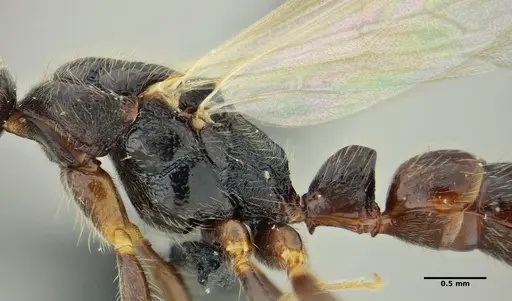
Leptogenys elzasoares was only described in 2022,making it one of the newest ant species to science. The type specimens were collected near Manaus in the Brazilian Amazon at the Colosso camp location. The species is part of the Leptogenys unistimulosa group, which includes several similar-looking ants. What makes L. elzasoares stand out is the median clypeal lobe with exactly 12 stout setae (chaetae), most related species only have 3-4 of these structures [1]. The workers have a distinctive bicolored appearance with a black head, mesosoma, and petiole contrasting sharply with bright ferruginous (rusty orange) antennae, legs, and gaster. The petiolar node has an acutely pointed posterior spine, which is another useful identification feature [1].
Natural History
The known specimens were collected walking on a trail in a small open area surrounded by primary Amazon forest. Researchers noted they were either migrating as a colony or possibly fleeing from an army ant raid at the time of collection [1]. This observation gives us some insight into their behavior, like other Leptogenys species, they are active foragers that can travel in groups. An interesting find was a phoretic deutonymph mite of the family Acaridae adhered to the left maxilla of one worker paratype, showing that these ants can carry mites on their bodies (a common phenomenon in many ant species) [1][2]. No other biological information has been documented for this species yet.
Housing and Care
Since this is a newly described species with no established care guidelines, we must infer from related Leptogenys species. These are predatory ants from tropical rainforest environments, so they will need warm and humid conditions. Aim for temperatures around 24-28°C with humidity in the 70-85% range. A naturalistic setup with moist substrate works well, or you can use a Y-tong/plaster nest that holds humidity well. Leptogenys ants are predatory and will hunt other small invertebrates, so their primary food should be live prey like small crickets, fruit flies, or other tiny arthropods. Some species in this genus may accept protein gels or frozen prey, but live food is more reliable. Given their Amazonian origin, they do not require any hibernation or diapause period.
Temperament and Defense
Leptogenys ants are known for their predatory lifestyle, hunting other ants and small insects in their natural habitat. Workers are typically fast-moving and may show coordinated foraging behavior. The large eyes of L. elzasoares suggest they rely on vision more than some other ant genera. This species belongs to the subfamily Ponerinae, which have functional stings for defense. While specific defensive behaviors are not documented for this species, they likely can sting if threatened. They are not considered aggressive toward humans but will defend their nest if provoked. For captive care, provide a secure setup with good escape prevention, while not tiny, they are active and may explore potential exits.
Frequently Asked Questions
How do I keep Leptogenys elzasoares ants?
This is a newly described species with no established care guidelines. Based on related Leptogenys species from tropical regions, provide warm temperatures (24-28°C), high humidity (70-85%), and feed live prey like small insects. A naturalistic or plaster nest that holds moisture works well.
What do Leptogenys elzasoares eat?
Like other Leptogenys species, they are predatory ants that hunt other small invertebrates. Offer live prey such as small crickets, fruit flies, springtails, or other tiny arthropods. Some individuals may accept frozen or pre-killed prey, but live food is more reliable.
How big do Leptogenys elzasoares colonies get?
Colony size is unknown, this is a newly described species with no documented colony data. Based on related Leptogenys species, colonies likely reach several hundred workers over time.
Where is Leptogenys elzasoares found?
This species is known only from the Brazilian Amazon near Manaus in Amazonas state. Type specimens were collected at the Colosso camp location in primary rainforest [1].
How long do Leptogenys elzasoares take to develop from egg to worker?
The development timeline is not documented for this species. Based on related Leptogenys species in tropical conditions, expect approximately 2-3 months from egg to first worker at optimal temperatures.
Do Leptogenys elzasoares need hibernation?
No, this is an Amazonian tropical species that does not require hibernation or diapause. Keep them at warm, stable temperatures year-round.
Is Leptogenys elzasoares good for beginners?
This species is not recommended for beginners due to limited available care information and their predatory diet requirements. If you're interested in Leptogenys, consider better-documented species like Leptogenys mutabilis or related species that have established care guidelines.
Can I keep multiple Leptogenys elzasoares queens together?
Colony structure is unconfirmed for this species. Leptogenys genus typically forms single-queen colonies, but polygyny has been documented in some species. Without specific data for L. elzasoares, it is not recommended to combine unrelated queens.
What makes Leptogenys elzasoares different from other Leptogenys?
The most distinctive feature is the median clypeal lobe with exactly 12 stout setae (chaetae), most related species only have 3-4. They also have a striking bicolored appearance with a black body and bright ferruginous (rusty orange) antennae, legs, and gaster [1].
Report an Issue
The current care sheet is based fully on literature. See inconsistencies, or something that's incorrect? Please , it will be resolved after review from an admin. Contributing to the blogs tab also helps providing information, to make us be able to further improve the caresheets. Thank you for your support!
References

Esta ficha de cuidados está bajo licencia CC BY-SA 4.0 .
Blogs de la comunidad
ANTWEB1062707
Ver en AntWeb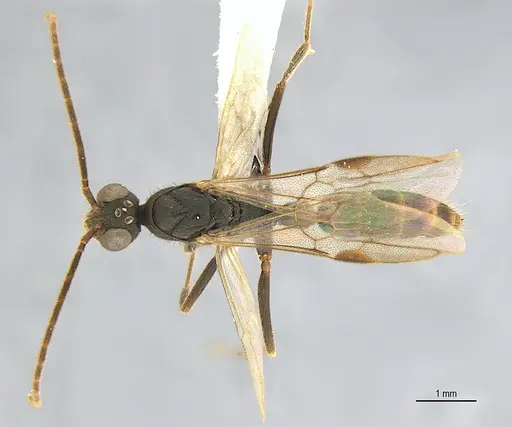
UFV-LABECOL-009566
Ver en AntWeb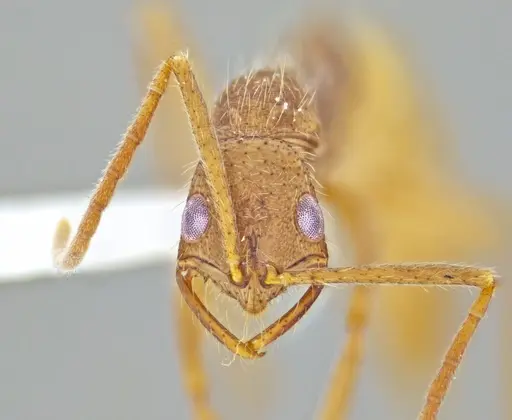
UFV-LABECOL-010408
Ver en AntWeb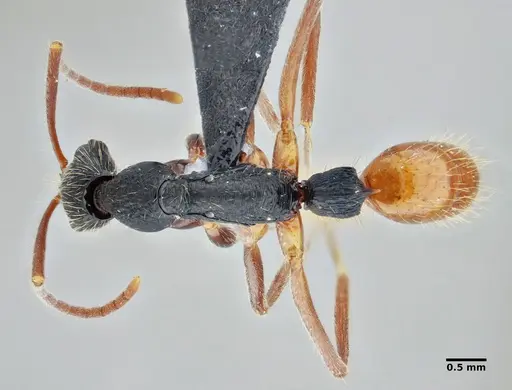
UFV-LABECOL-011120
Ver en AntWeb
Literatura
Cargando mapa de distribución...Cargando productos...