
Leptogenys davydovi
- Nom. cient.
- Leptogenys davydovi
- Tribu
- Ponerini
- Subfamilia
- Ponerinae
- Autor
- Karavaiev, 1935
- Distribución
- Encontrado en 0 países
Introducción
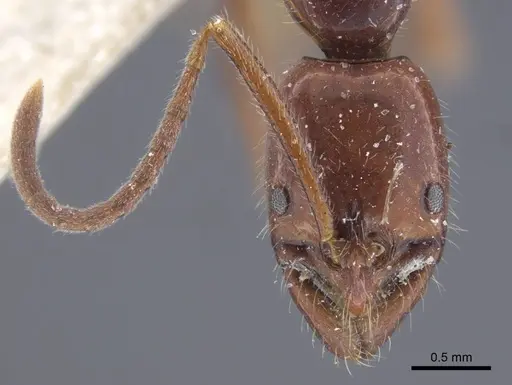
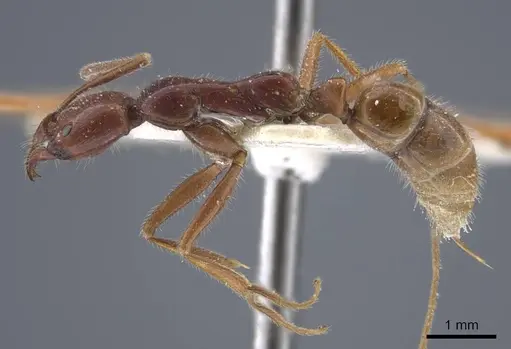
Leptogenys davydovi is a predatory ant in the subfamily Ponerinae. Workers have a smooth and shiny head, a weakly concave posterior head margin, and an erectly triangular petiolar node . Body color ranges from reddish brown to brownish black . Originally described from Vietnam in 1935,this species is found in Southeast Asia and southern China, including Vietnam, Yunnan Province, Hainan Island, India, and Sri Lanka . It inhabits tropical forests, nesting in rotting wood or soil at elevations around 1400m in Vietnam . This species is an active hunter, using its sting to subdue small invertebrates, a trait common in Ponerinae ants.
Quick Summary
- Difficulty: Medium
- Origin & Habitat: Native to Southeast Asia and southern China, found in Vietnam, Yunnan Province, Hainan Island, India, and Sri Lanka. Inhabits tropical forests, nesting in rotting wood or soil at elevations around 1400m in Vietnam [1][2][3].
- Colony Type: Colony structure is unconfirmed. Based on typical Leptogenys genus patterns, likely forms single-queen colonies (monogyne).
- Size & Growth:
- Queen: size data unavailable
- Worker: size data unavailable
- Colony: Colony size is unknown, but estimated to be moderate based on genus patterns.
- Growth: Moderate
- Development: Estimated 6-10 weeks at optimal temperatures, based on related Ponerinae species. (Development time is inferred from genus patterns, specific timeline for L. davydovi has not been studied.)
- Antkeeping:
- Temperature: Keep warm, roughly 24-28°C, based on tropical habitat.
- Humidity: Keep nest substrate consistently moist but not waterlogged, with a humidity gradient.
- Diapause: No, as a tropical species.
- Nesting: Prefer Y-tong, plaster, or soil nests with high humidity retention.
- Behavior: Active predators with a functional sting for hunting and defense. Not aggressive toward humans but defend nest vigorously. Escape risk is moderate due to agility.
- Common Issues: predatory nature requires constant live prey, failure to provide protein leads to colony decline, high humidity needs can cause mold if ventilation is poor, balance moisture with airflow, tropical species may struggle in cool conditions, maintain consistent warmth, founding colonies are vulnerable, queen and small colonies need quiet, dark locations
Housing and Nest Setup
Leptogenys davydovi does well in nests that retain humidity, such as Y-tong, plaster, or soil setups with rotting wood. The nest should have tight, enclosed chambers to mimic natural conditions [1]. Avoid dry, airy setups that cause desiccation.
Feeding and Diet
As a predatory ant, L. davydovi requires live small invertebrates like fruit flies or crickets. Offer protein regularly, with occasional sugar sources.
Temperature and Humidity Requirements
Maintain warm temperatures around 24-28°C and high humidity with moist substrate. A temperature gradient allows ants to regulate themselves.
Colony Founding and Early Development
New queens can be housed in test tubes with high humidity. Provide small live prey once eggs appear. Founding behavior is unconfirmed for this species.
Behavior and Temperament
Workers are active hunters with a functional sting for defense. They are not aggressive toward keepers but will defend the nest if disturbed.
Frequently Asked Questions
How long does it take for Leptogenys davydovi to produce first workers?
Estimated 6-10 weeks at optimal temperatures, based on related Ponerinae species.
What do Leptogenys davydovi ants eat?
They require live small invertebrates as primary food, such as fruit flies or crickets.
Do Leptogenys davydovi ants sting?
Yes, as a Ponerinae ant, they possess a functional sting for hunting and defense.
What temperature and humidity do Leptogenys davydovi need?
Keep them warm at 24-28°C with moist substrate, based on tropical habitat.
Is Leptogenys davydovi a good species for beginners?
This species is rated medium difficulty due to specific humidity and prey requirements, so not recommended for beginners.
How big do Leptogenys davydovi colonies get?
Colony size is unknown, but estimated to be moderate based on genus patterns.
Do Leptogenys davydovi need hibernation?
No, as a tropical species, they do not require diapause.
What type of nest is best for Leptogenys davydovi?
Y-tong, plaster, or soil nests with high humidity retention work well.
Can I keep multiple Leptogenys davydovi queens together?
This is not recommended, as colony structure is unconfirmed and Leptogenys typically form single-queen colonies.
Why is my Leptogenys davydovi colony declining?
Common causes include insufficient live prey, low humidity, or cool temperatures, ensure proper care conditions.
Report an Issue
The current care sheet is based fully on literature. See inconsistencies, or something that's incorrect? Please , it will be resolved after review from an admin. Contributing to the blogs tab also helps providing information, to make us be able to further improve the caresheets. Thank you for your support!
References

Esta ficha de cuidados está bajo licencia CC BY-SA 4.0 .
Blogs de la comunidad
CASENT0916834
Ver en AntWeb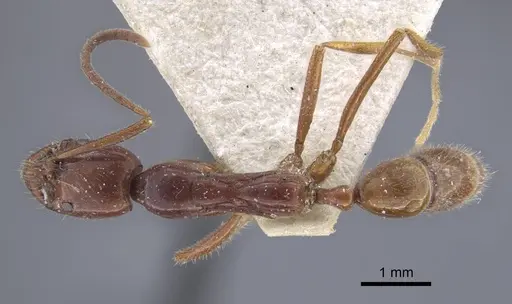
Literatura
Cargando mapa de distribución...Cargando productos...