
Leptogenys assamensis
- Nom. cient.
- Leptogenys assamensis
- Tribu
- Ponerini
- Subfamilia
- Ponerinae
- Autor
- Forel, 1900
- Distribución
- Encontrado en 0 países
Introducción
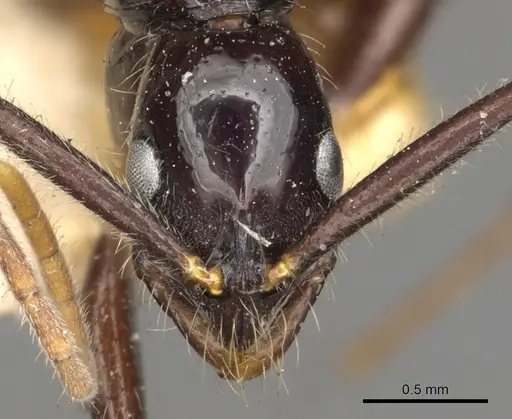
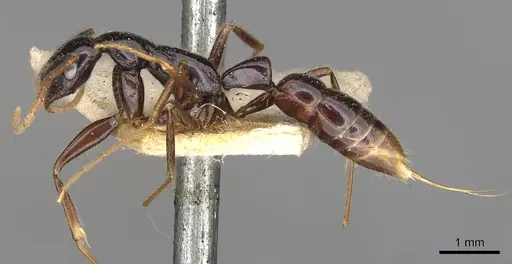
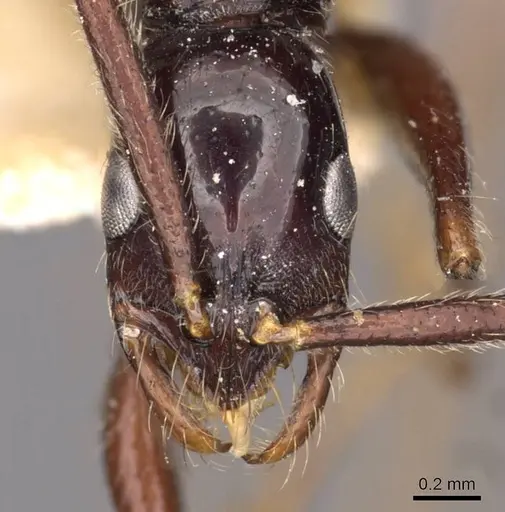
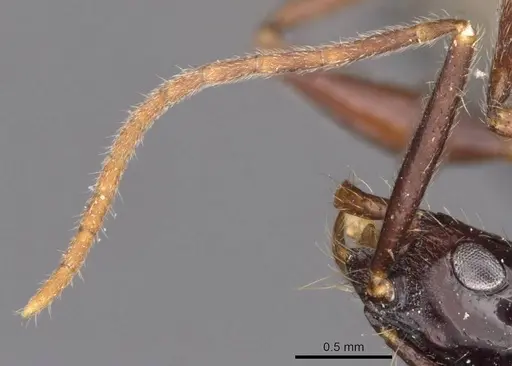
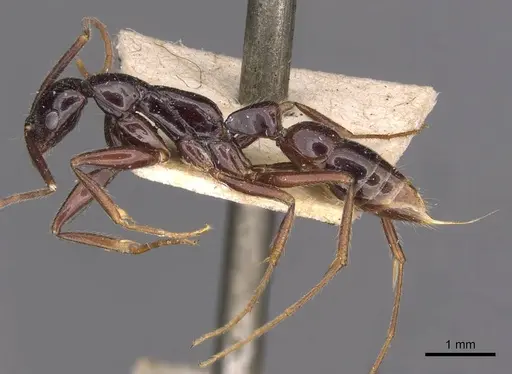
Leptogenys assamensis is a medium-sized predatory ant native to the Indomalaya region, found in India (Assam, Meghalaya) and Bhutan. Workers measure 6.5-7mm with an extremely slender, elongated body and a distinctive long petiole node that gives them a unique profile . Their reddish-brown coloration and narrow head make them easily recognizable among Ponerine ants. These ants are ground-dwellers found in warm broadleaved forests, with one worker collected in Bhutan at 700m elevation . The genus name 'Leptogenys' means 'slender jaw', reflecting their characteristic elongated mandibles used for hunting prey.
Quick Summary
- Difficulty: Medium
- Origin & Habitat: India (Assam, Meghalaya) and Bhutan at elevations around 700m. Found in warm broadleaved forests, these ants are ground-dwellers that prefer damp forest floor environments [4][5][6].
- Colony Type: Colony structure is unconfirmed. Based on typical Leptogenys patterns, likely single-queen colonies with moderate worker populations.
- Size & Growth:
- Queen: Size data unavailable, queen has not been described in available literature
- Worker: 6.5-7mm [1][2][3]
- Colony: Colony size is unconfirmed for this species, estimated at several hundred workers based on genus patterns
- Growth: Growth rate is unconfirmed, estimated as moderate based on typical Ponerine ant development
- Development: Estimated 6-10 weeks based on related Ponerine species at optimal temperature (Development time is estimated from genus-level data since no species-specific study exists.)
- Antkeeping:
- Temperature: Keep around 22-26°C. This species comes from subtropical broadleaved forests in Bhutan and India, so they prefer warm, stable conditions. A heating cable on one side of the nest creates a suitable gradient.
- Humidity: High humidity preferred, keep the nest substrate consistently moist but not waterlogged. These forest-dwellers need more moisture than desert ants.
- Diapause: Diapause requirements are unconfirmed for this species. Based on their distribution in temperate-to-subtropical Himalayan foothills (Bhutan, Meghalaya), they may benefit from a winter rest period of 2-3 months at around 10-15°C.
- Nesting: Ground-dwelling species. In captivity, they do well in naturalistic setups with soil or in Y-tong/plaster nests with moisture chambers. They prefer tight, enclosed spaces that mimic their natural underground nests.
- Behavior: Leptogenys assamensis is a predatory ant that hunts small invertebrates. They are active foragers and likely use chemical trails to recruit nestmates to prey. Workers are medium-sized and relatively fast-moving. As Ponerine ants, they have a functional stinger and can deliver a painful sting if threatened, handle with caution. Escape prevention is important as they are agile and may attempt to escape. Their common name 'procession ant' suggests they may exhibit trailing behavior where workers follow each other in lines [5].
- Common Issues: Predatory diet means they need live prey, failure to provide suitable live food is the most common cause of colony failure, High humidity requirements can lead to mold problems if ventilation is poor, Diapause requirements are unconfirmed but may be needed, skipping winter rest could lead to colony decline over time, Sting pain may cause stress to handlers, use caution during colony maintenance, Growth rate is slower than many common pet ants which can lead to keeper impatience
Housing and Nest Setup
Leptogenys assamensis is a ground-dwelling species that prefers enclosed, humid nest spaces. In captivity, they do well in naturalistic setups with a deep soil layer or in moisture-retaining nests like Y-tong or plaster formicariums. The nest should have a water reservoir or moisture chamber to maintain humidity. Because they come from forest floor environments, they prefer dimmer conditions, avoid direct bright light on the nest. The outworld should be simple but spacious enough for hunting and foraging. Use a test tube setup for founding colonies, moving them to a larger nest once the colony reaches 15-20 workers. [4][5]
Feeding and Diet
Leptogenys assamensis is a predatory ant that hunts small invertebrates. In captivity, their primary food should be live small prey such as springtails, fruit flies, small crickets, and other tiny arthropods. They are not scavengers like many common pet ants, they actively hunt and subdue prey with their sting. Feed them prey items roughly every 2-3 days, adjusting based on colony size and consumption. A small dish of sugar water or honey can be offered occasionally, but protein from live prey is essential for brood development. Remove uneaten prey after 24 hours to prevent mold.
Temperature and Heating
These ants come from warm subtropical forests in Bhutan and India, so they need temperatures in the 22-26°C range for optimal activity and brood development. A heating cable placed on one side of the nest creates a temperature gradient that allows the ants to self-regulate. Monitor colony behavior, if workers cluster near the heat source, increase temperature slightly, if they avoid it, reduce heat. Avoid temperatures above 30°C as this can stress or kill the colony. Room temperature may be sufficient if your home stays in this range, otherwise use a low-wattage heating cable. [4]
Humidity and Moisture
As forest-floor dwellers from Bhutan and Meghalaya, these ants need higher humidity than desert ants. Keep the nest substrate consistently moist, it should feel damp to the touch but not have standing water. A moisture chamber or water reservoir connected to the nest helps maintain stable humidity. Mist the outworld occasionally, but avoid letting water pool in the nest area. Good ventilation is important to prevent mold, but avoid excessive airflow that dries out the nest. The goal is damp, not wet, think of a forest floor after rain. [4]
Seasonal Care and Diapause
Diapause requirements are unconfirmed for this species. Based on their distribution in the Himalayan foothills (Bhutan, Meghalaya), they may benefit from a winter diapause period. During late autumn to early spring, gradually reduce temperatures to 10-15°C and reduce feeding. Keep the colony slightly cooler but above freezing. Do not feed during deep winter dormancy. Resume normal temperatures and feeding in spring. Skipping diapause could potentially lead to colony decline over time as the ants may not be able to complete their natural seasonal cycle. [4][6]
Behavior and Temperament
Leptogenys assamensis is an active, predatory ant with a functional stinger. Workers are medium-sized (6.5-7mm) and fast-moving. They hunt individually or in small groups, using chemical signals to recruit nestmates to large prey items. Their common name 'procession ant' suggests they may exhibit trailing behavior [5]. Handle with caution, while their sting is not dangerous to healthy adults, it can be painful. These ants are not aggressive toward humans but will defend their nest if threatened. They are good escape artists due to their speed and size, ensure your setup has tight-fitting barriers.
Frequently Asked Questions
How long does it take for Leptogenys assamensis to produce first workers?
The egg-to-worker timeline is not directly documented for this species. Based on typical Ponerine ant development, expect around 6-10 weeks from egg to first nanitic worker at optimal temperature (22-26°C). Ponerine ants generally develop slower than many common pet ants.
What do Leptogenys assamensis ants eat?
They are predatory ants that need live small invertebrates. Feed them springtails, fruit flies, small crickets, and other tiny arthropods. They are not scavengers and typically do not accept dead protein or sugar water as primary food. Live prey is essential for colony survival and brood development.
What temperature should I keep Leptogenys assamensis at?
Keep them warm, around 22-26°C. This matches their natural habitat in warm broadleaved forests in Bhutan and India. A heating cable on one side of the nest creates a suitable gradient.
Do Leptogenys assamensis need hibernation?
Diapause requirements are unconfirmed for this species. Based on their distribution in the Himalayan foothills, they may benefit from a winter rest period of 2-3 months at 10-15°C. Gradually reduce temperatures in autumn and resume normal care in spring.
Are Leptogenys assamensis good for beginners?
They are rated as medium difficulty. Their predatory diet requires more effort than ants that accept dead protein or sugar water. They also need high humidity and may require winter diapause. Not the best choice for a first ant but manageable for keepers with some experience.
How big do Leptogenys assamensis colonies get?
Colony size is not directly documented, but based on genus patterns, they likely reach several hundred workers. Growth is moderate, expect several months to a year to reach 20-30 workers from a founding queen.
Can I keep multiple Leptogenys assamensis queens together?
Colony structure is unconfirmed for this species. Based on typical Leptogenys patterns, they likely form single-queen colonies. Combining unrelated queens is not recommended without species-specific documentation.
What humidity level do Leptogenys assamensis need?
High humidity, keep the nest substrate consistently moist but not waterlogged. They come from damp forest floor environments in Bhutan and India. Aim for damp soil conditions, not dry.
When should I move Leptogenys assamensis from a test tube to a formicarium?
Move them when the colony reaches 15-20 workers and the test tube shows signs of space constraints. They prefer enclosed nests with moisture, so a Y-tong or plaster nest with a moisture chamber works well.
Report an Issue
The current care sheet is based fully on literature. See inconsistencies, or something that's incorrect? Please , it will be resolved after review from an admin. Contributing to the blogs tab also helps providing information, to make us be able to further improve the caresheets. Thank you for your support!
References

Esta ficha de cuidados está bajo licencia CC BY-SA 4.0 .
Blogs de la comunidad
CASENT0902617
Ver en AntWeb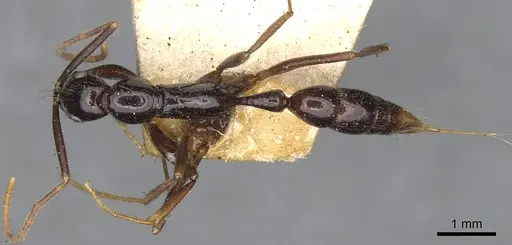
CASENT0907363
Ver en AntWeb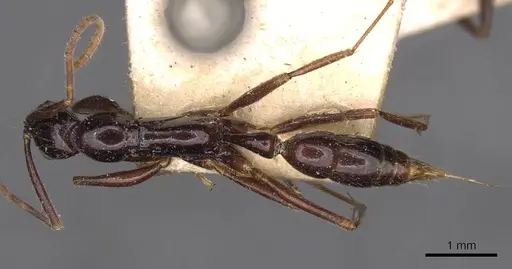
Literatura
Cargando mapa de distribución...Cargando productos...