
Lepisiota gerardi
- Nom. cient.
- Lepisiota gerardi
- Tribu
- Plagiolepidini
- Subfamilia
- Formicinae
- Autor
- Santschi, 1915
- Distribución
- Encontrado en 0 países
Introducción
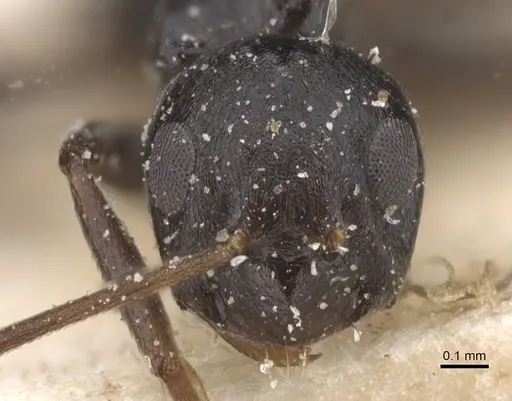
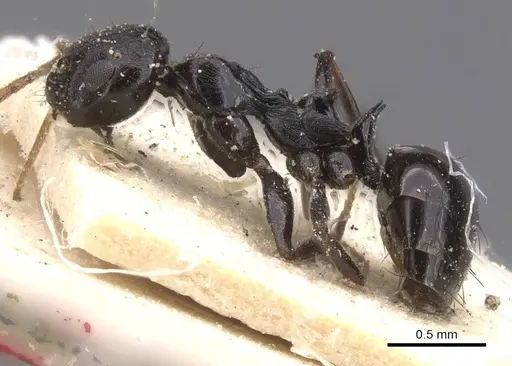
Lepisiota gerardi is a species of ant endemic to the Tanganyika region of the Democratic Republic of Congo . Members of the Lepisiota genus are commonly known as 'spider ants' due to their rapid, jerky movements and often elongated legs. Workers are small to medium-sized, typically ranging from 3-6mm, with a slender build and reddish-brown to dark coloration. Queens of related Lepisiota species are larger, usually 7-10mm, with a robust mesosoma. This genus is widespread across Africa, Asia, and the Mediterranean, with species adapted to various habitats from savannas to forest edges .
Quick Summary
- Difficulty: Medium
- Origin & Habitat: Endemic to Tanganyika in the Democratic Republic of Congo [1]. Based on related species, they likely inhabit savanna or forest edge habitats in tropical central Africa.
- Colony Type: Colony structure is unconfirmed for this specific species. Many Lepisiota species form single-queen colonies, though some can have multiple queens.
- Size & Growth:
- Queen: Estimated 7-10mm, inferred from genus-level patterns for Lepisiota species [2]
- Worker: Estimated 3-6mm, inferred from genus descriptions [2]
- Colony: Unknown for this species, likely several hundred workers based on typical Lepisiota colony sizes [2]
- Growth: Moderate, inferred from related species [2]
- Development: Estimated 6-10 weeks based on typical Formicinae development at warm temperatures (Development time is estimated from genus-level data, specific timing for L. gerardi is unconfirmed)
- Antkeeping:
- Temperature: Keep at 24-28°C based on tropical African distribution, a slight gradient allows workers to regulate their temperature
- Humidity: Moderate humidity around 50-70%. Allow the nest substrate to dry slightly between waterings.
- Diapause: Unlikely to require true diapause given their tropical origin, but may show reduced activity during cooler periods
- Nesting: Likely ground-nesting species. A Y-tong (AAC) nest or plaster nest with chambers scaled to their size works well. Provide a moisture chamber for humidity control.
- Behavior: Lepisiota gerardi is likely an active forager with fast, jerky movements characteristic of the genus. They are probably opportunistic feeders, scavenging and hunting small invertebrates. Workers likely recruit nestmates to food sources through chemical trails. Escape prevention should be good, while not the smallest ants, they are agile and may attempt escapes. Monitor for activity around lid seams.
- Common Issues: tropical species may struggle if temperatures drop below 22°C, colonies may be slow to establish due to moderate growth rate, wild-caught colonies may carry parasites or pathogens, limited availability means established colonies are valuable, prioritize colony survival over experimentation, ground-nesting habits require secure boundaries to prevent escapes
Housing and Nest Setup
Lepisiota gerardi will do well in a Y-tong (AAC) nest or plaster formicarium with properly scaled chambers. Since their exact size is estimated from genus patterns, choose chambers that allow workers to move freely but not large open spaces that might make them feel insecure. Provide a water reservoir or moisture chamber to maintain humidity. For the outworld, a simple plastic container with a secure lid works well. Use a test tube setup for the founding queen if you obtain a claustral queen, a small test tube with a cotton ball providing water is ideal for the founding stage. [2]
Feeding and Diet
Based on typical Lepisiota behavior, these ants are likely omnivorous with a preference for protein sources. Offer small live prey such as fruit flies, pinhead crickets, or small mealworms. They will likely accept sugar water or honey as an energy source, which is useful for supporting colony growth and queen reproduction. Feed protein prey 2-3 times per week, and keep a constant sugar water supply. Remove uneaten prey after 24 hours to prevent mold issues. [2]
Temperature and Heating
As a tropical African species, Lepisiota gerardi needs warm conditions. Maintain temperatures between 24-28°C in the nest area. You can achieve this with a small heating cable or mat placed on one side of the nest to create a gentle temperature gradient. This allows workers to self-regulate by moving between warmer and cooler chambers. Avoid temperatures below 22°C for extended periods, as this may slow colony development or cause health issues. Room temperature may be sufficient if your home stays consistently warm.
Colony Establishment and Growth
Starting a colony of Lepisiota gerardi requires patience, as they are not fast-growing like some tropical species. If you obtain a founding queen, she will likely seal herself in a chamber (claustral founding) and raise her first brood alone on stored fat reserves. The first workers (nanitics) will be smaller than mature workers. After the first workers emerge, the colony enters a growth phase where brood production increases. Expect moderate growth rates, a well-established colony may reach several hundred workers over 1-2 years under good conditions. [2]
Behavior and Observation
Watch for the characteristic Lepisiota movement pattern, quick, darting motions with frequent direction changes. Workers are likely active foragers who will quickly discover and recruit to food sources. They probably use chemical pheromone trails to guide nestmates to good foraging areas. While not typically aggressive toward humans, they may defend their nest vigorously if threatened. Their small size and speed make them interesting to observe but can make escape prevention challenging. [2]
Frequently Asked Questions
How long does it take for Lepisiota gerardi to produce first workers?
Based on typical Formicinae development, expect 6-10 weeks from egg to first worker at optimal temperatures (24-28°C). This timeline is estimated from genus-level data, as specific development time for L. gerardi has not been documented.
What temperature do Lepisiota gerardi ants need?
Keep them at 24-28°C. A heating cable on one side of the nest creates a gradient that lets workers regulate their temperature. Avoid temperatures below 22°C for extended periods.
Do Lepisiota gerardi ants need hibernation?
No. As a tropical species from central Africa, they do not require a true diapause period. They may show reduced activity during cooler periods, but full hibernation is not necessary.
What do Lepisiota gerardi ants eat?
They are likely omnivorous. Offer small live prey (fruit flies, small crickets, mealworms) 2-3 times per week, and provide a constant sugar water or honey supply.
Can I keep multiple Lepisiota gerardi queens together?
This has not been documented for this specific species. Based on genus patterns, they likely form single-queen colonies. Do not attempt combining unrelated queens without specific evidence they can coexist.
How big do Lepisiota gerardi colonies get?
Colony size is unconfirmed for this species, but based on related Lepisiota species, colonies likely reach several hundred workers over 1-2 years.
Are Lepisiota gerardi good for beginners?
This species is rated Medium difficulty. While not the most challenging ant to keep, the limited specific care data means you should have basic antkeeping experience. Their tropical temperature requirements and moderate growth rate require some patience.
When should I move Lepisiota gerardi to a formicarium?
Wait until the colony has at least 20-30 workers before moving from a founding setup. Ensure the new nest has appropriately sized chambers and a moisture source.
Why are my Lepisiota gerardi dying?
Common causes include temperatures below 22°C, excessive humidity causing mold, or poor nutrition. Review your temperature settings, ensure ventilation is adequate, and offer varied protein sources. Wild-caught colonies may also carry parasites.
Report an Issue
The current care sheet is based fully on literature. See inconsistencies, or something that's incorrect? Please , it will be resolved after review from an admin. Contributing to the blogs tab also helps providing information, to make us be able to further improve the caresheets. Thank you for your support!
References

Esta ficha de cuidados está bajo licencia CC BY-SA 4.0 .
Blogs de la comunidad
CASENT0912389
Ver en AntWeb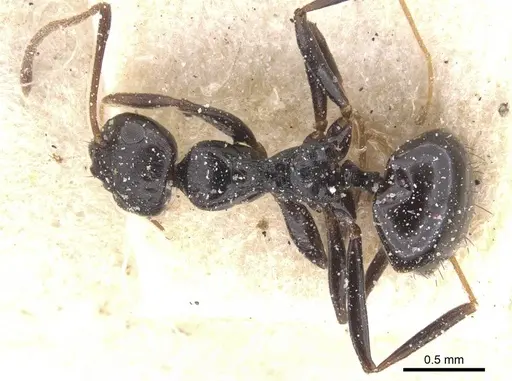
Literatura
Cargando mapa de distribución...Cargando productos...