
Lepisiota ajjer
- Nom. cient.
- Lepisiota ajjer
- Tribu
- Plagiolepidini
- Subfamilia
- Formicinae
- Autor
- Bernard, 1953
- Distribución
- Encontrado en 0 países
Introducción
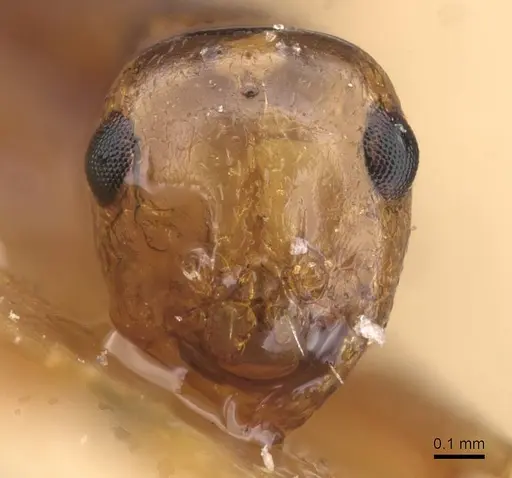
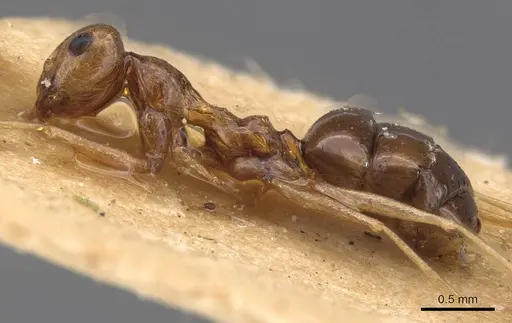
Lepisiota ajjer is a small desert ant native to the central Sahara region, specifically the Tassili des Ajjer mountains in Algeria . Workers measure 2.4-3.3mm and have a dark brown head, gaster, and thorax, with red-orange markings on the mesonotum and epinotum. Their legs and antennae are very pale yellow-orange, which separates them from related species. Males are larger at 6-6.6mm . This species is adapted to extreme arid conditions, living at elevations of 1200-1800m in rocky areas with sparse vegetation .
Quick Summary
- Difficulty: Medium
- Origin & Habitat: Tassili des Ajjer mountains in Algeria, at elevations 1200-1800m. Inhabits steep sandstone slopes, rocky areas, and rock crevices in extremely arid conditions [2][1].
- Colony Type: Unconfirmed, no specific data on queen number or social structure available.
- Size & Growth:
- Antkeeping:
- Temperature: Keep warm, around 24-28°C. Based on their Saharan origin and activity during strong May heat, they prefer hot conditions [2]. Use a heating cable to create a gradient.
- Humidity: Keep nest substrate dry with minimal moisture, as they are adapted to arid conditions [2]. Avoid dampness or condensation.
- Diapause: Unknown, no data on diapause requirements for this species.
- Nesting: Provide a dry nest with tight chambers, such as plaster or soil nests, mimicking rock crevices [2]. Avoid large water reservoirs.
- Behavior: Workers are active foragers during hot daytime hours. They are not aggressive and unlikely to sting. Their small size (2.4-3.3mm) means escape prevention is important, use fine mesh on ventilation and seal all connections.
- Common Issues: too much humidity will kill colonies due to their arid adaptation, escape risk is high because workers are small and can squeeze through gaps, slow growth due to limited data requires patience and observation
Natural History and Distribution
Lepisiota ajjer is endemic to the Tassili des Ajjer mountains in Algeria, part of the Sahara Desert. It inhabits steep sandstone slopes at 1200-1800m elevation, living in rock crevices in extremely arid conditions [2]. The species is active during hot daytime hours, even at noon in strong May heat [2]. Its orange-yellow legs make it easily recognizable compared to related species.
Housing and Nest Setup
Replicate their natural arid rock crevice habitat with a dry nest, such as plaster or soil, with tight chambers scaled to their small size [2]. Use fine mesh on ventilation holes to prevent escapes. Avoid large water reservoirs, provide only minimal moisture in one small area.
Temperature and Heating
Maintain nest temperatures around 24-28°C, with a gradient using a heating cable on one side [2]. They are naturally active in warm conditions, so ensure access to unheated areas for regulation.
Feeding and Diet
Offer small protein sources like fruit flies or pinhead crickets 2-3 times per week, and occasional sugar water or honey. Remove uneaten prey within 24 hours. Provide fresh water in small amounts, as desert ants get moisture from food.
Seasonal Care and Overwintering
Diapause requirements are unknown for this species. If needed, reduce temperatures to 10-15°C for a few months during winter, but observe colony behavior for cues.
Colony Development
No specific development data is available. Colonies may grow slowly due to arid conditions. Patience is required, as care may need adjustment based on observation.
Frequently Asked Questions
How long does it take for Lepisiota ajjer to produce first workers?
Specific timing is unknown. No data on development is available for this species.
What temperature do Lepisiota ajjer ants need?
Keep them warm at 24-28°C, as they prefer hot, dry conditions [2].
Do Lepisiota ajjer ants need hibernation?
Diapause requirements are unknown for this species.
How big do Lepisiota ajjer colonies get?
Colony size data is not available for this species.
Are Lepisiota ajjer good for beginners?
This species is rated as medium difficulty due to limited information and specific care needs.
Do Lepisiota ajjer ants escape easily?
Yes, workers are small (2.4-3.3mm) and can escape through tiny gaps. Use fine mesh and seal connections [2].
What do Lepisiota ajjer ants eat?
They likely accept small insects and occasional sugar sources. Offer protein 2-3 times per week.
Can I keep multiple Lepisiota ajjer queens together?
Colony structure is unconfirmed. Combining queens is not recommended due to lack of data.
How humid should the nest be for Lepisiota ajjer?
Keep humidity very low with dry substrate, as they are adapted to arid conditions [2].
When should I move Lepisiota ajjer to a formicarium?
Wait until the colony has active foragers and is established, but no specific timing data is available.
Where is Lepisiota ajjer found in the wild?
This species is endemic to the Tassili des Ajjer mountains in Algeria, living in rocky, arid habitats at 1200-1800m elevation [2][1].
Report an Issue
The current care sheet is based fully on literature. See inconsistencies, or something that's incorrect? Please , it will be resolved after review from an admin. Contributing to the blogs tab also helps providing information, to make us be able to further improve the caresheets. Thank you for your support!
References

Esta ficha de cuidados está bajo licencia CC BY-SA 4.0 .
Blogs de la comunidad
CASENT0913619
Ver en AntWeb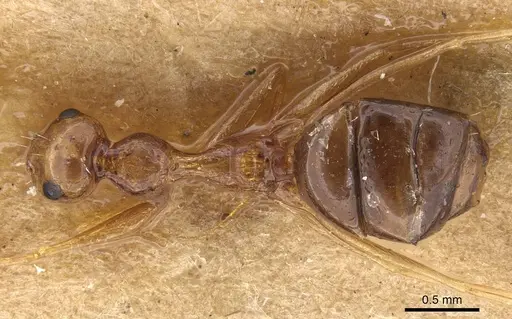
Literatura
Cargando mapa de distribución...Cargando productos...