
Fulakora heraldoi
- Nom. cient.
- Fulakora heraldoi
- Tribu
- Amblyoponini
- Subfamilia
- Amblyoponinae
- Autor
- Lacau & Delabie, 2002
- Distribución
- Encontrado en 0 países
Introducción
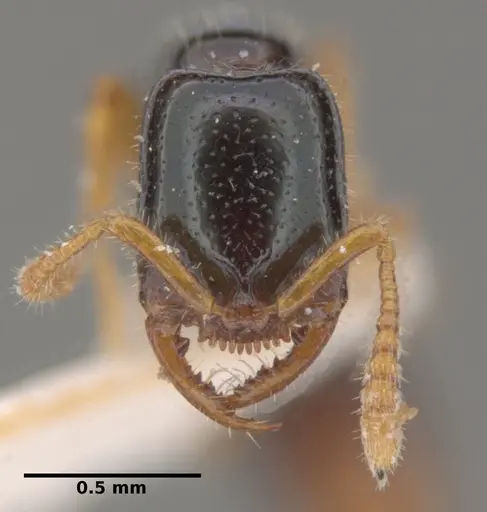
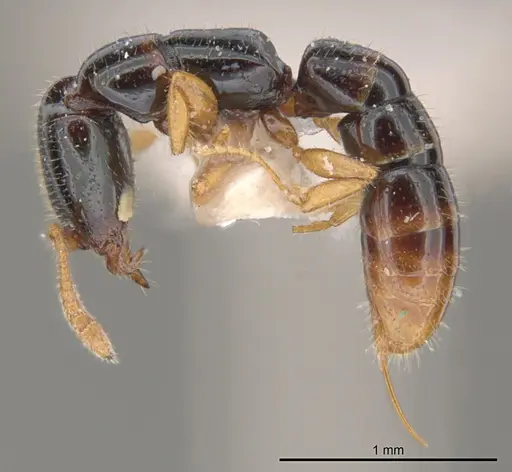
Fulakora heraldoi is a small, rare ant species from the Amazon rainforest in Brazil. Workers have distinctive falcate (curved, sickle-shaped) mandibles and a smooth, shiny head surface . The clypeus (the face plate above the mandibles) has 8-10 small teeth that help distinguish this species from relatives . This species belongs to the Amblyoponinae subfamily, known as 'dracula ants' due to their unique habit of consuming hemolymph from their own brood - this is not harmful and is a normal part of their behavior . The genus Fulakora was recently separated from Stigmatomma, and these ants remain poorly studied in the scientific literature .
Quick Summary
- Difficulty: Expert
- Origin & Habitat: Brazil (Amazonas region near Manaus). This species lives in the tropical Amazon rainforest, typically nesting in rotting wood or leaf litter on the forest floor [4].
- Colony Type: Colony structure is unconfirmed. Many Amblyoponinae species have ergatoid (wingless) replacement queens, but this has not been documented for F. heraldoi specifically.
- Size & Growth:
- Queen: Size data unavailable, no specific measurements exist in available literature
- Worker: Size data unavailable, original description mentions workers but exact measurements not provided in available literature [1][2]
- Colony: Likely small colonies based on typical Amblyoponinae patterns
- Growth: Unknown, likely slow to moderate based on genus
- Development: Unknown, estimated 6-10 weeks based on related Amblyoponinae species (No direct development data exists for this species. Estimates based on genus-level patterns.)
- Antkeeping:
- Temperature: Keep warm, around 24-28°C. Amazon species require stable tropical temperatures. Use a heating cable on one side of the nest to create a gentle gradient if room temperature is below 24°C.
- Humidity: High humidity is essential, these are rainforest ants. Keep the nest substrate consistently moist but not waterlogged. Aim for 70-85% humidity. Mist occasionally and use a water reservoir to maintain moisture.
- Diapause: Unlikely, Amazon species do not typically undergo true hibernation. You may reduce feeding and slightly lower temperatures (to around 20-22°C) during winter months, but active growth can continue year-round.
- Nesting: In captivity, they do well in small nests with tight chambers. Y-tong (AAC) nests or small test tube setups work well. The key is maintaining high humidity while preventing mold. Provide a small outworld for foraging.
- Behavior: These are cryptic, ground-dwelling ants that prefer to stay hidden. Workers are small and will explore slowly in search of prey. They are predatory, using their curved mandibles to capture small arthropods. Escape prevention is critical due to their tiny size, even small gaps can allow escapes. They are not aggressive toward keepers. They possess a sting used primarily for prey capture, but their small size means sting effects on humans are minimal.
- Common Issues: tiny size means escapes are likely without fine mesh barriers, high humidity requirements can lead to mold problems if ventilation is poor, slow growth may cause keepers to lose patience or overfeed, prey must be appropriately sized, too large prey will be ignored, wild-caught colonies may have parasites that are difficult to treat
Housing and Nest Setup
Fulakora heraldoi requires careful housing due to its tiny size and humidity needs. Use a small nest with tight-fitting chambers, Y-tong (AAC) nests work well because they maintain humidity while allowing you to observe the colony. Alternatively, test tube setups with a water reservoir can work. The critical factor is maintaining high humidity (70-85%) without creating stagnant conditions that promote mold. Use fine mesh on any ventilation holes, these ants can escape through surprisingly small gaps. Provide a small, shallow outworld for foraging that is also escape-proof. Avoid large, open spaces that can stress these small ants.
Feeding and Diet
As predatory ants, Fulakora heraldoi needs live prey. Offer small live insects appropriate to their size, pinhead crickets, fruit flies, small mealworms, and tiny arthropods like springtails are ideal. They are unlikely to accept sugar water or honey, as this is not part of their natural diet. Feed every 2-3 days, offering prey items that are roughly the size of the workers or smaller. Remove any uneaten prey after 24 hours to prevent mold.
Temperature and Humidity
These are Amazon rainforest ants that require warm, humid conditions. Maintain temperatures between 24-28°C year-round. A slight temperature gradient (warmer on one side) allows the colony to regulate its own conditions. Use a heating cable placed on top of the nest if your room temperature is below 24°C. Humidity is critical, keep the nest substrate consistently moist. Check daily and rehydrate as needed rather than on a fixed schedule. A water reservoir attached to the nest helps maintain stable humidity. Poor humidity leads to colony decline and death, but excessive moisture without ventilation causes deadly mold.
Colony Development and Growth
Fulakora heraldoi is likely a slow-growing species, typical of Amblyoponinae. Expect the first workers (nanitics) to appear 6-10 weeks after the queen lays eggs, though this is an estimate based on genus patterns since no species-specific data exists. Initial colony growth will be slow, do not be tempted to overfeed or expand the setup too quickly. Once the colony reaches 10-20 workers, growth may accelerate slightly. Mature colonies likely remain small, probably under 100 workers. Be patient, these ants are a long-term commitment, and rushing the process often leads to colony failure.
Behavior and Temperament
These are cryptic, secretive ants that prefer dark, humid microhabitats. Workers are not aggressive and will flee rather than fight when disturbed. They are primarily nocturnal or crepuscular, becoming more active during dim lighting conditions. Their small size makes them effectively harmless to keepers, they may bite if handled roughly, but the bite is not painful. The most notable behavior is their predatory hunting using their distinctive curved mandibles. They hunt slowly and methodically rather than chasing prey aggressively. Provide deep substrate or multiple chambers to allow them to retreat and feel secure.
Report an Issue
The current care sheet is based fully on literature. See inconsistencies, or something that's incorrect? Please , it will be resolved after review from an admin. Contributing to the blogs tab also helps providing information, to make us be able to further improve the caresheets. Thank you for your support!
References

Esta ficha de cuidados está bajo licencia CC BY-SA 4.0 .
Blogs de la comunidad
INPA-HYM-034964
Ver en AntWeb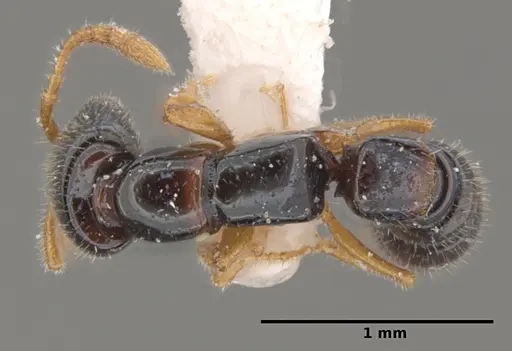
Literatura
Cargando mapa de distribución...Cargando productos...