
Formica mesasiatica
- Nom. cient.
- Formica mesasiatica
- Tribu
- Formicini
- Subfamilia
- Formicinae
- Autor
- Dlussky, 1964
- Distribución
- Encontrado en 0 países
Introducción
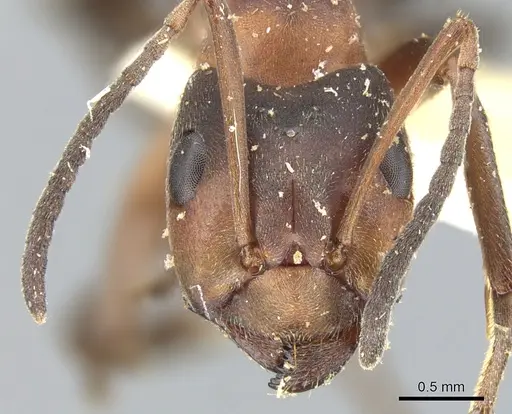
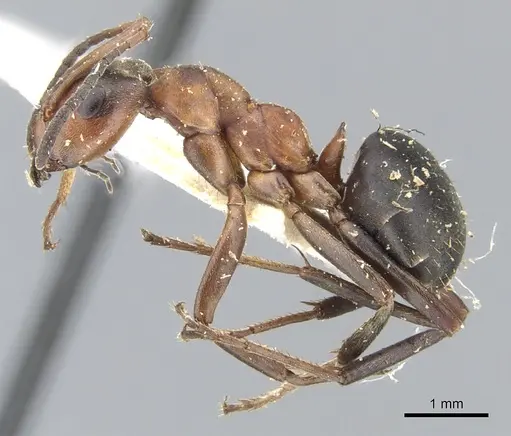
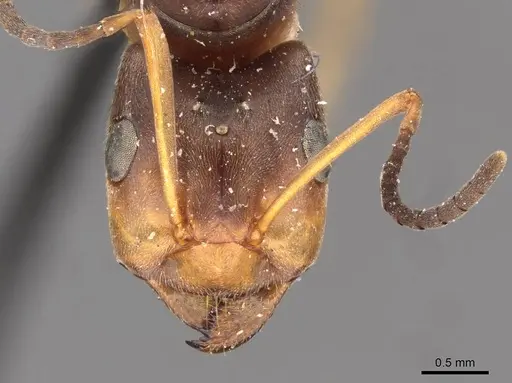
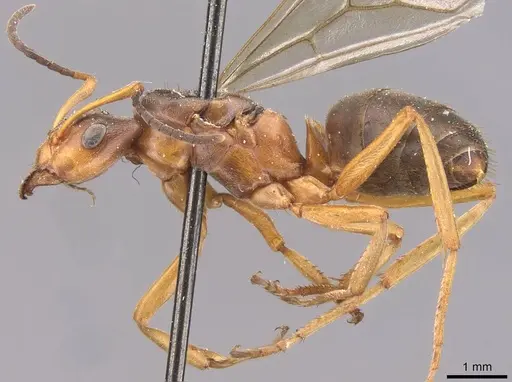
Formica mesasiatica is a large ant belonging to the Coptoformica subgenus. Workers are robust with dark reddish-brown to black coloration and dense golden-brown pubescence. The most recognizable features are the standing hairs on the clypeus (the area just above the jaws) and the often hook-shaped hairs around their eyes. This species is endemic to the mountains of Central Asia, specifically the Tianshan and Northern Pamir regions, where it lives at elevations between 1300-2700 meters . As a member of the Coptoformica subgenus, this species is likely a temporary social parasite - the queen invades a colony of another Formica species, kills the host queen, and uses the host workers to raise her first brood. This makes them challenging to establish in captivity since you may need a host colony. They build characteristic thatch mounds from grass and small twigs, and can form either isolated single nests or polydomous colonies with multiple connected nests .
Quick Summary
- Difficulty: Expert
- Origin & Habitat: Central Asian mountains (Tianshan and Northern Pamir) at elevations of 1300-2700m. Found in steppe-like or semidry grasslands and woodland clearings, with highest densities in grasslands with shrubs [1][2].
- Colony Type: Likely temporary social parasite, queen invades host Formica colony. Can be monodomous (single isolated nest) or polydomous (multiple connected nests) [1][2].
- Size & Growth:
- Queen: ~7-9mm, inferred from Formica genus [1][2]
- Worker: ~4-6mm, inferred from Formica genus [1][2]
- Colony: Likely several thousand workers based on related Formica species
- Growth: Moderate, estimated based on related species
- Development: Estimated 6-8 weeks at optimal temperature based on genus patterns (Development time inferred from related Formica species, not directly studied for this species)
- Antkeeping:
- Temperature: Keep nest area around 20-24°C with a gradient. This species is adapted to cooler mountain conditions (1300-2700m elevation) so avoid overheating. Room temperature is likely suitable for most of the year [1].
- Humidity: Moderate humidity around 50-60%. These ants inhabit semidry grasslands, so the nest should not be overly damp. Provide a water source but avoid saturated conditions.
- Diapause: Yes, these are temperate mountain ants that experience cold winters. Provide a winter rest period at 5-10°C for 3-4 months (roughly November-February in the Northern Hemisphere) [3].
- Nesting: Thatch mound builders in nature, they construct mounds from grass and twigs. In captivity, a large formicarium with chambers suitable for their size works well. They need space for potential polydomous structure if the colony grows. A naturalistic setup with soil and organic material allows them to build their characteristic thatch structures [4].
- Behavior: Workers are active foragers and are known to be effective predators of bark beetles, including Ips hauseri and Pityophthorus kirgisicus. They actively hunt and remove beetle pupae and larvae from under bark [4]. They are moderately aggressive when defending their nest and have the typical Formica ability to spray formic acid as a defense. Escape prevention is important, these are medium-sized ants that can climb smooth surfaces but are not extreme escape artists. They are diurnal and typically active during warmer daylight hours.
- Common Issues: temporary parasitic founding makes colony establishment very difficult, queens need a host colony, polydomous colony structure means they may need more space than expected as colony grows, mountain-adapted species may be sensitive to overheating, keep away from direct heat sources, winter diapause is essential for long-term colony health, skipping hibernation can weaken colonies, as predators, they need a constant supply of live prey insects, sugar alone is not sufficient
Housing and Nest Setup
Formica mesasiatica requires careful housing considerations due to their likely temporary parasitic lifestyle. In the wild, new queens must find and invade an established colony of another Formica species to found their colony. In captivity, this presents a significant challenge, you will need to obtain both a mated queen and a host colony (typically a common Formica species like Formica fusca or F. rufa). The nest should be spacious given their potential colony size. A large formicarium with multiple chambers works well, and they will likely construct thatch-like structures if given appropriate materials. Because they can form polydomous colonies in nature, they may benefit from having multiple connected nesting areas as the colony grows [4][2]. Escape prevention should be moderate, these ants can climb smooth surfaces but are not particularly small. Standard fluon barriers on smooth formicarium walls should suffice.
Feeding and Diet
These ants are primarily predatory, with documented prey on bark beetles including Ips hauseri and Pityophthorus kirgisicus. Workers actively hunt and remove beetle larvae and pupae from under bark [4]. In captivity, their diet should consist mainly of live insect prey, appropriate sized options include fruit flies, small crickets, mealworms, and other small insects. They likely also consume honeydew and nectar in nature, so offering sugar water or honey occasionally is beneficial. Unlike some Formica species that are primarily herbivorous, F. mesasiatica is clearly predatory and should have constant access to protein sources. Feed prey insects 2-3 times per week, and keep a sugar water dispenser available at all times.
Temperature and Seasonal Care
As a mountain species from elevations of 1300-2700m, Formica mesasiatica is adapted to cooler conditions than many tropical ants. Keep the nest area at room temperature (around 20-24°C) with a slight gradient allowing workers to choose their preferred temperature. Avoid placing the nest near heat sources or in direct sunlight, overheating can be fatal. These ants are active during the summer months in their native range, with nuptial flights occurring from late June through early August [1][3]. Winter diapause is essential, simulate their natural mountain environment by providing a cold period at 5-10°C for approximately 3-4 months during winter. This rest period is crucial for colony health and triggers proper reproductive behavior.
Colony Establishment - The Parasitic Challenge
The biggest challenge in keeping Formica mesasiatica is their likely temporary parasitic founding behavior. Based on Coptoformica subgenus patterns, new queens must find and invade an established colony of another Formica species. The queen enters the host nest, kills or displaces the host queen, and uses the host workers to raise her first brood [1]. This means a newly mated queen alone will likely not establish a colony, she may require a host. In captivity, you would need to introduce a newly caught queen to a small host colony (of a common species like Formica fusca) and monitor for acceptance. This process is challenging and success is not guaranteed. Many antkeepers consider this species suitable only for very experienced keepers who understand ant social parasitism.
Behavior and Defense
Workers of Formica mesasiatica are active foragers and effective predators. They exhibit typical Formica behavior including the ability to spray formic acid as a defensive secretion. When threatened, they will raise their abdomen and spray formic acid at the perceived threat, this can be irritating to human skin but is not dangerous. They are not particularly aggressive toward humans but will defend their nest vigorously. Their foraging activity is diurnal, matching the daytime temperatures in their mountain habitat. Workers communicate using chemical trails and can recruit nestmates to food sources. Their large size compared to many ant species makes them relatively easy to observe during foraging activities.
Frequently Asked Questions
How do I establish a Formica mesasiatica colony?
This is the biggest challenge, F. mesasiatica is likely a temporary social parasite based on Coptoformica subgenus patterns. Unlike most ants, the queen may not be able to found a colony alone. She likely needs to invade and take over a host Formica colony. In captivity, you would need to obtain both a newly mated queen AND a small host colony (commonly Formica fusca or similar). Introduce the queen to the host colony and hope the host workers accept her. This is an expert-level procedure with uncertain outcomes.
What do Formica mesasiatica ants eat?
They are primarily predatory. Feed live insects like fruit flies, small crickets, and mealworms 2-3 times per week. They also benefit from sugar sources, offer honey water or sugar water. Their predatory nature is well-documented in the wild where they hunt bark beetles [4].
What temperature do Formica mesasiatica ants need?
Keep them at room temperature, around 20-24°C. They are mountain-adapted (1300-2700m elevation) and do not tolerate heat well. Avoid placing their nest near heaters or in direct sunlight.
Do Formica mesasiatica need hibernation?
Yes, they require a winter diapause. These are temperate mountain ants that experience cold winters in their native range. Provide 3-4 months at 5-10°C during winter (roughly November-February in the Northern Hemisphere).
Are Formica mesasiatica good for beginners?
No. This species is recommended only for expert antkeepers due to their likely temporary parasitic founding requirements. You may need a host colony to establish a new queen, which adds significant complexity to their care.
How big do Formica mesasiatica colonies get?
Based on related Formica species, colonies likely reach several thousand workers. They can form polydomous colonies (multiple connected nests) in nature, so they may need more space than typical single-nest ant species.
When do Formica mesasiatica have nuptial flights?
Nuptial flights occur from late June through early August in their native Central Asian mountain habitat. Higher elevations experience delayed flight timing [1][2].
Report an Issue
The current care sheet is based fully on literature. See inconsistencies, or something that's incorrect? Please , it will be resolved after review from an admin. Contributing to the blogs tab also helps providing information, to make us be able to further improve the caresheets. Thank you for your support!
References

Esta ficha de cuidados está bajo licencia CC BY-SA 4.0 .
Blogs de la comunidad
CASENT0903275
Ver en AntWeb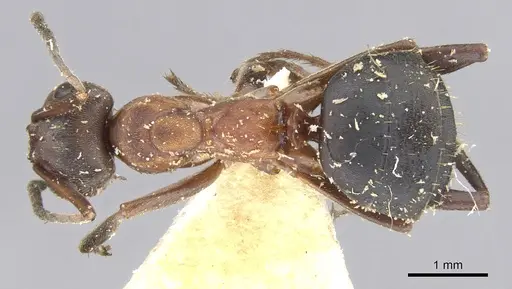
CASENT0907591
Ver en AntWeb
Literatura
Cargando mapa de distribución...Cargando productos...