
Dorylus buyssoni
- Nom. cient.
- Dorylus buyssoni
- Subfamilia
- Dorylinae
- Autor
- Santschi, 1910
- Distribución
- Encontrado en 0 países
Introducción
Dorylus buyssoni is an extremely rare army ant species known only from male specimens collected in Kenya, East Africa. The original description was based on four male specimens collected near Nairobi in 1904 by Ch. Alluaud . Only males have been scientifically described - no workers or queens have ever been documented for this species. The genus Dorylus contains the famous driver ants, known for their massive colonies and nomadic lifestyle. This species remains one of the most poorly documented ants in the entire genus, with virtually no biological or ecological information available. The subspecies Dorylus buyssoni conjugens is also recognized but similarly lacks any described castes .
Quick Summary
- Difficulty: Expert
- Origin & Habitat: Kenya, East Africa (Afrotropical region). The type locality is Nairobi. Based on other Dorylus species, they likely inhabit forest edges and savanna habitats where they form massive colonies that conduct raiding swarms [2].
- Colony Type: Unknown, only males have been described. Dorylus species typically form large colonies with single queens (monogyne), but this species is too poorly documented to confirm [2].
- Size & Growth:
- Queen: Size data unavailable, no queens have been described
- Worker: Size data unavailable, no workers have been described
- Colony: Unknown, no colony data exists
- Growth: Unknown
- Development: Unknown, no development data exists (No brood or developmental stages have ever been documented for this species)
- Antkeeping:
- Temperature: Unknown for this species. Dorylus species are tropical and prefer warm conditions, but specific requirements for D. buyssoni are unstudied.
- Humidity: Unknown. Dorylus species generally prefer humid conditions similar to their tropical forest habitats.
- Diapause: Unknown. Most Dorylus species are tropical and do not hibernate, but this has not been studied for D. buyssoni.
- Nesting: Unknown. Dorylus species typically create temporary bivouacs in soil or rotting wood and move frequently (nomadic lifestyle). No specific nesting observations exist for this species.
- Behavior: Unknown, this species has never been documented in captivity or studied for behavior. Dorylus genus members are known for their aggressive raiding behavior, large colony sizes, and nomadic nest movement. Workers are blind or nearly so. However, none of this has been confirmed for D. buyssoni specifically.
- Common Issues: this species has never been documented in captivity, no established care protocols exist., only males have been scientifically described, obtaining a colony would require finding one in the wild., the species is extremely rare with only a handful of specimens known from a single location., no worker or queen morphology means positive identification would be nearly impossible., dorylus colonies can be aggressive and deliver painful stings, exercise extreme caution if attempting to keep.
What We Know About This Species
Dorylus buyssoni was first described by Felix Santschi in 1910 based on four male specimens collected near Nairobi, Kenya in 1904. The type specimens were collected by Ch. Alluaud from the Wa-Kikouyou area (likely modern-day Kikuyu) [1]. That's it. That's essentially all the documented scientific information about this species. No workers, no queens, no colonies, no biological observations, no ecological data. The subspecies Dorylus buyssoni conjugens was also described but similarly lacks any additional documentation [2]. This is one of the least known ant species in the entire Dorylinae subfamily.
Why This Species Is Not Available in the Antkeeping Hobby
This species has never been documented in the antkeeping hobby and likely cannot be obtained. The primary reason is simple: only male specimens have ever been collected and described by scientists. Without workers or queens, there is no way to establish a captive colony. Even if a wild colony were discovered, Dorylus colonies are massive (often hundreds of thousands of individuals) and extremely aggressive, making collection and transport impractical. The species appears to be either very rare, very localized, or both. No specimens have been reported in modern entomological surveys, suggesting either the species is genuinely scarce or may have been misidentified in the original description. [2]
General Dorylus Biology (Genus-Level Information)
While D. buyssoni specifically is unknown, the Dorylus genus is among the most studied army ants in the world. These are the famous African driver ants that form colonies potentially exceeding 20 million individuals. They are nomadic, moving their bivouac (temporary nest) every few weeks as food sources are exhausted. Unlike many ants, Dorylus workers are largely blind, navigating instead through chemical trails and mass recruitment. They conduct massive raiding swarms that overwhelm prey including insects, spiders, and occasionally small vertebrates. Queens are enormous and continuously produce eggs. However, none of this has been confirmed for D. buyssoni specifically, and this species may have entirely different biology. [2]
Is It Possible to Keep This Species?
No. This species is not available in the antkeeping hobby and cannot be recommended for keeping. The complete lack of any documented colony, worker, or queen means there is no way to establish a captive population. Even if you somehow obtained a wild colony, positive species identification would be impossible without the described worker caste. Additionally, Dorylus colonies are among the most difficult ants to maintain in captivity due to their massive size, aggressive nature, nomadic behavior, and specific dietary needs. If you are interested in army ants, consider better-documented Dorylus species like Dorylus fulvus or Dorylus nigricans, or explore other genera entirely. This species remains a mystery to science and should remain so, attempting to collect it would be scientifically irresponsible and practically impossible.
Frequently Asked Questions
Can I keep Dorylus buyssoni ants?
No. This species has never been documented in captivity and likely cannot be obtained. Only male specimens have ever been described, no workers or queens exist in any collection. There is no established care protocol for this species.
Where can I find Dorylus buyssoni for sale?
This species is not available in the antkeeping hobby. It has never been documented for sale and likely cannot be found. The species is known only from a handful of male specimens collected in Kenya over 100 years ago.
What does Dorylus buyssoni look like?
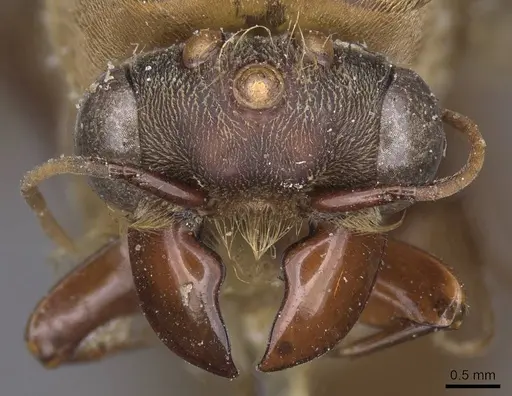
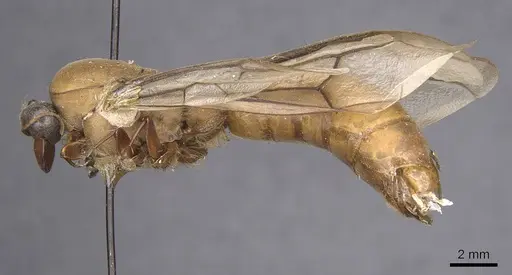
Only males have been described. They were originally described by Santschi in 1910 with a figure. The general Dorylus genus has large, reddish-brown to black ants with powerful mandibles. However, the specific appearance of D. buyssoni workers or queens is completely unknown.
How big do Dorylus buyssoni colonies get?
Unknown. No colony data exists for this species. Dorylus genus colonies can reach into the millions, but this has not been documented for D. buyssoni.
What do Dorylus buyssoni eat?
Unknown for this species. Dorylus genus army ants are predators that conduct raiding swarms to capture invertebrates. They likely accept insects and other protein sources, but this is unconfirmed for D. buyssoni.
Are Dorylus buyssoni good for beginners?
No. This species is not available and cannot be kept. Additionally, Dorylus species are among the most challenging ants to keep even for experienced keepers due to their massive colony sizes, aggressive nature, and specific care requirements.
What is the temperature requirement for Dorylus buyssoni?
Unknown. No temperature data exists for this species. Dorylus species are tropical and prefer warm conditions, but specific requirements for D. buyssoni are unstudied.
Does Dorylus buyssoni need hibernation?
Unknown. Dorylus species are primarily tropical and do not typically hibernate. However, this has not been studied for D. buyssoni specifically.
How long does it take for Dorylus buyssoni to develop from egg to worker?
Unknown. No developmental data exists for this species. No eggs, larvae, or pupae have ever been documented.
Can I catch a Dorylus buyssoni colony in the wild?
Not recommended and likely impossible. The species is known only from a few male specimens collected over a century ago. Positive identification would be impossible without workers, and collecting Dorylus colonies is extremely dangerous and impractical due to their size and aggression.
Is Dorylus buyssoni endangered?
Unknown. The conservation status of this species has not been assessed. It is not listed on the IUCN Red List, and the species has not been observed in modern surveys.
Report an Issue
The current care sheet is based fully on literature. See inconsistencies, or something that's incorrect? Please , it will be resolved after review from an admin. Contributing to the blogs tab also helps providing information, to make us be able to further improve the caresheets. Thank you for your support!
References

Esta ficha de cuidados está bajo licencia CC BY-SA 4.0 .
Blogs de la comunidad
CASENT0911278
Ver en AntWeb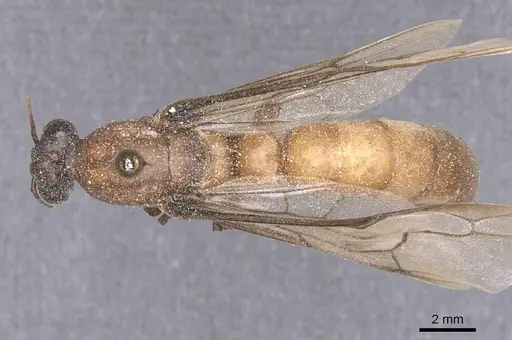
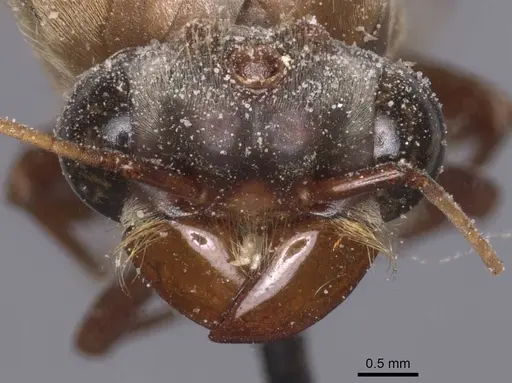
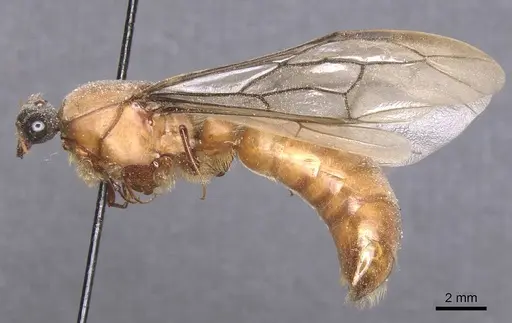
CASENT0915343
Ver en AntWeb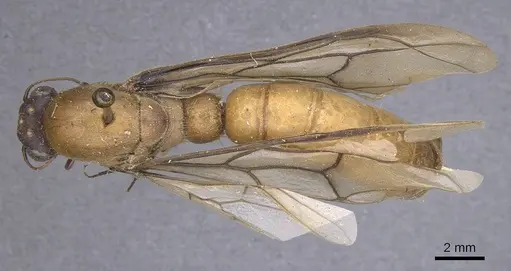
Literatura
Cargando mapa de distribución...Cargando productos...