
Dilobocondyla eguchii
- Nom. cient.
- Dilobocondyla eguchii
- Tribu
- Crematogastrini
- Subfamilia
- Myrmicinae
- Autor
- Bharti & Kumar, 2013
- Distribución
- Encontrado en 0 países
Introducción
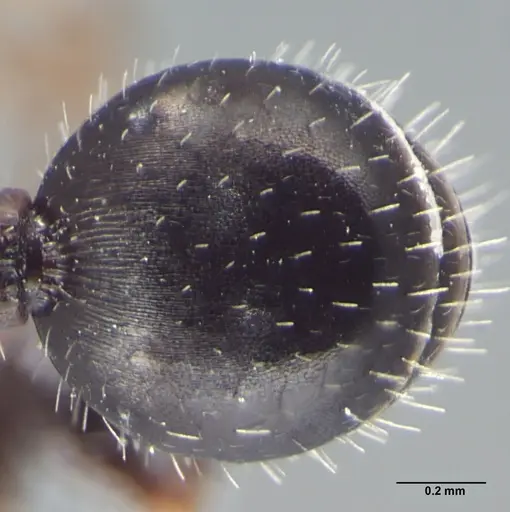
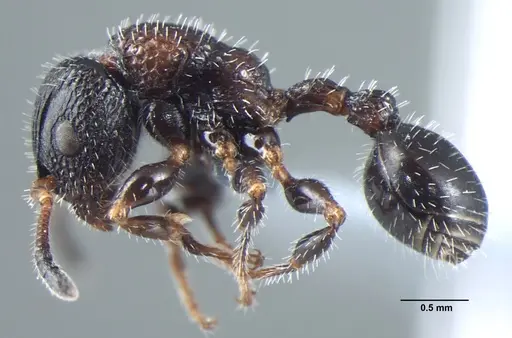
Dilobocondyla eguchii is a small Myrmicinae ant species native to the central highlands of Vietnam. Workers measure approximately 4.84mm in total length and have a distinctive brownish-black body with a reddish tinge on the mesosoma, petiole, and postpetiole. Their mandibles, scape, and trochanter are yellowish brown. The head and body are covered with abundant erect whitish hairs, and the gaster has fine longitudinal striations at the base . This species was described in 2013 and remains poorly studied in both the wild and captivity.
Quick Summary
- Difficulty: Expert
- Origin & Habitat: Native to the Langbiang Plateau in southern Vietnam, specifically Da Lat City at 1550m elevation. Found in a highly-modified decorative floral garden in the 'Valley of Love' (Thung Lung Tinh Yeu). The region has a mild mountain climate with temperatures ranging from 13-22°C in winter (January) to 17-26°C in spring (April-May) [1][2].
- Colony Type: Colony structure is unconfirmed. Only known from a single worker specimen collected in 2005 [1]. No data on queen morphology or colony size exists.
- Size & Growth:
- Queen: Unknown, no queen has been described [1]
- Worker: 4.84mm total length [1]
- Colony: Unknown, only single worker known [1]
- Growth: Unknown
- Development: Unknown, no development data exists for this species (Based on typical Myrmicinae patterns, expect 6-10 weeks at optimal temperature, but this is entirely speculative for this species)
- Antkeeping:
- Temperature: Based on the mild mountain climate of their native habitat (Da Lat at 1550m elevation), keep them in the cool range of 18-24°C. Avoid overheating. Room temperature (around 20-22°C) is likely appropriate [2].
- Humidity: Based on the moderate elevation and garden habitat, aim for moderate humidity (50-70%). Provide a moisture gradient so ants can choose their preferred zone. The substrate should be moist but not waterlogged.
- Diapause: Unknown, the mild climate of Da Lat suggests they may not require a true diapause, but a cool period during winter months may be beneficial.
- Nesting: No specific data on natural nesting preferences. Based on the genus and their collection in a garden setting, they likely nest in soil or rotting wood. Use a test tube setup initially, transitioning to a Y-tong or plaster nest once colony establishes. Keep nest chambers moderately sized.
- Behavior: Behavior is unstudied. Based on genus typical patterns, they are likely docile and non-aggressive. Workers are moderate-sized (4.84mm) so escape prevention should be standard, they are not tiny enough to require fine mesh barriers like some Myrmicinae, but secure lids are still essential. As Myrmicinae, they have a stinger but use a smear defense mechanism rather than piercing. Foraging style is unknown but likely similar to other Crematogastrini, they probably forage on the ground and may tend aphids for honeydew.
- Common Issues: extremely limited availability, this species is rarely available in the antkeeping hobby, no captive breeding data exists, establishing a colony may be very challenging, unknown queen biology, founding behavior and colony establishment are completely unstudied, risk of wild-caught colonies having parasites or disease due to lack of captive husbandry knowledge, temperature sensitivity, being from a cool mountain environment, they may be sensitive to overheating
Species Discovery and Rarity
Dilobocondyla eguchii was described in 2013 by Bharti and Kumar, making it one of the more recently described ant species in the hobby. The type specimen was collected by Dr. Katsuyuki Eguchi (the species is named in his honor) in January 2005 from Da Lat City in Vietnam's Lam Dong Province [1]. This species is extremely rare in both scientific collections and the antkeeping hobby, you are unlikely to encounter it for sale, and if you do acquire one, you would be pioneering captive husbandry for this species. The 2020 study by Liu et al. recorded the species in China's Yunnan Province, expanding its known range slightly [3], but it remains one of the least-studied Dilobocondyla species.
Natural Habitat and Climate
This species comes from a relatively cool, mountainous region of Vietnam. Da Lat City sits at 1550m elevation on the Langbiang Plateau in the southern central highlands. The climate is mild year-round with average temperatures ranging from 13-22°C in the coldest month (January) to 17-26°C in the warmest months (April-May) [2]. This is notably cooler than typical tropical ant habitats, which means captive colonies should be kept cooler than most exotic ant species. The type specimen was collected from a decorative floral garden, a highly modified human landscape, suggesting this species can tolerate some degree of habitat disturbance. However, the specific microhabitat preferences (soil depth, shade levels, nest site characteristics) remain completely unknown.
Identification and Morphology
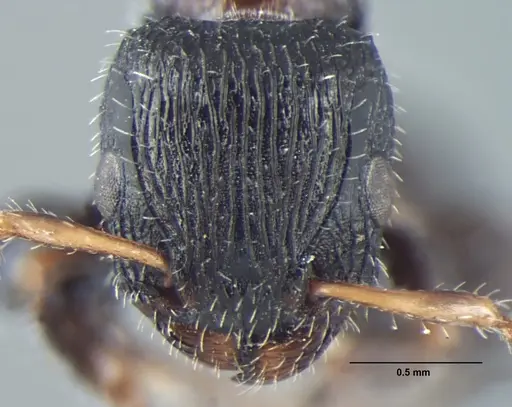
Workers of D. eguchii can be identified by several distinctive features: 14 strong rugae (ridges) between the frontal carinae at the level of the eyes, abundant long erect hairs covering the body, and fine longitudinal striations on the first segment of the gaster extending about halfway from the base. The body is brownish-black with a reddish tinge on the mesosoma, petiole, and postpetiole. The mandibles, scape, and trochanter are yellowish brown. The petiole is notably long compared to similar species. These are medium-sized Myrmicinae ants at 4.84mm total length, making them similar in size to many common Crematogastrini like Crematogaster species [1].
Care Recommendations
Since this species has never been kept in captivity (as far as documented), all care recommendations are educated guesses based on the genus typical behavior and the species' native climate. Keep temperatures cool, around 18-24°C, avoiding any overheating. Room temperature is likely ideal. Humidity should be moderate (50-70%) with a moisture gradient in the nest. For nesting, start with a standard test tube setup and transition to a Y-tong or plaster formicarium once the colony grows. Feed a varied diet including protein sources (small insects) and sugar sources (honey or sugar water), though acceptance is unconfirmed. Go slowly with any husbandry changes, this species is likely sensitive to environmental shifts. If you successfully establish a colony, document your observations carefully as they would be valuable contributions to our knowledge of this species.
Why Keep This Species?
Dilobocondyla eguchii is not a species for beginners or even most experienced antkeepers. It is extremely rare, completely unstudied in captivity, and you would essentially be pioneering its husbandry. However, for the dedicated antkeeper who values contributing to scientific knowledge, this could be a rewarding challenge. The appeal here is not in established husbandry protocols but in being among the first to learn how this species lives and breeds in captivity. If you do acquire specimens, treat them as valuable and document everything, colony behavior, feeding preferences, growth rates, and any reproductive success would be novel observations worth sharing with the antkeeping community.
Frequently Asked Questions
Is Dilobocondyla eguchii available in the antkeeping hobby?
No, this species is extremely rare in the antkeeping hobby. It was only described in 2013 and has only been collected a handful of times. You are very unlikely to find it for sale.
What temperature should I keep Dilobocondyla eguchii at?
Based on their native cool mountain habitat in Vietnam (1550m elevation, 13-26°C year-round), keep them in the cool range of 18-24°C. Room temperature (around 20-22°C) is likely ideal. Avoid overheating.
How big do Dilobocondyla eguchii colonies get?
Unknown, only a single worker specimen has ever been collected. No colony size data exists. Based on related Dilobocondyla species, colonies are likely small to moderate (dozens to a few hundred workers).
What do Dilobocondyla eguchii ants eat?
Unconfirmed, no feeding observations exist for this species. Based on genus typical behavior, they likely eat small insects and may tend aphids for honeydew. Offer small protein sources (fruit flies, small mealworms) and sugar sources (honey, sugar water) and observe acceptance.
Do Dilobocondyla eguchii ants sting?
Unknown, no sting records exist. As Myrmicinae, they have a stinger but it is likely small and the sting mild. This subfamily uses a smear defense mechanism rather than piercing, wiping venom onto enemies rather than injecting them. Given their docile genus typical temperament, they are not considered dangerous.
How long does it take for Dilobocondyla eguchii to develop from egg to worker?
Unknown, no development data exists for this species. Based on typical Myrmicinae development, expect 6-10 weeks at optimal temperature, but this is entirely speculative.
Can I keep multiple Dilobocondyla eguchii queens together?
Unknown, no data exists on colony structure or queen behavior. Do not attempt combining unrelated queens without documented evidence this species tolerates it.
Is Dilobocondyla eguchii a good species for beginners?
No. This species is not recommended for any level of antkeeping experience except the most advanced and dedicated hobbyists who want to pioneer captive breeding of an extremely rare, unstudied species. There are no established care protocols.
Where does Dilobocondyla eguchii live in the wild?
Only known from Vietnam's central highlands (Da Lat City, Lam Dong Province at 1550m elevation) and possibly adjacent Yunnan Province, China. The type locality is a decorative floral garden in Da Lat [1][3].
Does Dilobocondyla eguchii need hibernation?
Unknown, the mild climate of Da Lat (13-26°C year-round) suggests they may not require a true diapause. However, a cool period during winter months may be beneficial. More research is needed.
Report an Issue
The current care sheet is based fully on literature. See inconsistencies, or something that's incorrect? Please , it will be resolved after review from an admin. Contributing to the blogs tab also helps providing information, to make us be able to further improve the caresheets. Thank you for your support!
References

Esta ficha de cuidados está bajo licencia CC BY-SA 4.0 .
Blogs de la comunidad
ANTWEB1008025
Ver en AntWeb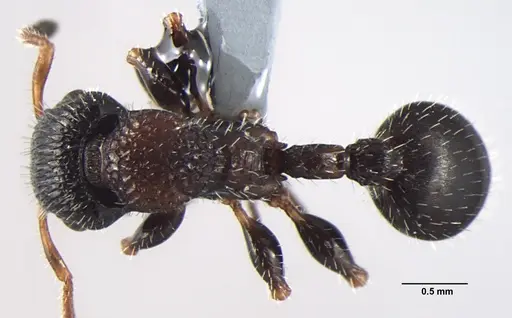
Literatura
Cargando mapa de distribución...Cargando productos...