
Diacamma leyteense
- Nom. cient.
- Diacamma leyteense
- Tribu
- Ponerini
- Subfamilia
- Ponerinae
- Autor
- Zettel <i>et al.</i>, 2016
- Distribución
- Encontrado en 0 países
Introducción
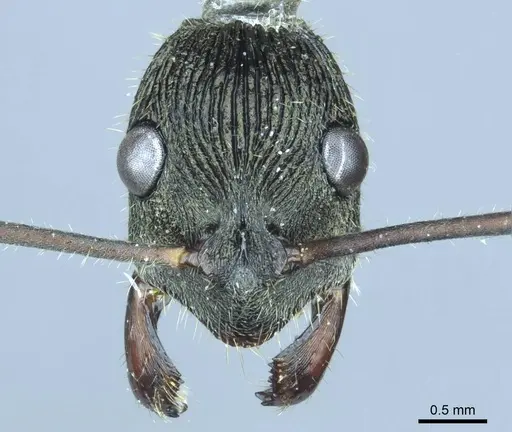
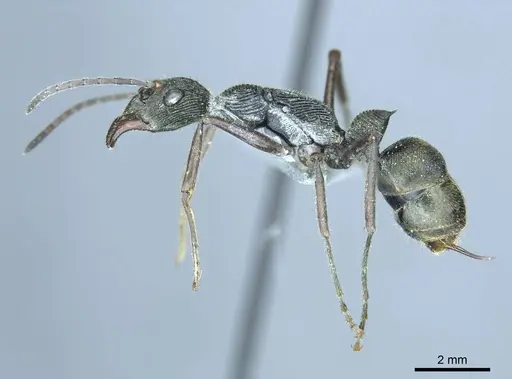
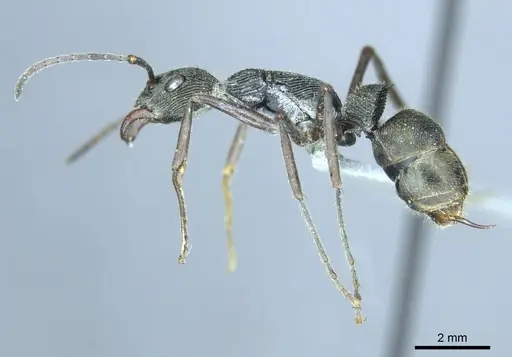
Diacamma leyteense is a medium-sized ant from the Philippines, measuring 11.1-13.2mm in total length . Workers have a black, moderately shiny body with reddish legs, short erect hairs, and an elongated head with medium-sized bulging eyes . This species is endemic to Leyte Island and southwestern Samar in the Philippines . Unlike most ants, Diacamma species lack true queens and reproduce through gamergates, workers that become reproductive .
Quick Summary
- Difficulty: Medium
- Origin & Habitat: Philippines (Leyte and southwestern Samar) in tropical island environments [1]
- Colony Type: Queenless, no distinct queen caste, reproduction by gamergates (reproductive workers).
- Queen Status: Queenless Colony
- Special: Gamergates
- Size & Growth:
- Queen: Queenless species, reproduction by gamergate (reproductive worker) instead of a distinct queen caste.
- Worker: 11.1-13.2mm total length [1]
- Colony: Up to 200 workers (estimated from related species) [2]
- Growth: Moderate
- Development: Estimated 8-12 weeks at optimal temperature [2] (Development is temperature-dependent, warmer conditions may speed up growth)
- Antkeeping:
- Temperature: Keep warm, around 24-28°C, based on tropical habitat [2]
- Humidity: Keep substrate consistently moist but not waterlogged, as they are from humid environments [2]
- Diapause: No, tropical species do not require hibernation [1]
- Nesting: Prefer humid nests like Y-tong, plaster, or soil nests [2]
- Behavior: Workers are active foragers and predatory, hunting small invertebrates. They have a functional stinger and can deliver painful stings if threatened. Moderately aggressive when defending the colony. Escape prevention is important due to their medium size, use standard barriers and secure lids.
- Common Issues: colonies may fail if humidity drops too low, these tropical ants need consistent moisture, predatory diet requires live prey, failure to provide adequate protein leads to colony decline, gamergate death can cause colony instability, ensure the reproductive worker is healthy, wild-caught colonies may contain parasites that can decimate the colony in captivity, slow growth can frustrate beginners, Ponerines take longer to establish than many common ants
Housing and Nest Setup
Use humid nest setups to replicate their natural forest floor habitat. Y-tong or plaster nests work well, as they hold moisture. Naturalistic soil setups are also suitable, keep the substrate damp but not waterlogged. Chambers should be scaled for medium-sized ants (11-13mm). Provide a small outworld for foraging and observation. Maintain humidity by misting occasionally or using a water reservoir, with adequate ventilation to prevent mold [2].
Feeding and Diet
Diacamma leyteense is predatory and needs live protein prey. Offer small live insects like fruit flies, pinhead crickets, and springtails 2-3 times per week. Remove uneaten prey after 24 hours to prevent mold. They may occasionally accept sugar water, but protein is essential [2].
Temperature and Heating
Keep the nest area at 24-28°C using a heating cable or mat on one side to create a gradient. Place heating on top to avoid drying the substrate. Monitor with a thermometer and avoid temperatures above 32°C. No hibernation is needed [2].
The Gamergate System
Diacamma species lack true queens and reproduce through gamergates, workers that lay eggs. When a gamergate dies, another worker can replace her. Your colony will have a dominant reproductive worker instead of a queen [2].
Behavior and Temperament
Workers are active foragers that hunt individually. They are moderately aggressive and will sting if threatened. Their sting is painful but not dangerous to healthy humans. Use standard barriers to prevent escapes, as they can climb smooth surfaces [2].
Frequently Asked Questions
How long does it take for Diacamma leyteense to produce first workers?
Expect 8-12 weeks from egg to worker at optimal temperature (24-28°C), based on genus patterns [2].
Do Diacamma leyteense ants have a queen?
No, Diacamma species reproduce through gamergates, which are reproductive workers [2].
Can I keep multiple Diacamma leyteense colonies together?
No, different colonies will fight, so only keep one colony per enclosure [2].
What do Diacamma leyteense eat?
They are predatory and need live protein prey like springtails, fruit flies, and small crickets [2].
What temperature do Diacamma leyteense need?
Keep them warm at 24-28°C, as they are tropical ants from the Philippines [2].
Are Diacamma leyteense good for beginners?
They are rated as medium difficulty due to specific care needs like live prey and high humidity [2].
How big do Diacamma leyteense colonies get?
Colonies can reach up to 200 workers, estimated from related species [2].
Do they need hibernation?
No, being a tropical species, they do not require hibernation [1].
Why is my Diacamma leyteense colony declining?
Common causes include insufficient live prey, low humidity, cool temperatures, or loss of the gamergate [2].
Report an Issue
The current care sheet is based fully on literature. See inconsistencies, or something that's incorrect? Please , it will be resolved after review from an admin. Contributing to the blogs tab also helps providing information, to make us be able to further improve the caresheets. Thank you for your support!
References

Esta ficha de cuidados está bajo licencia CC BY-SA 4.0 .
Blogs de la comunidad
CASENT0916093
Ver en AntWeb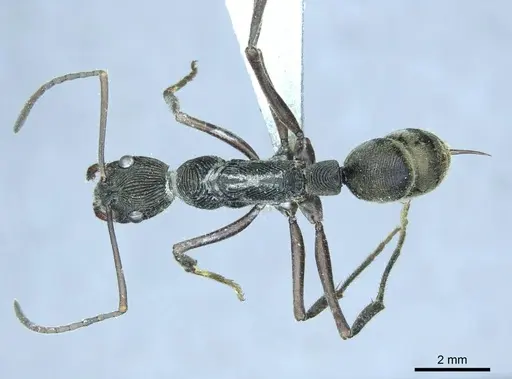
Literatura
Cargando mapa de distribución...Cargando productos...