
Diacamma brevistriatum
- Nom. cient.
- Diacamma brevistriatum
- Tribu
- Ponerini
- Subfamilia
- Ponerinae
- Autor
- Laciny <i>et al.</i>, 2015
- Distribución
- Encontrado en 0 países
Introducción
Diacamma brevistriatum is a relatively small Ponerine ant species from the montane regions of West Malaysia. Workers measure 10-11.8mm in total length and have a distinctive black body with coarse striations running from the head to the first abdominal segment. The most diagnostic feature is the pair of short striated patches on the second abdominal segment (gaster tergite 2), which gives this species its name. These ants belong to the Diacamma rugosum species complex and were only formally described in 2015, meaning their biology in captivity remains largely undocumented. As Ponerine ants, they possess a functional stinger and are predatory hunters. This is a species for more experienced antkeepers who can provide the specific conditions this montane species requires.
Quick Summary
- Difficulty: Medium/Hard
- Origin & Habitat: West Malaysia, found in montane areas of Kelantan, Pahang, Perak, and Selangor at elevations between 400-1500m [1][2].
- Colony Type: Queenless, no distinct queen caste, reproduction by gamergates (reproductive workers).
- Queen Status: Queenless Colony
- Size & Growth:
- Queen: Queenless species, reproduction by gamergate (reproductive worker) instead of a distinct queen caste.
- Worker: 9.98-11.74mm total length [1].
- Colony: Colony size unconfirmed, estimated at several hundred workers based on related Diacamma species.
- Growth: Moderate, estimated from genus patterns.
- Development: Unconfirmed, no direct development data exists for this species. (Development timeline is unconfirmed. Ponerine ants typically develop slower than many common pet ants.)
- Antkeeping:
- Temperature: Keep at 22-26°C. This species comes from montane areas in tropical Malaysia, so they prefer warm but not extremely hot conditions. A gentle temperature gradient allows them to regulate their body temperature.
- Humidity: Moderate to high humidity around 60-80%. Montane forest environments experience consistent moisture. Keep the nest substrate moist but not waterlogged, with some drier areas available.
- Diapause: No, as a tropical montane species from Malaysia, they do not experience cold winters that would trigger diapause. Keep them at stable temperatures year-round.
- Nesting: In nature they likely nest in soil or rotting wood in forest floor environments. In captivity, a naturalistic setup with moist substrate or a Y-tong/plaster nest works well. They prefer dark, humid nest chambers.
- Behavior: As Ponerine ants, they are predatory and will hunt small invertebrates. They possess a functional stinger and can deliver a painful sting if threatened. Workers are moderately aggressive when defending the colony. They are active foragers and likely hunt individually rather than using recruitment trails. Their small size means escape prevention is important, they can squeeze through small gaps. Handle with caution due to their stinger.
- Common Issues: lack of documented care information makes successful captive husbandry more challenging, predatory diet requirements may be difficult to meet consistently, sting risk means they require careful handling and should not be kept by those uncomfortable with stinging ants, montane origin means they may be sensitive to temperature extremes or dry conditions, slow colony growth compared to common pet ants may frustrate beginners
Identification and Appearance
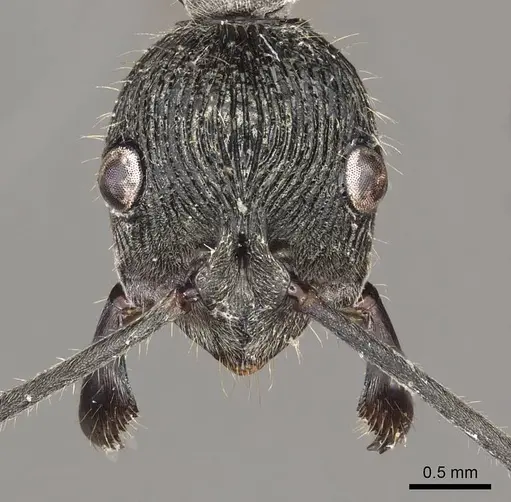
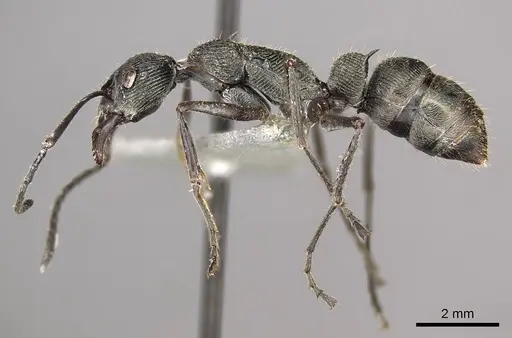
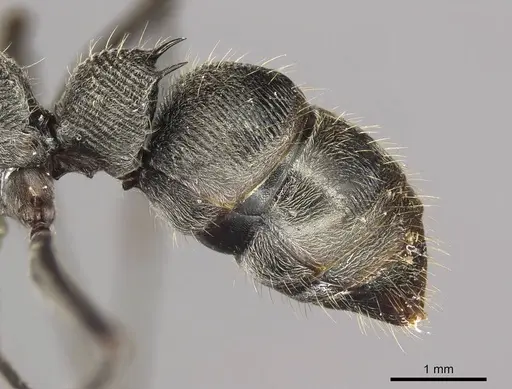
Diacamma brevistriatum workers measure 10-11.8mm in total length, making them relatively small for the Diacamma genus. Their body is entirely black without any metallic shimmer, which helps distinguish them from some related species. The most distinctive feature is the coarse striation pattern covering their body, deep ridges run from the cheeks (genae) all the way to the first abdominal segment. The diagnostic character that separates this species from others in the Diacamma rugosum complex is the pair of short striated patches on the second abdominal segment (gaster tergite 2). Their petiole (the narrow 'waist' segment) has moderately long teeth that are relatively far apart. The eyes are relatively small but do slightly protrude beyond the sides of the head [1].
Natural Distribution and Habitat
This species is endemic to West Malaysia, specifically found in the montane regions of Kelantan, Pahang, Perak, and Selangor. Specimens have been collected at elevations ranging from 400m up to 1500m above sea level. The type locality is in the Cameron Highlands area, approximately 40km southeast of Ipoh in the Titi Wangsa mountain range. Additional specimens have been found on Tioman Island and in the Korbu Mountains. These are humid, forested areas with consistent year-round temperatures typical of tropical highlands [1][2].
Feeding and Diet
As Ponerine ants, Diacamma brevistriatum are predatory hunters. They likely prey on small invertebrates including springtails, tiny beetles, and other micro-arthropods found in forest floor environments. In captivity, you should offer a diet based on small live prey such as fruit flies, pinhead crickets, and other appropriately-sized insects. Unlike some ants that readily accept sugar sources, Ponerine ants are primarily protein predators. You may occasionally offer a small amount of honey or sugar water, but do not rely on these as primary food sources. Feed prey items twice weekly, removing any uneaten insects within 24 hours to prevent mold issues.
Temperature and Humidity Care
Since this species comes from montane tropical forests, aim for temperatures in the 22-26°C range. Avoid temperatures above 30°C or below 18°C. A heating cable on one side of the nest can create a temperature gradient, allowing the ants to regulate their body temperature by moving between warmer and cooler areas. Place the heating on top of the nest material rather than underneath to prevent excessive drying. Maintain humidity at 60-80%, the substrate should feel consistently moist but never waterlogged. Montane environments are humid, so occasional misting of the outworld can help, but ensure good ventilation to prevent mold. A water tube for drinking should always be available.
Nesting Requirements
In their natural habitat, Diacamma species typically nest in soil or rotting wood on the forest floor. For captivity, a naturalistic setup with moist substrate (a mix of soil and sand) works well, or you can use a Y-tong or plaster nest designed for Ponerine ants. The nest chambers should be dark, these ants prefer dim, humid conditions. Because they are predatory foragers, they need adequate outworld space to hunt and explore. The nest should have chambers sized appropriately for their worker size (around 10-11mm). Ensure the setup allows for easy maintenance of humidity without flooding.
Behavior and Defense
Diacamma brevistriatum possesses a functional stinger, a characteristic of all Ponerine ants. When threatened, workers will not hesitate to sting. The sting is reportedly painful, similar to other Ponerine ants. This means you should handle this species with caution, never disturb the nest without proper protection, and avoid putting your hand near the colony. They are not aggressive hunters but will defend their nest vigorously. Workers forage individually rather than in groups, hunting prey through the substrate and leaf litter. Their small size means they can escape through tiny gaps, use fine mesh and tight-fitting lids on all enclosures.
Frequently Asked Questions
How long does it take for Diacamma brevistriatum to produce first workers?
The development timeline is unconfirmed for this species. Based on typical Ponerine ant development, expect approximately 6-10 weeks from egg to worker at optimal temperature (around 24-26°C). However, since this species was only described in 2015 and has no documented captive breeding, this is an estimate.
Can I keep Diacamma brevistriatum in a test tube setup?
A test tube setup can work for a founding queen or small colony, but you will need to provide proper humidity and feeding access. For established colonies, a naturalistic setup or Y-tong nest with moist substrate is more appropriate for their montane humidity requirements.
What do Diacamma brevistriatum eat?
They are predatory ants that hunt small invertebrates. Feed small live prey such as fruit flies, small crickets, mealworms, and other appropriately-sized insects. Protein should make up the majority of their diet. Sugar sources may be accepted occasionally but should not be relied upon as primary nutrition.
Do Diacamma brevistriatum need hibernation?
No, they do not need hibernation. As a tropical montane species from Malaysia, they experience consistent warm temperatures year-round. Keep them at stable temperatures between 22-26°C throughout the year without a diapause period.
Are Diacamma brevistriatum good for beginners?
No, this species is not recommended for beginners. It was only formally described in 2015, meaning there is very little documented care information. Additionally, their predatory diet requirements, stinger, and specific humidity needs make them more challenging than common beginner species like Lasius or Camponotus.
How big do Diacamma brevistriatum colonies get?
Colony size is unconfirmed for this specific species. Based on related Diacamma species, colonies likely reach several hundred workers. This is not a supercolony-forming species.
Can I keep multiple Diacamma brevistriatum queens together?
The colony structure of this species has not been documented. Combining unrelated queens of this species has not been studied and is not recommended based on typical Diacamma behavior.
What temperature should I keep Diacamma brevistriatum at?
Keep them at 22-26°C. They come from montane areas in tropical Malaysia, so they prefer warm but not extremely hot conditions. A temperature gradient allowing them to move between warmer and cooler areas is ideal.
Why is Diacamma brevistriatum so hard to find for sale?
This species was only formally described in 2015 and has a limited distribution in the montane forests of West Malaysia. It is not commonly kept in the ant hobby and is rarely available from suppliers. Most specimens in collections come from scientific sampling rather than the ant trade.
Report an Issue
The current care sheet is based fully on literature. See inconsistencies, or something that's incorrect? Please , it will be resolved after review from an admin. Contributing to the blogs tab also helps providing information, to make us be able to further improve the caresheets. Thank you for your support!
References

Esta ficha de cuidados está bajo licencia CC BY-SA 4.0 .
Blogs de la comunidad
CASENT0915958
Ver en AntWeb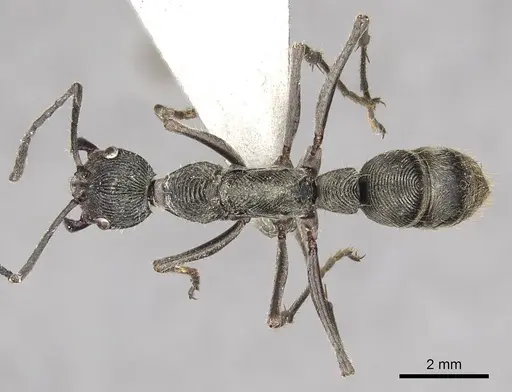
Literatura
Cargando mapa de distribución...Cargando productos...