
Crematogaster vulcania
- Nom. cient.
- Crematogaster vulcania
- Tribu
- Crematogastrini
- Subfamilia
- Myrmicinae
- Autor
- Santschi, 1913
- Distribución
- Encontrado en 0 países
Introducción
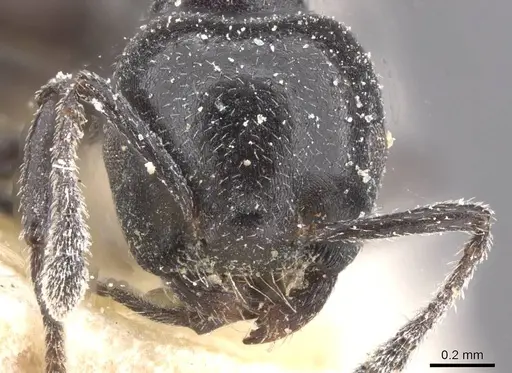
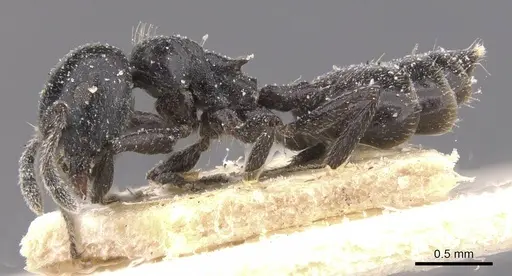
Crematogaster vulcania is a small arboreal ant species native to East Africa, specifically documented in the Rift Valley region of Kenya at the foot of Mount Longonot. These ants are part of the famous acacia-ant mutualism, nesting exclusively in the swollen thorns of Acacia trees. Workers are tiny, with the characteristic heart-shaped abdomen that gives Crematogaster their common name 'acrobat ants' - when threatened, they raise their abdomen over their head like an acrobat. The species gets its name from its association with volcanic regions in East Africa.
Quick Summary
- Difficulty: Medium
- Origin & Habitat: East Africa, documented in the Rift Valley at the foot of Mount Longonot in Kenya. They inhabit acacia savanna and nest exclusively inside swollen thorns of Acacia stenocarpa trees [1]. This is a classic plant-ant mutualism where the ants get shelter and the acacia gets protection from herbivores.
- Colony Type: Single-queen colonies based on typical Crematogaster patterns. The acacia thorn nesting suggests a stable, established colony structure.
- Size & Growth:
- Queen: ~8mm, inferred from typical Crematogaster genus size [2]
- Worker: ~4mm, inferred from typical Crematogaster genus size [2]
- Colony: Up to several hundred workers, estimated from similar Crematogaster species [2]
- Growth: Moderate
- Development: Estimated 6-10 weeks based on related Crematogaster species [2] (Development time estimated from genus patterns, direct observations not available for this species)
- Antkeeping:
- Temperature: Keep warm and stable, roughly low-to-mid 20s°C. They come from warm East African savanna and need consistent heat [1].
- Humidity: Provide a humidity gradient, mostly dry nest chamber with one small moist area. Acacia thorns provide relatively dry internal chambers.
- Diapause: No true diapause required, East African species experience mild seasonal variation. A brief slowdown during winter months may occur.
- Nesting: Arboreal specialists, they naturally nest in hollow plant structures. Y-tong (AAC) nests work well, or you can provide artificial 'thorn' setups. They prefer tight, enclosed chambers that mimic their natural acacia thorn homes.
- Behavior: These ants are defensive and will readily defend their nest. They show the classic Crematogaster behavior of raising their abdomen when disturbed, this is a warning display and they may spray formic acid. Workers are active foragers, patrolling the area around their nest. They are relatively fast-moving and excellent climbers. Escape prevention is important despite their small size, they can squeeze through small gaps.
- Common Issues: dry conditions can kill founding colonies, acacia thorns retain some moisture but captive nests dry quickly, small size makes escape prevention critical, use fine mesh and tight-fitting barriers, slow founding means colonies are vulnerable, avoid disturbing the queen during claustral founding, overheating is a risk, keep temperatures stable but not excessive, wild colonies may have specialized mutualistic relationships that affect their care, they may be adapted to specific acacia environments
Natural History and Nesting
Crematogaster vulcania is documented nesting exclusively in the swollen thorns of Acacia stenocarpa in the Rift Valley region of Kenya [1]. This places them squarely in the classic acacia-ant mutualism ecological niche. The swollen thorns (called domatia) provide natural shelter, they're hollow inside, offering protection from the elements and predators while allowing the ants to move freely. In the wild, these ants would patrol the acacia tree, defending it against herbivores in exchange for their secure nesting site. This arboreal lifestyle means they are adapted to warmer, drier conditions than many ground-nesting ants. Their small size allows them to navigate the narrow internal chambers of acacia thorns with ease.
Housing and Nest Setup
Since they are arboreal specialists, provide a nest that mimics their natural thorn dwellings. Y-tong (AAC) nests work well because they offer tight, enclosed chambers. You can also create a naturalistic setup with artificial 'thorns', narrow tubes or chambers that replicate the domatia they use in the wild. Avoid large, open spaces in the nest, these ants prefer cozy, enclosed areas. A small outworld connected to the nest allows for foraging. Since they are climbers, ensure the outworld has smooth walls or a barrier like fluon to prevent escapes. The nest should be kept slightly elevated from any water reservoir to prevent flooding. [2]
Temperature and Heating
As an East African species from a warm region, Crematogaster vulcania needs temperatures in the warm range. The Rift Valley experiences warm temperatures year-round, so they do not require a true hibernation. A heating cable on one side of the nest creates a gentle temperature gradient, allowing the ants to choose their preferred zone. Avoid temperatures above 32°C, as this can stress or kill the colony. Room temperature in most homes may be slightly cool, consider supplemental heating if your colony seems sluggish. Watch for workers clustering near the warmer side of the nest. [1][2]
Feeding and Diet
In their natural acacia habitat, these ants likely tend aphids or scale insects for honeydew and hunt small insects. Offer sugar water or honey as a constant energy source. For protein, provide small insects like fruit flies, pinhead crickets, or mealworm pieces. They are small, so prey items should be appropriately sized. Based on typical Crematogaster behavior, they are likely omnivorous with a preference for honeydew and small arthropods. Feed protein regularly and keep sugar water available at all times. Remove uneaten prey after 24 hours to prevent mold. [2]
Colony Founding
A newly mated queen will seal herself into a small chamber, this is claustral founding, typical of the genus. She will not leave to forage, surviving entirely on stored fat reserves while raising her first brood. The founding chamber should be small and enclosed, mimicking the tight space of an acacia thorn. Keep the setup dark and undisturbed for several weeks. After the first workers emerge, the colony can be moved to a larger setup if needed. Be patient during founding, the queen may take time to produce her first workers based on related species. [2]
Behavior and Defense
Crematogaster ants are named 'acrobat ants' for their distinctive defensive posture, when threatened, they raise their abdomen over their head, making them appear larger and more threatening. They can also spray formic acid as a defense mechanism. Workers are active and will aggressively defend the nest. They are excellent climbers and will explore vertical surfaces. This species is not particularly large or dangerous to humans, but their formic acid spray can be irritating. The small workers can squeeze through surprisingly small gaps, making escape prevention essential. [2]
Frequently Asked Questions
How long does it take for Crematogaster vulcania to have first workers?
Expect several weeks from egg to first worker at optimal temperature. This is based on typical Crematogaster development patterns since specific data for this species is not available.
What temperature do Crematogaster vulcania ants need?
Keep them warm at low-to-mid 20s°C. They come from the warm East African Rift Valley and need consistent heat to thrive. A slight gradient allowing cooler areas is beneficial.
Do Crematogaster vulcania ants need hibernation?
No, they do not require true hibernation. As an East African species, they experience mild seasonal variation. A brief slowdown in winter is possible but not necessary.
What do Crematogaster vulcania ants eat?
They eat sugar sources (honey water or sugar water) and small insects like fruit flies or pinhead crickets. They likely also collect honeydew in the wild, so sugar should be available at all times.
Are Crematogaster vulcania ants good for beginners?
This species is rated as Medium difficulty. They have specific arboreal nesting requirements and need warm conditions. Beginners should research acacia-ant setups before attempting this species.
Do Crematogaster vulcania ants sting?
They do not have a stinger, but they can spray formic acid as defense. This can be irritating to skin and eyes. They are not considered dangerous to humans.
How big do Crematogaster vulcania colonies get?
Based on similar species, colonies likely reach several hundred workers. They are not among the largest Crematogaster species.
What size nest should I use for Crematogaster vulcania?
Use a small, enclosed nest like a Y-tong (AAC) or a test tube setup with tight chambers. They naturally nest in narrow acacia thorns, so they prefer cozy, enclosed spaces over large open areas.
Can I keep multiple Crematogaster vulcania queens together?
Not recommended. While some Crematogaster can be polygynous, this has not been documented for this specific species. Starting with a single queen is the safest approach.
Why are my Crematogaster vulcania escaping?
Their small size means they can squeeze through tiny gaps. Use fine mesh, tight-fitting lids, and barrier methods like fluon on smooth surfaces. Check all connections and gaps regularly.
Report an Issue
The current care sheet is based fully on literature. See inconsistencies, or something that's incorrect? Please , it will be resolved after review from an admin. Contributing to the blogs tab also helps providing information, to make us be able to further improve the caresheets. Thank you for your support!
References

Esta ficha de cuidados está bajo licencia CC BY-SA 4.0 .
Blogs de la comunidad
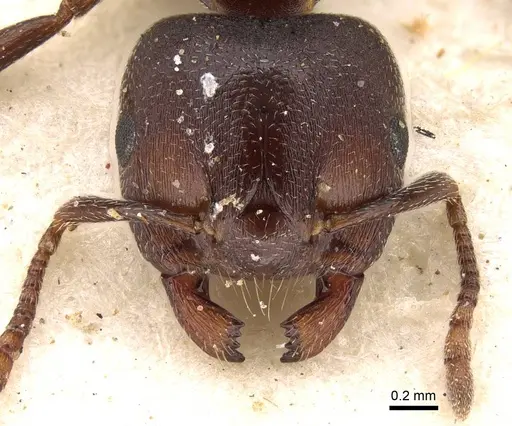
CASENT0912727
Ver en AntWeb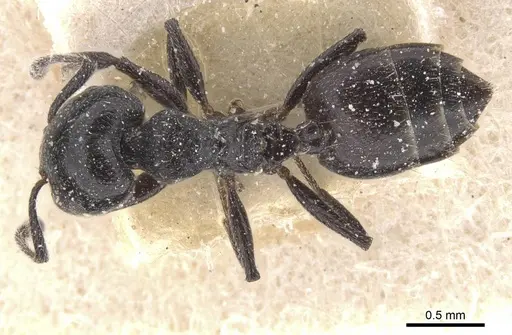
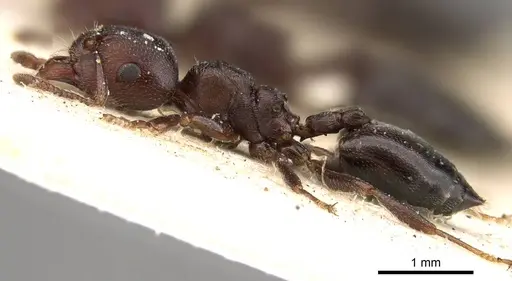
CASENT0914294
Ver en AntWeb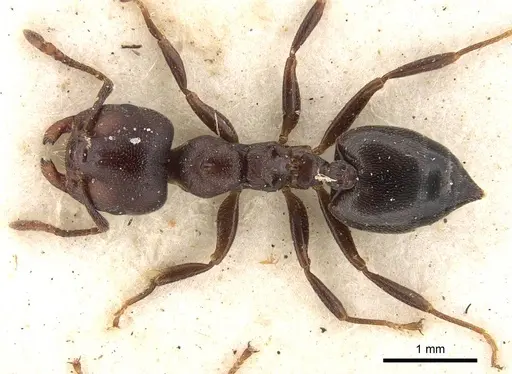
Literatura
Cargando mapa de distribución...Cargando productos...