
Cardiocondyla zoserka
- Nom. cient.
- Cardiocondyla zoserka
- Tribu
- Crematogastrini
- Subfamilia
- Myrmicinae
- Autor
- Bolton, 1982
- Distribución
- Encontrado en 0 países
Introducción
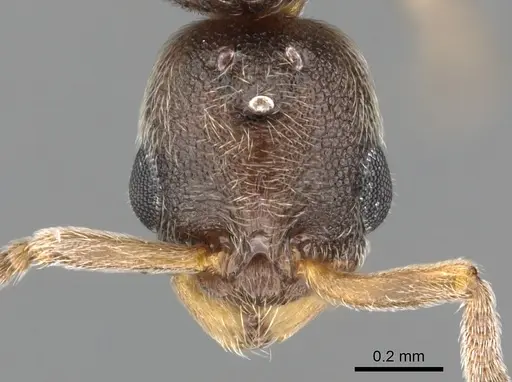
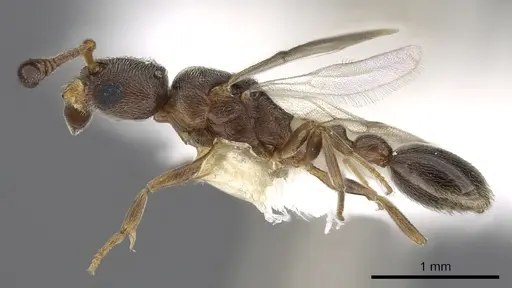
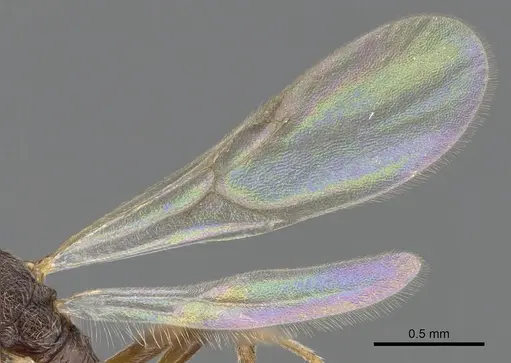
Cardiocondyla zoserka is a small, dark brown to blackish ant native to West Africa, specifically Nigeria and Côte d'Ivoire. Originally described in 1982 as a potential workerless social parasite, Heinze (2019) revealed it to be a free-living species with one of the most bizarre male morphologies known in ants. The males possess uniquely modified antennae with cup-shaped apical segments - no other ant on Earth has antennae even remotely resembling these. Queens and workers have normal antennae, making this an extraordinary case of sexual dimorphism where the males are the strange ones. The species nests in moist floodplain soils in West Africa and is the only known Cardiocondyla that produces exclusively winged males rather than the typical wingless ergatoid males found in all other species in this genus [AntWiki].
Quick Summary
- Difficulty: Expert
- Origin & Habitat: West Africa, Nigeria (near Abuja, Gurara Falls) and Côte d'Ivoire (Comoé National Park). Found in flood plain environments with moist sandy soil at depths 15-30 cm, often on elevated sand heaps with Mimosa shrubs and small Ficus trees, sometimes under pebbles in wet floodplain areas [1].
- Colony Type: Free-living species with functional colonies producing workers, winged males, and winged female sexuals. Closely related to the C. shuckardi species group based on DNA sequences [1][2].
- Size & Growth:
- Queen: 3.3 mm total length [3]
- Worker: size data unavailable
- Colony: Colonies can produce more than 30 winged males. Exact worker count unconfirmed [1]
- Growth: Unknown
- Development: Unknown, no captive development data exists (This species has never been successfully bred in captivity. Development timeline cannot be estimated from available research.)
- Antkeeping:
- Temperature: Warm conditions expected based on West African origin. Foragers remain active at air temperatures above 35°C and soil temperatures above 50°C in the wild, moving between grass blades to avoid hot ground. A range of 24-30°C is a reasonable starting point [1].
- Humidity: Prefers moist conditions, found in flood plain soils at 15-30 cm depth, occasionally in wet sand under pebbles. Maintain substrate consistently moist but not waterlogged [1].
- Diapause: No, this is a tropical species from West Africa with no documented winter dormancy. Keep at warm temperatures year-round [1].
- Nesting: Soil-nesting species. In captivity, a naturalistic setup with moist sandy substrate or a Y-tong/plaster nest with moisture chambers would likely work. The key is maintaining consistent moisture in the substrate.
- Behavior: Males are uniquely active and persistent in courtship behavior, spending nearly 30% of observation time courting females and 25% courting other males. They stridulate (vibrate their gasters) while mounted on females and hold their bizarre cup-shaped antennae near the female's head. Despite extensive observation, complete copulation was never witnessed in captivity, suggesting this species may have specific mating requirements that are difficult to replicate. Workers are small and likely forage actively. Escape prevention should be a priority, they are tiny ants and can escape through small gaps [2].
- Common Issues: no captive breeding success has been documented, this species has never been established in antkeeping, complete mating has never been observed in laboratory conditions, suggesting reproduction may require specific triggers, limited distribution data means exact care requirements are uncertain, tropical species requires warm, stable temperatures year-round, wild-caught colonies may be difficult to locate and obtain, this species belongs to Myrmicinae which have a smear defense mechanism using a flattened stinger
The Bizarre Antennae - What Makes This Species Unique
The males of Cardiocondyla zoserka possess one of the most unusual ant morphologies ever documented. Their antennal funiculi (the flexible segments beyond the scape) feature extremely broad segments 8-10, with the apical segment forming a cup-shaped hollow that extends deep into the segment. Segments 6 and 7 are dorsoventrally flattened, while segments 9 and 10 are strongly concave. This creates a pair of cup-shaped structures at the antenna tips [2]. Research revealed these antennae contain gland cells that likely produce mating pheromones, the numerous pores and invaginations on the ventral surface of segments 7-10 connect to class 3 gland cells with end apparatuses. The gland cells have large nuclei with numerous nucleoli, indicating high metabolic activity. This suggests the males use chemical signaling through their antennae during courtship, with the cup-shaped tips possibly serving to disperse secretions toward the female's antennae [2]. Queens and workers have completely normal antennae, making this an extreme example of sexual dimorphism.
Courtship and Mating Behavior
The courtship behavior of C. zoserka has been studied extensively in laboratory settings, and it's unlike almost any other ant. Males spend about 29.5% of their time courting females and an surprising 25.2% courting other males. During courtship, males climb onto the female's back, grasp her alitrunk with their legs, and stridulate by rapidly vibrating their gaster. They hold their antennae with the cup-shaped tips directed backward toward the female's head without actually touching her. Females initially remain immobile but later try to shake males off by twisting their bodies or moving rapidly through the nest [2]. Despite more than 16 hours of direct observation and 36 hours of snapshot recording, complete copulation was never observed. Females appeared reluctant to mate, pulling their abdomen under their thorax when males approached with extended genitals. Isolating females from males as pupae or presenting females with males from different colonies did not increase mating success. This suggests the species may have very specific mating requirements that are difficult to replicate in captivity [2].
Distribution and Natural Habitat
Cardiocondyla zoserka is known from two main locations in West Africa: Nigeria (near Abuja, Gurara Falls) and Côte d'Ivoire (Comoé National Park). The Côte d'Ivoire populations were found in the flood plain of the Comoé River at approximately 195 meters elevation. Nests were located in moist soil at depths of 15-30 cm, often on elevated heaps of sand where Mimosa shrubs and small Ficus trees grew. Some colonies were found in wet sand under large pebbles in the floodplain itself [1]. Foragers remain active throughout the day even in extreme heat, with air temperatures exceeding 35°C and soil temperatures above 50°C. They avoid the hot ground by moving from grass blade to grass blade [1]. This floodplain habitat suggests the species is adapted to seasonal flooding and requires moist soil conditions.
Why This Species Hasn't Been Kept
Cardiocondyla zoserka has never been successfully maintained in antkeeping collections. The primary reason is that the species was only recognized as a valid, free-living species in 2019, before that, it was thought to be a workerless social parasite. Additionally, the known populations are in remote protected areas of West Africa (Nigeria and Côte d'Ivoire), making wild collection difficult. The courtship studies showed that even when kept in laboratory conditions with established colonies, mating never occurred despite extensive observation. This suggests the species may require specific environmental triggers, colony conditions, or seasonal cues that we don't yet understand. For prospective keepers, this means acquiring and breeding C. zoserka would be an extremely challenging project requiring significant resources and patience [2][1].
Frequently Asked Questions
Is Cardiocondyla zoserka a good species for beginners?
No. This species is not recommended for beginners and may not be suitable for anyone except expert antkeepers with specific scientific interest. It has never been successfully bred in captivity, and complete mating has never been observed even in laboratory settings. The species was only confirmed as a valid free-living ant (rather than a parasite) in 2019, so there is essentially no captive care knowledge base.
Can I keep Cardiocondyla zoserka in a test tube?
While test tubes work for many small Myrmicinae, there is no established protocol for this species. Based on its natural habitat (moist floodplain soil at 15-30 cm depth), a test tube setup would likely need constant moisture. However, since captive breeding has never been achieved, there is no proven housing method. A naturalistic setup with moist sandy substrate may be more appropriate than a dry test tube setup.
How long does it take for Cardiocondyla zoserka to go from egg to worker?
This is unknown. No captive breeding of this species has ever been documented, so there is no development timeline data.
Do Cardiocondyla zoserka ants sting?
Cardiocondyla ants are very small and possess stingers, but the stinger is typically too small to penetrate human skin. They are not considered dangerous to humans. The main defense of this species is escape and hiding rather than stinging.
What do Cardiocondyla zoserka eat?
Their exact diet is unstudied in captivity. In the wild, foragers were collected using cookie crumbs as bait, suggesting they will accept sweet substances and protein. As a Cardiocondyla species, they likely eat small insects, honeydew, and nectar. In captivity, offering standard ant foods like sugar water, honey, and small protein sources (fruit flies, small mealworms) would be a reasonable starting point, though acceptance is unconfirmed.
Can I keep multiple queens together?
This has not been studied. The colony structure (monogyne vs polygyne) of this species is unconfirmed. Combining unrelated queens of this species has not been documented and cannot be recommended.
Do Cardiocondyla zoserka need hibernation?
No. This is a tropical West African species that does not experience cold winters in its native habitat. There is no documented diapause or hibernation requirement. Keep them warm year-round.
Why are the male ants so strange-looking?
The males have uniquely modified antennae with cup-shaped apical segments that contain gland cells. These glands likely produce mating pheromones used during courtship. The bizarre morphology appears to be related to chemical communication, the cup-shaped tips may help disperse secretions toward females during the extended courtship rituals that have been observed. This is the only known Cardiocondyla species with winged males, all other species in the genus produce wingless ergatoid males [2].
Is Cardiocondyla zoserka a parasite?
No. Originally described as a potential workerless social parasite (inquiline) living in nests of related species, Heinze (2019) demonstrated through genetic analysis that C. zoserka is actually a distinct, free-living species. The strange winged individuals were actually males with unusual morphology. It is not parasitic and forms its own functional colonies with workers [1].
Where can I get Cardiocondyla zoserka?
This species is essentially unavailable in the antkeeping hobby. It is known only from remote protected areas in Nigeria and Côte d'Ivoire, and no captive breeding success has ever been achieved. Even scientific colonies maintained in laboratories never successfully bred. Obtaining this species would require field collection in West Africa, which presents significant practical and legal challenges.
Report an Issue
The current care sheet is based fully on literature. See inconsistencies, or something that's incorrect? Please , it will be resolved after review from an admin. Contributing to the blogs tab also helps providing information, to make us be able to further improve the caresheets. Thank you for your support!
References

Esta ficha de cuidados está bajo licencia CC BY-SA 4.0 .
Blogs de la comunidad
CASENT0901750
Ver en AntWeb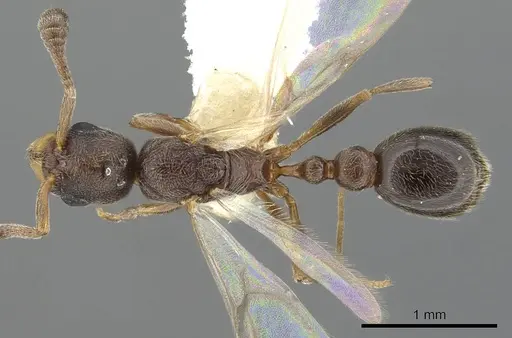
Literatura
Cargando mapa de distribución...Cargando productos...