
Cardiocondyla gallagheri
- Nom. cient.
- Cardiocondyla gallagheri
- Tribu
- Crematogastrini
- Subfamilia
- Myrmicinae
- Autor
- Collingwood & Agosti, 1996
- Distribución
- Encontrado en 0 países
Introducción
Cardiocondyla gallagheri is a tiny desert ant species native to the Arabian Peninsula, first described from Oman in 1996 by Collingwood and Agosti. Workers measure approximately 3.2mm in total length. The head is coarsely sculptured with large shallow punctures and a median band of longitudinal striae. The body is evenly brown with slightly paler legs and antennae. This species can be distinguished from the similar Cardiocondyla emeryi by its sharper, more upright propodeal spines, shallower mesopropodeal furrow, more domed petiole, and wider postpetiole with stronger alitrunk sculpture [AntWiki]. As a desert species from Oman, United Arab Emirates, and Yemen, C. gallagheri inhabits arid sandy environments. The genus Cardiocondyla is known for generalist foraging behavior, with workers scavenging for small insects and honeydew. Some Cardiocondyla species have ergatoid (wingless) males, though this trait has not been documented for C. gallagheri specifically.
Quick Summary
- Difficulty: Medium
- Origin & Habitat: Native to the Arabian Peninsula, specifically Oman, United Arab Emirates, and Yemen [2][3]. Found in desert environments including Wahiba Sands in Oman and Sharjah Desert Park in the UAE [4][3]. This is a hot, arid region with extreme temperatures and very low humidity.
- Colony Type: Colony structure has not been documented for this species.
- Size & Growth:
- Queen: Size data unavailable, queen measurements have not been described in the literature
- Worker: Approximately 3.2mm total length [1]
- Colony: Colony size data unavailable
- Growth: Growth rate is unconfirmed
- Development: Timeline is unconfirmed (No species-specific development data exists. Related Cardiocondyla species typically develop from egg to worker in 6-8 weeks at warm temperatures, but this is not verified for C. gallagheri.)
- Antkeeping:
- Temperature: Keep warm, around 24-28°C. Desert species require heated setups or placement in a warm room. A heating cable on one side of the nest creates a suitable gradient.
- Humidity: Low to moderate, these are desert ants. Keep nest substrate relatively dry with occasional moist areas. Avoid damp conditions that can cause mold.
- Diapause: Diapause requirements are unconfirmed. Desert species may have reduced activity during extreme heat rather than true hibernation. Consider a slight cooling period in winter (15-18°C) but this is not documented.
- Nesting: Natural nesting occurs in sandy desert soil under stones or in shallow ground nests. In captivity, a Y-tong (AAC) nest or plaster formicarium works well. Keep nesting area relatively dry with minimal moisture chambers.
- Behavior: Generalist foragers that scavenge for small insects, dead arthropods, and honeydew. Not aggressive and pose no threat to keepers. Their tiny size makes escape prevention critical, they can squeeze through standard test tube cotton and small gaps. Use fine mesh barriers and ensure all connections are sealed tightly. As Myrmicinae, they have a modified stinger used for smearing venom rather than piercing.
- Common Issues: escape prevention is critical due to their very small size, standard barriers may not contain them, no documented biology means care is based on genus-level inference rather than species-specific research, desert habitat requirements mean they may struggle in humid or poorly ventilated setups, overfeeding can cause mold problems in small colonies, winter cooling requirements are unconfirmed, guesswork may stress colonies
Natural History and Distribution
Cardiocondyla gallagheri is endemic to the Arabian Peninsula, known from Oman, the United Arab Emirates, and Yemen [2]. The species was first described from Wahiba Sands in Oman, collected by M.D. Gallagher in December 1989 [1]. Later records from Sharjah Desert Park in the UAE confirm its presence in sandy desert habitats [4][3].
Nothing is documented about this species' biology in the scientific literature. Based on the genus Cardiocondyla, these ants are small ground-nesting ants that typically nest in sandy or loamy soils, often under stones in desert and arid environments. Workers forage individually or in small groups, scavenging for small insects, dead arthropods, and tending honeydew-producing insects like aphids or scale insects.
Identification and Morphology
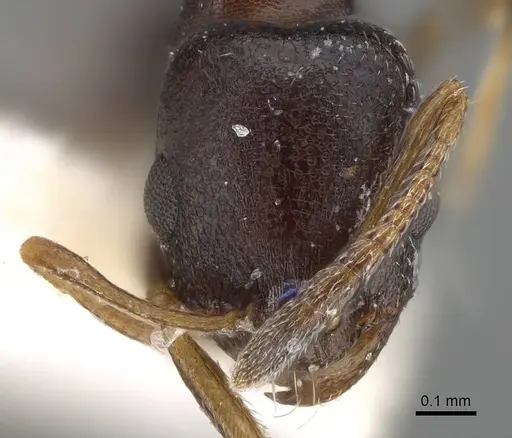
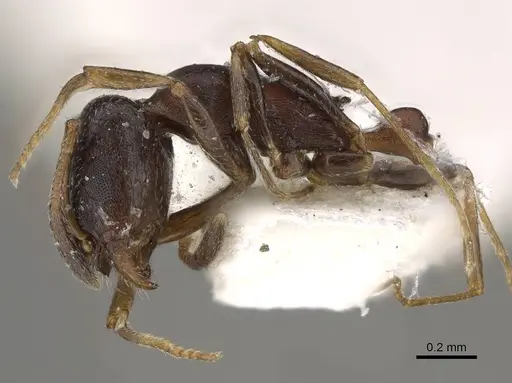
Workers of Cardiocondyla gallagheri measure approximately 3.2mm in total length. The head is coarsely sculptured with large shallow punctures and a distinctive median band of longitudinal striae (fine lines). The eyes are prominent. The propodeal spines are moderately long and sharper than the related C. emeryi, standing more upright. The mesopropodeal furrow is shallow, with the mesonotum meeting the propodeum at an oblique angle. The petiole is a thick rounded dome, longer than wide when viewed from above. The postpetiole is clearly wider than long and nearly twice as wide as the petiole. The body color is evenly brown, with legs and antennae slightly paler than the rest [1].
This species can be distinguished from similar Cardiocondyla emeryi by its sharper propodeal spines, shallower mesopropodeal furrow, more domed petiole, wider postpetiole, and stronger alitrunk sculpture.
Housing and Nest Setup
For keeping Cardiocondyla gallagheri in captivity, provide a small nest setup appropriate for their tiny size. A Y-tong (acrylic ant castle) nest with narrow chambers works well, as does a small plaster formicarium. The nesting area should be kept relatively dry, these are desert ants that prefer arid conditions. Avoid setups with large water reservoirs that create excessive humidity.
Because workers are only about 3mm long, escape prevention is critical. Standard test tube cotton may not contain them, use tight-fitting lids, fine mesh (at least 0.5mm or smaller), and check all connections regularly. A small outworld (foraging area) connected to the nest allows for feeding and observation. Ensure any gaps in tubing are sealed with cotton or appropriate barriers.
Feeding and Diet
In the wild, Cardiocondyla species are generalist foragers that scavenge for small insects, dead arthropods, and honeydew from sap-sucking insects. In captivity, offer small protein sources such as small mealworms, fruit flies, tiny crickets, or other small insects. Sugar sources like diluted honey or sugar water may be accepted, though some Cardiocondyla species show limited interest in sweets.
Feed small amounts every 2-3 days, removing any uneaten prey after 24 hours to prevent mold. Because of their tiny size, even small prey items represent significant meals. Monitor consumption patterns to adjust feeding frequency, overfeeding is a common cause of mold problems in small ant colonies.
Temperature and Seasonal Care
As a desert species from Oman and the UAE, Cardiocondyla gallagheri requires warm conditions. Keep the nest area at 24-28°C for optimal colony activity and development. A small heating cable placed on top of the nest can provide gentle warmth if room temperature is insufficient. Always ensure there is a temperature gradient so ants can move between warmer and cooler areas.
Winter care is not well-documented for this species. Desert ants may experience reduced activity during the cooler winter months rather than true hibernation. A slight temperature reduction to 15-18°C for 2-3 months during winter may be beneficial, but this is based on inference rather than documented requirements. Monitor colony behavior, if workers become less active and cluster together, they may be entering a rest period.
Frequently Asked Questions
How long does it take for Cardiocondyla gallagheri to produce first workers?
The egg-to-worker timeline is not documented for this species. Based on related Cardiocondyla species, expect approximately 6-8 weeks from egg to first worker at optimal temperature (around 26°C). Growth may be slower if temperatures are lower.
What do Cardiocondyla gallagheri ants eat?
They are generalist foragers. Offer small protein sources like tiny insects (fruit flies, small mealworms, pinhead crickets). Sugar water or diluted honey may be accepted but is not a required food source. Remove uneaten prey after 24 hours.
Do Cardiocondyla gallagheri ants sting?
As Myrmicinae ants, they have a modified stinger used for smearing venom onto enemies rather than piercing flesh. The stinger is far too small to penetrate human skin. They are completely harmless to keepers and show no aggressive behavior toward humans.
How big do Cardiocondyla gallagheri colonies get?
Colony size is not documented for this species. Typical Cardiocondyla species produce colonies of several hundred workers at maximum.
Can I keep multiple Cardiocondyla gallagheri queens together?
This is not recommended. Colony structure is unconfirmed for this species, and combining unrelated queens typically results in fighting.
What temperature do Cardiocondyla gallagheri need?
Keep them warm at 24-28°C. This is a desert species from Oman and the UAE that requires heated conditions. A small heating cable on the nest can help maintain appropriate temperatures.
Do Cardiocondyla gallagheri need hibernation?
True hibernation is not documented for this species. Desert ants may experience reduced activity during cooler months. A slight cooling period (15-18°C) for 2-3 months in winter may be appropriate but is not confirmed.
Why are my Cardiocondyla gallagheri escaping?
Their tiny size means they can squeeze through very small gaps. Use fine mesh (0.5mm or smaller), check all connections, and ensure lids fit tightly. Replace cotton barriers with appropriate escape-proof materials.
Is Cardiocondyla gallagheri good for beginners?
This species is rated Medium difficulty. While small and docile, the lack of documented biology means care must be based on genus-level inference. Their tiny size also requires excellent escape prevention.
When should I move Cardiocondyla gallagheri to a formicarium?
Keep them in a test tube setup for the founding stage. Once the colony reaches 20-30 workers and the test tube shows signs of stress (mold, debris buildup), move to a small formicarium or Y-tong nest.
Report an Issue
The current care sheet is based fully on literature. See inconsistencies, or something that's incorrect? Please , it will be resolved after review from an admin. Contributing to the blogs tab also helps providing information, to make us be able to further improve the caresheets. Thank you for your support!
References

Esta ficha de cuidados está bajo licencia CC BY-SA 4.0 .
Blogs de la comunidad
CASENT0922317
Ver en AntWeb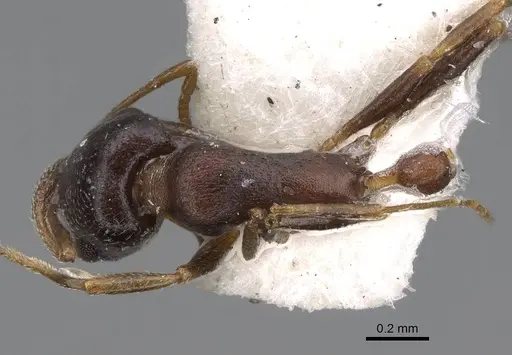
Literatura
Cargando mapa de distribución...Cargando productos...