
Camponotus subtilis
- Nom. cient.
- Camponotus subtilis
- Subgénero
- Tanaemyrmex
- Tribu
- Camponotini
- Subfamilia
- Formicinae
- Autor
- Smith, 1860
- Distribución
- Encontrado en 0 países
Introducción
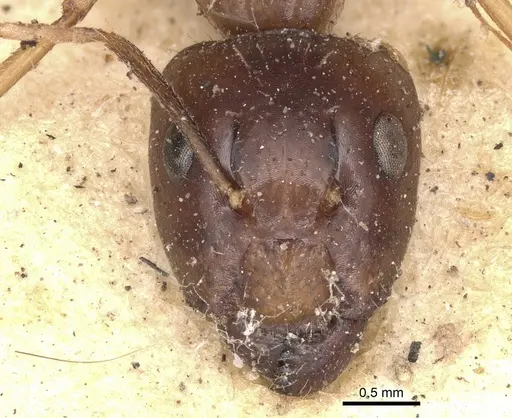
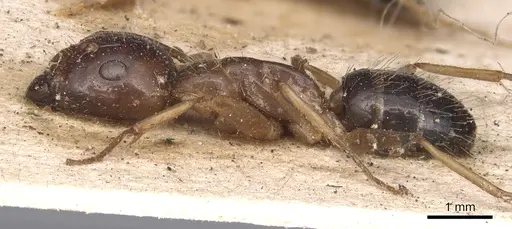
Camponotus subtilis is a moderately small carpenter ant from Bacan Island in the Moluccas (Indonesia). Workers come in two distinct sizes: major workers measure approximately 7-8mm while minor workers are roughly 4-5mm . The head and thorax are reddish-testaceous in color, while the abdomen is black with a subtle bronze or metallic sheen. The petiole (the narrow waist connecting thorax and abdomen) differs between castes - rounded in majors and conical in minors. This species was originally described by Frederick Smith in 1860 from specimens collected by Alfred Russell Wallace on Bacan Island in the Moluccas . This is a poorly documented tropical species with very limited scientific study. As a Camponotus species from the Indonesian archipelago, it likely follows typical carpenter ant patterns, but the lack of detailed research means much of the care information is inferred from genus-level patterns.
Quick Summary
- Difficulty: Medium
- Origin & Habitat: Bacan Island in the Moluccas (Indonesia), part of the Indomalaya region. This is a tropical island environment with warm temperatures year-round [1][2].
- Colony Type: Likely monogyne (single queen colonies) based on typical Camponotus patterns, though colony structure has not been directly documented for this species.
- Size & Growth:
- Queen: Size data unavailable, no confirmed measurements exist for this species
- Worker: Major workers: 7-8mm, Minor workers: 4-5mm [1]
- Colony: Unknown for this species, no documented colony sizes exist
- Growth: Moderate, based on related Camponotus species
- Development: Estimated 6-8 weeks at optimal tropical temperatures, based on typical Camponotus development patterns (Development time is estimated from genus patterns since no species-specific data exists. Tropical species typically develop faster than temperate ones.)
- Antkeeping:
- Temperature: Keep at 24-28°C. As a tropical species from the Indonesian archipelago, they need warm conditions year-round. A heating cable on one side of the nest can create a gentle gradient.
- Humidity: Moderate to high humidity (60-80%). Tropical island environments are humid, keep the nest substrate slightly moist but not waterlogged. Provide a water tube for drinking access.
- Diapause: No, this is a tropical species from Indonesia and does not require hibernation. Keep temperatures consistent year-round.
- Nesting: In captivity, standard formicarium setups work well. Y-tong (AAC) nests, plaster nests, or test tube setups with proper humidity control are all suitable. Provide a dark nesting area as they prefer dim conditions.
- Behavior: Generally calm and not overly aggressive for a carpenter ant. Workers are moderately active foragers. They are omnivorous, accepting both protein sources (insects) and sugar (honey water, sugar water). Escape risk is moderate, these are not tiny ants but standard carpenter ant size, so standard escape prevention measures (fluon barriers, tight-fitting lids) are sufficient.
- Common Issues: tropical species are sensitive to temperature drops, keep warm year-round, limited natural history data means colony behavior may have surprises, humidity control is important, too dry causes brood loss, too wet causes mold, slow founding phase is normal, claustral queens take time to raise first workers, standard carpenter ant escape prevention is adequate but not optional
Housing and Nest Setup
Camponotus subtilis does well in standard ant keeping setups. A test tube setup works well for founding colonies, use a test tube with a water reservoir separated by a cotton plug, providing humidity while keeping the nesting area dry. For established colonies, Y-tong (AAC) nests or plaster nests with hydration systems are suitable options. The key is maintaining proper humidity (60-80%) while allowing for some drier areas within the nest for the ants to regulate their conditions. Provide an outworld for foraging and feeding. Since this is a tropical species, avoid any cooling or drafts, keep the entire setup in a warm room or use a gentle heating method. [2]
Feeding and Diet
Like most Camponotus species, C. subtilis is omnivorous. Offer protein sources such as small insects (fruit flies, small crickets, mealworms), and provide sugar sources regularly (honey water, sugar water). Feed protein 2-3 times per week, and keep sugar water available at all times. Remove uneaten prey after 24-48 hours to prevent mold. Since this species comes from a tropical island environment, they likely have access to honeydew from aphids and scale insects in the wild, sugar sources mimic this natural food. Fresh water should always be available. [2]
Temperature and Seasonal Care
This tropical species requires warm temperatures year-round. Keep the nest area between 24-28°C. Unlike temperate Camponotus species that need hibernation, C. subtilis does not require a diapause period. Temperature drops below 20°C can stress colonies and slow or stop brood development. Use a heating cable or heating mat on one side of the nest to create a gentle thermal gradient if your room temperature is below 24°C. Place the heating on top of the nest, not underneath, to avoid excessive drying. Monitor colony activity, if workers cluster near the heat source, increase temperature slightly, if they avoid it, reduce heat. [2]
Colony Development and Growth
As a claustral species, the queen will seal herself into a chamber and not leave to forage during the founding phase. She relies entirely on her stored fat reserves to lay eggs and feed the first brood. The first workers (nanitics) are typically smaller than normal workers and may take 6-8 weeks to emerge at optimal temperatures. After the first workers arrive, the colony enters a growth phase where the queen continues laying eggs and workers take over foraging duties. Growth rate is moderate. Be patient during founding, this is the most vulnerable stage and many colonies fail here due to disturbance or improper conditions. [2]
Frequently Asked Questions
How long does it take for Camponotus subtilis to get their first workers?
Expect 6-8 weeks from founding to first workers at optimal temperatures (25-28°C). This is typical for Camponotus species. The queen seals herself in and raises the first brood alone, patience is key during this stage.
Do Camponotus subtilis ants need hibernation?
No. This is a tropical species from Indonesia and does not require hibernation or diapause. Keep them warm year-round at 24-28°C.
What do Camponotus subtilis eat?
They are omnivorous. Offer small insects (fruit flies, small crickets, mealworms) as protein 2-3 times per week, and keep sugar water or honey water available at all times. Remove uneaten prey after a day or two.
How big do Camponotus subtilis colonies get?
Colony size is not documented for this species. Based on typical Camponotus patterns, expect slow to moderate growth over time. It takes months to a year to reach significant numbers.
Are Camponotus subtilis good for beginners?
This species is rated Medium difficulty. While they are generally hardy once established, the lack of species-specific documentation means there may be unexpected challenges. They are more forgiving than some exotic species but require attention to tropical temperature and humidity conditions.
When should I move Camponotus subtilis to a formicarium?
Move to a larger setup when the colony reaches around 30-50 workers or when the test tube becomes cramped. Make sure the new setup has appropriate humidity control and is escape-proof. Acclimate slowly by connecting the formicarium to the test tube and allowing them to explore on their own.
What size are Camponotus subtilis workers?
This species has two worker castes. Major workers are approximately 7-8mm, while minor workers are roughly 4-5mm [1]. The size difference is noticeable in established colonies.
Where is Camponotus subtilis found in the wild?
This species is native to Bacan Island in the Moluccas (Maluku Islands), Indonesia. It was originally described from specimens collected by Alfred Russell Wallace in the 19th century [1][2].
Can I keep multiple Camponotus subtilis queens together?
This is not recommended. While some Camponotus species can be polygyne, there is no data on this for C. subtilis. It is likely monogyne (single queen), so combining unrelated queens is risky and may result in fighting.
Report an Issue
The current care sheet is based fully on literature. See inconsistencies, or something that's incorrect? Please , it will be resolved after review from an admin. Contributing to the blogs tab also helps providing information, to make us be able to further improve the caresheets. Thank you for your support!
References

Esta ficha de cuidados está bajo licencia CC BY-SA 4.0 .
Blogs de la comunidad
CASENT0901890
Ver en AntWeb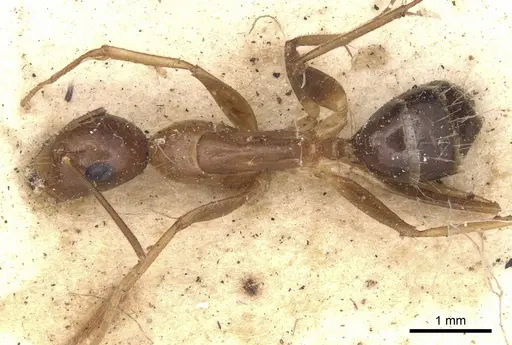
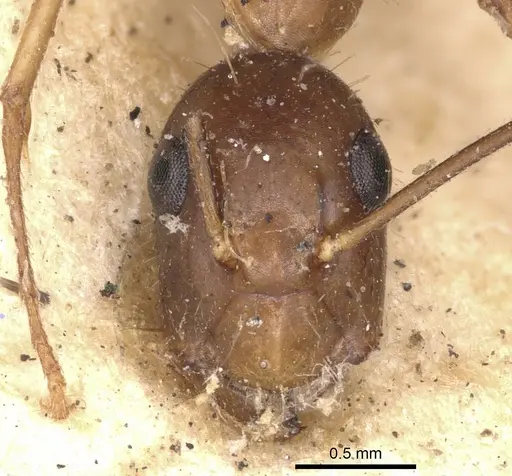
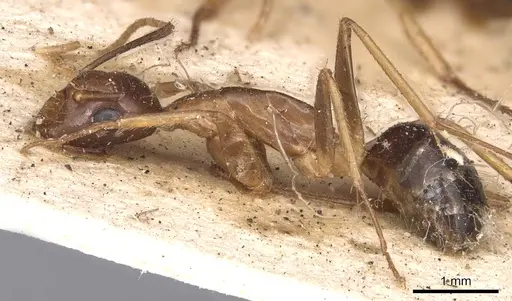
CASENT0901891
Ver en AntWeb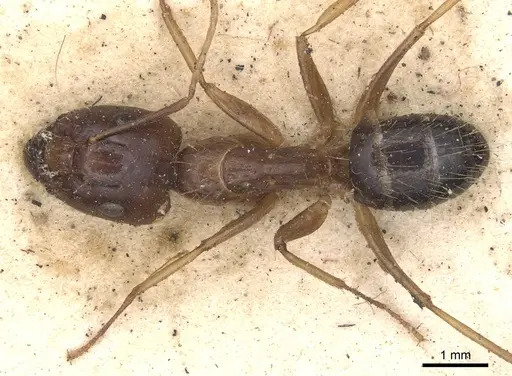
Literatura
Cargando mapa de distribución...Cargando productos...