
Camponotus sinaiticus
- Nom. cient.
- Camponotus sinaiticus
- Subgénero
- Tanaemyrmex
- Tribu
- Camponotini
- Subfamilia
- Formicinae
- Autor
- Ionescu-Hirsch, 2010
- Distribución
- Encontrado en 0 países
Introducción
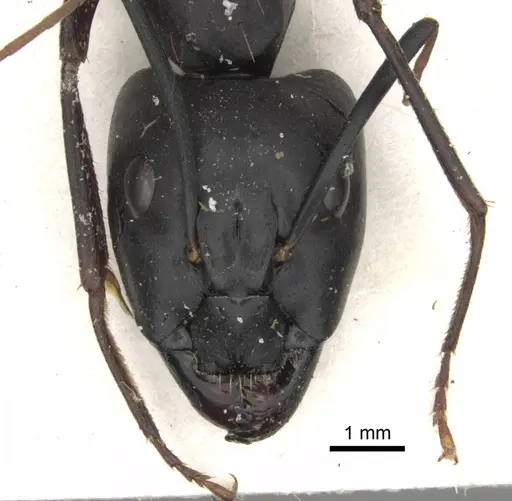
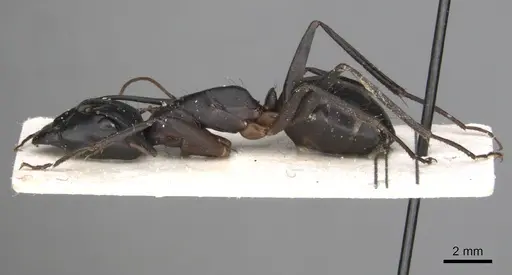
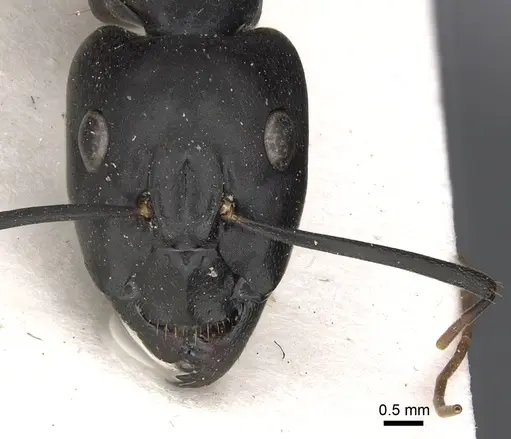
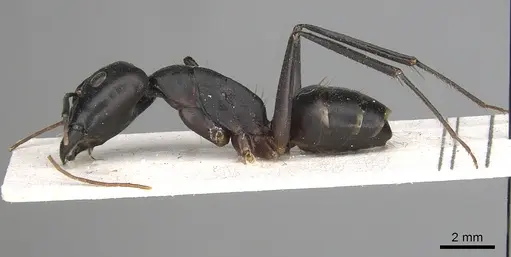
Camponotus sinaiticus is a large, dark species belonging to the subgenus Tanaemyrmex. Workers range from 9.1-15.2mm in total length, with major workers being completely black to dark brown and minor workers having a black head with dark brown gaster and pale brown mesosoma [AntWiki]. This species has notably long scapes and legs relative to its head size, and sports a prismatic hind tibia with a row of bristles underneath. The body has a finely reticulate-punctate, matte sculpture with sparse erect setae. Found only in the Sinai region of Egypt, Israel, and Jordan, this ant is endemic to these Middle Eastern areas . The species was formally described in 2010, and remarkably, almost nothing has been documented about its biology in the scientific literature - making it a true mystery species for antkeepers.
Quick Summary
- Difficulty: Unknown
- Origin & Habitat: Desert and arid regions of the Sinai Peninsula (Egypt), southern Israel (Dead Sea area and southern Negev), and Jordan [4][2]. This is a desert-dwelling species adapted to hot, dry conditions.
- Colony Type: Unconfirmed, likely single-queen colonies based on typical Camponotus patterns, but no documented colony structure exists for this species.
- Size & Growth:
- Queen: Size data unavailable, no documented queen measurements exist for this species. Based on genus patterns for large Tanaemyrmex species, queens likely exceed 15mm.
- Worker: 9.1-15.2mm total length [1]
- Colony: Unknown, no colony size data exists
- Growth: Unknown, no development data exists
- Development: Unconfirmed, typical Camponotus development is 6-8 weeks at optimal temperature, but this has not been studied in this species (No direct measurements exist. Estimates based on genus-level data for related Tanaemyrmex species.)
- Antkeeping:
- Temperature: Inferred: 22-28°C based on desert habitat preferences of related Tanaemyrmex species. Provide a temperature gradient allowing ants to self-regulate.
- Humidity: Inferred: Low to moderate humidity (30-50%), desert species adapted to dry conditions. Allow nest substrate to dry between waterings.
- Diapause: Unknown, desert species may have reduced activity in winter but specific diapause requirements unstudied
- Nesting: Inferred: Likely nests in soil or under stones in natural habitat. Y-tong (AAC) nests or plaster nests with dry to moderately damp substrate would likely work. Avoid overly humid conditions.
- Behavior: Behavior is unstudied. Based on genus patterns, expect typical Camponotus temperament, generally non-aggressive but will defend the nest if threatened. Likely nocturnal or crepuscular foraging patterns typical of desert ants. Major workers are large and can deliver a moderately painful bite combined with formic acid spray. Escape risk is moderate due to large worker size, standard barriers should suffice.
- Common Issues: no documented biology means all care is based on genus inference, results may vary, desert species may be sensitive to excess humidity leading to fungal problems, winter care is completely unknown, proceed with caution, slow growth typical of large Camponotus species may test keeper patience, wild-caught colonies may have unknown parasites or diseases
Discovery and Taxonomy
Camponotus sinaiticus was formally described in 2010 by Ionescu-Hirsch from specimens collected across the Sinai Peninsula. The species name refers to the Sinai Desert, which is its main known distribution area. It belongs to the subgenus Tanaemyrmex, a group of large, often desert-dwelling Camponotus ants. The type specimens were collected from various wadis (dry riverbeds) in the Sinai region of Egypt, with additional specimens from Israel and Jordan. The species is characterized by its long scape and legs relative to head width, and a prismatic hind tibia with a ventral row of bristles. It resembles dark specimens of Camponotus fellah but can be distinguished by its longer scapes and legs. [1]
Natural Habitat and Distribution
This is a truly limited-range species found only in the Middle East. Populations are known from the Sinai Peninsula in Egypt, the Dead Sea region and southern Negev in Israel, and the Karak region of Jordan [4][2][3]. The species is considered endemic to this region, meaning it's found nowhere else on Earth. The habitat consists of desert wadis and arid regions, harsh, hot, and dry environments. Specimens have been collected from wadi environments, which are typically dry riverbeds that only flow after rare rainfall events. These areas experience extreme temperatures and very low humidity.
Size and Morphology
Workers of Camponotus sinaiticus are large, measuring 9.1-15.2mm in total length [1]. Major workers have head lengths of 1.99-4.14mm with head widths of 1.45-3.75mm, while minor workers are significantly smaller with distinctly elongated heads. The scapes are notably long, extending past the occipital margin by about one-third of the scape length in major workers and by more than half in minor workers. The legs are long and strongly compressed laterally, with the hind tibia being prismatic (triangular in cross-section) with a longitudinal ridge. The body has a matte, finely reticulate-punctate sculpture. Coloration varies: major workers are completely black to dark brown with brown antennal flagellum and coxae, while minor workers have black heads and scapes, dark brown gasters, and pale brown mesosoma and legs.
Housing and Nesting
Since nothing is known about this species' nesting preferences in captivity, we must infer from related desert-dwelling Camponotus species. A Y-tong (AAC) nest or plaster nest works well for large Camponotus species. Given the desert origin, err on the side of drier conditions rather than overly humid. The nest should have chambers scaled to their large size. Provide a water tube for humidity but don't saturate the nest material. In the outworld, include a shallow water dish and offer protein foods. Escape prevention is important though not as critical as for tiny species, standard fluon barriers on smooth surfaces should suffice given their large size.
Feeding
No specific dietary studies exist for this species. Based on typical Camponotus behavior, they are likely omnivorous, accepting both sugar sources (honey water, sugar water) and protein (insects, mealworms, crickets). As a large desert species, they may have higher protein requirements for colony growth. Offer a varied diet: protein 2-3 times per week and sugar water constantly available. Remove uneaten prey after 24-48 hours to prevent mold. Given their large size, they can handle larger prey items than smaller ant species.
Temperature and Seasonal Care
This species comes from a desert environment with extreme temperatures. Based on related Tanaemyrmex species, aim for a temperature range of 22-28°C in the nest area, with a gradient allowing the ants to choose their preferred temperature. A heating cable on one side of the nest can create this gradient. During winter, room temperature may be sufficient, but reduced activity is expected. Do not overheat, desert ants are adapted to warmth but not extreme heat. Monitor colony behavior: if workers cluster away from the heat source, reduce temperature, if they cluster near it, increase slightly. The specific diapause requirements are unknown, proceed conservatively with slight temperature reduction (15-18°C) during winter months rather than full hibernation.
Frequently Asked Questions
How long does it take for Camponotus sinaiticus to produce first workers?
The egg-to-worker timeline is unconfirmed for this species as no biological studies exist. Based on typical Camponotus development, expect 6-8 weeks at optimal temperature (around 24-26°C). However, this is an estimate only, actual development time may vary.
What do Camponotus sinaiticus ants eat?
No species-specific dietary data exists. Based on genus patterns, offer both sugar sources (honey water, sugar water) and protein (insects like mealworms, crickets, or other small arthropods). Feed protein 2-3 times per week and keep sugar water available at all times.
Are Camponotus sinaiticus good for beginners?
This species cannot be recommended for beginners due to the complete lack of documented care information. All husbandry advice is based on inference from related species. If you're experienced with large Camponotus species and comfortable experimenting, it can be an interesting project. For beginners, choose species with established care protocols.
What temperature should I keep Camponotus sinaiticus at?
Based on desert habitat inference, aim for 22-28°C with a temperature gradient. Start around 24-26°C and adjust based on colony behavior. A heating cable on part of the nest can create the gradient ants need to self-regulate.
How big do Camponotus sinaiticus colonies get?
Colony size is unknown, no documented colony sizes exist for this species. Based on typical large Camponotus species, colonies likely reach several hundred to perhaps over a thousand workers over several years.
Can I keep multiple queens together?
Colony structure is unconfirmed for this species. Typical Camponotus are monogyne (single queen), but polygyny has been observed in some species. Without specific data, keeping multiple unrelated queens together is not recommended.
Do Camponotus sinaiticus need hibernation?
Diapause requirements are completely unknown. As a desert species from a relatively mild climate (Sinai/Israel/Jordan), they may not require true hibernation. A slight temperature reduction to 15-18°C during winter months is a conservative approach.
What humidity level do Camponotus sinaiticus need?
No specific data exists. As a desert species, they likely prefer drier conditions, aim for 30-50% humidity. Allow the nest substrate to dry partially between waterings. Avoid the constantly damp conditions that work for tropical species.
When will nuptial flights occur for Camponotus sinaiticus?
Nuptial flight timing is completely unstudied. Based on collection data from the type specimens (March, April, July, September), flights may occur during warm months, but this is speculative. No specific flight data exists for this species.
Report an Issue
The current care sheet is based fully on literature. See inconsistencies, or something that's incorrect? Please , it will be resolved after review from an admin. Contributing to the blogs tab also helps providing information, to make us be able to further improve the caresheets. Thank you for your support!
References

Esta ficha de cuidados está bajo licencia CC BY-SA 4.0 .
Blogs de la comunidad
CASENT0281013
Ver en AntWeb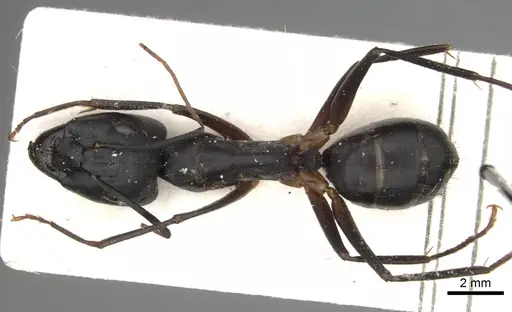
CASENT0281033
Ver en AntWeb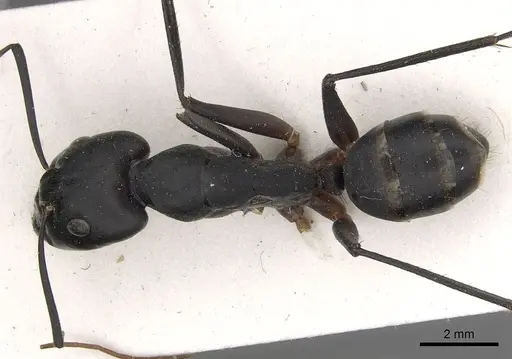
Literatura
Cargando mapa de distribución...Cargando productos...