
Camponotus erythrocephalus
- Nom. cient.
- Camponotus erythrocephalus
- Tribu
- Camponotini
- Subfamilia
- Formicinae
- Autor
- Clouse, 2007
- Distribución
- Encontrado en 0 países
Introducción
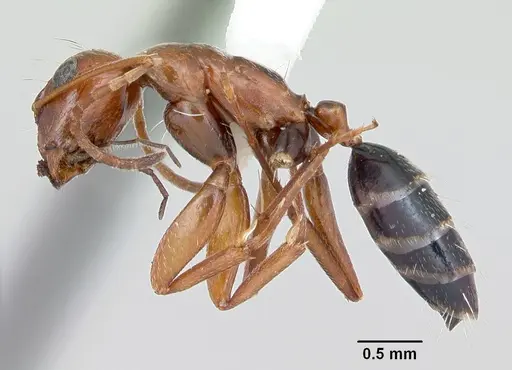
Camponotus erythrocephalus is a small carpenter ant known only from Yap Island in the Federated States of Micronesia. Workers measure 3.95-5.15mm total length with a distinctive appearance: a reddish-orange head and mesosoma contrasting sharply against a mostly black gaster that features four grey stripes along the abdominal segments . The species name 'erythrocephalus' comes from Latin meaning 'red-headed,' perfectly describing this ant's most striking feature . The flattened petiole and monochromatic reddish anterior combined with the contrasting black gaster make this species visually unique among Micronesian ants . This is an extremely rare species in the antkeeping hobby, having only been described in 2007 and known from just a handful of worker specimens collected on Yap Island . The limited distribution and poor dispersal ability suggest it is a true island endemic . As a Camponotus species, it likely shares typical carpenter ant behaviors including nesting in wood and tending scale insects for honeydew, though these aspects remain unconfirmed due to the species' rarity and recent description.
Quick Summary
- Difficulty: Unknown, Insufficient data for difficulty rating
- Origin & Habitat: Yap Island, Federated States of Micronesia (tropical Pacific island near 9°N latitude) [1][2]
- Colony Type: Unconfirmed, only workers have been described, colony structure unknown
- Size & Growth:
- Antkeeping:
- Temperature: Unconfirmed, likely needs warm conditions similar to other tropical Pacific Camponotus species. Based on Yap Island's climate (around 27°C year-round), start around 24-28°C and observe colony activity.
- Humidity: Unconfirmed, likely requires moderate to high humidity typical of tropical island environments. Keep nest substrate moist but not waterlogged.
- Diapause: Unlikely, tropical species from near the equator experiences minimal seasonal temperature variation. No diapause expected.
- Nesting: Unconfirmed, likely nests in rotting wood like other Camponotus species. A Y-tong (AAC) nest or plaster nest with some moisture retention would be appropriate starting points.
- Behavior: Undocumented in captivity. Based on genus typical behavior, likely moderately docile with well-developed workers capable of defending the colony. Escape risk is moderate given worker size of 4-5mm, standard barrier methods should suffice. As a tropical species, likely active year-round without winter dormancy.
- Common Issues: this species has no established care guidelines, keepers will be pioneers in keeping this ant, no queen description exists, so obtaining a founding queen may be extremely difficult, wild-caught colonies may be impossible to obtain due to the species' limited range, tropical requirements mean temperature must be maintained consistently warm year-round, lack of documented diet acceptance means experimental feeding will be necessary
Species Discovery and Rarity
Camponotus erythrocephalus was only described in 2007 by Ronald M. Clouse, making it one of the more recently described ant species available in the hobby [1]. The species is known from only a handful of worker specimens collected on Yap Island in the Federated States of Micronesia [1]. Yap Island is part of the Caroline Islands chain in the western Pacific, located near 9°N latitude. The fact that this species has only been found on a single island suggests it has poor dispersal abilities and is likely a true island endemic [1]. The type specimens were collected between 1946 and 1950, with the original description published nearly 60 years after the last collection [1][2]. This species is not considered part of a 'difficult' species complex, meaning identification should be straightforward if you can obtain verified specimens [3].
Identification and Appearance
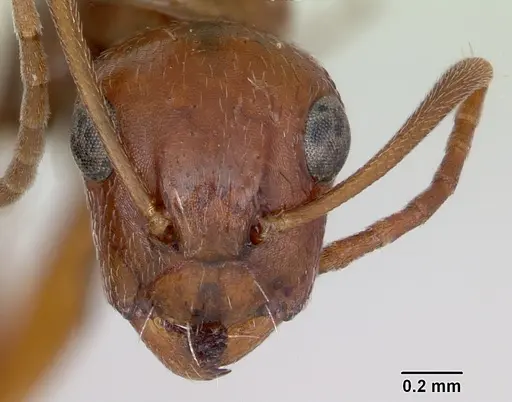
Workers of Camponotus erythrocephalus are distinctive and unlikely to be confused with other species. The most striking feature is the contrast between the reddish-orange head and mesosoma against the mostly black gaster [1]. The gaster also displays four grey stripes created by whitish-clear strips along the posterior edge of each gastral tergite, these stripes are slightly wider than the maximum width of the antenna scape [1]. Workers measure 3.95-5.15mm total length, placing them in the small to medium range for carpenter ants [1]. The petiole is flattened and about 1.5 times longer than tall [1]. The head tapers slightly toward the mandibles when viewed from the front, and the 12-segmented antennae have scapes that extend beyond the vertex by more than half their length [1]. The body is mostly shining with slight puncturing on the head and shallow whorls elsewhere [1].
Housing and Nesting
Since this species has never been kept in captivity, housing recommendations are based on what likely works for a tropical Pacific Camponotus species. A Y-tong (acrylic and cotton) nest or a plaster nest with some moisture retention would be appropriate starting points, as these allow you to maintain both warmth and humidity. The nest should have chambers scaled to the worker size of 4-5mm. For the outworld, a standard formicarium setup with a water reservoir for humidity works well. Given the species' tropical origin, avoid any cooling or drafty placements. Since nothing is known about their specific nesting preferences, providing a choice between slightly moister and drier areas within the nest lets the colony self-regulate. Escape prevention should be standard, while not tiny, these ants can climb smooth surfaces, so Fluon barriers on the rim of the outworld are recommended.
Feeding and Diet
The natural diet of Camponotus erythrocephalus has not been documented. Like other Camponotus species, they likely consume honeydew from sap-sucking insects, nectar from plants, and protein from small insects. For captive care, offer a standard ant diet: sugar water or honey as an energy source, and protein sources like mealworms, crickets, or other small insects. Given their small worker size (under 5mm), prey items should be appropriately sized, small fruit flies, pinhead crickets, or small mealworm pieces work well. Since this is an unstudied species, acceptance of various foods may require experimentation. Sugar water should always be available, with protein offered 2-3 times per week. Remove uneaten prey after 24-48 hours to prevent mold.
Temperature and Seasonal Care
Camponotus erythrocephalus originates from Yap Island, which has a tropical climate with temperatures around 26-28°C year-round and high humidity. No diapause or winter rest is expected given this species' proximity to the equator. Keep the nest area at a warm temperature, ideally in the 24-28°C range. A heating cable on one side of the nest can create a temperature gradient, allowing the colony to self-regulate. Place the heating element on top of the nest rather than underneath to avoid excessive drying. Room temperature in most homes (20-24°C) may be acceptable, but warmer conditions likely support better colony growth. Maintain moderate to high humidity, think damp tropical forest floor rather than dry conditions. A water reservoir connected to the nest helps maintain humidity levels.
Challenges and Future Keeping
Camponotus erythrocephalus represents both an exciting opportunity and a significant challenge for antkeepers. This species has never been documented in the antkeeping hobby, meaning anyone who obtains and keeps them successfully will be pioneering their care. The primary challenges include: obtaining verified colonies (the species is only known from Yap Island), no established care guidelines, and the queen caste has never been described, so founding colonies may be essentially impossible to obtain. If you do obtain workers, the best approach is to treat this as an experimental species: start with conditions suitable for tropical Camponotus (warm, humid), offer varied foods to test acceptance, and document everything. Sharing your findings with the antkeeping community would help establish proper care guidelines for this rare species. The lack of data also means this species could potentially be kept by experienced keepers interested in contributing to our knowledge of poorly studied ants.
Frequently Asked Questions
How do I care for Camponotus erythrocephalus ants?
Care guidelines have not been established for this species since it has never been kept in captivity. Based on its origin from Yap Island in Micronesia, provide warm temperatures (24-28°C), moderate to high humidity, and a nest that retains some moisture. Feed sugar water and small protein sources like fruit flies or small mealworms. This is an experimental species where keepers will need to develop care protocols through observation.
What do Camponotus erythrocephalus ants eat?
Their natural diet is unconfirmed. In captivity, offer sugar water or honey as an energy source and small insects (fruit flies, small crickets, mealworm pieces) for protein. Start with standard ant foods and observe what the colony accepts. Their small worker size (under 5mm) means prey should be appropriately sized.
Where is Camponotus erythrocephalus found?
This species is known only from Yap Island in the Federated States of Micronesia, located in the western Pacific Ocean. It appears to be a true island endemic with poor dispersal abilities [1].
How big do Camponotus erythrocephalus workers get?
Workers measure 3.95-5.15mm in total length, making them small to medium-sized carpenter ants [1].
Do Camponotus erythrocephalus ants need hibernation?
No hibernation is expected. This is a tropical species from near the equator (Yap Island, ~9°N latitude) where temperatures remain warm year-round. Keep them active and warm throughout the year.
What temperature do Camponotus erythrocephalus need?
Based on Yap Island's tropical climate (around 27°C year-round), aim for 24-28°C. Start in this range and adjust based on colony activity. If workers cluster near the warm side, increase slightly, if they avoid heated areas, room temperature may suffice.
Can I keep multiple queens together?
Unknown. The colony structure of this species has not been documented, even the queen caste has not been described. No information exists about whether they are single-queen (monogyne) or multi-queen (polygyne) colonies.
How long does it take for Camponotus erythrocephalus to develop from egg to worker?
Unknown, this species has never been studied in captivity. Based on typical Camponotus development patterns, expect approximately 6-10 weeks from egg to first worker at warm temperatures, but this is only an estimate.
Are Camponotus erythrocephalus good for beginners?
No. This species is not recommended for beginners due to: extreme rarity (only known from Yap Island), no established care guidelines, and likely extreme difficulty in obtaining a colony. Even experienced keepers will face challenges with this species.
When do Camponotus erythrocephalus have nuptial flights?
Unknown, nuptial flight timing has not been documented for this species. As a tropical island species near the equator, seasonal timing may differ from temperate ants. The species was only described in 2007, so basic biology remains poorly understood.
Why is Camponotus erythrocephalus so rare?
This species appears to be a true island endemic with poor dispersal abilities, known only from Yap Island in Micronesia [1]. It was only described in 2007 despite specimens being collected decades earlier. The limited distribution and the fact that only a handful of specimens exist make this one of the rarest ant species in the hobby.
Report an Issue
The current care sheet is based fully on literature. See inconsistencies, or something that's incorrect? Please , it will be resolved after review from an admin. Contributing to the blogs tab also helps providing information, to make us be able to further improve the caresheets. Thank you for your support!
References

Esta ficha de cuidados está bajo licencia CC BY-SA 4.0 .
Blogs de la comunidad
CASENT0173108
Ver en AntWeb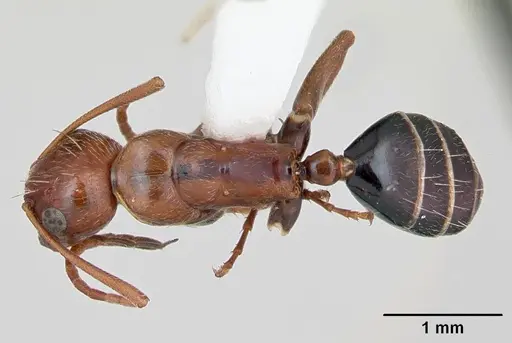
Literatura
Cargando mapa de distribución...Cargando productos...