
Brachymyrmex iridescens
- Nom. cient.
- Brachymyrmex iridescens
- Tribu
- Myrmelachistini
- Subfamilia
- Formicinae
- Autor
- Ortiz-Sepúlveda <i>et al.</i>, 2019
- Distribución
- Encontrado en 0 países
Introducción
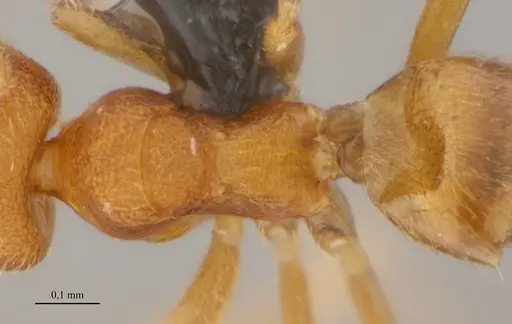
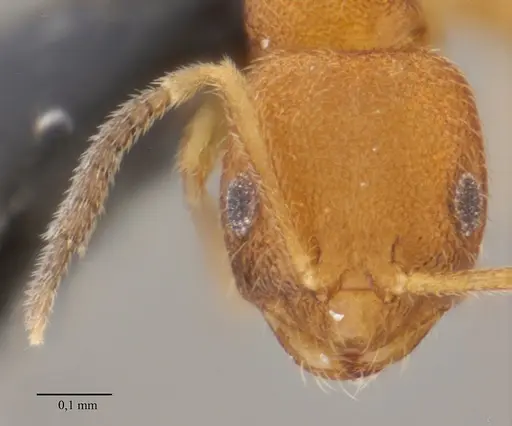
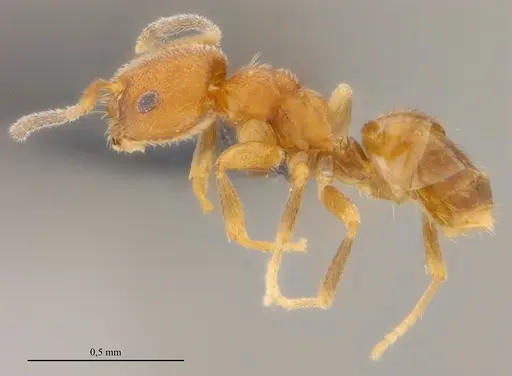
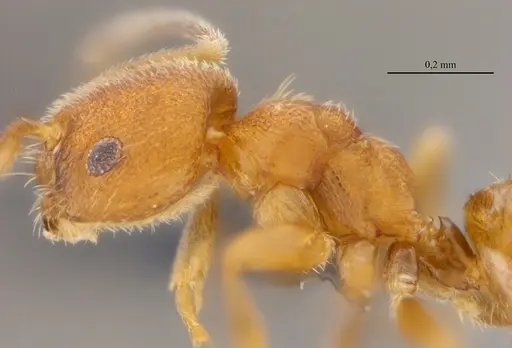
Brachymyrmex iridescens is a tiny, recently described ant species native to southern Brazil and northeastern Argentina. Workers are among the smaller ants, though exact total length is not documented in scientific literature. The species gets its name from a distinctive iridescent sheen visible under stereoscope illumination - a feature that helps distinguish it from similar Brachymyrmex species found in Central America. Their body is uniformly brownish with a finely textured head and thorax (alveolate sculpture), while the abdomen appears smooth and shiny. This species was formally described in 2019, which means there is no biological data available about how they live and behave in the wild [AntWiki].
Quick Summary
- Difficulty: Expert
- Origin & Habitat: Southern Brazil (Santa Catarina, Paraná) and northeastern Argentina (Misiones) in the Neotropical region. The specific natural habitat is unknown [1][2].
- Colony Type: Unconfirmed. Colony structure for this specific species has not been documented in scientific literature [1].
- Size & Growth:
- Queen: Undescribed, no queen caste has been documented for this species [1].
- Worker: Size data unavailable, the scientific literature provides head length (0.37-0.43mm) and mesosoma length (0.39-0.42mm) measurements but not total body length. Based on Brachymyrmex genus patterns, workers are likely around 2mm total length [1][2].
- Colony: Unknown, no colony size data exists for this species [1].
- Growth: Unknown, no development data exists [1].
- Development: Unknown, no development data exists for this species. (No direct measurements of egg-to-worker development exist.)
- Antkeeping:
- Temperature: Unknown for this species. Based on their origin in subtropical Brazil/Argentina, aim for warm conditions around 22-26°C and observe colony activity.
- Humidity: Unknown. Brachymyrmex species typically prefer moderate humidity. Keep nest substrate lightly moist but not waterlogged, with some drier areas available.
- Diapause: Unknown whether this species requires hibernation. Given their subtropical origin in Brazil and Argentina, they likely do not need a true diapause but may reduce activity during cooler periods.
- Nesting: No specific nesting data exists. Based on genus patterns, they likely nest in small cavities under stones, in leaf litter, or in shallow burrows. In captivity, a small test tube setup or Y-tong nest with appropriately scaled chambers would be suitable.
- Behavior: Behavior is unstudied. Based on genus patterns, Brachymyrmex iridescens is likely a docile, non-aggressive species that forages quietly in leaf litter and may tend aphids for honeydew. They are tiny and may be overlooked by keepers due to their small size. Escape prevention should be a priority given their minute size, they can squeeze through remarkably small gaps. No stinging behavior is known for this genus.
- Common Issues: complete lack of biological data makes captive care highly speculative, tiny size creates significant escape risk, use fine mesh and tight-fitting barriers, no established husbandry guidelines exist, this would be a pioneering species to keep, wild-caught colonies may harbor unknown parasites or pathogens, slow growth and small colony sizes mean progress is difficult to observe
Discovery and Identification
Brachymyrmex iridescens was formally described in 2019 by Ortiz-Sepulveda and colleagues through a comprehensive molecular and morphological study of the genus. The species name 'iridescens' refers to its most distinctive feature, a conspicuous iridescent sheen visible when examined under stereoscope illumination. This iridescence helps separate it from similar species like Brachymyrmex santschii, which is found in Costa Rica and Panama instead. The type specimens were collected from Chapecó in Santa Catarina, Brazil, in July 1960, but sat in museum collections until modern taxonomic methods helped recognize them as a new species [1][2].
Distribution and Range
This species is currently known only from a limited range in the southern Neotropics, specifically southern Brazil (states of Santa Catarina and Paraná) and northeastern Argentina (Misiones province). This relatively restricted distribution contrasts with some other Brachymyrmex species that have broader ranges. The habitats in these areas are characterized by subtropical forests with moderate humidity. The specific microhabitats these ants use within these forests remain undocumented [1][2].
Why This Species Is So Challenging to Keep
Brachymyrmex iridescens represents one of the most challenging ant species to keep in captivity precisely because almost nothing is known about its biology. The scientific literature explicitly states that nothing is known about the biology of this species, we do not know what they eat, how they found colonies, when they have nuptial flights, or what conditions they need to thrive. This means keeping them would be entirely experimental. There are no care guides, no established protocols, and no experienced keepers to turn to for advice. For these reasons, this species is recommended only for expert antkeepers who are specifically interested in pioneering husbandry for poorly studied species [1][3].
What We Can Infer About Care
While direct care information does not exist, we can make educated guesses based on what we know about the genus Brachymyrmex and related Formicinae ants. The genus Brachymyrmex contains small, generally cryptic ants that are not aggressive and tend to form small colonies. As a Formicinae member, this species may have claustral founding, but this is not confirmed. They probably accept a typical ant diet of sugar sources and small protein items, though exact preferences are unknown. Their tiny size means they likely prefer humid, stable conditions and may be sensitive to drying out. Start with standard small-ant setups (test tubes, small Y-tong nests) and adjust based on colony response. If you attempt to keep this species, document everything, your observations could contribute to future care guides [3].
Frequently Asked Questions
Is Brachymyrmex iridescens a good species for beginners?
No. This species is not recommended for beginners or even intermediate antkeepers. Biology is completely unknown, no care protocols exist, and keeping them would be entirely experimental.
What do Brachymyrmex iridescens ants eat?
Unknown, no feeding observations have been documented for this species. Based on genus patterns, they likely accept sugar sources (honey, sugar water) and small protein items like fruit flies or pinhead crickets, but this is not confirmed.
How long does it take for Brachymyrmex iridescens to develop from egg to worker?
Unknown, no development data exists for this species.
Can I keep multiple Brachymyrmex iridescens queens together?
Unknown, colony structure has not been documented. Combining unrelated queens is not recommended given the lack of information.
What size colony does Brachymyrmex iridescens reach?
Unknown, no colony size data exists for this species.
Do Brachymyrmex iridescens need hibernation?
Unknown, diapause requirements have not been studied. Given their subtropical origin in Brazil and Argentina, they likely do not require a true hibernation period.
What temperature should I keep Brachymyrmex iridescens at?
No specific temperature data exists. Based on their origin in subtropical Brazil/Argentina, aim for warm conditions around 22-26°C and adjust based on observed colony activity.
When do Brachymyrmex iridescens have nuptial flights?
Unknown, nuptial flight timing has not been documented.
How big is a Brachymyrmex iridescens queen?
Unknown, the queen caste has not been described. The type series only includes workers.
Is Brachymyrmex iridescens aggressive?
Unknown, behavior is unstudied. Based on genus patterns, Brachymyrmex species are generally docile and non-aggressive.
Where can I get Brachymyrmex iridescens?
This species is not available in the antkeeping hobby. It was only described in 2019 and has a limited distribution in southern Brazil and Argentina. No captive colonies are known to exist outside museum collections.
Report an Issue
The current care sheet is based fully on literature. See inconsistencies, or something that's incorrect? Please , it will be resolved after review from an admin. Contributing to the blogs tab also helps providing information, to make us be able to further improve the caresheets. Thank you for your support!
References

Esta ficha de cuidados está bajo licencia CC BY-SA 4.0 .
Blogs de la comunidad
UFV-LABECOL-010768
Ver en AntWeb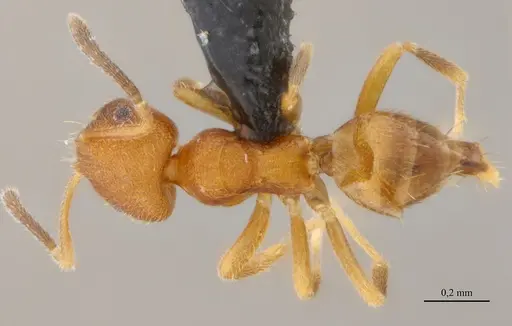
Literatura
Cargando mapa de distribución...Cargando productos...