
Bothroponera rubescens
- Nom. cient.
- Bothroponera rubescens
- Tribu
- Ponerini
- Subfamilia
- Ponerinae
- Autor
- Santschi, 1937
- Distribución
- Encontrado en 0 países
Introducción
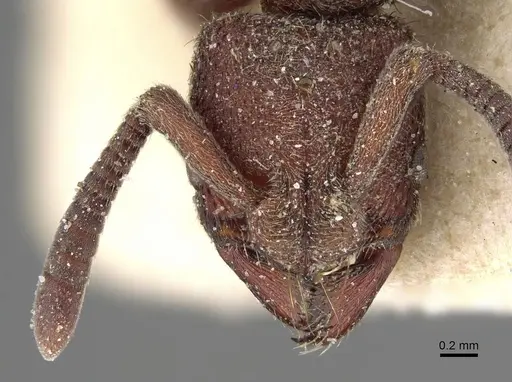
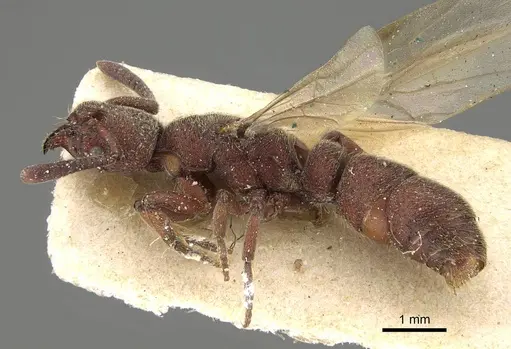
Bothroponera rubescens is a small reddish-brown ponerine ant from the talpa species complex, found exclusively in central Africa. Queens measure 7.10-7.80mm total length, making this the smallest female in the Bothroponera talpa complex . The species is characterized by its six-toothed mandibles, sharp V-shaped clypeus, and uniform reddish-brown coloration throughout . This ant inhabits a wide range of Congolian biomes including swamp forests, lowland forests, and forest-savanna mosaics in the Democratic Republic of Congo and Angola . Workers and males remain undescribed, meaning this species is rarely kept in captivity and basic biology is poorly understood .
Quick Summary
- Difficulty: Unknown, likely Expert
- Origin & Habitat: Democratic Republic of Congo (Haut Ubangi region) and Angola (Lunda Norte Province). Inhabits Western and Eastern Congolian Swamp Forests, Central Congolian Lowland Forests, and forest-savanna mosaics [1][2].
- Colony Type: Colony structure unconfirmed. Bothroponera species vary from single-queen to multi-queen colonies, but the specific structure of B. rubescens is unknown [1].
- Size & Growth:
- Queen: 7.10-7.80mm [1][2], smallest female in the talpa complex
- Worker: Unknown, workers have not been described [1][2]
- Colony: Unknown, no colony size data available
- Growth: Unknown
- Development: Unknown, no development data exists for this species (Development timeline unconfirmed. Based on typical Ponerinae patterns, expect 6-10 weeks at tropical temperatures, but this is an estimate.)
- Antkeeping:
- Temperature: Aim for 24-28°C based on tropical African habitat. Provide a gentle gradient allowing workers to self-regulate. This is inferred from habitat data, not direct study.
- Humidity: Keep substrate consistently moist but not waterlogged. The swamp forest and lowland forest habitats suggest high humidity needs (60-80%). Provide a moisture gradient.
- Diapause: Unknown, tropical species may not require formal hibernation, but may reduce activity during cooler periods. No specific data.
- Nesting: No specific nesting data exists. Based on Congolian forest habitats, they likely prefer humid, enclosed spaces. Y-tong or plaster nests with moisture reservoirs likely work well. Avoid dry, airy setups.
- Behavior: Behavior is unstudied. Bothroponera are typically predatory Ponerine ants with moderate aggression and a functional sting. Expect nocturnal activity and hunting behavior. Escape risk is moderate given queen size of ~7mm, standard barrier methods should suffice.
- Common Issues: lack of basic biological data makes captive care highly uncertain, no established husbandry guidelines exist for this species, wild-caught colonies may have unknown parasites or diseases, humidity control is critical, they come from humid forest habitats, food acceptance is unknown, may require live prey like typical Ponerines
Species Identification and Background
Bothroponera rubescens is a member of the talpa species complex within the subfamily Ponerinae. Originally described by Santschi in 1937 from the Democratic Republic of Congo, it was later transferred to the genus Pachycondyla before being returned to Bothroponera following modern classification revisions [1]. The species is known only from queen specimens, making it one of the least studied Bothroponera species. The queen measures 7.10-7.80mm total length, making it the smallest female in the talpa complex. Key identification features include six-toothed mandibles (unique among females in the complex), a sharp V-shaped clypeal carina, and uniform reddish-brown coloration [1][2]. The distribution spans the Ubangi River region in DRC and the Lunda Norte Province in Angola.
Natural Habitat and Distribution
This species inhabits a remarkably wide range of Congolian biomes across central Africa. In the DRC, it is found in the Ubangi River area characterized by Western Congolian Swamp Forests, Eastern Congolian Swamp Forests, and Central Congolian Lowland Forests. In Angola, it occupies the Lunda Norte Province, likely within the Angola Miombo Woodlands ecosystem [1][2]. This habitat diversity suggests the species can adapt to varying moisture conditions, though all are relatively humid tropical forest environments. The wide biome tolerance is notable given how poorly the species is otherwise studied.
Current State of Knowledge
Bothroponera rubescens represents a significant knowledge gap in antkeeping. Workers and males have never been described, meaning we have no morphological data for the worker caste, no behavioral observations, and no documented colony structures. The queen is the only known caste. This makes creating accurate care guidelines essentially impossible, any advice given must be considered highly speculative and based on genus-level patterns rather than species-specific data. For prospective keepers, this means accepting significant uncertainty in exchange for the opportunity to potentially document new biological information. This species would be best suited for experienced antkeepers comfortable with experimental husbandry and detailed record-keeping. [1][2]
Inferred Care Guidelines
Since direct care data does not exist, we can make reasonable inferences from the genus and habitat. Bothroponera species are typically predatory Ponerine ants, so offer small live prey such as fruit flies, pinhead crickets, or small mealworms. Sugar water or honey may be accepted but is not a primary food source for most Ponerines. Temperature should be kept warm (24-28°C) reflecting their tropical African distribution. Humidity needs are likely high (60-80%) given the swamp forest and lowland forest habitats. Nesting likely prefers enclosed, humid spaces, Y-tong nests or plaster nests with water reservoirs are logical starting points. The queen size of ~7mm suggests moderate escape risk, but standard barrier methods should be adequate. Always provide a moisture gradient so ants can self-regulate their humidity preferences.
Legal and Ethical Considerations
Bothroponera rubescens is not documented as invasive anywhere. However, never release any non-native ant species outside its documented range. The DRC and Angola are the only confirmed countries for this species. If you obtain this species, ensure your collection source is legal and ethical. Given how poorly studied this species is, any captive colony represents a valuable opportunity to document new biological information for science. Consider collaborating with researchers by sharing behavioral observations or morphological data if you successfully maintain a colony. [1][2]
Frequently Asked Questions
How do I keep Bothroponera rubescens?
No established care guidelines exist for this species. Based on genus patterns, provide a warm (24-28°C), humid environment with access to small live prey. Use a Y-tong or plaster nest with moisture reservoir. This is experimental, be prepared to adjust conditions based on colony behavior.
What do Bothroponera rubescens eat?
Diet is unconfirmed for this species. Based on typical Bothroponera and Ponerine behavior, they are likely predatory. Offer small live insects like fruit flies, pinhead crickets, or small mealworms. Sugar water may be accepted but should not be the primary food source.
How long does it take for Bothroponera rubescens to produce workers?
Unknown, no development data exists for this species. Based on typical Ponerine development at tropical temperatures, estimate 6-10 weeks from egg to first worker, but this is purely speculative.
Are Bothroponera rubescens good for beginners?
No. This species is not recommended for beginners due to complete lack of established care guidelines, unknown colony structure, and the fact that only queens have been described. The species would be best for expert antkeepers interested in documenting new biological information.
Do Bothroponera rubescens queens need to forage during founding?
Unknown, founding behavior has not been documented. Most Bothroponera are likely claustral (queen seals herself in and lives off stored fat), but this is not confirmed for B. rubescens specifically.
Can I keep multiple Bothroponera rubescens queens together?
Unknown, colony structure has not been documented for this species. Bothroponera species vary between single-queen and multi-queen colonies. Do not combine unrelated queens without documented evidence they can form multi-queen colonies.
What size colony does Bothroponera rubescens reach?
Unknown, colony size data does not exist. Workers have never been described, so we have no information about typical colony sizes or growth patterns.
What temperature should I keep Bothroponera rubescens at?
Aim for 24-28°C based on tropical African habitat. Provide a temperature gradient so the colony can self-regulate. This is inferred from habitat data, not direct study of thermal requirements.
Does Bothroponera rubescens need hibernation?
Unknown, likely no formal hibernation required as this is a tropical species. However, they may reduce activity during cooler periods. No specific seasonal data exists.
Where is Bothroponera rubescens found?
Democratic Republic of Congo (Haut Ubangi region) and Angola (Lunda Norte Province). The species inhabits Congolian swamp forests, lowland forests, and forest-savanna mosaics.
Why is so little known about Bothroponera rubescens?
Only queen specimens have ever been described, workers and males remain unknown. This makes the species extremely difficult to study in the wild and essentially impossible to provide definitive captive care guidelines for. It represents a significant gap in ant biological knowledge.
Report an Issue
The current care sheet is based fully on literature. See inconsistencies, or something that's incorrect? Please , it will be resolved after review from an admin. Contributing to the blogs tab also helps providing information, to make us be able to further improve the caresheets. Thank you for your support!
References

Esta ficha de cuidados está bajo licencia CC BY-SA 4.0 .
Blogs de la comunidad
CASENT0922369
Ver en AntWeb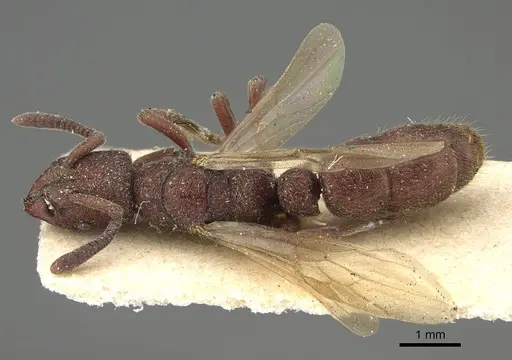
Literatura
Cargando mapa de distribución...Cargando productos...