
Baracidris pilosa
- Nom. cient.
- Baracidris pilosa
- Tribu
- Solenopsidini
- Subfamilia
- Myrmicinae
- Autor
- Fernández, 2003
- Distribución
- Encontrado en 0 países
Introducción
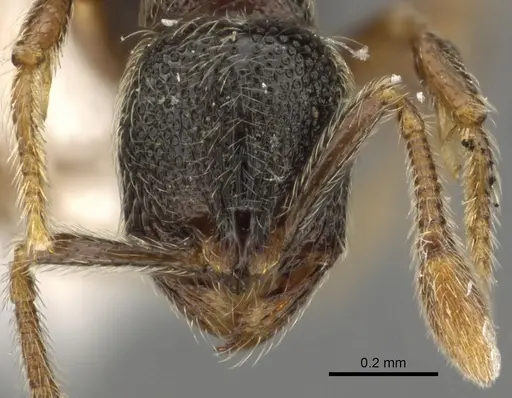
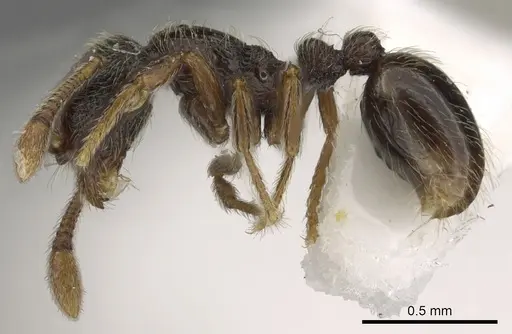
Baracidris pilosa is an extremely tiny ant species native to the highlands of East Africa, specifically found in Uganda (Mount Elgon at 2250m) and Kenya (Embu Irangi Forest at 2000m). Workers measure just 2.14mm in total length, making them among the smallest ants in the Solenopsidini tribe . They have a distinctive dark brown body with light brown legs and antennae, and are covered in long white hairs that stand upright on the head, petiole, and postpetiole . The genus Baracidris belongs to the Solenopsidini tribe and is closely related to Adelomyrmex, sharing a unique clypeal structure where the center of the face is raised into a narrow ridge . These ants live in forest leaf litter at high elevations, which tells us they prefer cool, humid conditions . This is one of the rarest ants in the hobby - in fact, almost nothing is known about their biology in the wild or how they behave in captivity. They were only described scientifically in 2003, and no research has been published on their colony structure, founding behavior, or captive care since then. This makes them an expert-level species best suited for antkeepers who enjoy the challenge of working with poorly documented species and contributing to our collective knowledge.
Quick Summary
- Difficulty: Expert
- Origin & Habitat: Highland forests of Uganda (Mount Elgon, 2250m) and Kenya (Embu Irangi Forest Station, 2000m). They live in leaf litter in forest habitats [2].
- Colony Type: Unknown, colony structure has not been documented. Based on tribe placement (Solenopsidini), likely single-queen colonies, but this is unconfirmed.
- Size & Growth:
- Queen: Unknown, queens have not been described scientifically
- Worker: 2.14mm total length [1]
- Colony: Unknown, likely small colonies based on their tiny size and leaf-litter habitat
- Growth: Unknown
- Development: Unknown, no development data exists for this species. (No scientific data exists on development time.)
- Antkeeping:
- Temperature: Cool to moderate conditions. Based on their high-elevation forest habitat (2000-2250m), aim for 18-22°C. Avoid warm conditions, they come from cool mountain forests. Room temperature is likely appropriate for most keepers.
- Humidity: High humidity required. These ants live in leaf litter in humid forest floors. Keep the nest substrate consistently moist but not waterlogged. Provide a moisture gradient so they can choose their preferred spot.
- Diapause: Unknown, no research on seasonal behavior. Their high-elevation habitat suggests they may experience cooler temperatures seasonally, but whether they require a true diapause is unconfirmed.
- Nesting: In captivity, they would likely do well in a naturalistic setup with leaf litter or a tight-fitting test tube setup. Their tiny size means they need very small chambers and narrow passages. A Y-tong nest with fine chambers or a plaster nest with good moisture retention would work.
- Behavior: Completely unstudied in captivity. Based on their tiny size and leaf-litter habitat, they are likely shy, slow-moving, and may be nocturnal or crepuscular. They probably forage individually in the leaf litter layer rather than forming visible foraging trails. Their minute eyes (single ocellus only about 0.01mm) suggest they may rely more on chemical cues than vision. As members of the Solenopsidini tribe, they have a sting capability, though with their tiny size any sting would be negligible. Escape prevention is critical, at 2mm, they can squeeze through incredibly tiny gaps. Treat them like other tiny Myrmicinae: use fine mesh, tight-fitting lids, and barrier tape.
- Common Issues: escape prevention is critical, at 2mm they can squeeze through gaps you cannot see, no captive husbandry information exists, you are essentially pioneering their care, high humidity needs can lead to mold if ventilation is poor, slow growth and tiny size make them vulnerable to stress, wild-caught colonies may have parasites or diseases we cannot identify
Appearance and Identification
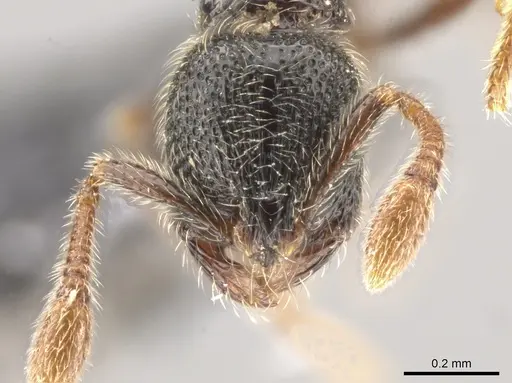
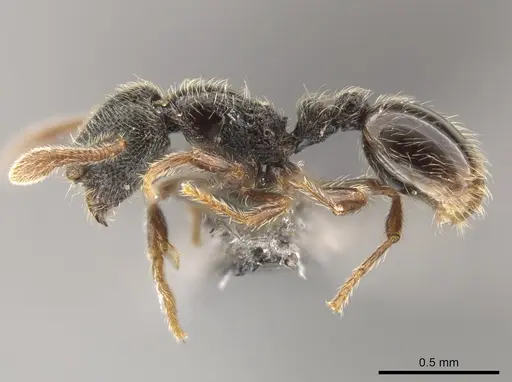
Baracidris pilosa workers are among the smallest ants you will ever keep, measuring just 2.14mm total length [1]. Their head and body are dark brown, while their legs and antennae are light brown, and they have distinctive long white hairs standing upright on the head, petiole, and postpetiole [1]. The most distinctive feature is their clypeus, the center of their face is raised into a narrow ridge, which is why scientists consider them close relatives of the genus Adelomyrmex [1]. They have tiny eyes with just a single lens (ocellus), and their antennae have 12 segments without a strong club [1]. Their mandibles have five teeth, and the propodeum has short triangular teeth [1]. Workers are monomorphic, meaning all workers look the same size [1]. If you see these tiny brown ants with hairy heads in your setup, you have Baracidris pilosa.
Natural Habitat and Distribution
This species is known only from two high-elevation locations in East Africa: Mount Elgon in Uganda at 2250m altitude and the Embu Irangi Forest Station in Kenya at 2000m altitude [1]. Both locations are in highland forest environments. They have been collected from leaf litter, which is their primary microhabitat [2]. The genus Baracidris is extremely rare, only three species exist, and this one was only described in 2003 [3]. Their restricted distribution to these two mountain forest sites makes them a truly special find for antkeepers. The high elevation means they are adapted to cooler, more humid conditions than many tropical ants.
Housing and Nesting
Because we have no captive care data for this species, we must make educated guesses based on their natural habitat and relatives. They come from cool, humid forest leaf litter, so your setup should mimic that. A naturalistic terrarium with a deep layer of moist substrate (coconut fiber or soil) would best replicate their natural conditions. You could also use a test tube setup with a water reservoir, but given their tiny size, ensure the cotton is packed very tightly. A Y-tong (AAC) nest with small chambers or a moist plaster nest would also be appropriate. The key is maintaining high humidity without letting the nest become stagnant, use adequate ventilation while retaining moisture. Their tiny size (2mm) means escape prevention must be excellent: use fine mesh on any ventilation holes and barrier tape on tank edges.
Feeding and Diet
The diet of Baracidris pilosa has not been studied in the wild or captivity. Based on their tribe placement (Solenopsidini) and tiny size, they likely forage for small prey and may tend aphids for honeydew. Start with offering sugar water or honey diluted with water (a drop on a tiny piece of sponge works well), and small protein sources like fruit flies, pinhead crickets, or tiny mealworms. Given their size, prey items should be appropriately small, think springtails or fruit fly-sized. Monitor carefully to see what they accept. Do not be surprised if they ignore standard ant foods at first, this is an unstudied species and their dietary preferences are unknown. Offer a variety and observe what disappears.
Temperature and Seasonal Care
Based on their high-elevation forest habitat (2000-2250m), Baracidris pilosa likely prefers cool to moderate temperatures. Aim for 18-22°C in the nest area. This is cooler than most tropical ants prefer, so avoid placing their nest on a heating mat or in direct sunlight. Room temperature is probably ideal for most keepers. Regarding seasonal changes, we have no data on whether they require a winter rest period (diapause). Their mountain habitat does experience seasonal temperature variations, so they may benefit from a slight cool-down in winter, but do not force hibernation if your colony is small or fragile. Observe your colony's activity levels and adjust accordingly, if they become less active in winter, reduce feeding and do not disturb them as much.
Challenges and Why This Is an Expert Species
Baracidris pilosa is not a species for beginners. Almost nothing is known about their biology, meaning you are essentially pioneering their captive care. You will likely face many unknowns: Will they accept standard ant foods? How fast do they develop? What temperatures do they truly prefer? Do they need a diapause? These are questions we cannot answer. Additionally, their tiny size makes them vulnerable, they can dry out quickly, drown in water droplets, escape through invisible gaps, and stress easily from disturbance. A small mistake can wipe out a colony. If you succeed in keeping them, you will be contributing valuable knowledge to the antkeeping community. Document your observations carefully and consider sharing them so others can learn from your experience.
Frequently Asked Questions
Is Baracidris pilosa a good species for beginners?
No. This is an expert-level species. Almost nothing is known about their biology, and no captive husbandry guides exist. Their tiny size also makes them vulnerable to common beginner mistakes like drying out, escapes, and stress. Start with easier species like Lasius niger or Camponotus floridanus before attempting Baracidris.
How big do Baracidris pilosa colonies get?
Unknown. No colony size data exists in scientific literature. Based on their tiny worker size (2mm) and leaf-litter habitat, colonies are likely small, probably under 500 workers at maturity. This is an estimate based on similar tiny Myrmicinae.
What do Baracidris pilosa eat?
Unconfirmed. Based on their tribe (Solenopsidini), they likely eat small insects and may tend aphids for honeydew. In captivity, try offering sugar water/honey, tiny fruit flies, springtails, or small mealworms. Their dietary preferences have not been studied, you may need to experiment.
What temperature do Baracidris pilosa need?
Cool conditions. Based on their high-elevation forest habitat (2000-2250m), aim for 18-22°C. Avoid heating. Room temperature is likely appropriate for most keepers. They come from cool mountain forests, not warm tropical lowlands.
Do Baracidris pilosa need hibernation?
Unknown. No research exists on their seasonal behavior. Their mountain habitat does experience cooler winters, so they may benefit from a slight cool period, but do not force aggressive hibernation on a small or fragile colony. Observe their activity and adjust accordingly.
How long does it take for Baracidris pilosa to develop from egg to worker?
Unknown. No development data exists for this species. Your observations may be the first data points ever recorded.
Can I keep multiple Baracidris pilosa queens together?
Unknown. Colony structure has not been documented. We do not know if they are monogyne (single queen) or polygyne (multiple queens). Do not combine unrelated queens unless you are prepared to separate them if they fight.
How do I prevent Baracidris pilosa from escaping?
With extreme care. At 2mm total length, they can squeeze through gaps you cannot see. Use fine mesh (at least 0.5mm or smaller), ensure all lids fit tightly, and apply barrier tape (fluon) to tank edges. Check for any gaps around tubing connections. Tiny escapes are virtually impossible to find.
Where is Baracidris pilosa found in the wild?
Only two known locations: Mount Elgon in Uganda (2250m altitude) and Embu Irangi Forest Station in Kenya (2000m altitude). Both are highland forest areas. They live in leaf litter on the forest floor.
Report an Issue
The current care sheet is based fully on literature. See inconsistencies, or something that's incorrect? Please , it will be resolved after review from an admin. Contributing to the blogs tab also helps providing information, to make us be able to further improve the caresheets. Thank you for your support!
References

Esta ficha de cuidados está bajo licencia CC BY-SA 4.0 .
Blogs de la comunidad
CASENT0901014
Ver en AntWeb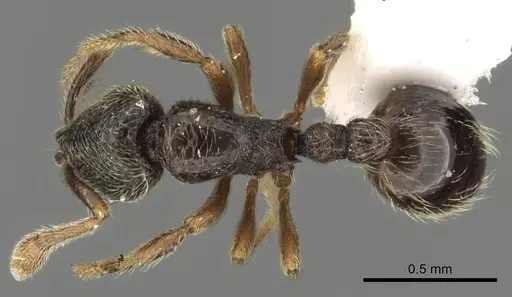
RBINSFOR001048
Ver en AntWeb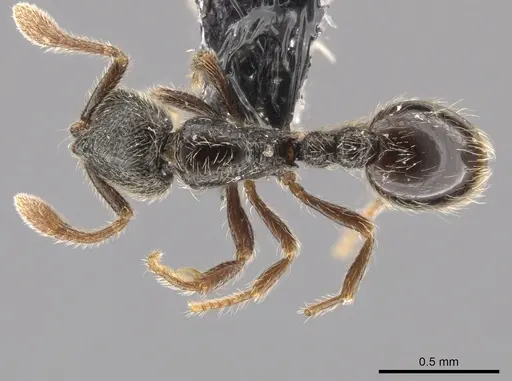
Literatura
Cargando mapa de distribución...Cargando productos...