
Aphaenogaster dlusskyi
- Nom. cient.
- Aphaenogaster dlusskyi
- Tribu
- Stenammini
- Subfamilia
- Myrmicinae
- Autor
- Radchenko & Arakelian, 1991
- Distribución
- Encontrado en 0 países
Introducción
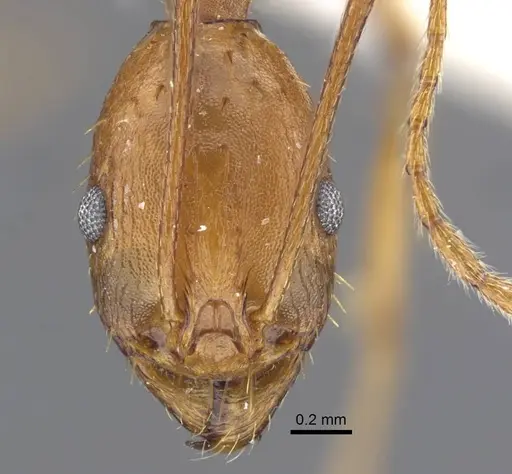
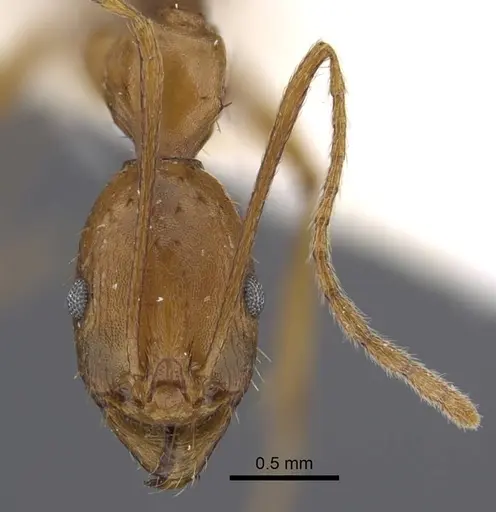
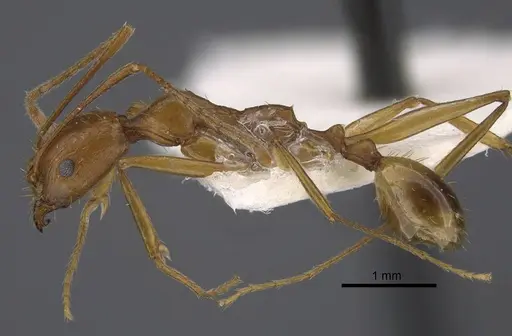
Aphaenogaster dlusskyi is one of the rarest ants in the Palearctic, known from a single worker collected in 1988 near Megri, Armenia . This specimen sits in the State Zoological Institute in Kyiv (SIZK) under specimen number CASENT0917359 . The species belongs to the Aphaenogaster splendida group and closely resembles Aphaenogaster kervillei, a species found approximately 1000 km to the west . Researchers cannot confirm whether Aphaenogaster dlusskyi represents a valid separate species or simply an eastern population of Aphaenogaster kervillei without additional specimens . No queen, nest, or additional workers have ever been found, leaving all biological data unknown . The species originates from temperate mountainous terrain at approximately 40°N latitude in southern Armenia near the Iranian border .
Quick Summary
- Difficulty: Expert
- Origin & Habitat: Megri region in southern Armenia, near the Iranian border [2][3]. The area features temperate to semi-arid mountainous terrain typical of the Armenian highlands at 40°N latitude [2].
- Colony Type: Unknown, only a single worker has ever been collected. Queen number and colony structure remain completely unconfirmed [1].
- Size & Growth:
- Queen: Size data unavailable, no queen has ever been described [1].
- Worker: Size data unavailable, detailed measurements were not possible from the holotype specimen [1].
- Colony: Unknown, no colony has ever been observed [1].
- Growth: Unknown.
- Development: Unknown. (No developmental data exists for this species.)
- Antkeeping:
- Temperature: Unknown. Based on its Armenian origin at 40°N latitude, it likely tolerates temperate conditions with seasonal variation [2]. Start around 22-25°C and observe colony behavior.
- Humidity: Unknown. Most Aphaenogaster prefer moderate humidity with access to drier areas.
- Diapause: Likely yes. As a temperate Palearctic species from 40°N latitude, it probably requires a winter rest period [2].
- Nesting: Unknown in the wild. Related Aphaenogaster typically nest in soil or under stones.
- Behavior: Unknown. Aphaenogaster species are generally active foragers that scavenge and collect seeds, but specific behavior for this species remains unobserved.
- Common Issues: this species is not available in the antkeeping trade, no captive colonies exist., all care requirements are speculative since no biological data exists for this species., identification requires expert examination due to similarity with Aphaenogaster kervillei., wild collection would likely impact an extremely rare population.
Identification and Taxonomic Status
Scientists have only found one worker of this species, collected on June 14,1988,near Megri, Armenia [1]. This single specimen sits in the State Zoological Institute in Kyiv (SIZK) under specimen number CASENT0917359 [1]. The original description by Radchenko and Arakelian in 1991 placed it in the Aphaenogaster splendida species group [1]. Recent research suggests it clusters closely with Aphaenogaster kervillei based on head shape and sculpturing patterns [1]. However, the type locality sits approximately 1000 km east of known Aphaenogaster kervillei populations [1]. Without genetic analysis or additional specimens from the region, researchers cannot confirm whether this represents a distinct species or simply an eastern population of Aphaenogaster kervillei [1]. If you encounter ants labeled as Aphaenogaster dlusskyi in the hobby, treat the identification with skepticism and demand documentation of the collection locality.
Natural History and Distribution
The only confirmed location is the Megri region in southern Armenia, near the border with Iran [2][3]. This area sits at approximately 40°N latitude in temperate, mountainous terrain [2]. The specific microhabitat where the worker was collected remains unrecorded. Because collectors have never found a queen, nest, or additional workers, we know nothing about colony size, nesting habits, foraging behavior, or diet [1]. The climate in this region includes hot summers and cold winters, suggesting the species experiences seasonal temperature changes typical of temperate latitudes [2].
Captive Keeping Considerations
You cannot obtain this species through the antkeeping trade. No captive colonies exist in documented collections, and the extreme rarity of the species makes wild collection inappropriate. If future research reveals additional populations and permits ethical collection, care would likely follow general Aphaenogaster patterns. However, these are guesses based on related species, not confirmed facts. You should not attempt to keep this species until researchers publish basic biological data. [1]
Similar Species
Keepers might confuse this with Aphaenogaster kervillei or other splendida group members like Aphaenogaster splendida. Aphaenogaster kervillei occurs across the Mediterranean and Middle East, while Aphaenogaster dlusskyi supposedly occurs only in Armenia. The two show overlapping characteristics in head sculpturing and body proportions [1]. Without expert morphological analysis or genetic testing, you cannot reliably distinguish them. Other Armenian Aphaenogaster species also occur in the region, further complicating field identification.
Frequently Asked Questions
What is Aphaenogaster dlusskyi?
It is a rarely seen ant species known from a single worker collected in Armenia in 1988. It belongs to the Aphaenogaster splendida group and may be related to Aphaenogaster kervillei [1][2].
Where does Aphaenogaster dlusskyi live?
Only one specimen has ever been found, collected near Megri in southern Armenia [2][3].
Can I keep Aphaenogaster dlusskyi as a pet?
No. This species is not available in the antkeeping hobby, and no captive care protocols exist. The species is known from a single specimen, making wild collection inappropriate [1].
How do you identify Aphaenogaster dlusskyi?
Identification requires expert examination of the holotype specimen or genetic analysis. It looks nearly identical to Aphaenogaster kervillei, and the two can only be distinguished by subtle differences in head sculpturing [1].
Does Aphaenogaster dlusskyi need hibernation?
Likely yes. Based on its temperate Armenian origin at 40°N latitude, it probably experiences cold winters and requires a winter rest period [2].
How big are Aphaenogaster dlusskyi colonies?
Unknown. Scientists have never observed a colony, nest, or queen [1].
Is Aphaenogaster dlusskyi the same as Aphaenogaster kervillei?
Researchers are unsure. The two may be separate species, or Aphaenogaster dlusskyi may represent an eastern population of Aphaenogaster kervillei. They differ in location but overlap in physical characteristics [1].
What does Aphaenogaster dlusskyi eat?
Unknown. Aphaenogaster species are generally omnivorous, but specific diet preferences for this species remain unstudied.
How long does Aphaenogaster dlusskyi take to develop from egg to worker?
Unknown. No developmental data exists [1].
Are Aphaenogaster dlusskyi good for beginners?
No. This species is not available in the hobby and lacks basic care information [1].
Report an Issue
The current care sheet is based fully on literature. See inconsistencies, or something that's incorrect? Please , it will be resolved after review from an admin. Contributing to the blogs tab also helps providing information, to make us be able to further improve the caresheets. Thank you for your support!
References

Esta ficha de cuidados está bajo licencia CC BY-SA 4.0 .
Blogs de la comunidad
CASENT0917359
Ver en AntWeb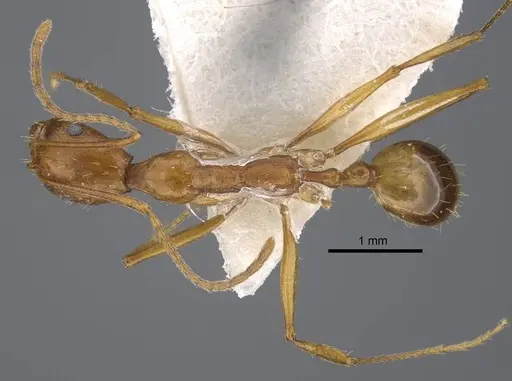
Literatura
Cargando mapa de distribución...Cargando productos...