
Anochetus hohenbergiae
- Nom. cient.
- Anochetus hohenbergiae
- Tribu
- Ponerini
- Subfamilia
- Ponerinae
- Autor
- Feitosa & Delabie, 2012
- Distribución
- Encontrado en 0 países
Introducción
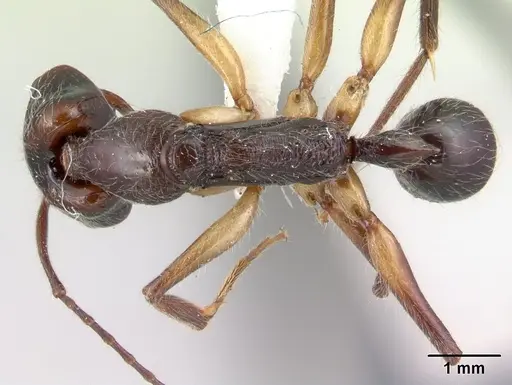
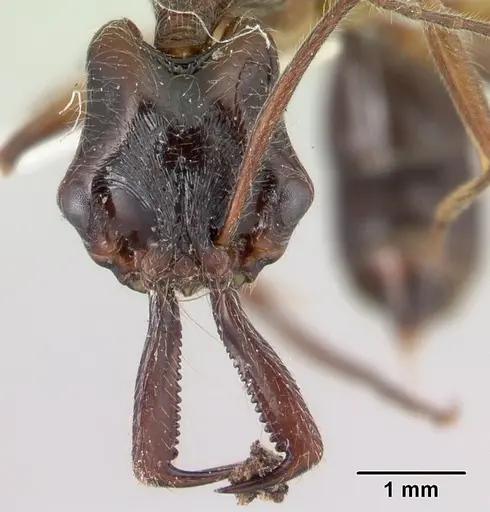
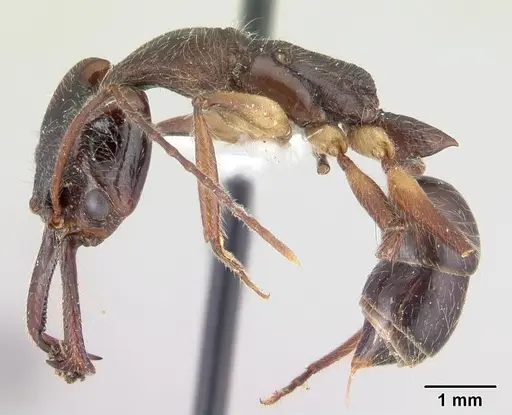
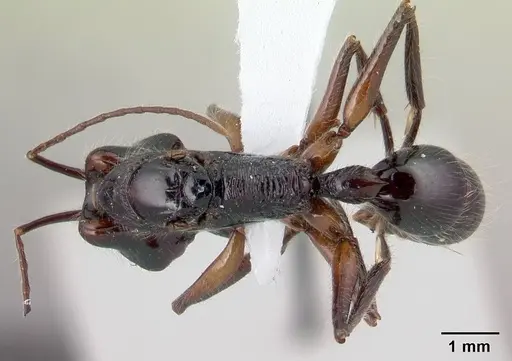
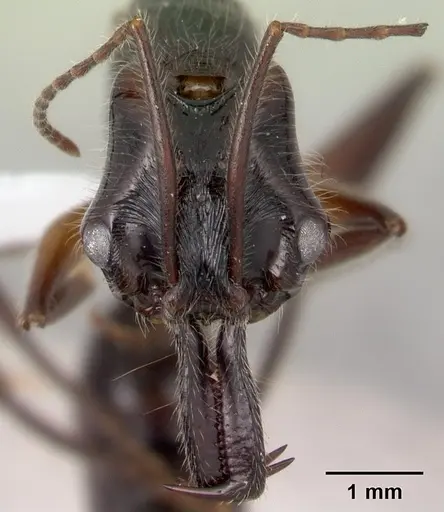
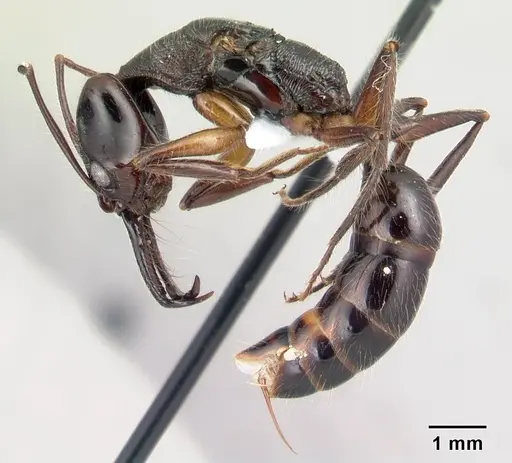
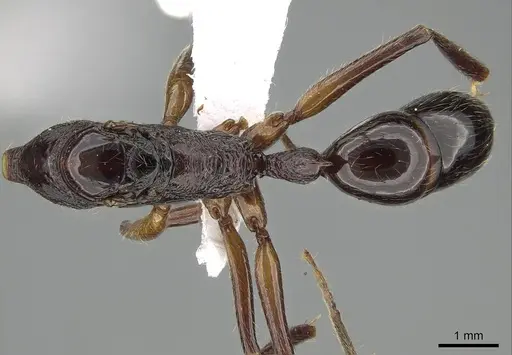
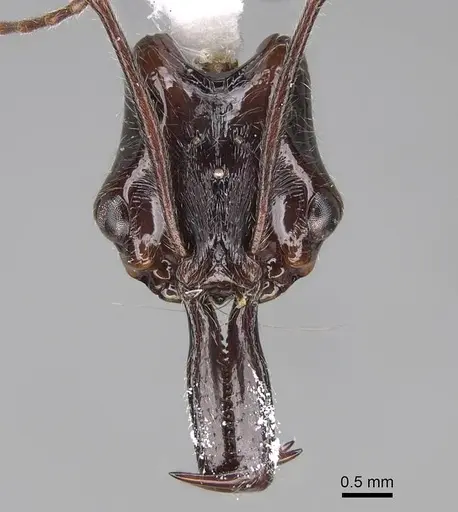
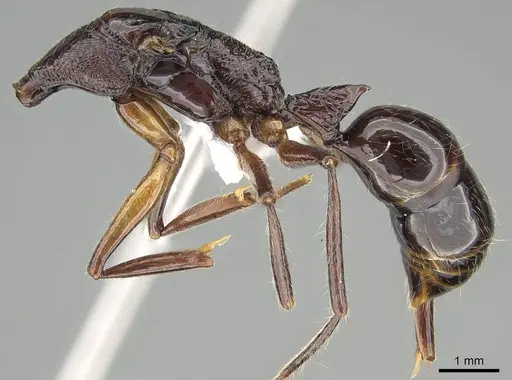
Anochetus hohenbergiae is the largest species in the trap-jaw ant genus Anochetus, with workers reaching over 12.7 mm in total length and queens reaching up to 15 mm . These ants display dark brown coloration with yellowish legs and possess the characteristic trap-jaw mandibles armed with 13-16 teeth that snap shut with incredible speed to capture prey . They live exclusively in the Atlantic forest canopy of southern Bahia, Brazil, where they nest inside epiphytic bromeliads growing on shade trees in cocoa plantations 12-19 meters high in the canopy . This species is known only from three localities in southern Bahia, making it one of the rarest Anochetus species . Colonies appear to remain small, probably containing fewer than 100 workers, and researchers have observed three dealate queens together at a single nest site, suggesting pleometrotic colony founding may occur where multiple queens cooperate to establish a new colony . The specific name hohenbergiae references their association with bromeliads of the genus Hohenbergia .
Quick Summary
- Difficulty: Expert
- Origin & Habitat: Southern Bahia, Northeastern Brazil, arboreal Atlantic forest cocoa plantations, nesting exclusively in epiphytic bromeliads 12-19 meters high in the canopy [1][3]
- Colony Type: Colony structure unconfirmed, pleometrosis (multiple founding queens) has been observed in the wild [1]
- Size & Growth:
- Queen: 14.05-15.02 mm [1]
- Worker: 12.70+ mm [1]
- Colony: Probably fewer than 100 workers [1]
- Growth: Slow
- Development: Unknown, estimated 8-12 weeks based on tropical Ponerinae patterns at 25-28°C (No direct development studies exist for this species, timeline inferred from related tropical trap-jaw ants)
- Antkeeping:
- Temperature: 24-28°C (estimated from tropical Brazilian origin), keep stable year-round [1]
- Humidity: High humidity required, nest in bromeliads suggests consistently moist conditions with good ventilation [1]
- Diapause: No, tropical species with no winter rest period required [1]
- Nesting: Arboreal vertical setup required, live bromeliads or artificial arboreal nests with excellent moisture retention [1]
- Behavior: Trap-jaw predatory behavior using lightning-fast mandible strikes, arboreal and likely fast-moving, small colony size makes them vulnerable to disturbances. Uses sting as defense mechanism (Ponerinae tribe Ponerini characteristic) [1][2]
- Common Issues: extremely rare in captivity with no established care protocols, expect to experiment., arboreal setup requires specialized vertical housing with live plants or complex artificial structures., small colony size means worker losses hit harder, each individual is valuable to colony survival., trap-jaw mandibles can deliver painful bites despite the species' small colony size., wild-caught colonies may carry phoretic mites that could cause issues in captivity [1][4].
Nest Preferences and Arboreal Housing
In nature, Anochetus hohenbergiae lives exclusively in epiphytic bromeliads, plants that grow on trees without soil, specifically Hohenbergia blanchetii and related species [1]. These bromeliads position themselves 12-19 meters high in the canopy, creating a unique microhabitat that captures water and organic debris [1]. For captive housing, you must replicate this arboreal lifestyle. A vertical setup is essential, think tall enclosures rather than horizontal tanks. Live bromeliads mounted on branches or backgrounds provide the most natural conditions, but you can substitute with artificial arboreal nests that feature humid chambers mimicking the water-holding leaf axils of bromeliads. The nest material must retain moisture without becoming waterlogged, and the setup needs excellent ventilation to prevent mold while maintaining the high humidity these canopy-dwelling ants expect [1].
Feeding and Diet
As trap-jaw ants, Anochetus hohenbergiae are specialized predators that use their lightning-fast mandibles to hunt prey [1][2]. While specific dietary observations are lacking for this species, related Anochetus species typically hunt small soft-bodied insects and springtails. You should offer small live prey appropriate for their size, fruit flies, small crickets, or termites. The trap-jaw mechanism allows them to stun prey instantly before dragging it back to the nest. Given their arboreal nature, they may prefer prey that moves on vertical surfaces. Always ensure prey is small enough to be handled by the colony, as with fewer than 100 workers, the colony cannot tackle large insects efficiently [1].
Temperature and Seasonal Care
Coming from the Atlantic forest of southern Bahia, Brazil, these ants experience stable tropical temperatures year-round [1]. You should maintain them at roughly 24-28°C without seasonal cooling. Unlike temperate ant species, Anochetus hohenbergiae does not require diapause or hibernation, they remain active throughout the year [1]. Use a heating cable or mat on one side of the enclosure to create a gentle thermal gradient, allowing the ants to choose their preferred temperature. Because they live in canopy bromeliads, they are adapted to stable conditions without extreme daily fluctuations, so avoid placing them near drafts or air conditioning units that create rapid temperature swings.
Behavior and Temperament
Anochetus hohenbergiae possesses the classic trap-jaw mechanism characteristic of the genus, mandibles that can snap shut in milliseconds to capture prey or defend the nest [1][2]. As a member of the Ponerinae subfamily tribe Ponerini, they use their sting as a defense mechanism, injecting potent peptide-rich venom that is painful to vertebrates. Despite their relatively large size for the genus (workers over 12 mm), they maintain the agile, arboreal habits of smaller Anochetus species. Their small colony size, likely fewer than 100 workers, means they cannot afford heavy losses and will likely avoid confrontation when possible [1]. In captivity, expect them to remain hidden in their nest chambers during the day, emerging to forage under low light conditions typical of the forest canopy interior. They are not known to be aggressive toward keepers, but the trap-jaw bite can be painful if they feel threatened, so handle enclosures with care.
Colony Founding and Queen Behavior
The founding behavior of Anochetus hohenbergiae remains unconfirmed by direct observation, but researchers have documented clues suggesting pleometrosis, where multiple queens cooperate to establish a new colony [1]. In 1992,three dealate (wingless) queens were found together at the base of an epiphyte, suggesting they may start nests together before eventually reducing to a single reproductive queen or maintaining a small colony structure [1]. If attempting to found colonies in captivity, you might experiment with introducing multiple queens to a spacious setup, but watch carefully for aggression. Whether queens are claustral (sealing themselves in to live off fat reserves) or semi-claustral (needing to forage during founding) is unknown, so provide food access from the start to be safe.
Growth and Development
Colonies of Anochetus hohenbergiae probably remain small throughout their existence, with worker counts likely staying below 100 individuals [1]. This slow growth rate means patience is essential, you will not see the explosive population growth typical of species like Tetramorium or Lasius. The egg-to-worker timeline has not been documented, but based on tropical Ponerinae patterns, expect roughly 8-12 weeks at optimal temperatures around 25-28°C. Because colonies remain small, each worker represents a significant portion of the workforce. Protect your colony from predation by mites or other pests, as losing even a few workers could severely impact colony function [1][4]. An astigmatine mite was found attached to one worker in the wild, in the hypopus stage, a resistant form that hitches rides on insects to find suitable development sites [1].
Frequently Asked Questions
Can I keep Anochetus hohenbergiae in a test tube?
No, test tubes are unsuitable for these arboreal ants. They require vertical arboreal setups with materials that mimic bromeliad leaf axils, not horizontal glass tubes [1].
How long until Anochetus hohenbergiae get their first workers?
The exact timeline is unknown, but based on related tropical trap-jaw ants, expect roughly 8-12 weeks from egg to first worker at 25-28°C.
Do Anochetus hohenbergiae need hibernation or diapause?
No, they come from tropical Brazil and remain active year-round. Keep them at stable warm temperatures without seasonal cooling [1].
What do Anochetus hohenbergiae eat?
They are trap-jaw predators that hunt small live prey. Offer fruit flies, small crickets, termites, or other soft-bodied insects appropriate for their 12+ mm size [1][2].
Can I keep multiple Anochetus hohenbergiae queens together?
Pleometrosis (multiple founding queens) has been suggested by wild observations of three queens together, but this is not guaranteed to work in captivity. If attempting this, provide ample space and be prepared to separate them if fighting occurs [1].
Are Anochetus hohenbergiae dangerous?
They possess trap-jaw mandibles that can deliver a painful bite if threatened, and as Ponerinae they also have a functional sting. They are not medically dangerous and their small colony size makes them manageable with proper respect [1][2].
What is the best nest type for Anochetus hohenbergiae?
Arboreal setups with live bromeliads or artificial arboreal nests with humid chambers work best. They need vertical space and high humidity mimicking their canopy bromeliad homes [1].
How big do Anochetus hohenbergiae colonies get?
Colonies probably remain small, with fewer than 100 workers. They will never become massive colonies like some other ant species [1].
Why are my Anochetus hohenbergiae dying?
Common causes include incorrect humidity (too dry or too wet), inadequate ventilation leading to mold, or insufficient food access. Their small colony size means they are vulnerable to any environmental stress [1].
Are Anochetus hohenbergiae good for beginners?
No, they are expert-level ants due to their specialized arboreal needs, rarity in the trade, small colony size, and lack of established care protocols.
Report an Issue
The current care sheet is based fully on literature. See inconsistencies, or something that's incorrect? Please , it will be resolved after review from an admin. Contributing to the blogs tab also helps providing information, to make us be able to further improve the caresheets. Thank you for your support!
References

Esta ficha de cuidados está bajo licencia CC BY-SA 4.0 .
Blogs de la comunidad
Literatura
Cargando mapa de distribución...Cargando productos...