
Aenictus xegi
- Nom. cient.
- Aenictus xegi
- Subfamilia
- Dorylinae
- Autor
- Gómez, 2022
- Distribución
- Encontrado en 0 países
Introducción
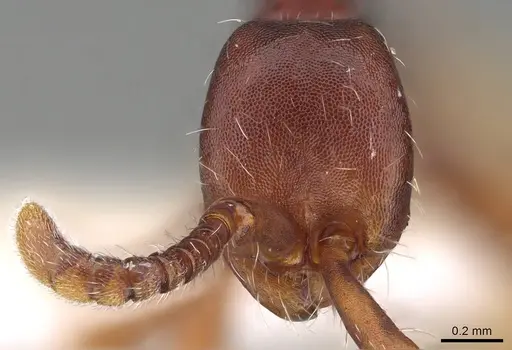
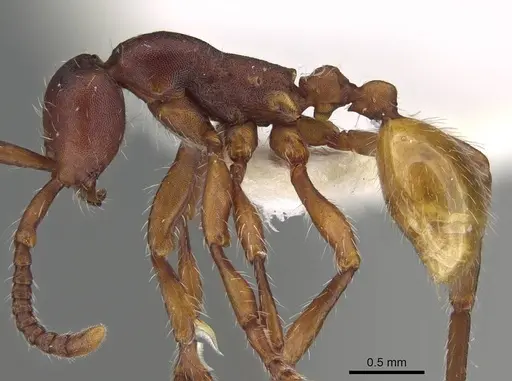
Aenictus xegi is a tiny army ant from the rainforests of West and Central Africa. Workers are small, dark brown with a yellowish-brown gaster . Scientists have only ever found four worker specimens, all collected from leaf litter in primary forests in Ghana, Cameroon, and Congo . No one has discovered a queen, male, or nest. This species belongs to the Aenictus koloi group and was only described in 2022 . The species name xegi honors Xavier Espadaler i Gelabert, the mentor of the describing scientist. Because only four workers exist in museum collections, virtually nothing is known about their colony structure, reproduction, or behavior in life.
Quick Summary
- Difficulty: Expert, Not suitable for captive keeping
- Origin & Habitat: West and Central Africa (Ghana, Cameroon, Congo), primary forest leaf litter [1][2]
- Colony Type: Unknown, only worker caste has been discovered [2]
- Size & Growth:
- Antkeeping:
- Behavior: Likely nomadic and predatory based on genus patterns, but specific behavior unconfirmed for this species. Extremely small size requires perfect escape prevention [1][2]
- Common Issues: only four specimens exist in scientific collections, virtually no biological data exists for captive care., army ant lifestyle requires massive foraging ranges and constant food supply impossible to provide in captivity., tiny worker size allows escape through the smallest gaps in standard ant keeping equipment., no queens have ever been found, establishing a captive colony is currently impossible.
Discovery and Rarity
Scientists described Aenictus xegi in 2022 based on just four worker specimens [1]. The holotype comes from leaf litter in the Atewa Forest Reserve in Ghana, collected in 1992 [2]. A paratype worker comes from Cameroon [2]. Two additional specimens from Congo are also attributed to this species [1]. No one has ever found a queen, male, or living colony. This extreme scarcity means we know almost nothing about how these ants live, reproduce, or organize their colonies.
Identification
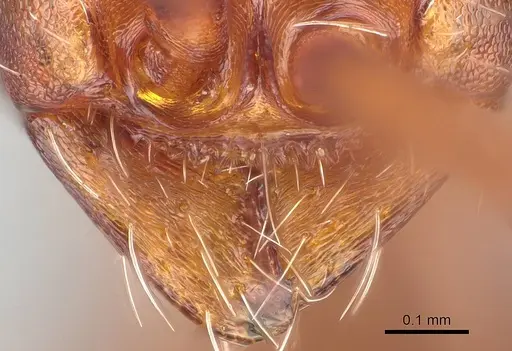
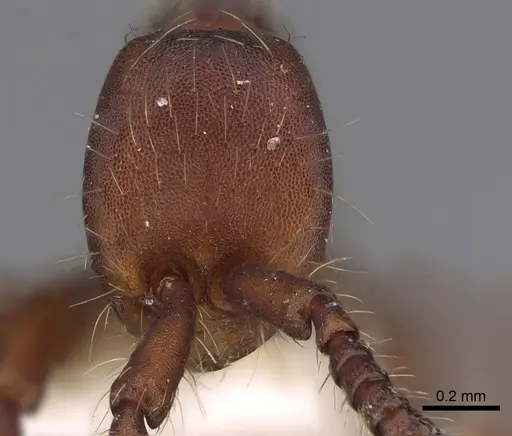
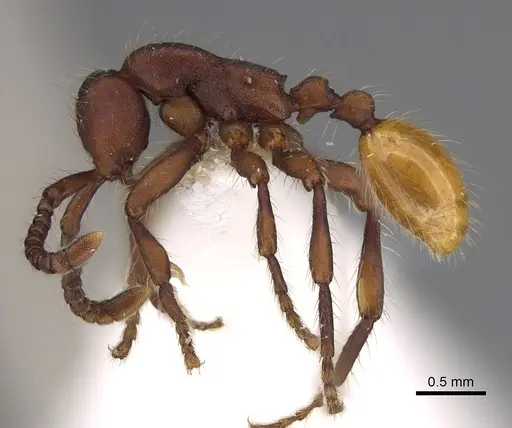
Aenictus xegi belongs to the Aenictus koloi species group [1]. It looks similar to Aenictus susanae but has scattered erect to semierect hairs instead of the dense reclinated setae found in that species [1]. The body is dark brown overall with a yellowish-brown gaster. The subpetiolar process is very developed, digitiform, with a large lamella about one third the length of the process [1].
Army Ant Biology
Aenictus xegi belongs to the army ant genus Aenictus. Based on patterns seen in related species, these ants are likely nomadic predators that do not build permanent nests. Instead, they may form temporary structures using their own bodies. These ants typically hunt in swarms, attacking other ant nests to steal brood and food. However, specific behavior for A. xegi remains unconfirmed because no living colony has ever been observed. [1]
Why This Species Is Not Suitable for Captivity
You cannot currently keep Aenictus xegi for several reasons. First, no queens have ever been collected, so there is no way to start a colony [2]. Second, army ants require specialized care involving massive foraging arenas, constant feeding, and specific humidity gradients that standard ant keeping equipment cannot provide. Third, the four known specimens were collected from deep primary forest leaf litter, a microhabitat nearly impossible to recreate authentically in captivity. If you want to keep African ants, consider species like Carebara or Tetramorium instead.
Habitat and Climate
All known specimens came from primary forest leaf litter in the Afrotropical region [1][2]. This habitat stays consistently warm and humid year-round. Based on this, temperatures around 24-28°C and high humidity would be needed, but these are estimates based on collection location, no one has studied the specific environmental needs of this species.
Frequently Asked Questions
Can I keep Aenictus xegi in a test tube?
No. You cannot keep them because no queens have ever been found, and army ants require specialized care impossible to provide in test tubes or standard formicariums.
How long until Aenictus xegi gets first workers?
Unknown. No one has ever raised this species in captivity or observed their development.
What do Aenictus xegi eat?
Likely other ants and small insects based on typical Aenictus behavior, but their specific diet is unconfirmed.
Do Aenictus xegi need hibernation?
No. They come from tropical Africa and likely remain active year-round.
How big do Aenictus xegi colonies get?
Unknown. Other Aenictus species form large colonies, but this has never been observed for A. xegi.
Can I buy Aenictus xegi queens?
No. Queens have never been collected, and the species is not available in the ant trade.
Are Aenictus xegi dangerous?
They are tiny and unlikely to sting, but like all ants they can bite. They are not dangerous to humans.
Why is there no care information for Aenictus xegi?
Only four worker specimens exist in museums. Scientists have never found a nest, queen, or living colony, so no care data exists.
Report an Issue
The current care sheet is based fully on literature. See inconsistencies, or something that's incorrect? Please , it will be resolved after review from an admin. Contributing to the blogs tab also helps providing information, to make us be able to further improve the caresheets. Thank you for your support!
References

Esta ficha de cuidados está bajo licencia CC BY-SA 4.0 .
Blogs de la comunidad
KG03210-3
Ver en AntWeb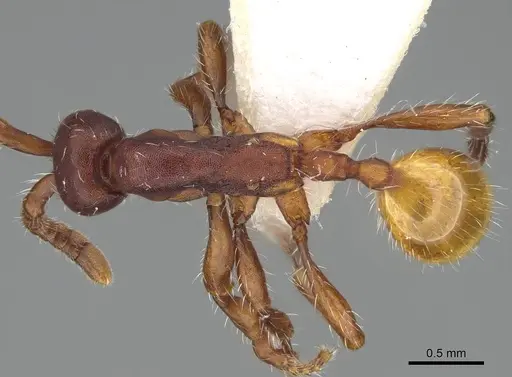
NHMUK012849243
Ver en AntWeb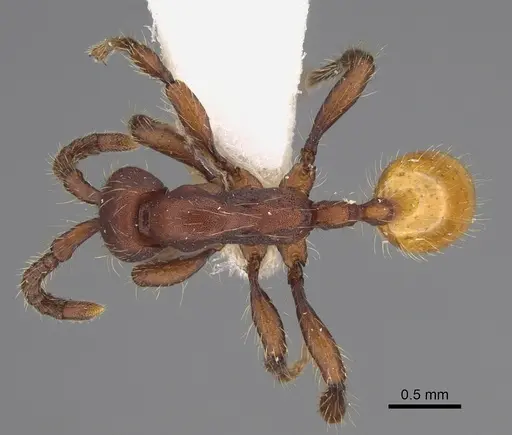
Literatura
Cargando mapa de distribución...Cargando productos...