
Aenictus longi
- Nom. cient.
- Aenictus longi
- Subfamilia
- Dorylinae
- Autor
- Forel, 1901
- Distribución
- Encontrado en 0 países
Introducción
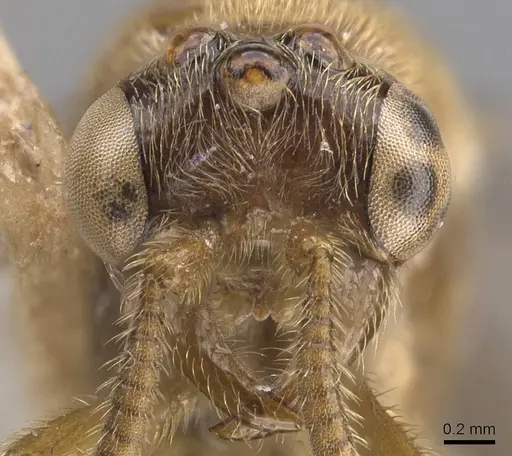
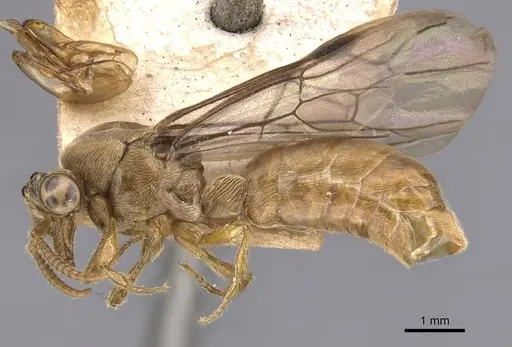
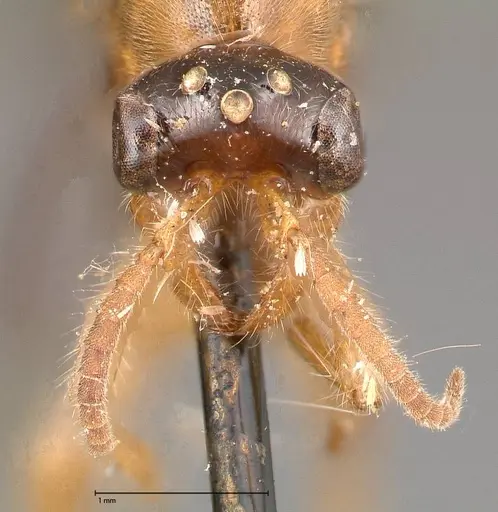
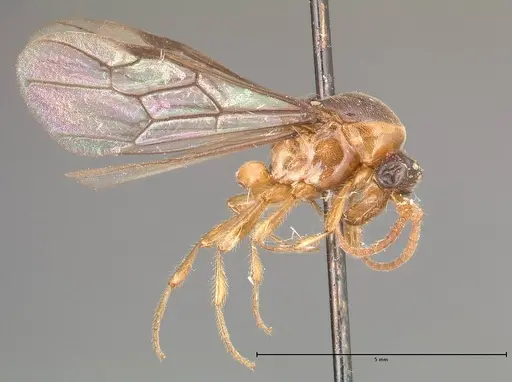
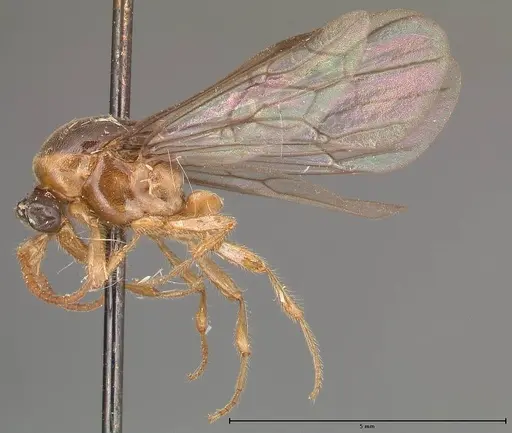
Aenictus longi are tiny army ants with workers measuring 1.9 to 2.6 millimeters in total length . They display the classic army ant coloration: reddish-brown head and mesosoma, a yellowish-brown abdomen that is paler than the rest of the body, and the propodeum being the darkest region . The species name refers to their notably elongated petiole (waist segment) . Their bodies are smooth and shiny, and they inhabit lowland rainforests across the Indomalaya region, including India (Meghalaya, Assam, Arunachal Pradesh), Myanmar, Thailand, and Lombok . As members of the subfamily Dorylinae, these are true army ants that do not build permanent nests . Instead, they form temporary clusters called bivouacs and hunt continuously through both primary and disturbed forests, active day and night . They are specialized predators of other ants and termites, requiring large territories to sustain their colonies. This makes them one of the most challenging ant species to maintain in captivity, suitable only for specialized research setups.
Quick Summary
- Difficulty: Expert
- Origin & Habitat: Lowland rainforests of the Indomalaya region, including India (Meghalaya, Assam, Arunachal Pradesh), Myanmar, Thailand, and Lombok [1][3][4].
- Colony Type: Colony structure is unconfirmed for this species. Based on typical Aenictus patterns, colonies likely have multiple queens and reproduce through colony fission rather than single-queen founding.
- Size & Growth:
- Queen: Size data unavailable, dichthadiiform (permanently wingless) queens are typical for the genus but no measurements exist for this species.
- Worker: 1.9-2.6 mm total length [1][2].
- Colony: Exact colony size unknown, army ant colonies typically reach tens of thousands of workers.
- Growth: Unknown.
- Development: Unknown. (Development speed is unstudied for this species.)
- Antkeeping:
- Temperature: Warm and stable, roughly 24-28°C, based on lowland tropical rainforest habitat [1]. Avoid fluctuations.
- Humidity: High humidity, keep substrate damp but not waterlogged to mimic rainforest floor conditions.
- Diapause: No, tropical species without winter dormancy.
- Nesting: Does not build permanent nests, requires large foraging arena with vertical surfaces and substrate for bivouac formation.
- Behavior: Highly active, nomadic army ants requiring constant movement and large foraging space. They are specialized predators of other ants and termites [1]. Their extremely small size makes escape prevention challenging without specialized fine-mesh enclosures.
- Common Issues: escape is likely without specialized fine mesh barriers due to 2mm worker size., starvation occurs without constant supply of appropriate prey, they require other ant colonies or termites, not just sugar water., colony collapse from confinement stress, they need large foraging arenas to roam naturally., inability to form proper bivouacs in small enclosures leads to disorganization and death., overheating in small spaces, they need stable tropical temperatures without hot spots.
Army Ant Biology and Natural History
Aenictus longi belongs to the army ant subfamily Dorylinae, which means they follow a nomadic lifestyle fundamentally different from typical ants [5]. In nature, these ants do not construct permanent nests in soil or wood. Instead, they form temporary living structures called bivouacs, clusters of workers and brood that hang from vegetation or rest in leaf litter. The colony moves frequently, carrying their brood and queen to new hunting grounds when they exhaust local prey.
These ants inhabit both primary and disturbed lowland rainforests across Southeast Asia [1]. They are active both day and night, constantly raiding through the leaf litter [1]. This high-energy lifestyle requires enormous territories, a single colony might roam across hundreds of square meters in the wild. In captivity, this translates to needing massive enclosures far beyond what standard ant farms provide.
Housing and Space Requirements
Do not attempt to keep Aenictus longi in test tubes or standard formicaria. These ants require specialized army ant enclosures with massive foraging arenas, think large glass tanks or custom-built setups measuring meters, not centimeters. They need vertical surfaces or branches where they can form their bivouacs (temporary camps) when resting.
The enclosure must have extremely fine mesh barriers or fully sealed designs with only tiny ventilation holes, as workers at just 2mm long can squeeze through small gaps [1]. Provide a substrate of leaf litter and soil that holds moisture without becoming muddy. Most importantly, they need space to roam, confining army ants to small areas causes stress that quickly kills the colony.
Feeding and Dietary Challenges
Aenictus longi are specialized predators that hunt other social insects, particularly other ant species and termites [1]. They do not accept standard ant keeper foods like honey water, seeds, or dead insects. You must provide living prey colonies, typically small ant colonies or termite colonies, which they will raid and consume.
This dietary requirement makes them nearly impossible for hobbyist keepers to maintain long-term. You need a constant supply of appropriate prey, which means maintaining cultures of other ants or termites specifically as food. Sugar sources like honey or sugar water may be accepted by workers but cannot sustain the colony alone. Without live prey, the colony will starve.
Temperature and Humidity
Coming from lowland tropical rainforests, these ants need warm, stable conditions around 24-28°C year-round [1]. They cannot tolerate cold or even cool room temperatures. Use a heating cable or mat on one side of the enclosure to create a gentle gradient, but ensure the entire setup stays within tropical ranges.
Humidity should remain high, mimicking the damp forest floor where they live. Keep the substrate consistently moist but not waterlogged, think damp forest leaf litter, not swamp. Provide some slightly drier areas within the enclosure so the ants can choose their preferred moisture level. They do not undergo winter rest (diapause) and must be kept warm continuously.
Colony Structure and Reproduction
Unlike typical ants where a single queen flies out to start a colony, Aenictus longi likely reproduces through colony fission (splitting). When colonies grow large, they divide into two or more daughter colonies, each taking a portion of the workers and brood. This means you cannot start a colony from a single queen in a test tube.
The queens are dichthadiiform, permanently wingless with large, worm-like bodies adapted for living in the bivouac. Males are winged and measure around 7-7.5 mm, significantly larger than workers [6][7]. Captive breeding is essentially impossible without massive specialized facilities.
Why These Ants Fail in Captivity
Almost all attempts to keep Aenictus longi in standard ant-keeping setups end in colony death within weeks. The primary killers are space starvation, the colony needs to roam extensively, and food starvation, they need living ant or termite prey, not honey and crickets.
Escape is another major issue. At 2mm long, workers pass through standard ant mesh and even small gaps in silicone seals [1]. You need specialized micro-mesh or fully sealed glass setups. Finally, stress from inappropriate conditions (too dry, too cold, or too confined) causes these high-energy tropical ants to collapse rapidly. They are research subjects, not pets.
Frequently Asked Questions
Can I keep Aenictus longi in a test tube?
No. These are army ants that do not fit the test tube founding model. They require massive foraging arenas and do not found colonies via single queens in small chambers.
What do Aenictus longi eat?
They are specialized predators that require living prey, specifically other ant colonies or termites [1]. They cannot survive on sugar water or dead insects alone.
How big do Aenictus longi colonies get?
Exact numbers are unknown, but army ants typically maintain colonies of tens of thousands of workers.
Do Aenictus longi need hibernation?
No. They are tropical ants from lowland rainforests and must be kept warm year-round (24-28°C).
Are Aenictus longi good for beginners?
Absolutely not. They are expert-level ants requiring specialized facilities, constant live prey, and massive enclosures. Even experienced keepers struggle with army ants.
How do I prevent Aenictus longi from escaping?
You need extremely fine mesh barriers or fully sealed enclosures. At 2mm long, they squeeze through standard ant-keeping barriers.
Can I keep multiple Aenictus longi queens together?
Colony structure (monogyne vs polygyne) is unconfirmed for this species. Combining unrelated colonies is not recommended.
How long until Aenictus longi get their first workers?
Development timeline is unstudied for this species.
Report an Issue
The current care sheet is based fully on literature. See inconsistencies, or something that's incorrect? Please , it will be resolved after review from an admin. Contributing to the blogs tab also helps providing information, to make us be able to further improve the caresheets. Thank you for your support!
References

Esta ficha de cuidados está bajo licencia CC BY-SA 4.0 .
Blogs de la comunidad
CASENT0907012
Ver en AntWeb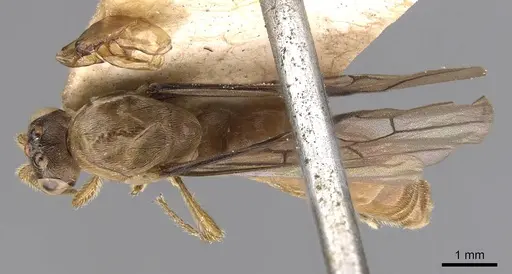
FOCOL0384
Ver en AntWeb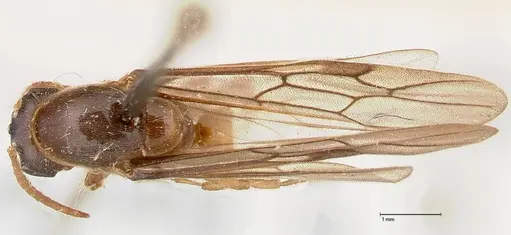
Literatura
Cargando mapa de distribución...Cargando productos...