
Aenictus jacobsoni
- Nom. cient.
- Aenictus jacobsoni
- Subfamilia
- Dorylinae
- Autor
- Forel, 1909
- Distribución
- Encontrado en 0 países
Introducción
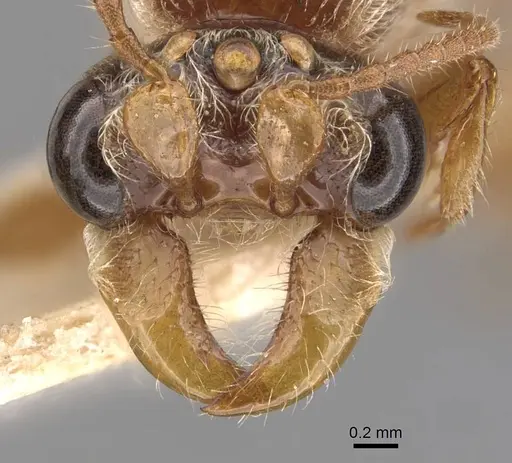
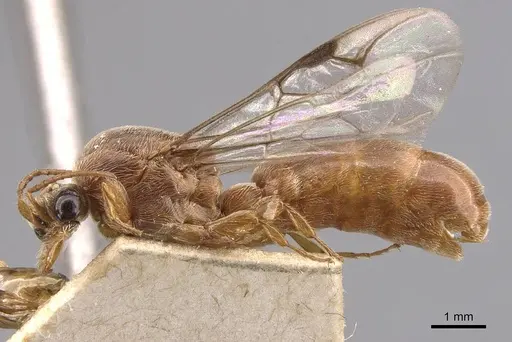
Aenictus jacobsoni is an army ant species endemic to the Indonesian islands of Java and Sumatra . Only male specimens were described in the original 1909 description by Forel, meaning worker caste, queen morphology, and colony structure remain undocumented in scientific literature . As a member of the Dorylinae subfamily, they likely share typical army ant characteristics including nomadic behavior and raiding habits, though this species specifically has never been studied in the wild.
Quick Summary
- Difficulty: Expert
- Origin & Habitat: Tropical forests of Java and Sumatra, Indonesia [1].
- Colony Type: Unknown specifically. Army ants typically form large colonies with multiple reproductive queens, but Aenictus jacobsoni has never been documented.
- Size & Growth:
- Queen: Size data unavailable, only males have been described scientifically.
- Worker: Size data unavailable, worker caste has never been documented.
- Colony: Unknown, no colony size data exists for this species.
- Growth: Unknown.
- Development: Unknown. (Development has not been studied for this species.)
- Antkeeping:
- Temperature: Warm tropical conditions, approximately 25-28°C, inferred from Indonesian distribution.
- Humidity: High humidity typical of tropical forest floor.
- Diapause: No, tropical species do not require winter rest.
- Nesting: Nomadic species does not construct permanent nests, standard ant farm setups are completely unsuitable.
- Behavior: Army ant behavior inferred from genus patterns. Likely forms raiding columns to hunt other ants and social insects. Extremely challenging to contain due to constant movement and likely large colony size.
- Common Issues: species is completely unsuitable for captive keeping due to nomadic lifestyle and undocumented care requirements., colony size and dietary needs would exceed practical limits for private ant keepers., no documented cases of successful long-term captive husbandry exist., basic biology (queen, workers, founding) remains unknown, making proper care impossible.
Distribution and Taxonomy
Aenictus jacobsoni was described by Forel in 1909 based on male specimens collected by E. Jacobson in Semarang, Java [2]. The species is endemic to Indonesia, with records from both Java and Sumatra [1]. No subsequent studies have documented the worker caste, queen morphology, or colony biology of this species.
Army Ant Biology
Specific studies of Aenictus jacobsoni do not exist. As a member of the genus Aenictus, they likely share characteristics with other Old World army ants. These ants are typically nomadic predators that form large colonies. Unlike most ants that establish permanent nests, army ants remain in a location only as long as food is available, then move their entire colony to new hunting grounds. They prey primarily on other social insects, especially other ants, using coordinated raiding columns. [1]
Why This Species Is Not Recommended for Captive Keeping
Aenictus jacobsoni presents extreme challenges that make them unsuitable for ant keeping. Their nomadic lifestyle requires massive enclosures that allow for constant colony movement. The likely colony size demands quantities of live prey that are impractical for hobbyists to provide. Their raiding behavior creates constant escape risks and makes standard nest designs completely inappropriate. No successful captive breeding or long-term maintenance of this species has been documented. [1]
Frequently Asked Questions
Can I keep Aenictus jacobsoni in a test tube?
No. This is an army ant species that does not use permanent nests. Test tubes are completely unsuitable for their nomadic lifestyle.
What do Aenictus jacobsoni eat?
Unknown specifically for this species, but related Aenictus species are specialized predators of other ants and social insects. They would require large quantities of live prey.
How big do Aenictus jacobsoni colonies get?
Unknown specifically. Army ant colonies in related species can reach thousands to tens of thousands of workers, but no data exists for this species.
Do Aenictus jacobsoni need a formicarium?
No. They are nomadic ants that do not build permanent nests. They require specialized facilities that allow for constant movement.
Are Aenictus jacobsoni dangerous?
They are unlikely to be dangerous to humans, but their small size and nomadic raiding behavior makes them extremely difficult to contain.
Can I keep multiple Aenictus jacobsoni queens together?
Unknown. No studies have documented queen number or reproductive strategy for this species.
Do Aenictus jacobsoni need hibernation?
No. They are tropical species from Indonesia and do not require winter rest periods.
Why are my Aenictus jacobsoni dying?
If you have obtained this species, they are likely dying because they cannot be kept successfully in standard ant keeping setups. This species has never been maintained in captivity and proper care methods are unknown.
Report an Issue
The current care sheet is based fully on literature. See inconsistencies, or something that's incorrect? Please , it will be resolved after review from an admin. Contributing to the blogs tab also helps providing information, to make us be able to further improve the caresheets. Thank you for your support!
References

Esta ficha de cuidados está bajo licencia CC BY-SA 4.0 .
Blogs de la comunidad
CASENT0907006
Ver en AntWeb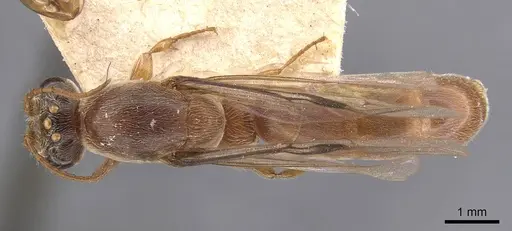
Literatura
Cargando mapa de distribución...Cargando productos...