
Aenictus bodongjaya
- Nom. cient.
- Aenictus bodongjaya
- Subfamilia
- Dorylinae
- Autor
- Jaitrong & Yamane, 2011
- Distribución
- Encontrado en 0 países
Introducción
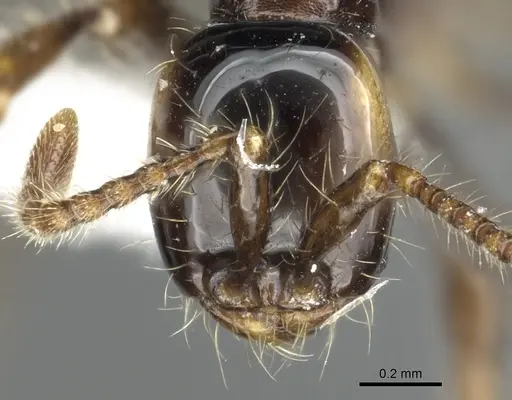
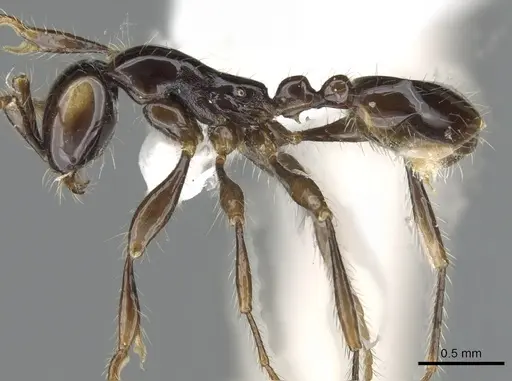
Aenictus bodongjaya is a tiny army ant species from southern Sumatra, Indonesia. Workers measure 2.9-3.2mm in total length, making them among the smaller army ant species. They have a dark reddish-brown body with entirely smooth and shiny legs, and belong to the Aenictus laeviceps species group . This species is only known from its type locality in a coffee plantation at 800-900m elevation in Bodong Jaya, Lampung Barat, southern Sumatra . As an army ant, they are specialized predators that conduct mass raids on other ant colonies and small invertebrates. The genus Aenictus is known for their nomadic lifestyle, though this particular species remains poorly studied in the wild.
Quick Summary
- Difficulty: Expert
- Origin & Habitat: Southern Sumatra, Indonesia, specifically Bodong Jaya in Lampung Barat region. Found in a coffee plantation at approximately 800-900 meters elevation [1]. This is a tropical highland area.
- Colony Type: Unknown, colony structure has not been documented for this species.
- Size & Growth:
- Antkeeping:
- Temperature: Keep at 24-28°C, this is a tropical species from Sumatra. Use a heating cable on one side of the nest to create a gentle gradient.
- Humidity: Maintain moderate to high humidity (60-80%). Aim for consistently damp substrate without being waterlogged.
- Diapause: Likely no diapause, army ants in tropical regions remain active year-round.
- Nesting: Army ants do not build permanent nests in the wild, they form bivouacs (temporary clusters). In captivity, provide a formicarium with multiple connected chambers that can be reorganized. A naturalistic setup with soil and hiding structures works better than rigid test tube setups.
- Behavior: Extremely active and aggressive predators. As army ants, they conduct coordinated mass raids on other ant colonies and small invertebrates. Workers are small but numerous, and they will readily attack and overwhelm prey colonies. They have a high escape risk due to their small size, use fine mesh barriers and ensure all openings are sealed. They do not store food like some ants, they consume prey immediately and need frequent feeding.
- Common Issues: difficulty establishing colonies, army ants are notoriously difficult to keep long-term in captivity due to their specialized requirements, need for constant live prey, they are obligate predators and will not survive on sugar water alone, escape prevention is critical due to their tiny 3mm size, stress from captivity, wild-caught colonies often fail to adapt to captive conditions, difficulty replicating their natural raiding behavior, without proper hunting space, colonies may become sluggish or fail to thrive
Understanding Army Ants
Aenictus bodongjaya belongs to the Dorylinae subfamily, commonly known as army ants. Unlike most ant species that build permanent nests, army ants are nomadic, they regularly move their entire colony to new locations, forming temporary bivouacs made of their own bodies. This species is part of the Aenictus laeviceps group, which contains smaller army ant species found primarily in Southeast Asia [1]. Army ants are specialized predators that conduct coordinated mass raids. They send waves of workers to overwhelm other ant colonies, termite colonies, or any small invertebrates they encounter. In captivity, replicating this behavior is challenging but essential for colony success.
Housing and Nest Setup
Army ants require different housing than typical ant species. Do not use simple test tube setups, they need space to move and form their characteristic raiding columns. A naturalistic setup works best: a formicarium with a deep soil layer (at least 5-8cm) mixed with organic material like coco fiber or peat moss. Provide multiple chambers connected by tunnels that the ants can reorganize as needed. The outworld (foraging area) should be spacious and include hiding structures like cork bark or small stones where they can form bivouacs. Use a water reservoir in the nest area to maintain humidity. Escape prevention is critical, these ants are tiny (under 3.2mm) and can squeeze through gaps that other ants cannot. Apply fluon or use fine mesh on all openings. Keep the nest area dark or dimly lit, army ants prefer dark, humid conditions.
Feeding and Diet
Aenictus bodongjaya is an obligate predator, they cannot survive without live prey. Feed them small live insects: fruit flies, pinhead crickets, small mealworms, waxworms, and other ant colonies. Providing feeder ant colonies is often the best way to keep them fed and active, as this mimics their natural raiding behavior. Other acceptable prey includes small spiders, springtails, and isopods. Feed small prey items daily or every other day, remove uneaten prey within 24 hours to prevent mold. They do not collect honeydew or nectar like some ants, though they may occasionally accept a drop of honey or sugar water as a supplemental energy source.
Temperature and Seasonal Care
As a tropical species from Sumatra, Aenictus bodongjaya requires warm temperatures year-round. Keep the nest area at 24-28°C. A heating cable placed on one side of the nest creates a temperature gradient that allows the ants to regulate their own temperature by moving between areas. Do not let temperatures drop below 22°C for extended periods, this species has no documented diapause and likely cannot tolerate cool conditions. Humidity should be moderate to high (60-80%), the substrate should feel damp but not waterlogged. Since this is a tropical species, they do not require hibernation.
Colony Dynamics and Behavior
Army ant colonies are fascinating but challenging to keep. Unlike typical ants that have one static nest, Aenictus colonies are constantly on the move, they will relocate their bivouac to new chambers every few days or weeks. This is normal behavior and should not be interpreted as distress. Colonies are typically founded by a single queen who seals herself in a chamber and raises the first workers alone. Once workers emerge, the colony becomes highly active and begins raiding. A healthy colony will show constant activity, workers moving in organized columns, raiding parties forming, and rapid consumption of prey. If your colony becomes sluggish, check temperature, feeding frequency, and humidity.
Frequently Asked Questions
How long does it take for Aenictus bodongjaya to produce first workers?
The exact timeline is unconfirmed for this species. Army ant queens typically seal themselves in and raise the first brood alone, so be patient during the founding stage, do not disturb the queen or open the nest prematurely.
Can I keep Aenictus bodongjaya in a test tube setup?
No, test tube setups are not suitable for army ants. They need space to form raiding columns and relocate their bivouac regularly. Use a naturalistic formicarium with soil, multiple chambers, and a spacious outworld.
What do Aenictus bodongjaya ants eat?
They are obligate predators that require live prey. Feed them small insects like fruit flies, pinhead crickets, small mealworms, and waxworms. The best approach is to provide other ant colonies as prey, this mimics their natural raiding behavior. They do not collect honeydew and will not survive on sugar water alone.
Do Aenictus bodongjaya ants sting?
Given their tiny size (under 3.2mm), any sting would be negligible even if present. Most Aenictus species are too small to penetrate human skin effectively. Their primary defense is overwhelming numbers during raids rather than stinging.
Are Aenictus bodongjaya ants good for beginners?
No, this species is rated Expert difficulty. Army ants have specialized requirements that make them one of the most challenging ant groups to keep: they need constant live prey, spacious setups, escape prevention, and warm tropical conditions. They are not recommended for anyone without significant ant-keeping experience.
How big do Aenictus bodongjaya colonies get?
The maximum colony size is unknown for this specific species. Only 17 specimens (1 holotype + 16 paratypes) have ever been collected, so colony size data does not exist.
Do Aenictus bodongjaya need hibernation?
No, this is a tropical species from Sumatra with no documented diapause. Keep them warm year-round (24-28°C).
Why is my Aenictus bodongjaya colony dying?
The most common causes are: insufficient live prey (they need constant protein), temperatures below 22°C, low humidity, stress from disturbance, or escape. Review all care parameters and ensure you are providing adequate live prey daily. Wild-caught colonies often fail to adapt to captivity.
Can I keep multiple queens together?
This has not been documented for this species. Colony structure (monogyne vs polygyne) has not been studied. Combining unrelated queens is not recommended as it typically leads to fighting.
When should I move them to a formicarium?
If you start with a founding queen in a test tube, you can move them to a naturalistic setup once the first workers have emerged and the colony is actively foraging. However, army ants often do better if started in a setup that accommodates their nomadic nature from the beginning.
Report an Issue
The current care sheet is based fully on literature. See inconsistencies, or something that's incorrect? Please , it will be resolved after review from an admin. Contributing to the blogs tab also helps providing information, to make us be able to further improve the caresheets. Thank you for your support!
References

Esta ficha de cuidados está bajo licencia CC BY-SA 4.0 .
Blogs de la comunidad
CASENT0903688
Ver en AntWeb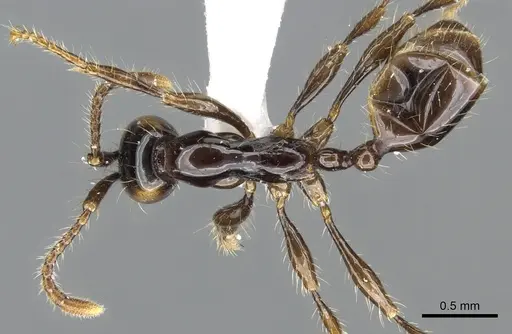
Literatura
Cargando mapa de distribución...Cargando productos...