
Aenictogiton attenuatus
- Nom. cient.
- Aenictogiton attenuatus
- Subfamilia
- Dorylinae
- Autor
- Santschi, 1919
- Distribución
- Encontrado en 0 países
Introducción
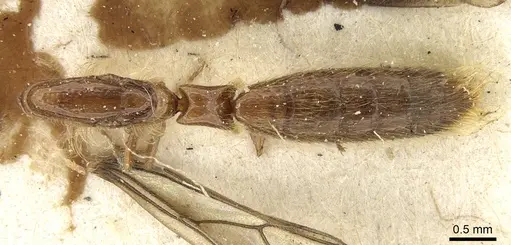
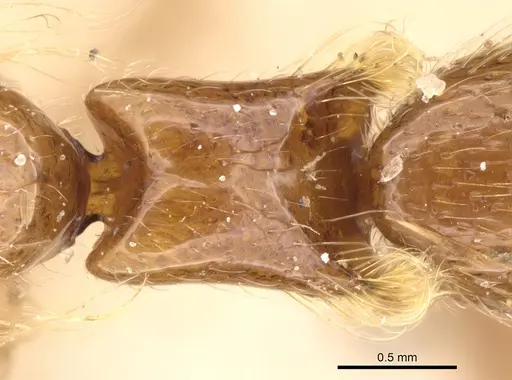
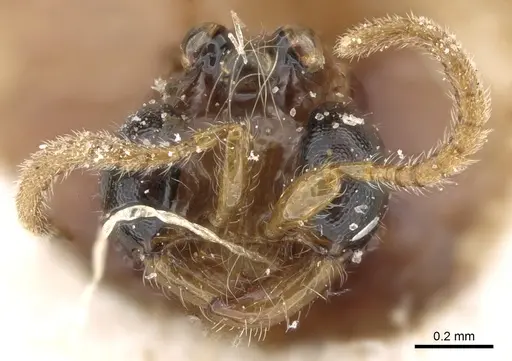
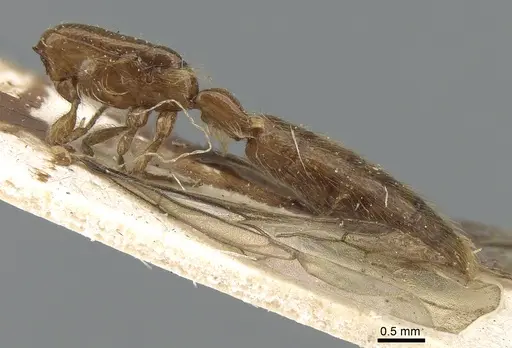
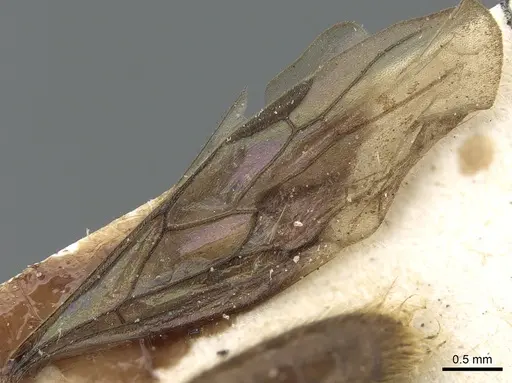
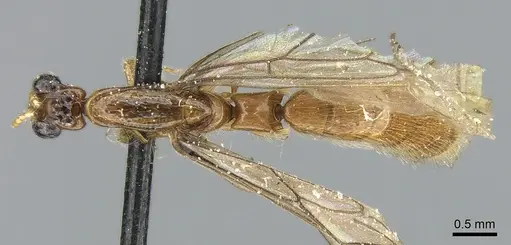
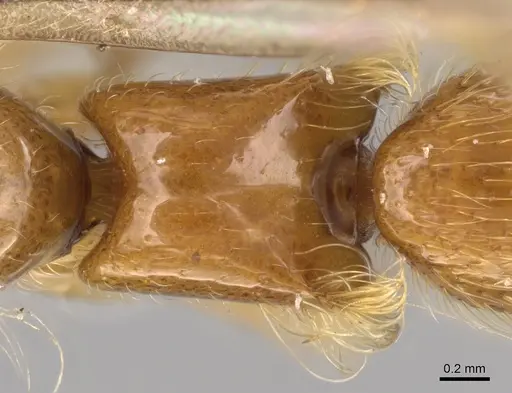
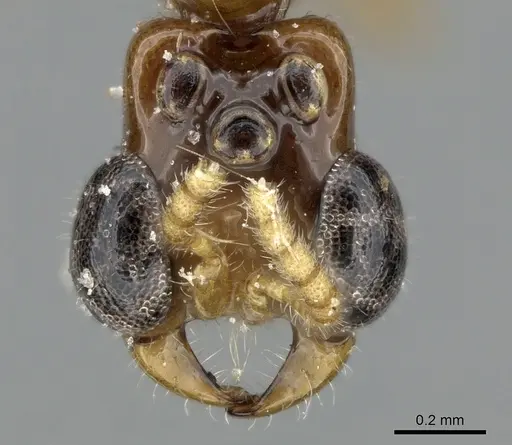
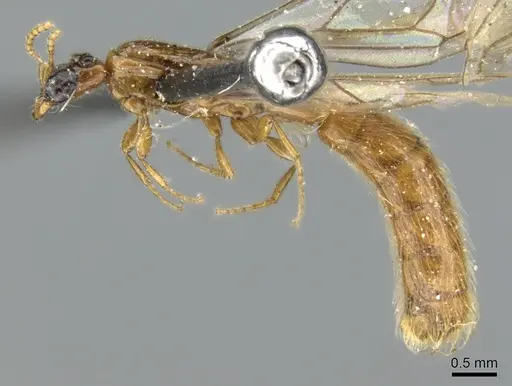
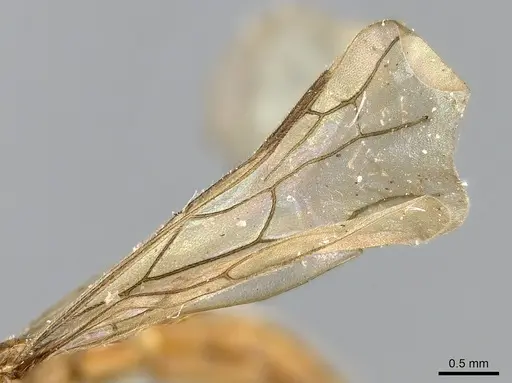
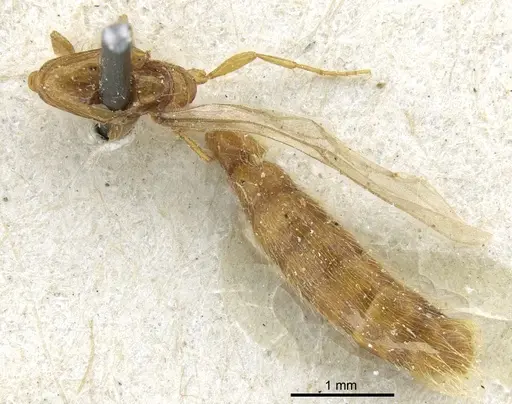
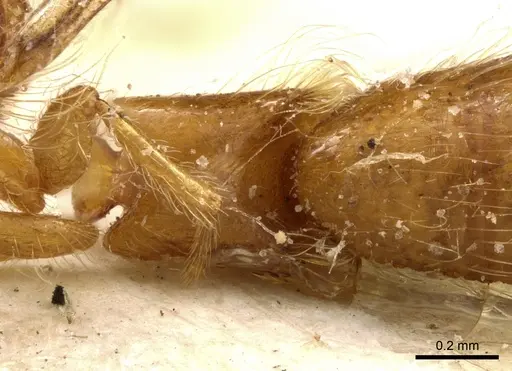
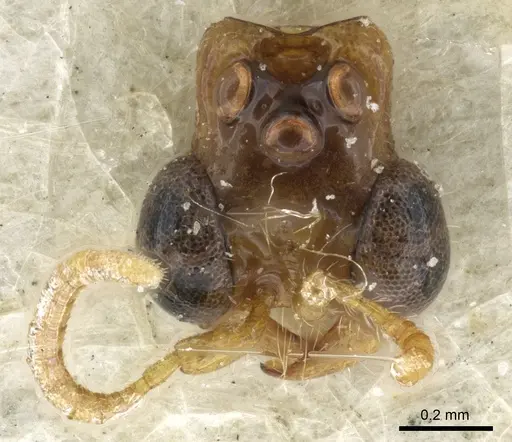
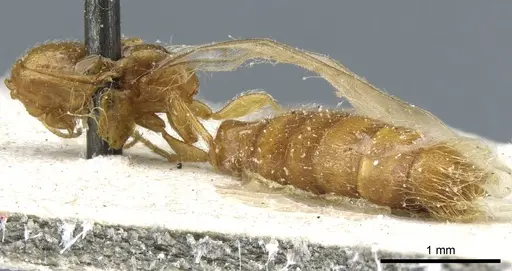
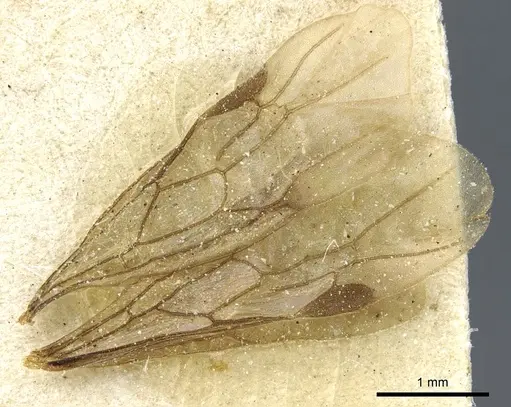
Aenictogiton attenuatus is one of the most mysterious ants in the world. Scientists have only ever found male specimens, no workers, no queens, and no colonies have ever been discovered . Males have been collected in light traps near forests in the Democratic Republic of Congo and Tanzania, suggesting these ants live in forested habitats and males fly at night . The entire genus Aenictogiton remains a complete biological mystery. They may live underground or in other hidden spaces, which explains why we have never found a colony . They belong to the subfamily Dorylinae, which includes the army ant genus Dorylus, leading some scientists to speculate they might have an army-ant-like lifestyle with huge colonies and nomadic habits, but there is no proof of this .
Quick Summary
- Difficulty: Impossible
- Origin & Habitat: Democratic Republic of Congo (Haut-Katanga and Haut-Lomami regions) and United Republic of Tanzania, forested habitats [1][2].
- Colony Type: Unknown, no colonies have ever been observed.
- Size & Growth:
- Antkeeping:
- Temperature: Unknown, based on tropical forest collection sites, likely warm stable temperatures, but unconfirmed [1].
- Humidity: Unknown, likely high humidity based on forest habitat, but unconfirmed [1].
- Diapause: Unknown, likely not needed for tropical species, but unconfirmed [1].
- Nesting: Unknown, suspected to live underground or in hidden spaces based on the lack of observed foraging, but this is speculation [1].
- Behavior: Unknown, no behavioral observations of living colonies exist [1].
- Common Issues: no queens or workers are available anywhere in the antkeeping trade., impossible to start a colony without a queen, and none have ever been collected., complete lack of care information means any attempt to keep them would be pure guesswork., males collected at light traps die quickly and cannot establish colonies.
The Mystery of Aenictogiton
Aenictogiton attenuatus was first described in 1919 from a male specimen collected in the Democratic Republic of Congo [1]. Over 100 years later, we still have never found a worker, queen, or living colony of this ant [1]. This makes it one of the most elusive ants in the world. Males continue to show up in light trap surveys near forests, proving the species is still alive, but where the actual colonies live remains a complete mystery [1][2]. Some scientists think they might live deep underground or inside rotting wood in ways that hide them from standard collecting methods [1].
Distribution and Collection
This species has been recorded in the Democratic Republic of Congo, specifically in the Haut-Katanga and Haut-Lomami regions, as well as in Tanzania [2][1]. All specimens come from forested areas, and most were caught in light traps at night [1]. This tells us they likely live in tropical forest habitats and that males fly after dark, possibly during specific seasons, though we do not know exactly when [1].
Why This Species Cannot Be Kept
You cannot keep Aenictogiton attenuatus in captivity because no one has ever found a queen or worker [1]. Without a queen, you cannot start a colony. Without workers, you cannot observe their behavior or care requirements. The species is not available from any ant dealer, and attempting to collect your own would be extremely difficult given that scientists have failed to find colonies for over a century [1]. Even if you found males, they die quickly and cannot start a colony alone.
Relation to Army Ants
Aenictogiton belongs to the subfamily Dorylinae, which includes the famous army ants like Dorylus [1]. This family connection has led some researchers to guess that Aenictogiton might live like army ants with huge colonies, nomadic habits, and group hunting [1]. However, there is no direct evidence for this, it remains pure speculation based on family relationships [1]. Until someone finds an actual colony, we cannot confirm if they are army ants, live in small hidden nests, or have some other lifestyle entirely [1].
Frequently Asked Questions
Can I keep Aenictogiton attenuatus in captivity?
No. This species is impossible to keep because no queens or workers have ever been found. Only male specimens exist in scientific collections, and males cannot start colonies [1].
Where can I buy Aenictogiton attenuatus?
You cannot buy this species anywhere. It is not available in the antkeeping trade because no one has ever collected a living colony [1].
What do Aenictogiton attenuatus eat?
We do not know. Since no workers or colonies have ever been observed, their diet remains a mystery [1].
How long until Aenictogiton attenuatus first workers hatch?
Unknown. No one has ever observed the development of this species because no colonies have been found [1].
Do Aenictogiton attenuatus need hibernation?
Unknown. They live in tropical Africa where temperatures stay warm year-round, so they likely do not need hibernation, but this is unconfirmed [1].
Are Aenictogiton attenuatus dangerous?
Unknown. Since no living colonies have been studied, we do not know if they can sting or bite [1].
Why are only males known for Aenictogiton attenuatus?
Scientists have collected males in light traps, but despite extensive searching, no one has ever found where the queens and workers live. They likely nest underground or in hidden spaces that make them extremely difficult to locate [1].
Are Aenictogiton attenuatus army ants?
They are related to army ants (genus Dorylus), but we have no proof they live like army ants. They might have huge nomadic colonies, or they might live in small hidden nests, we simply do not know [1].
Report an Issue
The current care sheet is based fully on literature. See inconsistencies, or something that's incorrect? Please , it will be resolved after review from an admin. Contributing to the blogs tab also helps providing information, to make us be able to further improve the caresheets. Thank you for your support!
References

Esta ficha de cuidados está bajo licencia CC BY-SA 4.0 .
Blogs de la comunidad
Literatura
Cargando mapa de distribución...Cargando productos...