
Zatania gloriosa
- Sci. Name
- Zatania gloriosa
- Tribe
- Lasiini
- Subfamily
- Formicinae
- Author
- LaPolla <i>et al.</i>, 2012
- Distribution
- Found in 3 countries
Introduction
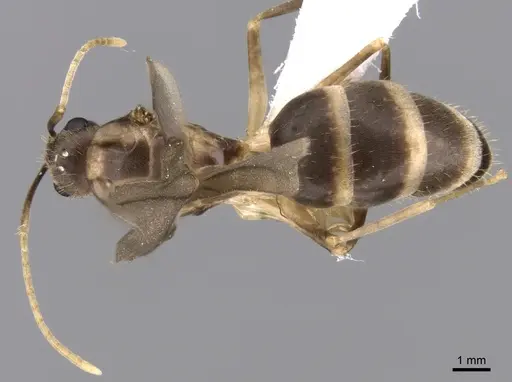
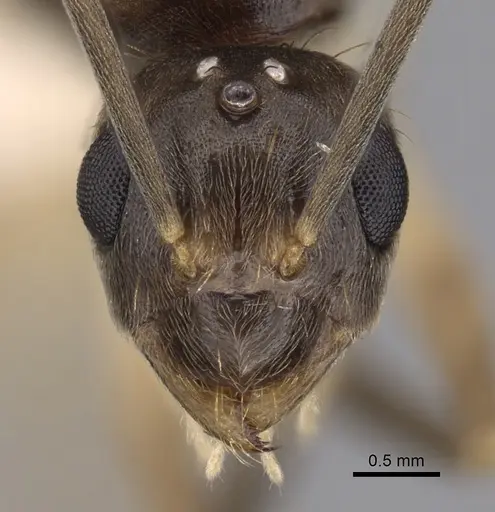
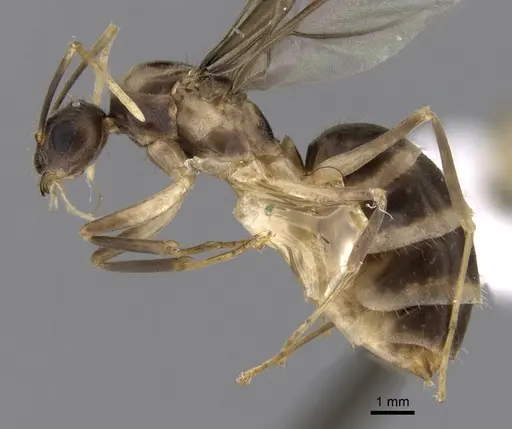
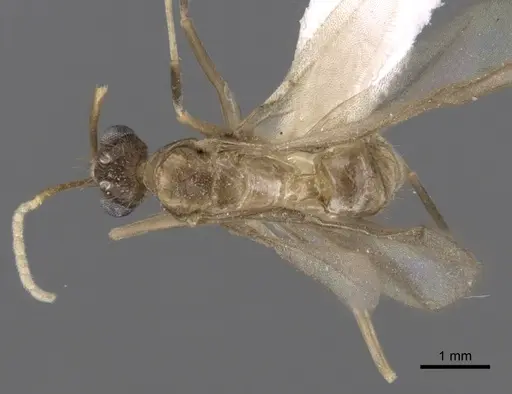
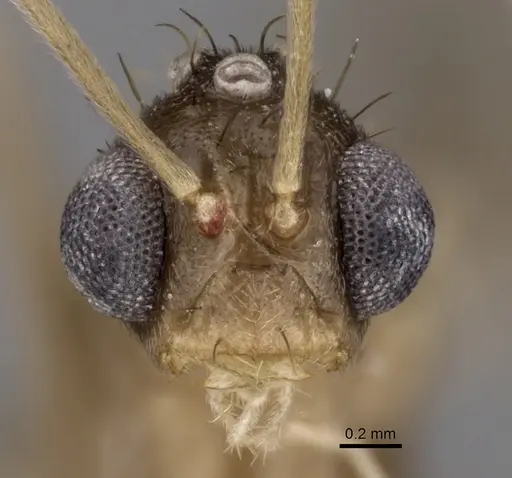
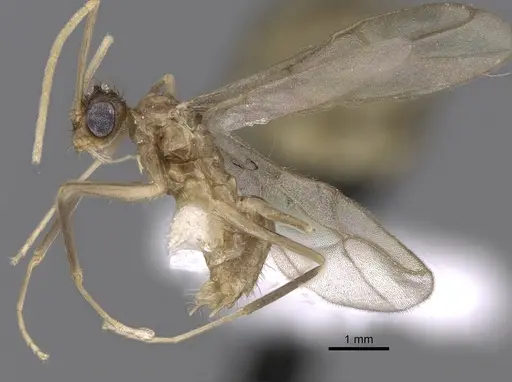
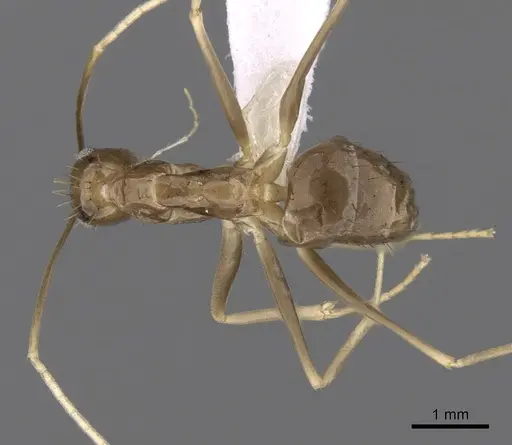
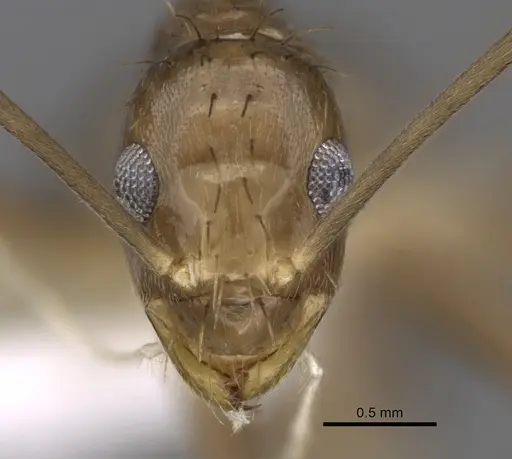
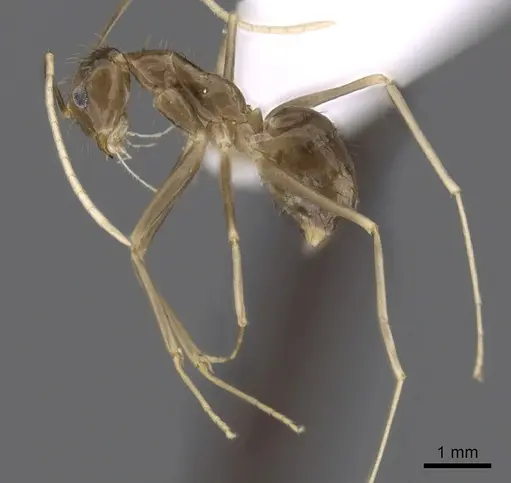
Zatania gloriosa is a tiny ant from the rainforests of Mexico, Honduras, and Guatemala . Workers measure 2.49-2.69 mm in total length, with a slender body and a distinctly narrow, oval-shaped head that sets it apart from other Formicinae . Their color pattern is striking: brown overall with patches of brownish yellow on the head (around the antenna bases), along the edges of body segments, and at the leg joints . Unlike the other four extant Zatania species, which are not ground-nesting, Z. gloriosa is the only species known to nest in the ground, with colonies found in sifted leaf litter in tropical wet forests . Its scientific name honors the type locality, Playón de la Gloria in Chiapas, Mexico .
Quick Summary
- Difficulty: Hard
- Origin & Habitat: Rainforests of Mexico (Chiapas), Honduras, and Guatemala, in tropical wet forests at elevations around 600 m. Colonies have been collected from sifted leaf litter [2][3][1].
- Colony Type: Unconfirmed, the social structure of this species has not been studied. It is the only ground-nesting Zatania species, but no data on queen number or colony composition exist [2].
- Size & Growth:
- Queen: Unknown, no queen body measurements have been published. Queens are slightly larger than workers but specific size is not recorded [2].
- Worker: 2.49-2.69 mm total length [2]
- Colony: Unknown, colony size has not been documented. Based on leaf-litter habits, colonies are unlikely to exceed a few hundred workers, but this is speculation.
- Growth: Unknown, no data on colony growth rate exists. Related Lasiini species often grow slowly, but this is not confirmed for Z. gloriosa.
- Development: Unknown, the development time has not been studied. Based on similar-sized Formicinae, an estimate of 6-10 weeks at 24°C is possible but unconfirmed. (All development data are inferred from related species, actual timeline may differ.)
- Antkeeping:
- Temperature: Keep at 22-26°C, consistent with their tropical rainforest origin. A gentle gradient (cool side 20°C, warm side 26°C) allows the ants to self-regulate [2].
- Humidity: High humidity (approximately 70-80% relative humidity) is essential. Keep the nest substrate consistently moist but not waterlogged. A water reservoir or hydration system helps maintain stable humidity [2].
- Diapause: Unknown, because the species is tropical, diapause is probably not required, but no studies have confirmed this. A slight winter cool-down (to 18-20°C) is optional but not necessary.
- Nesting: As the only ground-nesting Zatania species, Z. gloriosa thrives in a naturalistic setup with moist substrate (e.g., a soil-sand mix with leaf litter) or a Y-tong/plaster nest that retains moisture. The nest must have fine escape-proofing due to the ants' tiny size [2].
- Behavior: Very little is known about the behavior of this species. Based on their small size and leaf-litter habitat, they are likely shy, secretive, and non-aggressive. As members of Formicinae, they can spray formic acid as a defense but are not dangerous to humans. Escape prevention is critical because workers are under 3 mm and can squeeze through tiny gaps. They are probably nocturnal or crepuscular foragers.
- Common Issues: tiny size (2.5 mm) makes escape prevention extremely difficult, use fine mesh (, high humidity requirements can lead to mold if ventilation is inadequate, unknown biology may cause unexpected colony die-offs, research is minimal, tropical species may suffer if temperatures drop below 20°C for extended periods, wild-caught colonies from leaf litter may contain phorid flies, mites, or nematodes
Housing and Nest Setup
Because Zatania gloriosa is the only ground-nesting species in its genus, a naturalistic setup with moist substrate works best [2]. Mimic the leaf-litter layer with a mix of soil, sand, and organic matter (e.g., coco fiber). A Y-tong (AAC) or plaster nest with good moisture retention is also suitable. The nest chambers should be kept damp but not waterlogged. Due to the ants' tiny size (2.5 mm), your enclosure must have no gaps larger than 1 mm, use fine mesh on ventilation holes and seal all connections. A water reservoir connected to the nest helps maintain humidity over time.
Temperature and Humidity
Zatania gloriosa comes from warm, humid tropical forests [2]. Keep the nest temperature between 22-26°C. A small heating cable on one side of the nest creates a gradient, allowing the ants to choose their preferred spot. Humidity should be high (70-80% relative humidity). You can achieve this by using a moist substrate, adding a water tube inside the nest, or using a hydration system. Avoid placing the setup near air conditioners or drafty windows, as sudden temperature drops can stress the colony.
Feeding and Diet
In the wild, Zatania gloriosa likely feeds on honeydew from hemipterans and small arthropods found in leaf litter [2]. In captivity, offer a balanced diet: a sugar source (diluted honey or sugar water) and small protein prey like fruit flies, pinhead crickets, or small mealworms. Because workers are tiny, prey items should be appropriately sized (e.g., Drosophila). Provide sugar water continuously and protein two to three times per week. Remove uneaten prey after 24 hours to prevent mold. A varied diet supports healthy brood development.
Behavior and Temperament
Behavioral data for Zatania gloriosa are scarce. Based on its small size and leaf-litter habitat, it is probably shy, non-aggressive, and prefers to stay hidden. As a Formicinae, it can spray formic acid as a defense, but this is not dangerous to keepers. Escape prevention is the main concern. Workers are likely nocturnal or crepuscular, foraging through the leaf litter. They show no known specialized behaviors like slave-making or tandem running. Observe them from a distance, as handling is not recommended. [2]
Colony Development
Colony founding has not been documented for Zatania gloriosa. Most Formicinae queens are claustral, but this is not confirmed for this species. The queen probably seals herself in a small chamber and raises the first workers on stored reserves. The first workers (nanitics) are likely smaller than mature workers. Colony growth rate is unknown, keepers should be patient as the colony likely grows slowly. A well-established colony might reach only a few tens to a few hundred workers after several years, but this is speculative. Provide stable conditions and minimize disturbance during the founding stage. [2][3]
Frequently Asked Questions
How long does it take for Zatania gloriosa to raise their first workers?
This has not been studied. Based on similar small Formicinae, the time from egg to worker is likely 6-10 weeks at 24°C, but this is an estimate. No data exist for this species.
Can I keep Zatania gloriosa in a test tube setup?
A test tube can work for a founding queen, but you must ensure escape-proofing, a cotton plug alone may not be enough for such tiny ants. Use fine mesh over the opening. A test tube with a water reservoir at one end provides good humidity. Move to a larger setup once the colony has about 20-30 workers, as the test tube may become cramped or dry out too quickly.
Are Zatania gloriosa good for beginners?
No, this species is rated as Hard. Their tiny size, high humidity requirements, and unknown biology make them challenging for beginners. They are best suited for experienced keepers who can maintain stable tropical conditions and prevent escapes.
What do Zatania gloriosa eat?
Likely a generalist diet similar to other Formicinae: sugar sources (honey, sugar water) and small protein prey (fruit flies, small crickets, mealworms). In the wild, they probably consume honeydew and small arthropods from the leaf litter [2].
Do Zatania gloriosa need hibernation?
Probably not, the species is tropical and does not experience cold winters in its native range. No diapause has been reported. You can keep them active year-round at 22-26°C. A slight temperature drop in winter is optional but not required.
How big do Zatania gloriosa colonies get?
Colony size is undocumented. Based on the small body size and leaf-litter habitat, colonies probably stay small (a few hundred workers at most), but this is speculation. There are no published observations.
Why are my Zatania gloriosa escaping?
Their tiny 2.5 mm size lets them slip through openings that seem sealed to the naked eye. Check all joints, lids, and mesh edges. Use very fine mesh (0.5 mm) or apply a fluon barrier to the top of the formicarium walls. Ensure the outworld has a tight-fitting lid without gaps.
When should I move Zatania gloriosa to a formicarium?
Move them once the colony outgrows the test tube and you notice the water reservoir running low frequently, typically when the colony reaches 20-30 workers. Choose a nest with small chambers that match the ants' tiny size, and ensure the new setup has stable humidity and escape-proofing.
Can I combine multiple Zatania gloriosa queens?
No information exists on whether this species is polygynous or tolerates multiple queens. It is safest to assume that each queen should be housed alone until more is known. Do not attempt to combine unrelated queens.
Report an Issue
The current care sheet is based fully on literature. See inconsistencies, or something that's incorrect? Please , it will be resolved after review from an admin. Contributing to the blogs tab also helps providing information, to make us be able to further improve the caresheets. Thank you for your support!
References

This caresheet is licensed under CC BY-SA 4.0 .
Community Blogs
Literature
Loading distribution map...Loading products...