
Xerolitor explicatus
- Sci. Name
- Xerolitor explicatus
- Tribe
- Attini
- Subfamily
- Myrmicinae
- Author
- Kempf, 1968
- Distribution
- Found in 1 countries
Introduction
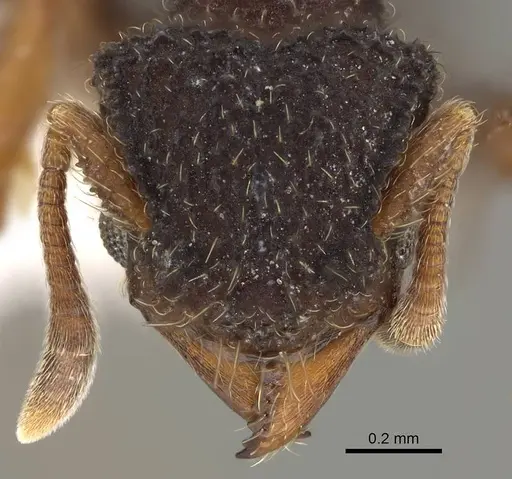
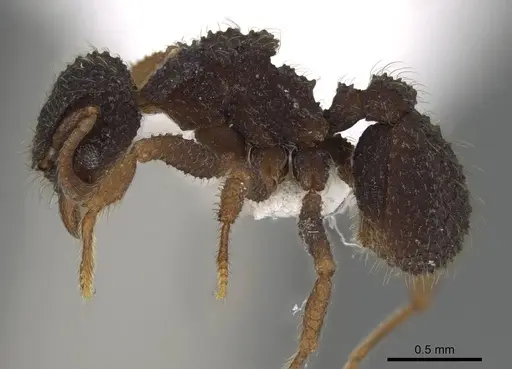
Xerolitor explicatus is a rare fungus-farming ant from the Brazilian Cerrado and Paraguayan Gran Chaco regions. Total body length is undocumented for workers and queens; only male total length is recorded at 3.82-4.09 mm . Workers are reddish-brown with a rough, areolate surface sculpture. Queens are darker reddish-brown with fully developed wings (forewing length 3.71 mm) . This species forms small colonies of up to 190 workers with a single queen, nesting underground with fungus gardens attached to rootlets 16-72 cm below the surface . Phylogenetically, it is the sole representative of an evolutionary lineage that split from the genus Sericomyrmex about 15 million years ago .
Quick Summary
- Difficulty: Expert
- Origin & Habitat: Native to the Brazilian Cerrado and Gran Chaco regions of South America (Argentina, Brazil, Paraguay), living in xeromorphic forest habitats at elevations between 250-1100 m [1][3]. Found in dry Chaco and savannah environments [2].
- Colony Type: Monogynous, single queen per colony [1].
- Size & Growth:
- Queen: Size data unavailable. Male total length 3.82-4.09 mm [1]. Queen forewing length 3.71 mm [2].
- Worker: Size data unavailable. Male total length 3.82-4.09 mm [1].
- Colony: Up to 190 workers [1].
- Growth: Moderate, inferred from related higher-attine species.
- Development: 6-10 weeks, estimated based on typical higher-attine development. (Development timeline not directly studied. Higher-attine ants typically develop from egg to worker in 6-10 weeks at optimal temperatures.)
- Antkeeping:
- Temperature: 24-28°C, these are warm-climate ants from tropical South America. A gentle gradient allows self-regulation.
- Humidity: Moderate, they nest in dry forest environments but maintain underground fungus gardens. Keep substrate lightly moist, not waterlogged.
- Diapause: Likely reduced activity in cooler months but not a true hibernator. Their native region has mild winters.
- Nesting: Underground nester, in captivity use a nesting chamber filled with soil or plaster. They need darkness and depth for fungus garden placement. A test tube setup can work for founding colonies, but they will need space for fungus garden development [1].
- Behavior: Workers forage during early morning hours (04:00-06:00) and stop after sunrise. They are crepuscular/nocturnal in dry seasons [1]. They have a stinger but are non-aggressive and pose no threat to humans. Escape prevention is moderate given their small size.
- Common Issues: maintaining live fungal cultivar is critical, they cannot survive without their symbiotic fungus [1]., dry habitat requirements can conflict with fungus cultivation needs, provide a humidity gradient., workers forage only during early morning hours (04:00-06:00), making observation difficult [1]., colonies remain small (up to 190 workers) even at maturity [1]., extreme rarity, this species is nearly unobtainable for hobbyists [2][1].
The Fungus-Growing Lifestyle
Xerolitor explicatus is a fungus-farming ant in the tribe Attini. Instead of hunting, it cultivates a specialized fungus for nutrition. The queen carries a fungal pellet during her nuptial flight to start a new garden [1]. The fungus produces gongylidia, swollen cells that the ants eat exclusively. Gongylidia size places this species in the higher-attine range, similar to fungi grown by Sericomyrmex and Trachymyrmex [1]. This means keeping Xerolitor requires maintaining a live fungal culture, they cannot survive on typical ant foods like sugar water or insects alone.
Nest Architecture and Housing
In the wild, Xerolitor nests underground with a single small entrance hole about 3 mm in diameter, no visible turret or mound. Fungus gardens are located 16-72 cm deep in chambers measuring 1.8-4.4 cm high and 1.8-3.5 cm wide. Gardens attach to rootlets hanging from the ceiling [1]. For captive care, replicate these conditions: a naturalistic setup with soil-filled chambers works best, or a plaster/soil nest with a chamber for the fungus garden. The nest must be dark. Provide a foraging area, but expect most activity during early morning hours.
Feeding and Nutrition
As a higher-attine fungus farmer, Xerolitor relies entirely on its fungal cultivar for nutrition. The ants do not hunt or scavenge, they tend their garden and consume gongylidia. In captivity, you must maintain a healthy fungal culture by providing organic material for the fungus to grow on (e.g., dead leaves, flowers, or substrates like potato or rice cereal). Their natural diet is exclusively fungus, it is unknown if they accept other food sources [1].
Foraging and Activity Patterns
Xerolitor workers have a unique foraging schedule. They are active during early morning hours between 04:00 and 06:00,stopping after sunrise around 06:15. They do not resume foraging during evening or early night hours [1]. This suggests crepuscular/nocturnal foraging to avoid midday heat. In captivity, you may rarely see them during typical waking hours. The best time to observe is very early morning. During rainy seasons or cooler months, they may shift to more diurnal activity [1].
Temperature and Seasonal Care
Xerolitor comes from the Brazilian Cerrado and Gran Chaco, which have hot summers and mild winters. Keep the nest at 24-28°C, with a gentle gradient so workers can self-regulate. A heating cable on top of the nest (to avoid drying the fungus) can help. They do not require true hibernation but may reduce activity during cooler months. Monitor colony activity, if workers become sluggish, slightly increase temperature. [1][3]
Colony Founding
Founding behavior is not directly documented for this species. Based on tribe-level patterns, the queen likely performs claustral founding: she seals herself in a chamber, uses stored fat, and raises her first workers from a fungal inoculum. She carries a pellet of fungal mycelium from her natal colony [1]. First workers (nanitics) will be smaller than mature workers and will begin tending the fungus. Colony growth is slow, expect 6-10 weeks for first workers to emerge.
Rarity and Availability
Xerolitor explicatus is one of the rarest ant species in captivity. It was known from only two worker specimens collected in 1968 [2]. Recent fieldwork has expanded knowledge, but it remains exceedingly rare in both the wild and hobby. It is highly unlikely to be available from commercial suppliers. Obtaining this species would require specialized research connections. This rarity, combined with specialized fungus-farming requirements, makes it an expert-level species unsuitable for beginners [2][1].
Frequently Asked Questions
Can I keep Xerolitor explicatus in a test tube?
A test tube can work for a founding queen, but you will need to transfer the colony to a more naturalistic setup with soil once the colony grows. The fungus garden needs space and rootlets to attach to, which a test tube cannot provide. Plan to move them to a soil-filled chamber within a few months of the first workers emerging.
What do Xerolitor explicatus eat?
They eat only their cultivated fungus. Unlike other ants, they do not hunt insects or drink sugar water. You must maintain a live fungal culture by providing organic material (like dead leaves or potato) for the fungus to grow on. The ants consume gongylidia, special fungal structures their garden produces.
How long does it take for the first workers to appear?
Based on typical higher-attine development, expect 6-10 weeks from egg to first worker at optimal temperatures (around 26°C). This is an estimate, the exact timeline has not been directly studied for this species. Nanitics will be smaller than mature workers and will immediately begin tending the fungus.
How big do Xerolitor explicatus colonies get?
Colonies remain small. The largest observed wild colonies had up to 190 workers [1]. This is typical for higher-attine ants outside the leaf-cutter genera. Do not expect large colonies like those of Lasius or Camponotus.
Are Xerolitor explicatus ants dangerous?
No. They are small, non-aggressive fungus farmers with a stinger that is not used for defense against humans. They pose no danger.
Do Xerolitor explicatus need hibernation?
No true hibernation is required. As tropical ants from South America, they do not experience harsh winters. They may reduce activity during cooler months, but keeping them at room temperature (20-24°C) year-round is appropriate. They prefer warm conditions of 24-28°C.
Why can't I find Xerolitor explicatus for sale?
This is one of the rarest ant species in the world. It was known from only two specimens until recently and remains exceedingly rare in both scientific collections and the ant-keeping hobby. There are no commercial suppliers. Obtaining this species would require connections to research institutions or specialized breeders.
Can I keep multiple queens together?
No. Xerolitor explicatus is monogynous, colonies have a single queen. Multiple queens would fight. In the wild, only one queen per colony has been observed [1]. Do not attempt to combine unrelated queens.
What temperature should I keep Xerolitor explicatus at?
Keep them warm at 24-28°C. These are ants from hot South American habitats. Use a heating cable on one side of the nest to create a gentle gradient, and place it on top of the nest to avoid drying out the fungus garden.
Is Xerolitor explicatus good for beginners?
No. This is an expert-level species. The combination of requiring live fungal cultivation, unusual foraging schedules (early morning), underground nesting needs, extreme rarity, and specialized knowledge makes it completely unsuitable for beginners. Even experienced antkeepers should think carefully before attempting this species.
Report an Issue
The current care sheet is based fully on literature. See inconsistencies, or something that's incorrect? Please , it will be resolved after review from an admin. Contributing to the blogs tab also helps providing information, to make us be able to further improve the caresheets. Thank you for your support!
References

This caresheet is licensed under CC BY-SA 4.0 .
Community Blogs
CASENT0173987
View on AntWeb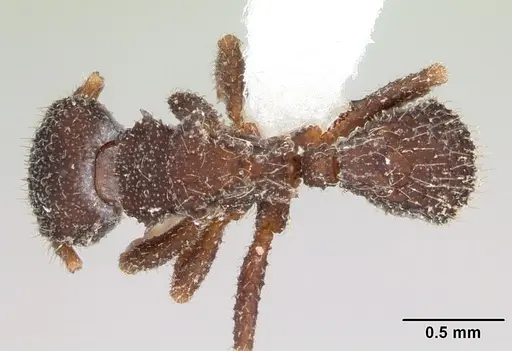
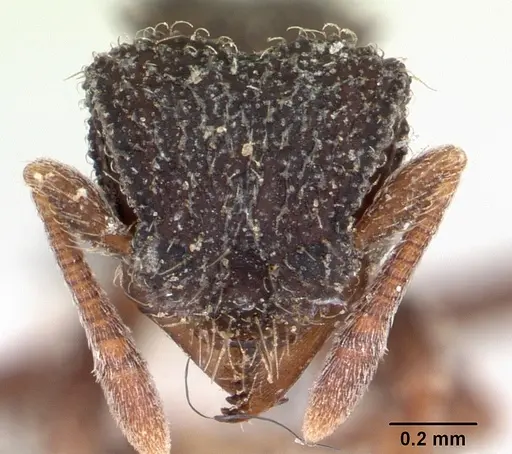
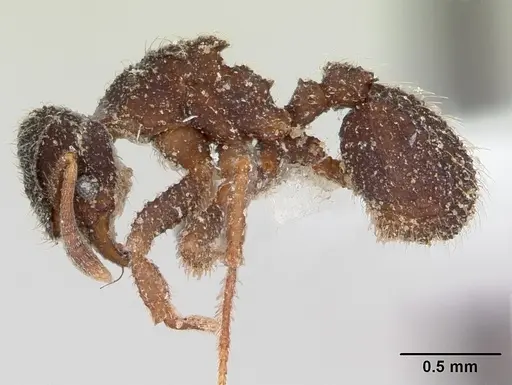
CASENT0922150
View on AntWeb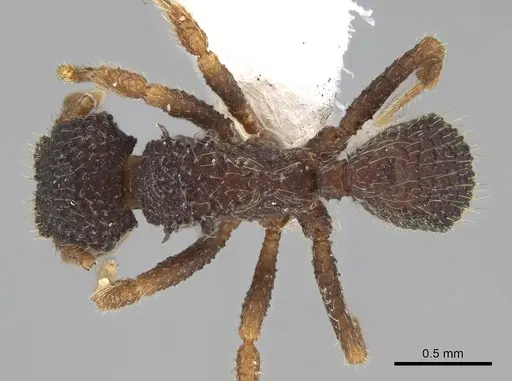
Literature
Loading distribution map...Loading products...