
Xenomyrmex stollii
- Sci. Name
- Xenomyrmex stollii
- Tribe
- Crematogastrini
- Subfamily
- Myrmicinae
- Author
- Forel, 1885
- Distribution
- Found in 4 countries
Introduction
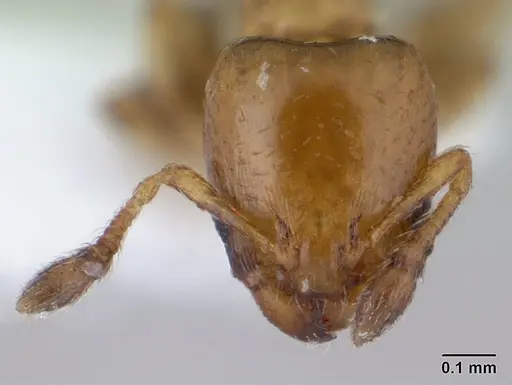
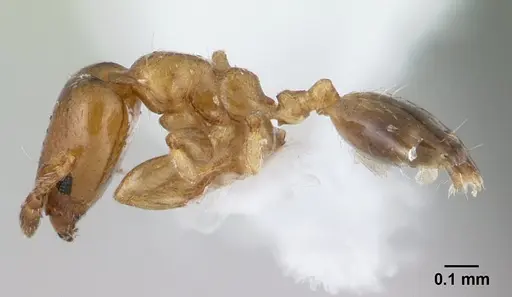
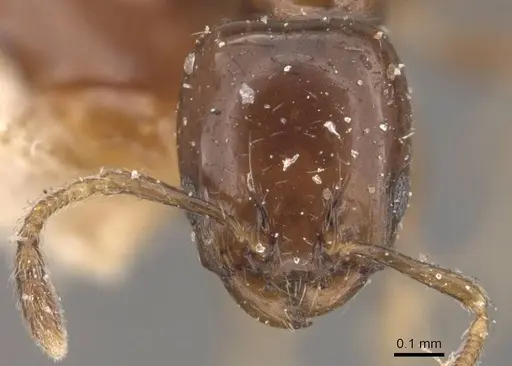
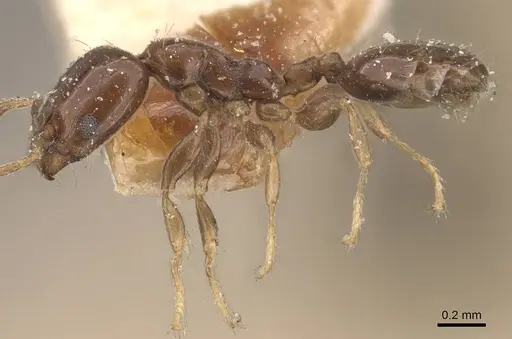
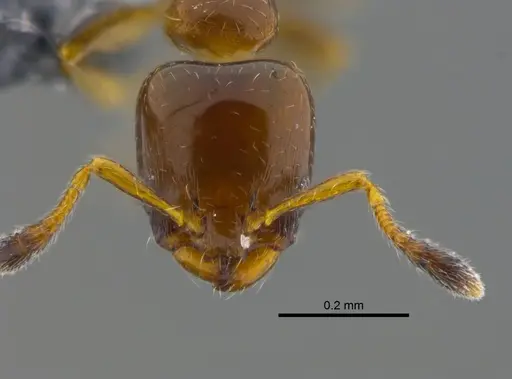
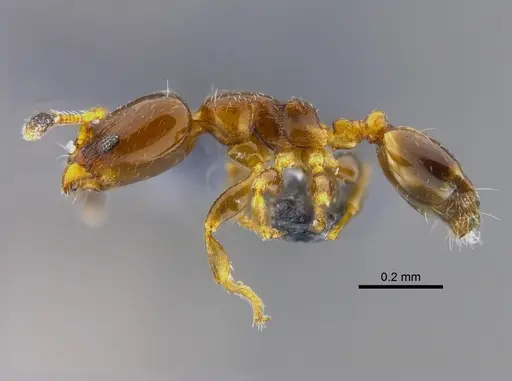
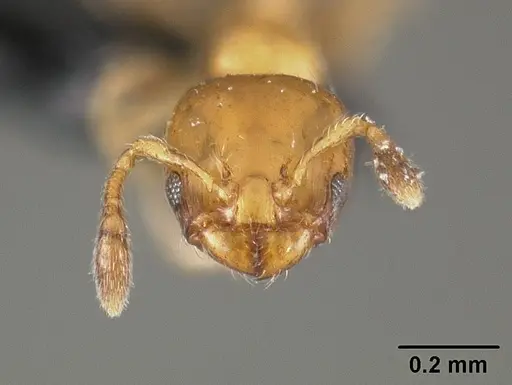
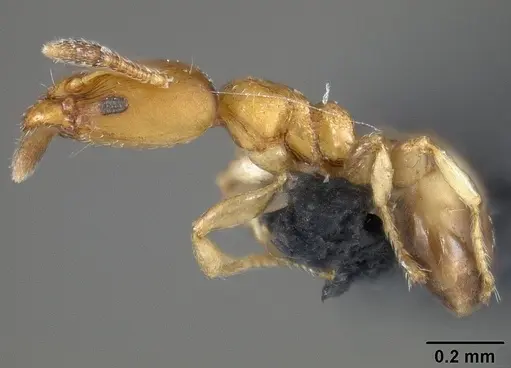
Xenomyrmex stollii is a tiny myrmecophilous ant native to the Neotropics, ranging from southern Mexico through Guatemala to Brazil. Workers measure just 2-2.3 mm and have a distinctive low, flattened body with smooth, shiny surfaces and a dark chestnut-brown to nearly black coloration . This species lives in close association with colonies of the much larger ant Camponotus abscisus, specifically nesting within plant cavities like oak galls occupied by their host . The genus Xenomyrmex is considered analogous to the European Formicoxenus, which are known guest ants that live inside host ant nests . Queens have an extremely low fat‑to‑muscle ratio (FMR of 0.13), placing them at the threshold of flightlessness - they have the lowest FMR recorded among ant species studied for flight dispersal . Like other members of the tribe Crematogastrini, their primary defense is a modified stinger used to smear venom onto attackers rather than piercing flesh.
Quick Summary
- Difficulty: Expert
- Origin & Habitat: Neotropical region, found in Guatemala, southern Mexico (Hidalgo, Nuevo León, Veracruz states), and Brazil. This arboreal species nests in plant cavities, always in association with Camponotus abscisus colonies [5][6][2].
- Colony Type: Myrmecophilous, lives as a guest inside host colonies of Camponotus abscisus. Social structure (monogyne vs. polygyne) is unknown. It cannot survive without a host.
- Size & Growth:
- Queen: Size data unavailable, only head width (0.7 mm) has been measured, which is not total body length [3][4].
- Worker: 2-2.3 mm [1].
- Colony: Unknown, likely small colonies, typical for myrmecophilous ants.
- Growth: Unknown, no captive breeding data.
- Development: Unconfirmed, no direct observations. Inferred from related small Myrmicinae: 4-8 weeks at tropical temperatures. (Development has never been directly observed in captivity.)
- Antkeeping:
- Temperature: Based on its Neotropical distribution, it likely thrives at 24-28 °C. No specific studies exist, so monitor and adjust.
- Humidity: As an arboreal cavity‑nester, moderate to high humidity is likely, keep the nest substrate slightly damp without waterlogging.
- Diapause: Unlikely, being a Neotropical species, it probably does not require a true diapause. May slow activity during cooler seasons.
- Nesting: In nature it nests in plant cavities, especially oak galls occupied by Camponotus abscisus [1]. In captivity you would need to provide a nest that allows close proximity to a living host colony, which is extremely challenging.
- Behavior: This is a specialized guest ant that lives commensally with Camponotus abscisus. It is not aggressive and relies on the host colony for protection and food. Workers are only 2 mm long, so they can squeeze through tiny gaps, excellent escape prevention is essential. They possess a modified stinger used for smearing venom, but are far too small to harm humans.
- Common Issues: this species requires a living host colony (Camponotus abscisus), keeping it alone is impossible, no captive breeding data exists, every attempt is experimental, standard ant‑keeping approaches (test tubes, formicaria without hosts) will fail, tiny size makes escape prevention very difficult, use fine mesh and seal all openings, even with a host, the long‑term success of a mixed colony in captivity is undocumented
Species Overview and Natural History
Xenomyrmex stolliii is one of the smallest ants in the Myrmicinae subfamily, with workers measuring just 2-2.3 mm [1]. Originally described from Guatemala City, where workers were found inside an enormous oak gall alongside a Camponotus abscisus colony [1]. The species has since been recorded across the Neotropical region, including multiple Mexican states (Hidalgo, Nuevo León, Veracruz) and Brazil [6][7]. Xenomyrmex is rare in ant surveys, occurring in only 0.12-3 % of samples in Amazonian studies, indicating naturally low population densities [8][9]. Forel first suggested this genus might be parasitic, analogous to the European genus Formicoxenus, and later research confirmed Camponotus abscisus as the host [2][1].
Flight and Dispersal Biology
Studies of queen flight morphology reveal that X. stollii has one of the most unusual reproductive biologies recorded. Queens have a body mass of just 0.602 mg and an extremely low fat‑to‑muscle ratio (FMR) of 0.13, the lowest among all species studied [3][4]. This FMR places them at the marginal flightlessness threshold (0.12-0.16), meaning they have very limited flight capability. Their wingspan is 7.33 mm with a wing area of 7.59 mm², but wing loading is extremely low at 0.78 N/m², and they have the highest aspect ratio (7.09) in the study, indicating highly efficient gliding wings rather than powerful fliers [3][4]. This suggests queens likely disperse through short‑range nuptial flights or perhaps on foot after landing, rather than long‑distance aerial dispersal.
Myrmecophilous Lifestyle
X. stollii is a specialized guest ant, it cannot survive independently but requires association with host colonies of Camponotus abscisus [2][10]. In the original collection from Guatemala, workers were found alongside larvae and pupae inside the same oak gall as the host colony [1]. This commensal relationship means Xenomyrmex lives in the nest structure of its host without directly harming it, it likely benefits from the host’s protection and shares its food stores. This is similar to how Formicoxenus species live in Formica nests in Europe. The practical implication for ant keepers is that this species absolutely cannot be kept in isolation, it needs a living Camponotus abscisus colony, which itself is a challenging species to maintain.
Keeping Considerations
This species is not recommended for ant keeping. Unlike typical ants that can be kept in test tubes or formicaria, X. stollii has an obligate requirement for a host ant colony. The only conceivable way to keep them would be to maintain both species simultaneously, with the Xenomyrmex living in proximity to or within the Camponotus abscisus nest. Camponotus abscisus is a large Neotropical carpenter ant that itself requires warm, humid conditions. No documented case exists of this species being successfully maintained in captivity, and its specialized biology suggests it would be extremely challenging even for expert antkeepers. For those interested in myrmecophilous ants, better‑studied species such as Formicoxenus nitidulus (the European guest ant) or other tropical guest ants with more accessible biologies would be more appropriate targets. [2][1]
Frequently Asked Questions
Can I keep Xenomyrmex stollii in a standard ant setup?
No. X. stollii cannot survive in isolation. It is an obligate guest ant that requires association with a living Camponotus abscisus colony. Keeping it in a standard test tube or formicarium without a host results in certain death [2][1].
What do Xenomyrmex stollii eat?
Their exact diet is not documented. As guest ants living inside host colonies, they probably feed on the host’s food stores or honeydew collected by Camponotus workers. They are not known to be predatory [2].
How big do Xenomyrmex stollii colonies get?
Colony size is not well documented. Based on their rare occurrence in ant surveys (found in only 0.12-3 % of samples) and their guest‑ant lifestyle, colonies are probably small, likely fewer than 100 workers. No captive colony size data exist [8][9].
Do Xenomyrmex stollii sting?
They have a stinger, but it is modified for smearing venom. Because workers are only 2-2.3 mm, they are far too small to penetrate human skin. They rely on their host colony for defense [1].
Are Xenomyrmex stollii good for beginners?
Absolutely not. This species is unsuitable for beginners or even intermediate keepers. It requires a living Camponotus abscisus host colony to survive, and no documented captive breeding exists. Even experienced antkeepers would struggle with the host requirement [2][1].
Do Xenomyrmex stollii need hibernation?
No. As a Neotropical species from Guatemala, Mexico, and Brazil, they do not require hibernation. They likely need year‑round warm conditions similar to their host [6][7].
How long does it take for Xenomyrmex stollii to develop from egg to worker?
This has never been documented. No captive observations exist for this species. Related small Myrmicinae from tropical regions typically develop in 4-8 weeks at warm temperatures, but this is only an estimate, there is no direct evidence.
Can I keep multiple Xenomyrmex stollii queens together?
Unknown. Multi‑queen founding (pleometrosis) has not been documented for this species. The more critical issue is whether they can survive at all without a host colony.
Why are Xenomyrmex stollii so rarely kept?
Because they are obligate guest ants, they cannot survive without a living Camponotus abscisus host colony. This makes them one of the most difficult ants to keep, as you must manage both species simultaneously. They are also rarely encountered even in their native range, occurring in only 0.12-3 % of ant surveys [2][8][9].
Where does Xenomyrmex stollii live in the wild?
It is found in Guatemala, southern Mexico (Hidalgo, Nuevo León, Veracruz states), and Brazil. As an arboreal ant, it nests in plant cavities, specifically documented inside oak galls occupied by its host Camponotus abscisus [6][7][1].
Report an Issue
The current care sheet is based fully on literature. See inconsistencies, or something that's incorrect? Please , it will be resolved after review from an admin. Contributing to the blogs tab also helps providing information, to make us be able to further improve the caresheets. Thank you for your support!
References

This caresheet is licensed under CC BY-SA 4.0 .
Community Blogs
CASENT0179463
View on AntWeb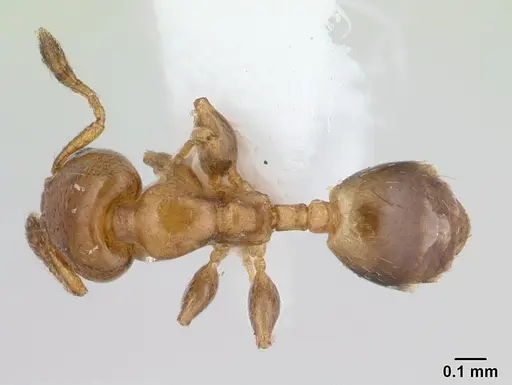
CASENT0908782
View on AntWeb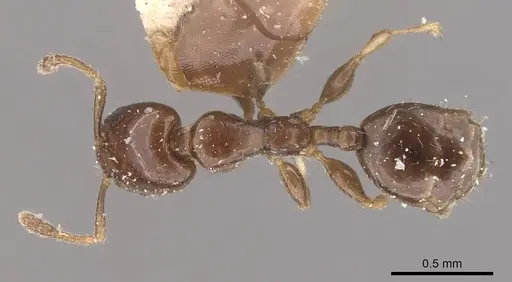
CBUMAGENT41913
View on AntWeb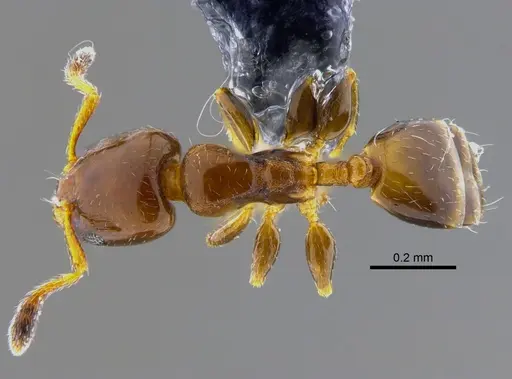
USNMENT01124291
View on AntWeb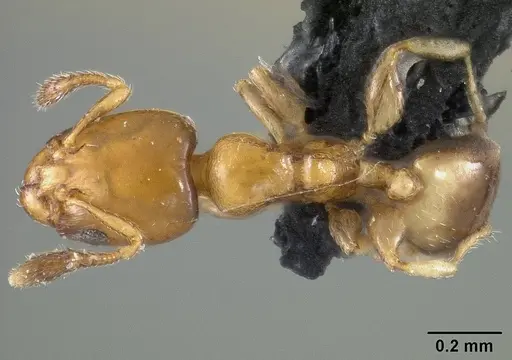
Literature
Loading distribution map...Loading products...