
Wasmannia lutzi
- Sci. Name
- Wasmannia lutzi
- Tribe
- Attini
- Subfamily
- Myrmicinae
- Author
- Forel, 1908
- Distribution
- Found in 2 countries
Introduction
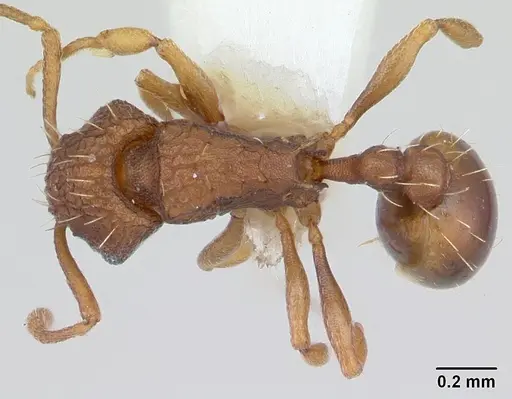
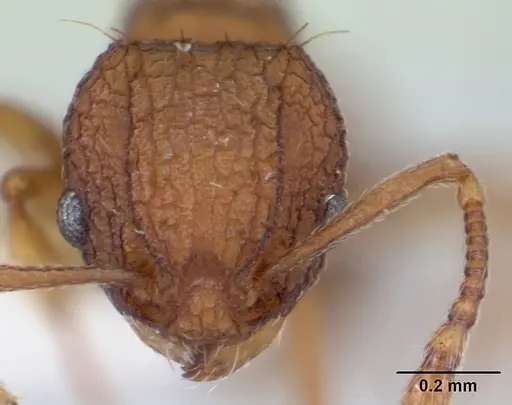
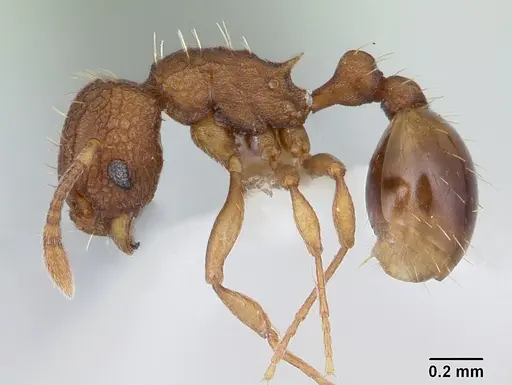
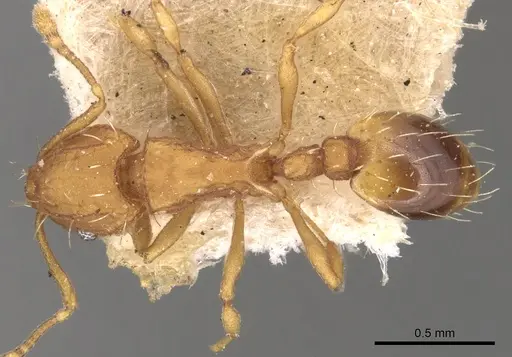
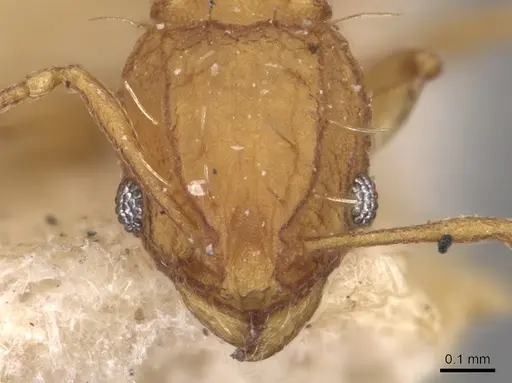
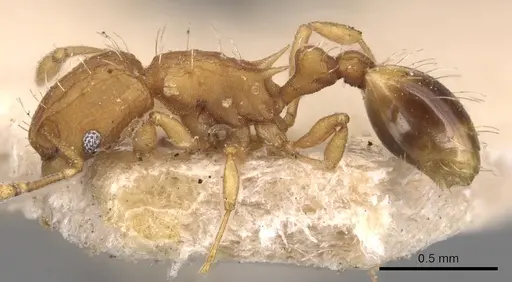
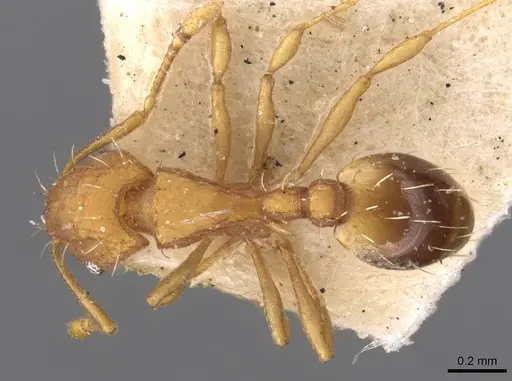
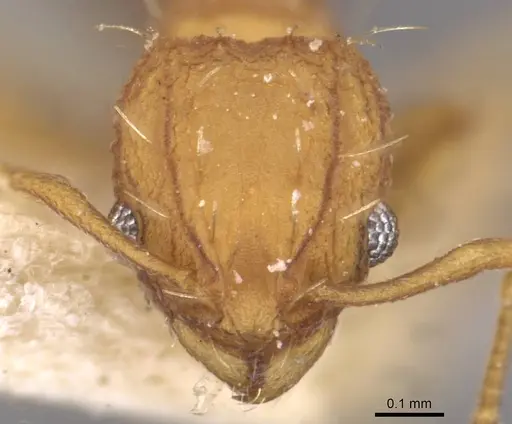
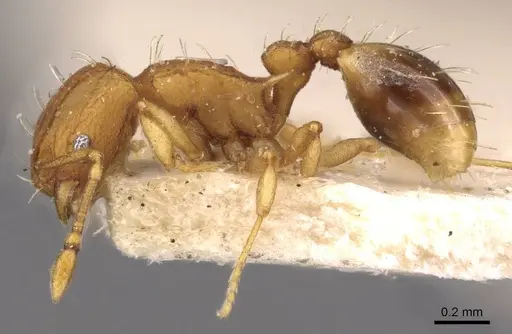
Wasmannia lutzi is a tiny ant species native to the Neotropical region of South America, found across southeastern Brazil (São Paulo state), Paraguay, and northern Argentina . It lives in a variety of habitats including Atlantic and Amazon forests, Caatinga dry forests, Cerrado savanna, grasslands, and regeneration fragments . Workers are among the smallest ants in the world, no total body length is recorded, but their mesosoma (chest) is only 0.56 mm long and their head width is 0.49 mm . Queens have a mesosoma length of 1.15 mm and a strongly trapezoidal head that is broader behind the eyes than across them . The species is easily recognized by its unique, very broad antennal scrobe that forms a flat surface from the frontal carinae to the side of the head, giving the head an angular look . Part of the tribe Attini, its specific biology is poorly known, for instance, it may or may not rely on fungus gardens . Notably, the genome size of this species has been measured at 0.37 pg .
Quick Summary
- Difficulty: Medium
- Origin & Habitat: Native to the Neotropical region of South America: southeastern Brazil (São Paulo state), Paraguay, and northern Argentina [1][2]. Recorded in Atlantic Forest, Amazon Forest, Caatingas dry forests, Cerrado, natural grasslands, and secondary forest fragments [3][4][5][6][7]. Also found in restinga (coastal dune) vegetation [9].
- Colony Type: Colony structure is not well documented. Based on related Wasmannia species, they likely have a single queen (monogyne), but this is unconfirmed. No ergatoid (wingless) replacement queens have been reported for this species.
- Size & Growth:
- Queen: No published total length, mesosoma (chest) length 1.15 mm [1]. Expected total length roughly 2.5-3 mm inferred from the genus.
- Worker: No published total length, mesosoma (chest) length 0.56 mm [1]. One of the smallest known ant species.
- Colony: Unknown for this species. Related Wasmannia auropunctata colonies can reach several thousand workers, but Wasmannia lutzi likely stays smaller.
- Growth: Unknown, likely moderate based on patterns in related species.
- Development: Estimated 5-8 weeks at 25-28 °C, based on typical development of small tropical Myrmicinae. (Timeline not specifically studied for this species. Estimate assumes stable tropical conditions.)
- Antkeeping:
- Temperature: Maintain 24-28 °C year-round, these are tropical ants from warm Brazilian habitats. Provide a gentle gradient, avoiding temperatures below 20 °C. [2]
- Humidity: Moderate to high, nest substrate should be consistently moist but not waterlogged. Mimic humid forest floor conditions.
- Diapause: No, tropical species, no winter diapause needed. Keep conditions warm year-round. [2]
- Nesting: In nature they nest in soil, under stones, and in rotting wood in forests [6][4]. For captivity, a test tube works for founding. Later, use a small Y‑tong (AAC), plaster, or soil nest with chambers scaled to their tiny size. Never use acrylic, it promotes condensation and poor air exchange.
- Behavior: Wasmannia lutzi is a docile, non‑aggressive species. Workers are active foragers, likely nocturnal or crepuscular. They have a functional stinger (like all Myrmicinae), but due to their tiny size, any sting is negligible to humans. Escape prevention is absolutely critical, their minute size allows them to squeeze through standard barriers. Use fine mesh (
- Common Issues: Escape prevention is critical due to their extremely small size, they can pass through gaps that seem sealed., Requires warm tropical temperatures, exposure below 20 °C can quickly cause colony stress or death., Limited specific care information available, expect to experiment, especially with diet and humidity., Wild‑caught colonies may carry mites or parasites that can decimate the colony., Minute size makes them hard to observe without magnification, and founding colonies are vulnerable to sudden disturbance.
Housing and Setup
For founding, a small‑diameter test tube with a cotton‑sealed water reservoir works well. Because queens are small (mesosoma ~1.15 mm), even a narrow tube is enough. Keep the tube horizontal or slightly tilted so the queen can reach water. Once the colony reaches roughly 30-50 workers, move them to a small Y‑tong (AAC), plaster, or soil nest with chambers no more than a few millimeters wide. Small chambers help the ants feel secure and make brood care easier. Keep the nest substrate moist, not flooded, and provide a small outworld for feeding. Escape prevention is absolutely critical: use fine mesh ( [2]
Temperature and Heating
Wasmannia lutzi requires warm tropical conditions. Keep the nest and outworld at 24-28 °C year‑round. Use a heating cable or mat on one side of the nest to create a gentle temperature gradient, allowing the ants to choose their preferred spot. Avoid letting the temperature drop below 20 °C, this can stall brood development and weaken the colony. If your home stays below 24 °C, supplemental heating is necessary. Watch the ants: if they all crowd near the heat source, the gradient may be too cold, if they avoid the heated area, reduce heat. [2]
Feeding and Diet
Although Wasmannia lutzi belongs to the fungus‑growing tribe Attini, it is unclear whether it actually depends on a fungal symbiont. No specific fungus has been recorded for this species. In captivity, offer a varied diet typical for small Myrmicinae: live prey such as fruit flies, pinhead crickets, and small mealworms, along with sugar water or honey as energy sources. Feed small amounts every 2-3 days and remove leftovers to prevent mold. Fresh water must always be available. Based on related species, these ants are generalist foragers that collect scavenged items. [2]
Colony Development
Queens have a mesosoma length of 1.15 mm, workers are even smaller with a mesosoma of only 0.56 mm [1]. The founding process has not been documented, but based on patterns in small Myrmicinae, queens likely seal themselves in a claustral chamber for 4-6 weeks before the first nanitic workers emerge. The first workers will be especially tiny, subsequent broods may be slightly larger. Colony growth is probably moderate, expect several months to reach 30-50 workers. Patience is essential. Do not disturb the queen during founding, stress may cause her to eat the eggs or abandon them. [1]
Handling and Temperament
Wasmannia lutzi is docile and poses no threat to keepers. Even if they do sting, the effect is negligible because of their tiny size. However, their minute size makes them expert escape artists. Always use fine mesh ( [2]
Frequently Asked Questions
How long does it take for Wasmannia lutzi to produce first workers?
The exact timeline for this species is not documented. Based on patterns in similar small Myrmicinae kept at 25-28 °C, expect first workers (nanitics) to emerge about 5-8 weeks after the queen lays her first eggs.
Can I keep Wasmannia lutzi in a test tube setup?
Yes. A small‑diameter test tube with a cotton water plug works well for founding. Keep it horizontal or slightly tilted. Once the colony reaches ~30-50 workers, move them to a properly scaled Y‑tong, plaster, or soil nest.
What temperature do Wasmannia lutzi need?
Maintain 24-28 °C year‑round. These tropical ants cannot tolerate temperatures below 20 °C for long. A heating cable or mat on one side of the nest creates a helpful gradient.
How big do Wasmannia lutzi colonies get?
The maximum colony size for this species is unknown. Related Wasmannia species like W. auropunctata can reach several thousand workers, but Wasmannia lutzi likely stays in the hundreds. No data are available.
Do Wasmannia lutzi need hibernation or diapause?
No. They are tropical ants with no winter diapause. Keep them warm and active year‑round.
Why are my Wasmannia lutzi escaping?
Their tiny size lets them squeeze through gaps that seem sealed. Use fine mesh (
Are Wasmannia lutzi good for beginners?
They are moderate difficulty. While hardy once established, their minute size requires careful escape‑proofing and attention to temperature. Beginners should be prepared for extra vigilance and some trial‑and‑error because specific care data is scarce.
What do Wasmannia lutzi eat?
Offer small live prey (fruit flies, pinhead crickets, small mealworms) and sugar water or honey. Feed small amounts every 2-3 days and remove leftovers. Fresh water should always be available.
When should I move Wasmannia lutzi to a formicarium?
Keep them in a test tube during founding. Once the colony reaches roughly 30-50 workers and the tube shows signs of crowding or fouling, transfer them to a small Y‑tong, plaster, or soil nest with narrow chambers.
Report an Issue
The current care sheet is based fully on literature. See inconsistencies, or something that's incorrect? Please , it will be resolved after review from an admin. Contributing to the blogs tab also helps providing information, to make us be able to further improve the caresheets. Thank you for your support!
References

This caresheet is licensed under CC BY-SA 4.0 .
Community Blogs
Literature
Loading distribution map...Loading products...