
Vombisidris dryas
- Sci. Name
- Vombisidris dryas
- Tribe
- Crematogastrini
- Subfamily
- Myrmicinae
- Author
- Bolton, 1991
- Distribution
- Found in 0 countries
Introduction
Vombisidris dryas is a small, uniformly yellow ant from the tropical rainforests of Borneo and Indonesia . Workers measure around 3.8 mm in total length, placing them among the smaller Myrmicinae . The species was first described from Sarawak, Malaysia, where the type specimen was collected on a tree trunk - pointing to an arboreal lifestyle . It belongs to the tribe Crematogastrini, a group known for diverse defense strategies. However, specific behavior for this species remains undocumented. This ant is still poorly studied. Beyond the original description, little is known about its colony structure, diet, or full distribution. The limited records suggest it may be a rare forest specialist. The uniformly yellow body and smooth first gastral tergite help tell it apart from other Vombisidris species .
Quick Summary
- Difficulty: Unknown
- Origin & Habitat: Borneo (Sarawak, Malaysia) and Indonesia, tropical rainforest [1]. The type was taken from a tree trunk, indicating an arboreal or semi‑arboreal lifestyle in humid forest [1].
- Colony Type: Unconfirmed. Based on typical Myrmicinae patterns, colonies are likely single‑queen (monogyne), but this has not been documented.
- Size & Growth:
- Queen: Unknown, queen not described in available literature
- Worker: 3.8 mm total length [1]
- Colony: Unknown, no colony size data available
- Growth: Unknown
- Development: Unconfirmed, no development data exists. Estimate 4-8 weeks at optimal tropical temperatures (around 26 °C), based on general Myrmicinae patterns. (All timeline info is speculative. Maintain stable warm conditions and observe colony progress.)
- Antkeeping:
- Temperature: Based on tropical origin [1], keep nest area warm at 24-28 °C. Provide a slight gradient (one side slightly cooler) so ants can choose. Avoid drafts and sudden drops.
- Humidity: Keep the nest substrate consistently moist but not waterlogged. Provide good ventilation to prevent mold. The arboreal habit suggests they may appreciate some dry spots, so offer a moisture gradient.
- Diapause: Unlikely, as a tropical species, they probably do not require diapause. Maintain warm temperatures year‑round.
- Nesting: Based on the type specimen being collected from a tree trunk, this species is arboreal [1]. In captivity, use a setup with vertical climbing surfaces (cork bark, twigs, moss). A Y‑tong (AAC) nest with narrow chambers can work but must be attached to an outworld that allows climbing. Avoid fully underground nests.
- Behavior: Temperament is unconfirmed. Given the small worker size (3.8 mm), they are not aggressive defenders and will likely flee rather than sting. Escape prevention is critical, use fine mesh or tight lids. They probably forage on vegetation, searching for honeydew and small prey. Provide climbing enrichment to encourage natural activity.
- Common Issues: very little data exists, all care advice is estimated, monitor colony closely and adjust based on behavior., arboreal nature may cause stress in ground‑only setups, always provide vertical surfaces., small size (3.8 mm) means high escape risk, use fine barriers and check for gaps., high humidity needs can lead to mold if ventilation is poor, ensure airflow., unknown diapause requirements, keep conditions stable year‑round unless you see a seasonal slowdown.
Natural History and Distribution
Vombisidris dryas is known from Borneo (Sarawak, Malaysia) and Indonesia, within the Indomalaya region [2][1]. The type specimen was collected from a tree trunk in Gunnung Mulu National Park, a pristine tropical rainforest in Sarawak [1]. This arboreal collection site suggests the species forages or nests on tree surfaces rather than on the ground.
The genus Vombisidris contains few described species, most being Southeast Asian forest dwellers. The dryas group, to which this species belongs, is defined by morphological traits such as the shape of the metanotal groove and propodeal spines [3]. The limited records may indicate a rare or locally distributed species, possibly specialized to certain forest microhabitats.
Identification and Morphology
Workers measure about 3.8 mm in total length and are uniformly yellow [1]. Key features include a complete subocular groove, a finely reticulate‑rugose head, a broad and deeply impressed metanotal groove, and propodeal spines about as long as the propodeal dorsum [3][2]. The first gastral tergite is almost completely smooth, and all dorsal surfaces bear stout, bluntly pointed hairs (pilosity) [1]. The eyes are relatively large, with 9-10 ommatidia in the longest row.
Housing and Nest Setup
Because the type was found on a tree trunk, provide a vertical, climbable setup [1]. A naturalistic terrarium with cork bark, twigs, and live moss works well, giving them surfaces to explore. A Y‑tong (AAC) nest with narrow chambers can also be used, but it must be connected to an outworld that allows climbing. Keep the nest substrate consistently moist but avoid waterlogging. Ensure good ventilation to prevent mold. Since this is a tropical species, never let temperatures fall below 22 °C and avoid cold drafts.
Feeding and Diet
No dietary data specific to Vombisidris dryas exists. Based on the arboreal habitat and typical Myrmicinae behavior, they likely consume honeydew from aphids and scale insects, plus small arthropods. In captivity, offer sugar water or honey as a constant energy source, and a protein source like small fruit flies, pinhead crickets, or mealworms 2-3 times per week. Place food on vertical surfaces to match their foraging preference. Adjust offerings based on observed acceptance.
Temperature and Seasonal Care
As a tropical rainforest species, Vombisidris dryas needs warm, stable conditions year‑round [1]. Keep the nest at 24-28 °C (75-82 °F). A heating cable on one side can create a gentle gradient. Place the heat source on top of the nest to avoid drying out the substrate. Avoid sudden temperature changes and cold drafts. Diapause is not expected, but this has not been confirmed. If you observe a seasonal slowdown, you may need to adjust.
Behavior and Temperament
Detailed behavioral observations are lacking. Given the small worker size (3.8 mm), they are likely timid and non‑aggressive, preferring to flee rather than fight. Their arboreal origin suggests they are active climbers, so provide branches or cork bark. They probably use chemical trails to recruit nestmates, but this has not been documented for this species. Escape prevention is critical because of their small size.
Frequently Asked Questions
How long does it take for Vombisidris dryas to develop from egg to worker?
The development timeline is unconfirmed, no scientific data exists. Based on typical Myrmicinae in tropical conditions, estimate about 4-8 weeks from egg to first worker at around 26 °C. First workers (nanitics) are likely smaller than mature workers.
What do Vombisidris dryas ants eat?
Dietary studies have not been done. Based on the arboreal habitat and general Myrmicinae patterns, they likely feed on honeydew and small insects. In captivity, offer sugar water or honey plus protein like fruit flies or pinhead crickets 2-3 times per week.
Do Vombisidris dryas ants need hibernation?
Unlikely, as a tropical species from Borneo, they probably do not require diapause. Keep temperatures warm (24-28 °C) year‑round. This is unconfirmed, so watch for any seasonal slowdown.
What type of nest is best for Vombisidris dryas?
Because the type was collected from a tree trunk, give them a vertical, climbable setup. Use cork bark, twigs, and moss in a naturalistic terrarium, or a Y‑tong (AAC) nest with narrow chambers attached to an outworld that allows climbing. Avoid underground setups.
How big do Vombisidris dryas colonies get?
Colony size data is unavailable. Based on the small worker size (3.8 mm) and typical Myrmicinae, colonies may reach several hundred workers at most. Growth rate is unknown.
Can I keep multiple Vombisidris dryas queens together?
Colony structure is unconfirmed. No data indicates whether this species is monogyne or polygyne. Based on general Myrmicinae, they likely form single‑queen colonies. Do not attempt combining queens unless evidence shows tolerance.
Do Vombisidris dryas ants sting?
This species belongs to Myrmicinae, tribe Crematogastrini, which primarily uses a smearing defense mechanism (spatulate stinger to wipe venom). No specific studies exist for this species. Given their small size and likely timid nature, they probably do not pose a stinging threat to keepers.
Are Vombisidris dryas good for beginners?
No. With almost no documented care information, this species is not recommended for beginners. All advice here is estimated from habitat and genus patterns. Beginners should start with well‑studied species like Lasius, Camponotus, or Messor.
What humidity do Vombisidris dryas need?
High humidity is essential, they come from tropical rainforests. Keep the nest substrate consistently moist but not waterlogged, with good ventilation. Provide a moisture gradient so ants can choose dryer areas. Avoid sticking to a single percentage, aim for damp but not wet.
Where is Vombisidris dryas found?
It is known from Borneo (Sarawak, Malaysia) and Indonesia in the Indomalaya region [2][1]. The type specimen was collected from a tree trunk in Gunnung Mulu National Park, Sarawak [1]. It appears to be a rare, locally distributed rainforest specialist.
Report an Issue
The current care sheet is based fully on literature. See inconsistencies, or something that's incorrect? Please , it will be resolved after review from an admin. Contributing to the blogs tab also helps providing information, to make us be able to further improve the caresheets. Thank you for your support!
References

This caresheet is licensed under CC BY-SA 4.0 .
Community Blogs
CASENT0901988
View on AntWeb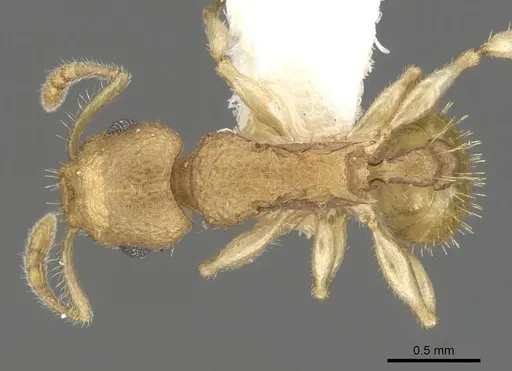
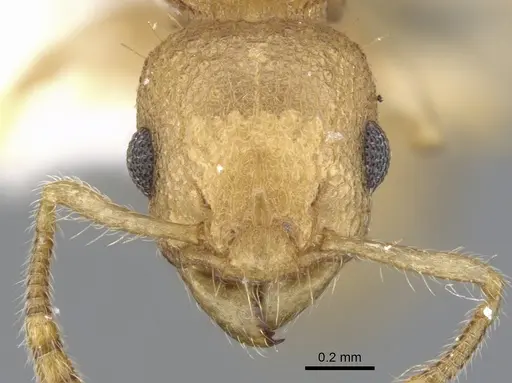
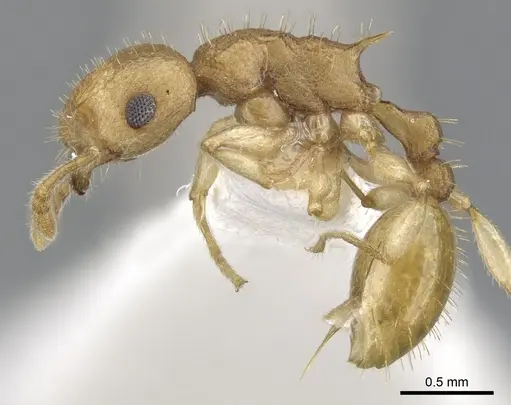
Literature
Loading distribution map...Loading products...