
Vombisidris australis
- Sci. Name
- Vombisidris australis
- Tribe
- Crematogastrini
- Subfamily
- Myrmicinae
- Author
- Wheeler, 1934
- Distribution
- Found in 1 countries
Introduction
Vombisidris australis is a small Myrmicinae ant species native to Queensland, Australia. Workers measure approximately 2.7mm and have a distinctive brown coloration, with the head and gaster appearing darker and more castaneous compared to the thorax. The mandibles, clypeus, antennae, and legs are a lighter yellowish-brown . The species belongs to the Vombisidris australis group and was originally described as Leptothorax australis before being reclassified to Vombisidris in 1991 . This species remains poorly studied in captivity, with no published data on colony structure, founding behavior, or natural diet. Based on its Queensland distribution (Cairns region), it inhabits tropical to subtropical environments in northern Australia .
Quick Summary
- Difficulty: Medium
- Origin & Habitat: Queensland, Australia, specifically the Cairns District region in northern Queensland [1]. The natural habitat consists of tropical to subtropical environments, likely in forested areas.
- Colony Type: Colony structure is unconfirmed. Based on related Vombisidris species, likely single-queen (monogyne) colonies [2].
- Size & Growth:
- Queen: Queen size is unconfirmed. No measurements available for this species.
- Worker: Approximately 2.7mm [1]
- Colony: Unknown, no colony size data available for this species
- Growth: Unknown, no development timing data available for this species
- Development: Unknown, no data available (No specific development data exists for this species.)
- Antkeeping:
- Temperature: Aim for 22-26°C, consistent with Queensland tropical/subtropical conditions [1]. A gentle gradient allows workers to self-regulate.
- Humidity: Moderate to high humidity preferred. Keep nest substrate moist but not waterlogged, similar to typical forest floor conditions in their range [1].
- Diapause: Unlikely to require true diapause given tropical distribution [1]. May show reduced activity during cooler months but maintain normal temperatures year-round.
- Nesting: Natural nesting behavior unconfirmed. Based on related Vombisidris species that are arboreal [2], V. australis may nest in rotting wood or arboreal sites. Y-tong or plaster nests with moderate moisture work well.
- Behavior: Behavior is poorly documented. Based on genus patterns, they are likely relatively docile with moderate foraging activity. Their small size (2.7mm) means escape prevention is critical, use fine mesh barriers and secure setups. As a Myrmicinae ant in the tribe Crematogastrini, they use a smearing defense mechanism: a modified stinger that wipes venom onto enemies instead of piercing. This is not a concern for keepers.
- Common Issues: limited availability, this species is rarely available in the antkeeping hobby, no established care protocols, keepers must adapt from related species, escape prevention critical due to small worker size, slow colony growth typical of lesser-studied species, humidity management important to prevent desiccation
Appearance and Identification
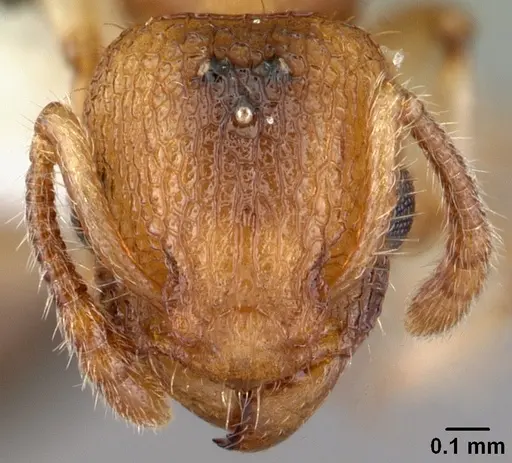
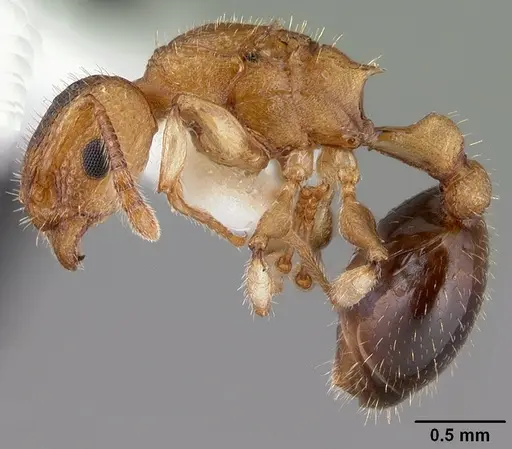
Vombisidris australis workers are small ants measuring approximately 2.7mm in length [1]. They have a distinctive appearance with a brown overall coloration, featuring a darker head and gaster that appears castaneous (reddish-brown). The mandibles, clypeus, antennae, and legs are a lighter yellowish-brown [1].
Key identification features include relatively short and blunt propodeal spines, an indistinct mesonotal suture, and a petiole that is more than twice as long as broad with a long peduncle. The species is smaller than its relative Vombisidris jacobsoni and differs in having shorter propodeal spines [3]. The eyes are rather large and convex, situated slightly in front of the middle of the head [1].
Distribution and Habitat
This species is endemic to Queensland, Australia, with the type locality being the Cairns District. The distribution covers the Australasian region, specifically northern Queensland's tropical zones [1][4].
In captivity, aim to replicate warm, moderately humid conditions consistent with their natural range. The Cairns region experiences a tropical climate with high year-round temperatures and humidity, suggesting your colony will thrive in similar conditions [1].
Temperature and Care
Keep Vombisidris australis at temperatures between 22-26°C, reflecting their Queensland tropical distribution [1]. Use a heating cable on one side of the nest to create a gentle temperature gradient, allowing workers to regulate their own temperature by moving between warmer and cooler areas.
Maintain moderate to high humidity within the nest, the substrate should feel damp but never waterlogged. A small water tube attached to the test tube or formicarium provides a humidity source. Monitor for condensation as an indicator of adequate moisture levels.
Avoid temperature extremes or sudden fluctuations, as this species has not been documented tolerating wide thermal ranges.
Nesting and Housing
Natural nesting behavior for V. australis remains unconfirmed, though related Vombisidris species have been found in arboreal habitats such as ant plants [2], suggesting V. australis may nest in rotting wood or similar cavities. For captivity, Y-tong (AAC) nests or plaster nests work well for these small Myrmicinae ants.
Ensure chambers are appropriately scaled to their 2.7mm worker size, tight-fitting passages help them feel secure. Provide a water reservoir for humidity maintenance. Test tube setups can work for founding colonies, but be prepared to move them to a more spacious formicarium as the colony grows.
Feeding and Diet
Dietary preferences for V. australis are unconfirmed. Based on typical Myrmicinae patterns and related species, they likely accept a standard ant diet including sugar sources (honey water, sugar water) and protein (small insects like fruit flies, pinhead crickets, mealworms).
Offer protein foods 2-3 times per week and maintain a constant sugar water source. Remove uneaten food after 24-48 hours to prevent mold. Start with small prey items scaled to their tiny worker size.
Behavior and Temperament
Specific behavioral observations for V. australis are limited. Based on genus-level patterns, they are likely relatively docile and non-aggressive. Their small size (2.7mm) makes them vulnerable in confrontations with larger ant species.
Escape prevention is critical, these tiny ants can squeeze through remarkably small gaps. Use fine mesh (at least 0.5mm) on all ventilation holes and ensure lid seals are tight. Check for gaps around water tube connections regularly.
As a member of the tribe Crematogastrini, they possess a modified stinger used for smearing venom onto enemies rather than piercing, but this is not a concern for keepers.
Frequently Asked Questions
How long does it take for Vombisidris australis to raise first workers?
The egg-to-worker timeline is unconfirmed for this species. No development data exists.
What do Vombisidris australis ants eat?
Diet is unconfirmed. Offer small insects (fruit flies, pinhead crickets, small mealworms) as protein 2-3 times weekly, plus constant access to sugar water or honey water. Remove uneaten food after 24 hours.
Can I keep Vombisidris australis in a test tube?
Yes, test tubes work well for founding colonies. Use a small water tube for humidity and ensure the cotton is packed tightly to prevent escapes. Monitor humidity levels and move to a formicarium when the colony reaches around 20 workers and shows signs of space constraints.
Do Vombisidris australis ants sting?
They belong to the tribe Crematogastrini, which uses a smearing defense mechanism: a modified stinger applies venom topically rather than injecting it. This is generally not a concern for keepers.
How big do Vombisidris australis colonies get?
Colony size is unknown, no wild colony data exists for this species.
What temperature and humidity do Vombisidris australis need?
Keep temperatures between 22-26°C with a gentle gradient. Maintain moderate to high humidity, the nest substrate should feel damp but not waterlogged. This reflects their Queensland tropical habitat [1].
Are Vombisidris australis good for beginners?
This species is not ideal for beginners due to limited availability and lack of established care protocols. The small worker size also requires careful attention to escape prevention. Experienced antkeepers interested in unusual species may find this a rewarding challenge.
Do Vombisidris australis need hibernation?
Diapause is unlikely given their tropical Queensland distribution [1]. The colony may show reduced activity during cooler months but should not require a true hibernation period. Maintain normal temperatures year-round.
Why are my Vombisidris australis dying?
Common causes include temperature stress from extremes or fluctuations, low humidity causing desiccation, escape-related losses (check all barriers), poor nutrition, or stress from overhandling. Review each parameter and make gradual adjustments.
When should I move Vombisidris australis to a formicarium?
Move from test tube to formicarium when the colony reaches around 20 workers and the test tube shows signs of space constraints or humidity issues. Y-tong or plaster nests work well for this species.
Report an Issue
The current care sheet is based fully on literature. See inconsistencies, or something that's incorrect? Please , it will be resolved after review from an admin. Contributing to the blogs tab also helps providing information, to make us be able to further improve the caresheets. Thank you for your support!
References

This caresheet is licensed under CC BY-SA 4.0 .
Community Blogs
PSW4356-12
View on AntWeb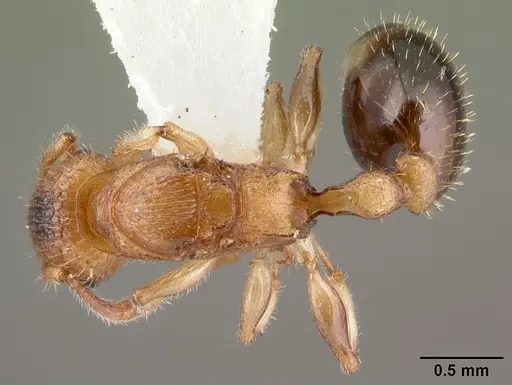
Literature
Loading distribution map...Loading products...