
Vollenhovia denticulata
- Sci. Name
- Vollenhovia denticulata
- Tribe
- Crematogastrini
- Subfamily
- Myrmicinae
- Author
- Emery, 1914
- Distribution
- Found in 2 countries
Introduction
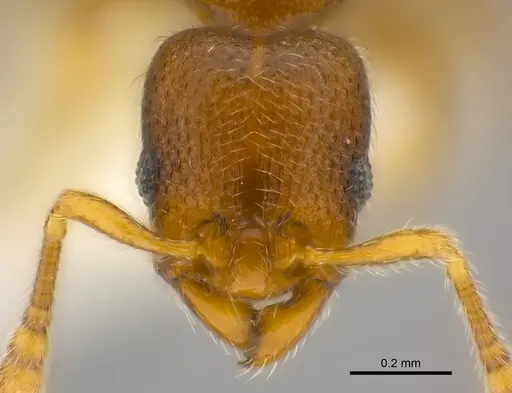
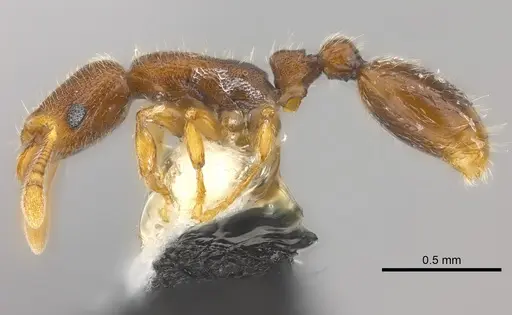
Vollenhovia denticulata is a small Myrmicinae ant species originally described by Emery in 1914 from New Caledonia . Workers are tiny ants, typical of the genus Vollenhovia, with the species also recorded from Fiji and Vanuatu in the Australasian region . This species is native to Fiji, where it was first recorded by Dlussky in 1994 based on Chernov specimens . Very little is known about this ant in the scientific literature. As a member of the tribe Crematogastrini, its defense mechanism likely involves smearing venom onto attackers using a modified flattened stinger, rather than piercing the skin. Tropical Pacific island origins imply warm and humid conditions are important, but specifics are missing.
Quick Summary
- Difficulty: Unknown
- Origin & Habitat: Native to the Australasian region, specifically New Caledonia, Fiji, and Vanuatu [2][3][1]. Likely inhabits tropical forest environments typical of these Pacific islands.
- Colony Type: Colony structure is unconfirmed. The species has been recorded from multiple locations but no research documents queen number or colony size.
- Size & Growth:
- Queen: Size data unavailable
- Worker: Size data unavailable
- Colony: Unknown, no colony size data available
- Growth: Unknown
- Development: Unconfirmed (No development data exists for this species)
- Antkeeping:
- Temperature: Unconfirmed, likely requires warm conditions similar to other tropical Pacific Myrmicinae. Based on its geographic origin, aim for temperatures in the mid-to-high 20s°C (around 24-28°C). Monitor colony activity to determine optimal range.
- Humidity: Unconfirmed, likely requires moderate to high humidity typical of tropical forest ants. Keep the nest substrate consistently moist but not waterlogged.
- Diapause: Unlikely, being a tropical species from Fiji and New Caledonia, it probably does not require a diapause period. However, slight temperature reductions during winter months may be beneficial if kept in temperate climates.
- Nesting: No specific nesting data available. Based on typical Vollenhovia behavior and related Myrmicinae from this region, they likely nest in rotting wood, soil, or under stones in damp forest habitats. A naturalistic setup with moist substrate or a Y-tong/plaster nest would be appropriate starting points.
- Behavior: Specific behavioral traits are undocumented. As a member of the Crematogastrini tribe, their defense mechanism involves smearing venom onto attackers using a modified flattened stinger, rather than piercing. Their tiny size makes escape prevention critical, use fine mesh barriers and tight-fitting lids. Foraging behavior is unknown but likely involves ground-level activity in search of small prey and honeydew.
- Common Issues: limited species-specific data makes care recommendations uncertain, small size creates high escape risk, excellent barrier maintenance is essential, humidity requirements are unconfirmed, monitor for mold or drying issues, no documented diet acceptance, start with standard ant foods and observe preferences, wild-caught colonies may carry parasites not yet identified in this species
Species Background and Distribution
Vollenhovia denticulata was originally described by Carlo Emery in 1914 from specimens collected in New Caledonia [1]. The species has since been recorded from Fiji and Vanuatu, making it a Pacific island endemic with a scattered distribution across the Australasian region [2][3].
This ant is considered native to Fiji, with the first Fijian records documented by Dlussky in 1994 based on specimens collected by Chernov [3]. The species appears in checklists of Fijian ants, though specific locality information remains limited [2]. The distribution across these Pacific islands suggests the species is well-adapted to tropical conditions.
Housing and Nesting
No specific nesting information exists for this species in the scientific literature. However, based on the typical habitat preferences of related Myrmicinae from the tropical Pacific region, they likely nest in rotting wood, soil, or under stones in damp forest environments.
For captive care, a naturalistic setup with moist substrate works well as a starting point. A Y-tong (AAC) nest or plaster nest can also provide appropriate humidity control. Given their small size, ensure the nest chambers are appropriately scaled, tight passages help the ants feel secure. Always use excellent escape prevention with fine mesh barriers, as tiny ants can squeeze through surprisingly small gaps.
Temperature and Humidity
Temperature and humidity requirements are not documented. Being native to tropical Pacific islands (Fiji, New Caledonia, Vanuatu), they likely prefer warm and humid conditions. Aim for temperatures in the range of 24-28°C, which aligns with typical tropical ant care. Avoid temperatures below 20°C for extended periods.
For humidity, maintain moderate to high levels, the nest substrate should feel consistently moist but not waterlogged. Provide a water tube for drinking access. Monitor the colony for signs of stress: workers clustering excessively near moisture suggests higher humidity is needed, while avoiding damp areas suggests conditions are too wet.
Feeding and Diet
Specific dietary preferences are unconfirmed. As a Myrmicinae ant, they likely have a mixed diet similar to most small ants: protein sources (small insects, mealworms, fruit flies) and carbohydrate sources (honey, sugar water).
Start with standard ant foods and observe what the colony accepts. Given their small size, prey items should be appropriately sized, fruit flies, springtails, and other tiny arthropods are more suitable than larger insects. Provide a constant sugar water source and offer protein prey 2-3 times per week. Remove uneaten prey after 24 hours to prevent mold issues.
Behavior and Temperament
Detailed behavioral observations are not available in the scientific literature. As a member of the Crematogastrini tribe, their defense mechanism involves smearing venom onto attackers using a modified flattened stinger, rather than piercing. The venom of Vollenhovia species is generally mild.
Their small size means they should be considered a high escape risk. Use fluon on nest edges, fine mesh on outworld openings, and ensure all connections are secure. Activity levels are unknown but likely moderate, with workers foraging individually or in small groups rather than forming large trails.
Frequently Asked Questions
How do I care for Vollenhovia denticulata ants?
Care recommendations are uncertain due to limited species-specific data. Based on its tropical Pacific origin, provide temperatures around 24-28°C and moderate to high humidity. Use a naturalistic setup with moist substrate or a Y-tong/plaster nest. Feed standard ant foods (sugar water, small insects) and observe colony preferences. Excellent escape prevention is essential due to their small size.
What do Vollenhovia denticulata ants eat?
Specific dietary preferences are unconfirmed. As a small Myrmicinae, they likely accept both sugar sources (honey, sugar water) and protein (small insects). Start with fruit flies, springtails, or other tiny prey, and provide a constant sugar water source. Adjust based on what your colony actually consumes.
What temperature do Vollenhovia denticulata ants need?
Temperature requirements are not documented. Being native to Fiji and New Caledonia (tropical Pacific), they likely need warm conditions around 24-28°C. Avoid temperatures below 20°C. A heating cable on one side of the nest can create a gradient if room temperature is insufficient.
How big do Vollenhovia denticulata colonies get?
Colony size is unknown, no scientific data exists on maximum colony size for this species. Based on typical Vollenhovia genus patterns, colonies are likely modest in size, possibly under several hundred workers. Growth rate is also unknown.
Do Vollenhovia denticulata ants sting?
As a member of the Crematogastrini tribe, their defense mechanism involves smearing venom onto attackers using a modified flattened stinger, rather than piercing. The venom is generally mild, so significant pain is unlikely. Handle with standard antkeeping precautions.
Where is Vollenhovia denticulata found?
This species is native to the Australasian region, specifically found in New Caledonia (original description location), Fiji, and Vanuatu [2][3][1]. It is considered a native species to these Pacific islands.
Is Vollenhovia denticulata good for beginners?
This species is not recommended for beginners due to the lack of species-specific care data. The limited scientific information means keepers must rely on general antkeeping knowledge and careful observation. Consider starting with better-documented species before attempting Vollenhovia denticulata.
Do Vollenhovia denticulata ants need hibernation?
Diapause is unlikely for this tropical species from Fiji and New Caledonia. These Pacific islands do not experience cold winters that would trigger dormancy. However, slight temperature reductions during winter months may be appropriate if your room temperature drops significantly.
How long does it take for Vollenhovia denticulata to develop from egg to worker?
Development timeline is unconfirmed, no research data exists for this species. No estimates can be given, expect to rely on observation and trial-and-error to find ideal conditions.
Can I keep multiple Vollenhovia denticulata queens together?
Colony structure is unconfirmed. No research documents whether they are monogyne (single queen) or polygyne (multiple queens). Combining unrelated queens is not recommended given the lack of data on their social structure.
Report an Issue
The current care sheet is based fully on literature. See inconsistencies, or something that's incorrect? Please , it will be resolved after review from an admin. Contributing to the blogs tab also helps providing information, to make us be able to further improve the caresheets. Thank you for your support!
References

This caresheet is licensed under CC BY-SA 4.0 .
Community Blogs
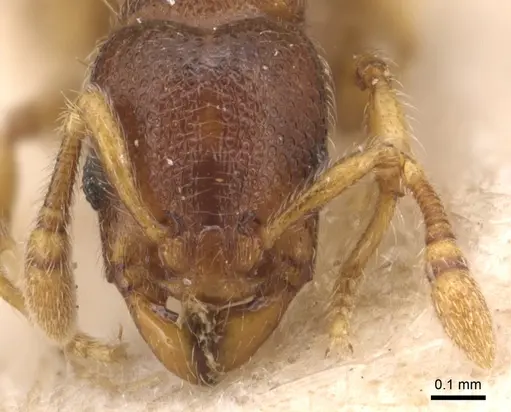
CASENT0182566
View on AntWeb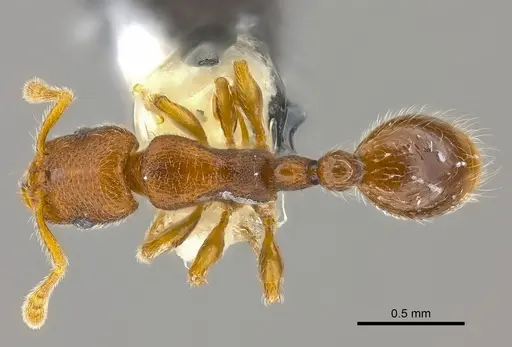
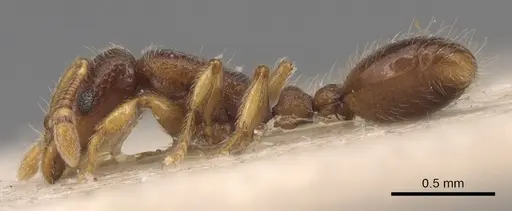
CASENT0904550
View on AntWeb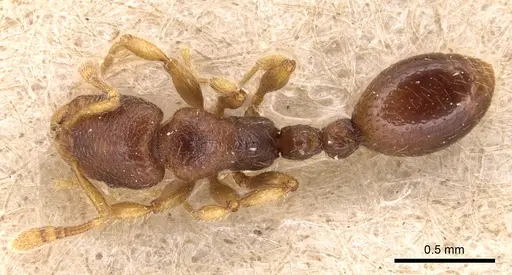
Literature
Loading distribution map...Loading products...