
Vitsika venustas
- Sci. Name
- Vitsika venustas
- Tribe
- Crematogastrini
- Subfamily
- Myrmicinae
- Author
- Bolton & Fisher, 2014
- Distribution
- Found in 1 countries
Introduction
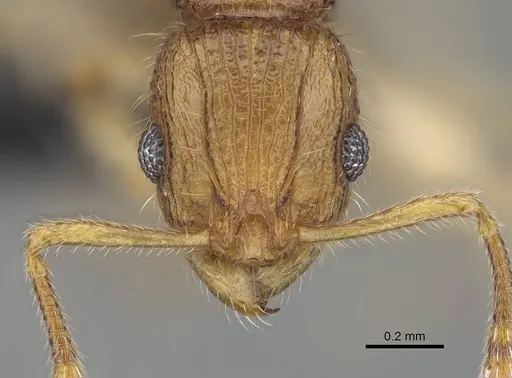
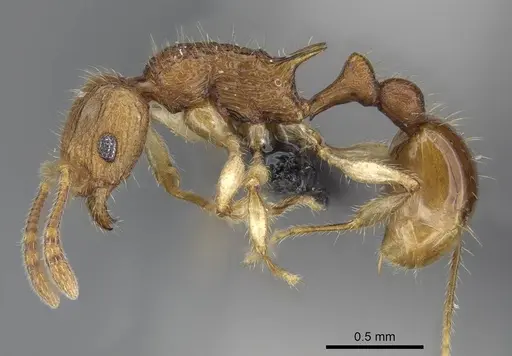
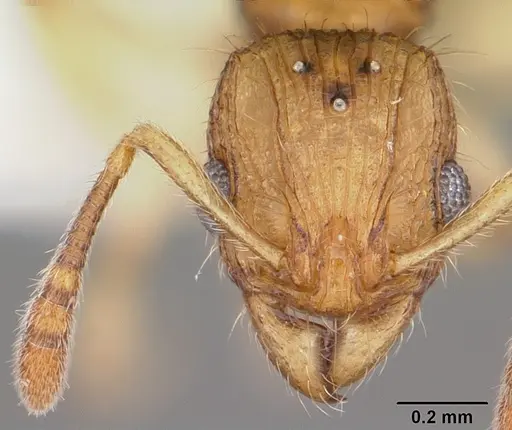
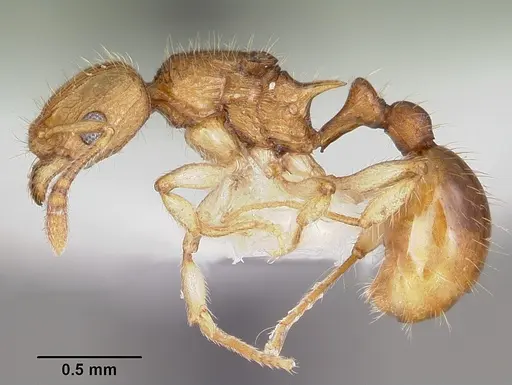
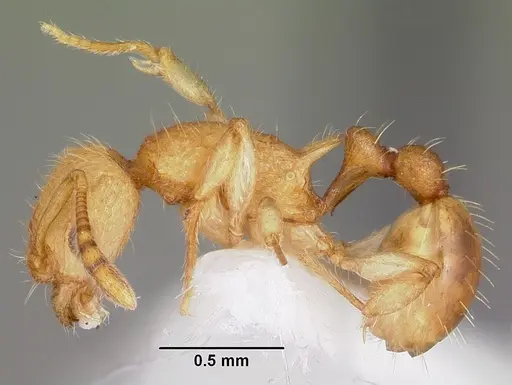
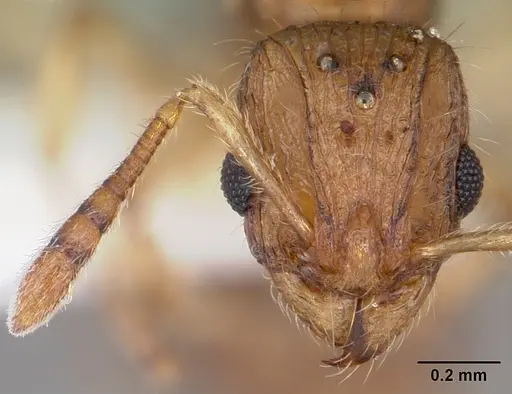
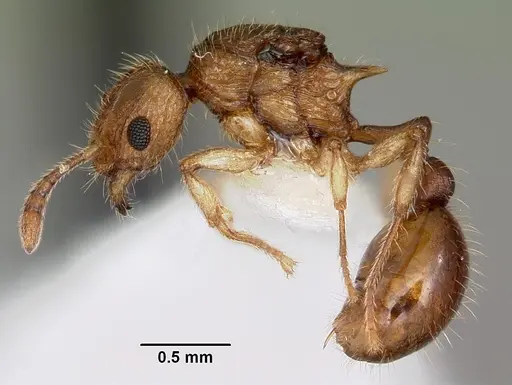
Vitsika venustas is a tiny rainforest ant endemic to Madagascar. Workers measure just 2.5-3.1 mm (body length) and are yellow to light brownish yellow in color . These ants live in the leaf litter layer of Madagascar's rainforests, where they nest in dead twigs and among decomposing vegetation on the forest floor . The genus Vitsika contains several endemic Madagascar species, and venustas is one of the smaller members. Queens come in two forms: winged (alate) queens and wingless ergatoid queens that look worker-like but act as replacement reproductives . Males have never been collected, which hints at an unusual reproductive system possibly centered around ergatoid queens .
Quick Summary
- Difficulty: Hard
- Origin & Habitat: Endemic to Madagascar, found in rainforest leaf litter and dead twigs on the forest floor [1][2]
- Colony Type: Likely single-queen colonies, with ergatoid (wingless) queen forms documented that may serve as replacement reproductives if the primary queen is lost [1]
- Size & Growth:
- Queen: Size data unavailable, only head measurements are known, not total body length (TL) [1]
- Worker: 2.5-3.1 mm (total length) [1]
- Colony: Unknown, likely under a few hundred workers based on litter-dwelling habits [1]
- Growth: Unknown, likely moderate based on small worker size and tropical climate
- Development: Estimated 6-8 weeks based on typical Myrmicinae development at tropical temperatures (24-28°C) (Direct development data are unavailable, this is a rough estimate.)
- Antkeeping:
- Temperature: Keep at 24-28°C year-round, these ants come from warm, humid Madagascar rainforest [1]
- Humidity: Keep the nest substrate consistently moist but not waterlogged, as they live in damp leaf litter. Mist the outworld occasionally to maintain humidity.
- Diapause: No, Madagascar has no true winter, so maintain tropical conditions year-round
- Nesting: Use small, tight chambers scaled to their tiny size. Y-tong (AAC) nests or small plaster nests work well. Provide damp substrate and avoid drying out.
- Behavior: These are tiny, shy ants that avoid confrontation. They forage individually in leaf litter rather than forming visible trails. Despite being in the subfamily Myrmicinae and tribe Crematogastrini, which typically use a smearing defense (modified stinger to wipe venom), these ants are not aggressive and are too small to deliver a meaningful sting. Escape prevention is critical due to their very small size, they can squeeze through standard test tube barriers.
- Common Issues: escape prevention is critical, their tiny size allows them to slip through gaps that larger ants cannot, high humidity requirements make them prone to mold if ventilation is poor, wild-caught colonies may be stressed from collection and transport, founding phase may be slow, the founding type is unconfirmed for this species, difficulty obtaining this species, endemic to Madagascar with limited export
Housing and Nest Setup
Because Vitsika venustas are tiny, scale their housing accordingly. Use small test tubes for founding colonies, keep the water reservoir modest to avoid flooding, and pack cotton plugs tightly since these ants can squeeze through surprisingly small gaps. For established colonies, Y-tong (AAC) nests with narrow chambers work well, as do small plaster nests that hold moisture. The key is to provide consistently damp substrate without letting the nest dry out or become waterlogged. Avoid tall, open spaces, these are litter-dwelling ants that prefer tight, enclosed spaces. A small outworld with damp soil or moss helps maintain humidity [1].
Temperature and Humidity
Maintain temperatures between 24-28°C year-round. Madagascar is tropical with no cold season, so these ants do not hibernate. High humidity is essential, keep the nest substrate consistently moist but not waterlogged, matching their native damp leaf litter. Mist the outworld occasionally to raise ambient moisture. Avoid placing the nest near air conditioning or heating vents that cause rapid drying. A small water dish in the outworld also helps maintain humidity.
Feeding and Diet
Like most small Myrmicinae, Vitsika venustas likely forages for tiny prey and honeydew in nature. Offer small live prey appropriate to their size: fruit flies, pinhead crickets, small mealworms, and micro-arthropods like springtails. They probably cannot handle large prey. Sugar sources like diluted honey or sugar water should be offered occasionally, though small ants often prefer honeydew or nectar. Feed small amounts every 2-3 days and remove uneaten prey to prevent mold. Their tiny size means even small items are substantial meals.
Colony Structure and Reproduction
This species has an unusual queen system, both winged (alate) and wingless (ergatoid) queen forms exist [1]. Ergatoid queens resemble workers but have an enlarged mesonotum and can serve as replacement reproductives if the primary queen dies. This means colonies may be able to recover from queen loss without needing a new nuptial flight. Males have never been collected, suggesting that reproduction may rely heavily on ergatoid queens or involve other unusual mechanisms [1]. Colonies are likely small to moderate in size, typical of litter-dwelling ant species.
Behavior and Defenses
Vitsika venustas are shy, non‑aggressive ants that avoid confrontation. In the wild, they forage individually through leaf litter rather than forming visible trails. Their small size makes them vulnerable, so they likely stay hidden most of the time. As members of the subfamily Myrmicinae and tribe Crematogastrini, their defense mechanism involves a modified flattened stinger used to wipe or smear venom onto enemies, rather than piercing flesh. However, these ants are too small to deliver a meaningful sting to humans. The main behavioral concern is escape, their tiny size means they can slip through gaps that larger ants cannot, so use fine mesh barriers and check all connections regularly [1].
Frequently Asked Questions
How long does it take for Vitsika venustas to raise first workers?
The exact timeline is unknown. Based on typical Myrmicinae development at tropical temperatures (24-28°C), expect roughly 6-8 weeks from egg to first worker. Founding queens may take several months to establish, so patience is essential.
Can I keep Vitsika venustas in a test tube?
Yes, test tubes work well for founding colonies. Use a small water reservoir and pack the cotton tightly, as these tiny ants can squeeze through gaps that larger ants cannot. Transfer to a small formicarium once the colony reaches roughly 20-30 workers.
Do Vitsika venustas ants sting?
These ants are too small to deliver a meaningful sting. Their primary defense is hiding, and even if they could sting, it would be negligible to humans. They are not considered dangerous.
What do Vitsika venustas eat?
Offer small live prey like fruit flies, micro‑arthropods, and tiny insects. They likely also accept sugar sources such as diluted honey or sugar water. Feed small amounts every few days and remove leftovers to prevent mold.
Are Vitsika venustas good for beginners?
No. This is a difficult species to keep due to its tiny size, high humidity requirements, and the limited availability of colonies. It is best suited for experienced antkeepers who can provide stable, humid conditions.
How big do Vitsika venustas colonies get?
Colony size is not well documented for this species. Based on their litter‑dwelling habits and small worker size, colonies likely reach a few hundred workers at most. Expect slow growth compared to larger ant species.
Do Vitsika venustas need hibernation?
No. As a Madagascar rainforest species, they do not experience winter. Maintain tropical temperatures (24-28°C) year‑round without a cooling period.
Why are my Vitsika venustas escaping?
Their tiny size allows them to squeeze through standard barriers. Use fine mesh (at least 0.5 mm), check all connections, and ensure cotton plugs are packed tightly. Escape prevention must be excellent.
Can I keep multiple queens together?
Not recommended. While ergatoid queens exist in this species, combining unrelated foundresses has not been documented and would likely result in fighting. Start with a single queen for best results.
Where is Vitsika venustas found?
This species is endemic to Madagascar, found only in rainforest leaf litter in the northern parts of the island. It was described in 2014 and remains poorly studied [1].
Report an Issue
The current care sheet is based fully on literature. See inconsistencies, or something that's incorrect? Please , it will be resolved after review from an admin. Contributing to the blogs tab also helps providing information, to make us be able to further improve the caresheets. Thank you for your support!
References

This caresheet is licensed under CC BY-SA 4.0 .
Community Blogs
CASENT0045957
View on AntWeb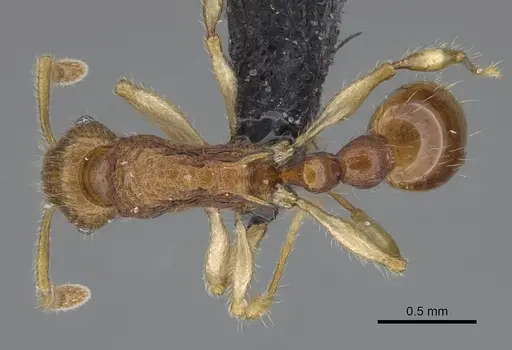
CASENT0102971
View on AntWeb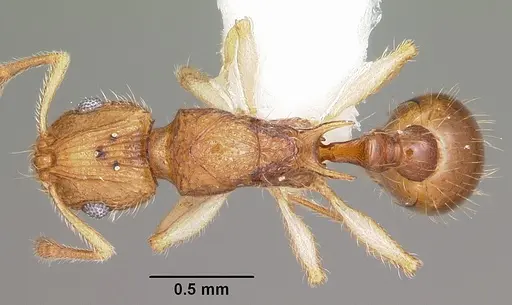
CASENT0102972
View on AntWeb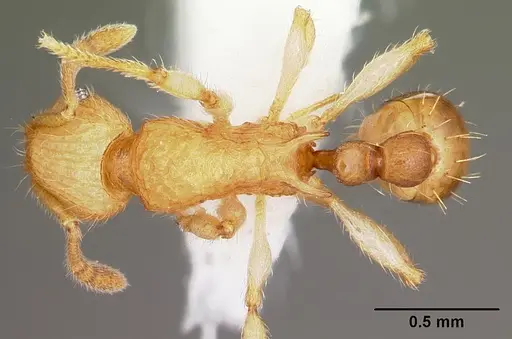
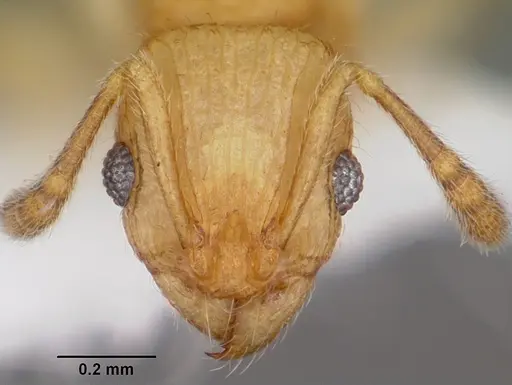
CASENT0104936
View on AntWeb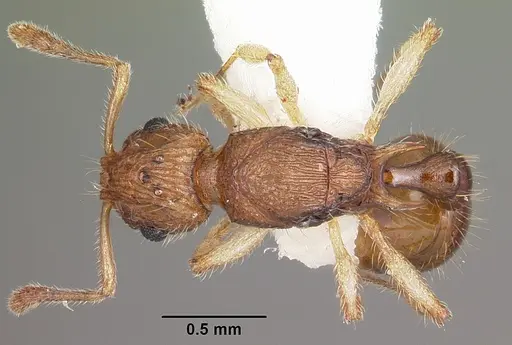
Literature
Loading distribution map...Loading products...