
Vitsika tenuis
- Sci. Name
- Vitsika tenuis
- Tribe
- Crematogastrini
- Subfamily
- Myrmicinae
- Author
- Bolton & Fisher, 2014
- Distribution
- Found in 1 countries
Introduction
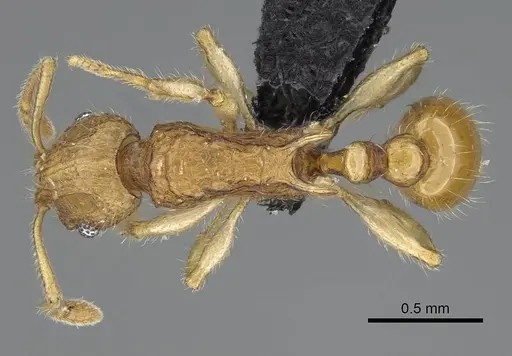
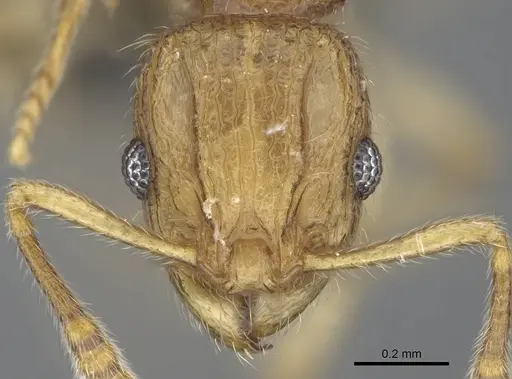
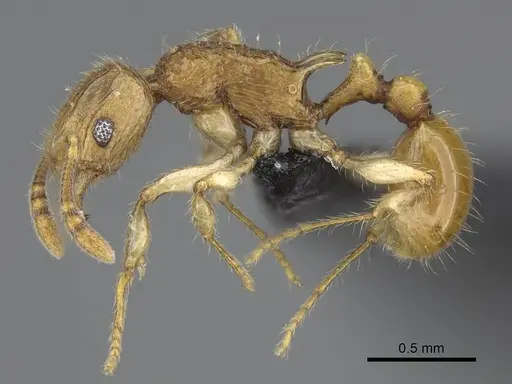
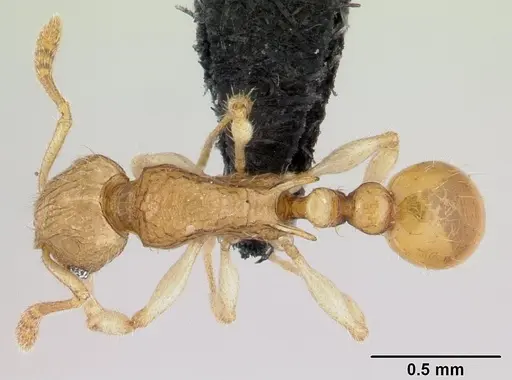
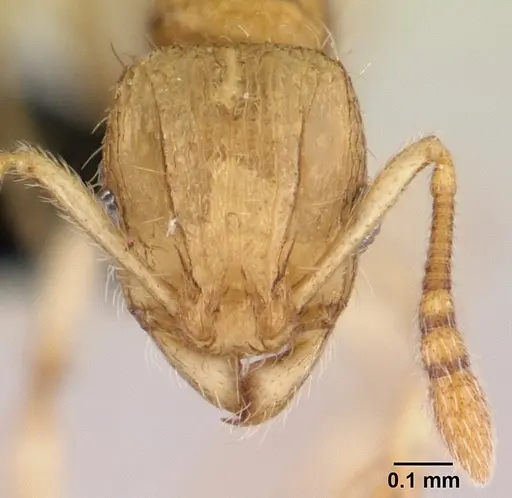
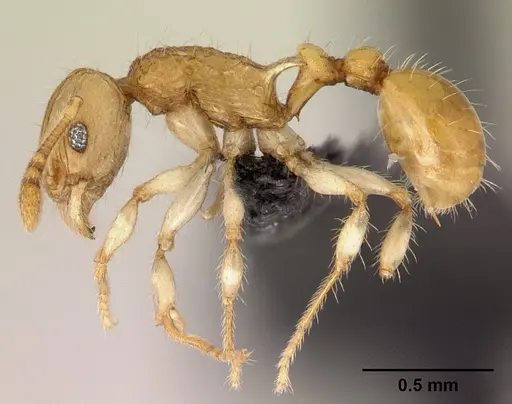
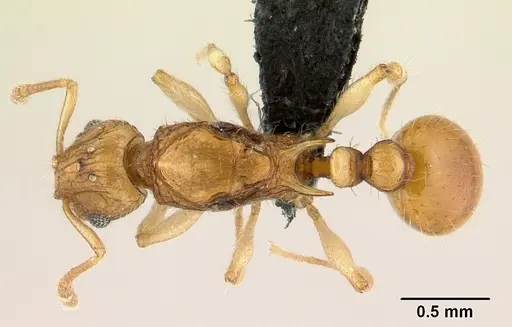
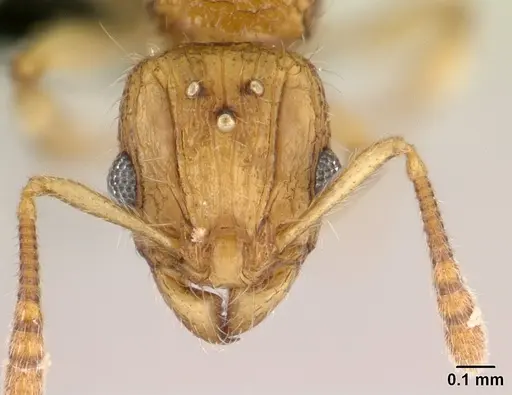
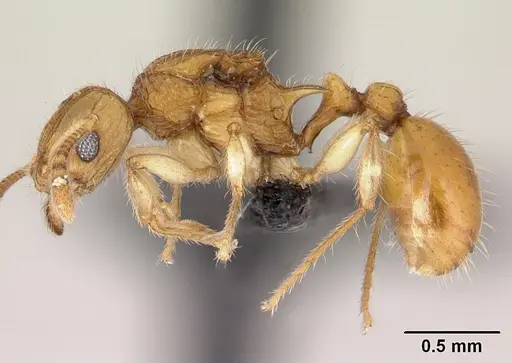
Vitsika tenuis is a tiny yellow ant endemic to Madagascar, first described in 2014 . Workers measure 2.2-2.8 mm total length , making them one of the smallest known ants. Their most distinctive feature is their strongly downcurved propodeal spines - curved downward rather than outward - which instantly sets them apart from related species . Queens are known only from alates; their total length is undocumented, but they have a larger head capsule . All material comes from sifted leaf litter in primary rainforest in northern Madagascar . Very little is known about the biology of this species in the wild, and it has no established captive breeding history. It represents a rare, poorly understood ant suitable only for experienced keepers interested in keeping unusual, recently described species. The downcurved propodeal spines are unique among Malagasy myrmicines and make them easy to identify under magnification .
Quick Summary
- Difficulty: Expert
- Origin & Habitat: Endemic to northern Madagascar, found in rainforest leaf litter in Antsiranana Province. Specimens have been collected from sifted litter in primary rainforest [1].
- Colony Type: Unknown, only alate queens have been collected, colony structure and queen number are not documented [1][2].
- Size & Growth:
- Queen: Data unavailable (only head capsule measurements known, not total length) [1].
- Worker: 2.2-2.8 mm total length [1].
- Colony: Unknown, no mature colonies have been documented in the wild or captivity.
- Growth: Unknown, no captive data exists.
- Development: Unknown, no development data exists. Estimated 6-10 weeks at warm temperatures, based on similar small Myrmicinae. (Estimate is speculative, actual timeline may differ significantly.)
- Antkeeping:
- Temperature: Based on rainforest origin, maintain warm conditions around 24-28°C. Provide a gentle gradient. No specific data available [1].
- Humidity: High humidity essential, keep substrate consistently moist but not waterlogged. Mimic rainforest leaf litter conditions. Good ventilation needed to prevent mold [1].
- Diapause: No, tropical species from Madagascar, no winter dormancy required.
- Nesting: Natural nesting occurs in leaf litter and rotting wood. In captivity, use small plaster or soil nests with tight chambers scaled to their size. Avoid dry conditions [1].
- Behavior: Tiny, docile ants. They belong to tribe Crematogastrini, which uses a 'smear' defense, the stinger is flattened and used to wipe venom onto attackers rather than piercing. They pose no threat to humans. Escape risk is extreme due to their 2-3 mm size, use fine mesh (0.5 mm or smaller) or fluon barriers.
- Common Issues: escape risk is extreme, their tiny size allows them through standard barriers, use 0.5 mm mesh or fluon., high humidity requirements can lead to mold if ventilation is poor, balance moisture with airflow., no captive breeding data, expect uncertain colony establishment and slow growth., wild-caught specimens may carry parasites or pathogens from leaf litter., temperature stability is important, avoid drafts and sudden swings.
Housing and Nest Setup
Vitsika tenuis needs a setup that recreates rainforest floor conditions. A naturalistic terrarium with moist leaf litter, moss, and small pieces of rotting wood works well, this mimics their natural habitat [1]. The substrate should be consistently moist but not waterlogged. Small plaster or soil nests with tight chambers are recommended, avoid large, open spaces that may stress the colony. Because of their tiny size, escape prevention is critical. Use fine mesh (0.5 mm or smaller) on ventilation holes, and apply fluon barriers to the upper edges of the outworld. A humidity reservoir (e.g., a water tube connected to the nest) helps maintain moisture without constant misting.
Feeding and Diet
The natural diet of Vitsika tenuis is undocumented, but as a litter-dwelling predator, they likely hunt micro-arthropods such as springtails and tiny mites [1]. In captivity, offer small live prey: springtails, Drosophila larvae, and pinhead crickets. Acceptance of sugar sources is uncertain, you can test with a small drop of diluted honey occasionally. Feed small amounts every 2-3 days, and remove any uneaten prey after 24 hours to prevent mold. Given their tiny size, even a single springtail is a substantial meal. Avoid overfeeding, as mold is a serious risk in humid conditions.
Temperature and Humidity
Maintain temperatures typical of tropical rainforests, around 24-28°C. Avoid temperatures below 20°C. Provide a gradient so workers can choose their preferred zone. A small heating mat on one side of the setup can help, but avoid direct heat on the nest. Humidity must be high, keep the nest substrate damp but not wet. A layer of leaf litter on top helps retain moisture. Good ventilation is necessary to prevent mold, but avoid strong airflow that dries the setup. No specific data exists for this species, base care on general rainforest ant guidelines [1].
Colony Establishment
Establishing Vitsika tenuis in captivity is challenging. They were only described in 2014 and have no documented captive breeding history [1]. If you obtain a queen, house her in a small, dark container with moist substrate, a test tube with a dirt section or a small plaster chamber. Since only alate queens have been collected [1], the founding process is unknown. Provide a safe, humid environment and do not disturb frequently. Expect slow growth and a high risk of failure. Patience is essential. Losses during founding are common with poorly understood species.
Behavior and Observation
Workers are subtle, slow-moving ants that forage primarily through substrate and leaf litter. Their most distinctive morphological feature is the strongly downcurved propodeal spines, visible under magnification [1]. They belong to the tribe Crematogastrini, whose members use a 'smear' defense mechanism, the stinger is flattened and spatulate, used to wipe venom onto attackers rather than piercing. They are not aggressive toward humans and pose no stinging threat. Observing them requires magnification (at least 10×) to appreciate the unique spine curvature. Their yellow coloration makes them appear nearly translucent in bright light. They are not a display species but offer a fascinating glimpse into a poorly known ant.
Frequently Asked Questions
How long does it take for Vitsika tenuis to develop from egg to worker?
Unknown, no development data exists. Based on similar small Myrmicinae, estimate 6-10 weeks at tropical temperatures (26-28°C). This is speculative, actual times may differ significantly.
What do Vitsika tenuis ants eat?
Their natural diet is undocumented. Based on their leaf litter habitat [1], they likely prey on micro-arthropods. In captivity, offer small live prey such as springtails, fruit flies, and tiny crickets. Sugar acceptance is uncertain, test with diluted honey occasionally.
Can I keep Vitsika tenuis in a test tube setup?
A test tube can work for founding if escape prevention is secure. Ensure a tight cotton plug and consider a fluon barrier. Their tiny 2-3 mm size makes escape a major risk in any setup.
Do Vitsika tenuis ants need hibernation?
No, they are tropical rainforest ants from Madagascar and do not require hibernation. Keep temperatures stable year-round between 24-28°C [1].
How big do Vitsika tenuis colonies get?
Unknown, no mature colonies have been documented. Based on similar litter-dwelling Myrmicinae, colonies may be modest (perhaps 100-500 workers), but this is speculative.
Do Vitsika tenuis ants sting?
They have a stinger, but it is modified for smearing venom rather than piercing. They are not aggressive and pose no threat to humans.
Are Vitsika tenuis good for beginners?
No, this is an expert-level species. They were only described in 2014 [1], have no captive breeding history, require high humidity, and escape easily due to their tiny size. Only experienced keepers should attempt to keep them.
What makes Vitsika tenuis different from other small ants?
Their most distinctive feature is the strongly downcurved propodeal spines, curved downward instead of the typical outward or upward angle, which makes them instantly recognizable under magnification [1].
What humidity do Vitsika tenuis require?
High humidity, consistent with rainforest leaf litter [1]. Keep the substrate damp but not waterlogged. A humidity reservoir or regular misting can help maintain conditions.
Where is Vitsika tenuis naturally found?
Vitsika tenuis is endemic to northern Madagascar, found in primary rainforest leaf litter [1]. All specimens have been collected from sifted litter in Antsiranana Province.
Report an Issue
The current care sheet is based fully on literature. See inconsistencies, or something that's incorrect? Please , it will be resolved after review from an admin. Contributing to the blogs tab also helps providing information, to make us be able to further improve the caresheets. Thank you for your support!
References

This caresheet is licensed under CC BY-SA 4.0 .
Community Blogs
Literature
Loading distribution map...Loading products...