
Vitsika procera
- Sci. Name
- Vitsika procera
- Tribe
- Crematogastrini
- Subfamily
- Myrmicinae
- Author
- Bolton & Fisher, 2014
- Distribution
- Found in 1 countries
Introduction
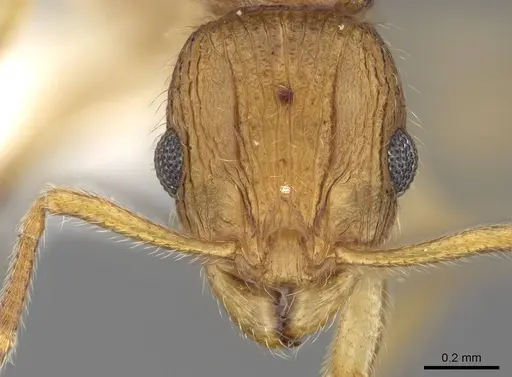
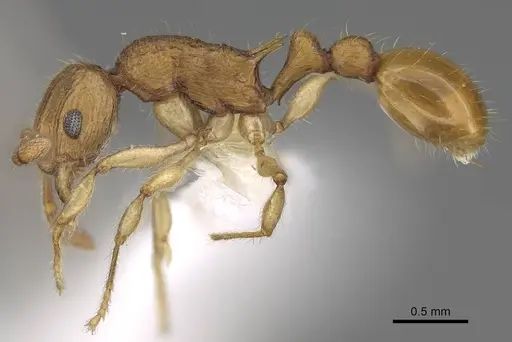
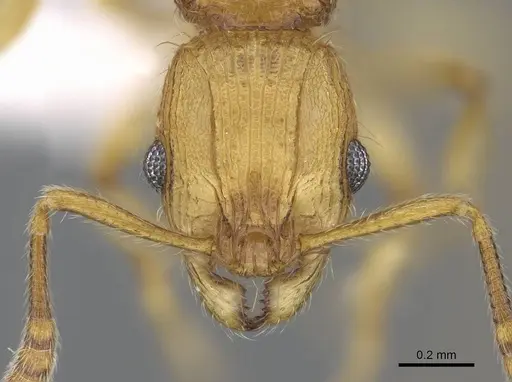
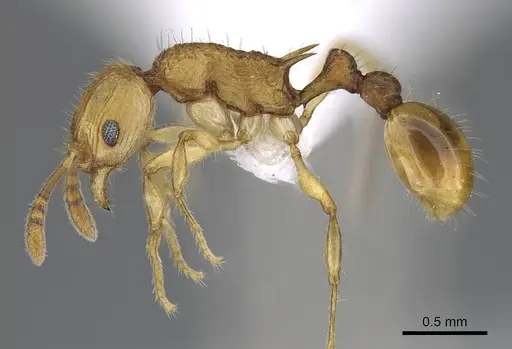
Vitsika procera is a tiny yellow ant endemic to the rainforests of Madagascar . Workers measure 3.0-3.4 mm in total length, making them one of the smaller ant species you can keep . They belong to the subfamily Myrmicinae, tribe Crematogastrini, and are closely related to other Madagascan endemic genera. The species was formally described in 2014 by Bolton and Fisher, and is distinguished from similar species by its thick, sculptured petiole node with distinctive costulae and rugulae patterns . The ant carries a modified, flattened spatulate stinger used to smear venom onto enemies rather than pierce flesh. All known specimens have been collected from rainforest litter samples, except for one worker beaten from low vegetation, suggesting they are ground-dwelling ants that prefer humid, shaded environments . A notable feature is the ergatoid (wingless) queen, which looks almost exactly like a worker but is slightly larger. This is unusual among ants and suggests the species may have specialized reproductive biology .
Quick Summary
- Difficulty: Medium
- Origin & Habitat: Endemic to Madagascar, found exclusively in rainforest habitats. All material has been collected from litter samples in rainforest, with one exception from beating low vegetation [1].
- Colony Type: Ergatoid queen system, the queen is wingless and nearly identical to workers. Colony monogyny/polygyny is unconfirmed. Males have never been collected [1].
- Size & Growth:
- Queen: Queens: ergatoid, slightly larger than workers, but exact total length is not recorded. Only head measurements (HL 0.77 mm) are available, which are not body size [1].
- Worker: 3.0-3.4 mm total length [1]
- Colony: Unknown, no colony size data available
- Growth: Unknown, no development data available
- Development: Unknown, no direct data for this species. Based on similar small Myrmicinae from tropical regions, estimate 4-8 weeks at optimal temperature. (Development timeline is unconfirmed. Related Madagascan Myrmicinae likely develop faster in warm, humid conditions.)
- Antkeeping:
- Temperature: Inferred from tropical rainforest habitat: keep warm, roughly 22-26°C. Avoid dropping below 20°C. A gentle gradient is recommended [1].
- Humidity: Rainforest litter dwellers need high, consistent moisture. The nest substrate should be kept moist but not waterlogged. Provide a water reservoir and mist regularly. Avoid letting the nest dry out [1].
- Diapause: Unlikely required. As a tropical species from Madagascar, they do not experience cold winters. Maintain consistent warm conditions year-round [1].
- Nesting: Natural nesting occurs in rainforest litter and soil. In captivity, a small test tube setup or mini formicarium with moist substrate works well. Provide tight chambers scaled to their tiny size, these are very small ants that can escape through standard mesh [1].
- Behavior: This is a docile, non-aggressive species. Workers are small and slow-moving, typically foraging in the litter layer. They possess a modified spatulate stinger used to smear venom, but they are not a threat to keepers. Because of their tiny size, escape prevention is critical, they can squeeze through standard mesh. They likely form small colonies based on their litter-dwelling habits [1][2].
- Common Issues: escape prevention is critical due to very small size (3-3.4 mm), use fine mesh and fluon barriers, high humidity requirements can lead to mold if ventilation is poor, limited availability in the antkeeping hobby, this is a rarely kept species with no established care protocols, wild-caught colonies may harbour parasites from their native habitat, founding and colony establishment are uncertain because males have never been collected and queens are ergatoid (wingless)
Housing and Setup
Vitsika procera is a tiny ant that requires appropriately scaled housing. A small test tube with a water reservoir and cotton plug works well for founding colonies, while established colonies can be kept in a mini formicarium or small plaster/soil nest. The key requirements are tight chambers that prevent escape and maintain high humidity. Use fine mesh for any ventilation, these ants are small enough to pass through standard ant mesh. The nest material should retain moisture well, as rainforest species need consistent damp conditions. A water reservoir connected to the nest helps maintain humidity. Avoid direct sunlight and keep the setup in a warm, shaded location [1].
Feeding and Diet
As a tiny litter-dwelling ant, Vitsika procera likely feeds on small arthropods and honeydew in the wild. In captivity, offer small live prey such as springtails, fruit flies, or tiny crickets. Sugar water or honey can be offered as an energy source, though acceptance may vary. Start with small portions and observe what the colony takes. Since this species is rarely kept, there are no established feeding protocols, be prepared to experiment with different foods. Feed small amounts every few days and remove uneaten prey to prevent mold. Protein-rich foods are likely important for brood development [2].
Temperature and Humidity
This is a tropical rainforest species from Madagascar, so warmth and humidity are essential. Maintain temperatures between 22-26°C, avoid letting the setup cool below 20°C. A small heating mat on one side of the enclosure can create a gentle gradient. Humidity should be kept high, the substrate should feel consistently moist but never waterlogged. Mist the setup regularly and check that condensation is present on the nest walls. Good ventilation is important to prevent mold, but avoid excessive airflow that dries out the nest. Place the setup away from air conditioning vents and direct sunlight [1].
Colony Structure and Reproduction
A unique feature of Vitsika procera is the ergatoid queen, she is wingless and nearly identical in appearance to workers, just slightly larger (only head measurements are recorded, not total length). This is different from typical ants where queens are distinctly larger and winged. Ergatoid queens typically remain in the nest and may serve as replacement reproductives. The colony structure (monogyne vs polygyne) is unconfirmed for this species. Males have never been collected, suggesting nuptial flight behavior may be different from typical ants or that reproduction happens within the nest. This makes colony establishment more challenging since you may not be able to catch flying queens [1].
Behavior and Temperament
Vitsika procera is a docile, non-aggressive species. Workers are small and slow-moving, typically foraging in the litter layer rather than actively hunting. They have a modified spatulate stinger used to smear venom onto enemies rather than pierce, but they pose no real threat to keepers. The species is likely nocturnal or crepuscular based on their rainforest litter habitat. Colonies are probably small, as is typical for litter-dwelling ants. Workers may form temporary trails to food sources. Because of their tiny size and docile nature, they are best kept in enclosures where they cannot escape or be disturbed by larger ants. They are unlikely to defend aggressively if the nest is opened [1][2].
Frequently Asked Questions
How long does it take for Vitsika procera to produce first workers?
The exact development timeline is unconfirmed for this species. Based on similar small Myrmicinae from tropical regions, expect approximately 4-8 weeks from egg to worker at optimal temperature (24-26°C). Growth may be slower if temperatures are below optimal [2].
Do Vitsika procera ants sting?
They have a modified flattened stinger, but it is used for smearing venom rather than piercing. They are not considered dangerous to humans. At most, they may attempt to smear, but this is harmless [2].
Can I keep Vitsika procera in a test tube?
Yes, a test tube setup works well for this species, especially for founding colonies. Use a small test tube with a water reservoir and cotton plug. Ensure the tube is sealed with fine mesh or fluon to prevent escape, these are very small ants that can squeeze through standard barriers [1].
What do Vitsika procera ants eat?
They likely accept small live prey such as springtails, fruit flies, and tiny insects. Sugar water or honey can be offered for energy. Start with small portions and observe colony acceptance. Protein is important for brood development [2].
Are Vitsika procera good for beginners?
This species is not ideal for beginners. It is rarely kept in the antkeeping hobby, so there are no established care protocols. They require high humidity and warm temperatures, and their tiny size makes escape prevention challenging. They are best suited for experienced antkeepers interested in keeping uncommon species [1].
Do Vitsika procera need hibernation?
No, hibernation is not required. As a tropical species from Madagascar, they do not experience cold winters. Maintain consistent warm temperatures (22-26°C) year-round. Dropping temperatures below 18°C for extended periods could be harmful [1].
How big do Vitsika procera colonies get?
Colony size is unknown for this species. Based on their small worker size and litter-dwelling habits, colonies are likely small, probably under 100 workers. Rainforest litter ants typically form smaller colonies compared to larger ant species [1].
Why are my Vitsika procera escaping?
Their tiny size (3.0-3.4 mm) means they can squeeze through the smallest gaps. Use fine mesh (at least 0.5 mm openings), apply fluon barrier to edges, and ensure all openings are sealed. Check that lid seals are tight and that there are no gaps around tubing connections [1].
Can I keep multiple Vitsika procera queens together?
This is unknown. The queen is ergatoid (wingless), which suggests different reproductive biology than typical ants. Combining unrelated queens has not been documented for this species. It is not recommended to attempt combining queens without evidence they will tolerate each other [1].
Where is Vitsika procera native to?
Vitsika procera is endemic to Madagascar. All known specimens have been collected from rainforest habitats on the island [1].
Report an Issue
The current care sheet is based fully on literature. See inconsistencies, or something that's incorrect? Please , it will be resolved after review from an admin. Contributing to the blogs tab also helps providing information, to make us be able to further improve the caresheets. Thank you for your support!
References

This caresheet is licensed under CC BY-SA 4.0 .
Community Blogs
CASENT0192035
View on AntWeb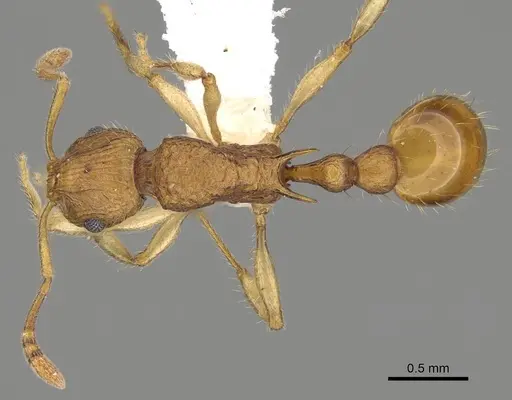
CASENT0914140
View on AntWeb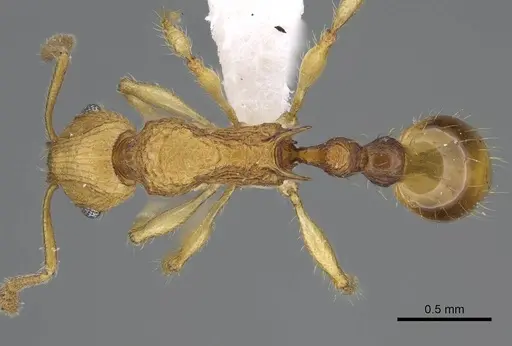
Literature
Loading distribution map...Loading products...