
Vitsika incisura
- Sci. Name
- Vitsika incisura
- Tribe
- Crematogastrini
- Subfamily
- Myrmicinae
- Author
- Bolton & Fisher, 2014
- Distribution
- Found in 1 countries
Introduction
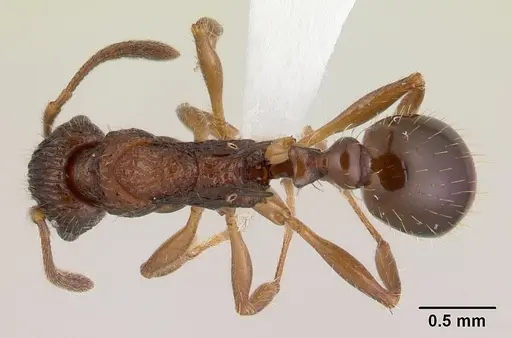
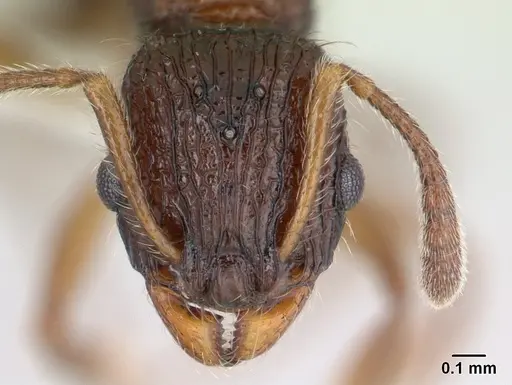
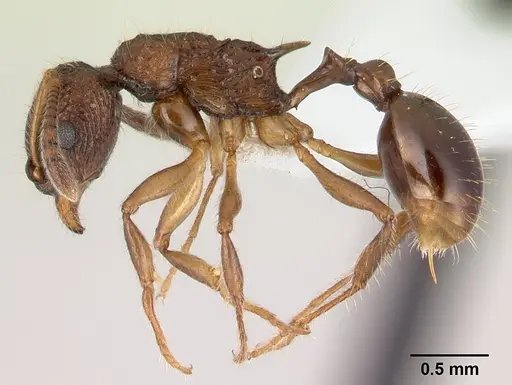
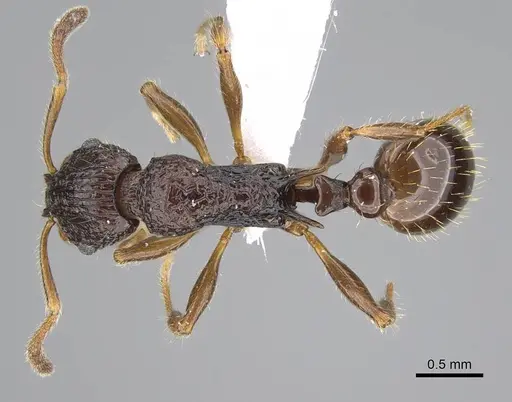
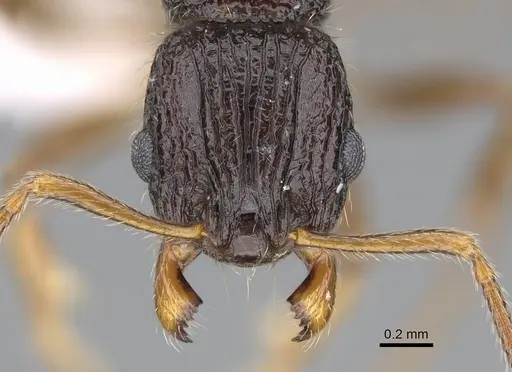
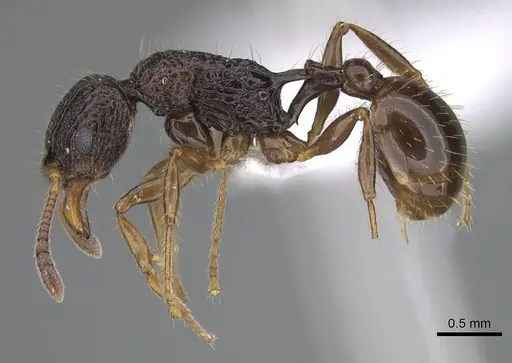
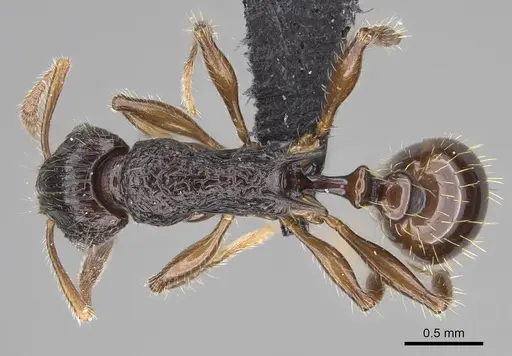
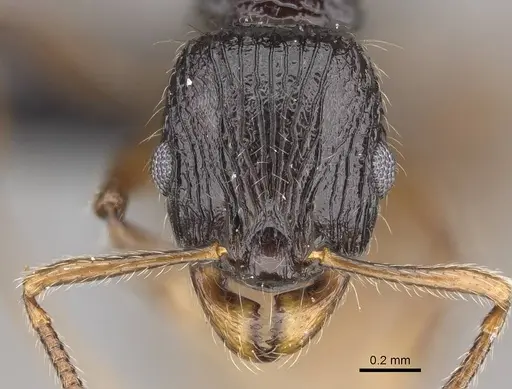
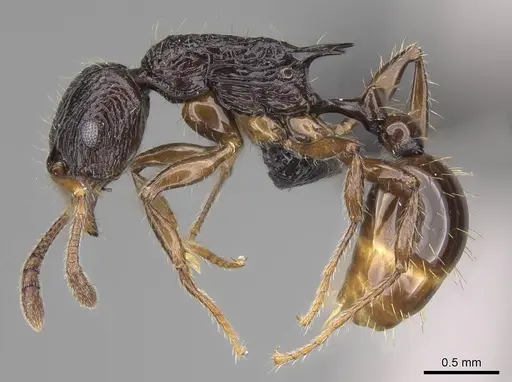
Vitsika incisura is a tiny ant species endemic to Madagascar, where it lives in montane rainforest habitats. Workers measure 3.6-4.2 mm in total length and are dark brown to blackish brown . This species is unique among Vitsika ants because the dorsal margin of its petiole node has a distinctive concave indentation in the center - a feature not found in any other known Vitsika species . The eyes are relatively well-developed, with 8-9 rows of ommatidia, and the postpetiole disc is entirely smooth . Queens are ergatoid (wingless and worker-like), with only a single specimen documented so far. This species was formally described in 2014 by Bolton and Fisher .
Quick Summary
- Difficulty: Medium
- Origin & Habitat: Endemic to Madagascar, specifically found in montane rainforest at around 1580 m elevation in the Antsiranana province [1][2]. In the wild, they nest in dead twigs above the ground and forage in low vegetation.
- Colony Type: Colonies are likely single‑queen (monogyne), but only an ergatoid (wingless) queen has been documented. Males have not been collected, so the full social structure is not yet confirmed [1].
- Size & Growth:
- Queen: Size data unavailable for ergatoid queen, only head and mesosoma measurements exist, not total length [1].
- Worker: 3.6-4.2 mm total length [1]
- Colony: Unknown, no wild or captive colony size data available
- Growth: Unknown, no development timing data exists
- Development: Unconfirmed, no direct development data exists (Development timeline has not been studied for this species.)
- Antkeeping:
- Temperature: Based on their montane rainforest origin (1580 m elevation in Madagascar), they likely prefer cooler temperatures than typical tropical ants. Aim for roughly 18-22 °C and avoid overheating. Room temperature in most homes should work well [1].
- Humidity: Montane rainforest species, they need higher humidity. Keep the nest substrate consistently moist but not waterlogged. A humidity level around 70-85% is appropriate, mimicking a damp forest floor [1].
- Diapause: Unknown, no data on overwintering requirements. Madagascar has mild winters, but montane elevations may experience cooler periods. Observe colony behavior, if the colony slows down in winter, consider a slight temperature reduction (5-10 °C) for a few months.
- Nesting: In the wild, they nest in dead twigs above ground [1]. For captivity, a small test tube setup or Y‑tong (AAC) nest with narrow chambers works well. Keep the nest humid and provide some damp substrate.
- Behavior: These are small, gentle ants that likely live in peaceful colonies. Their defense mechanism is to smear venom, typical of the Crematogastrini tribe. They forage in low vegetation and are not known to be aggressive. Their tiny size (under 4 mm) means escape prevention is critical, use fine mesh and tight‑fitting barriers. They are likely generalist foragers, collecting nectar and small prey.
- Common Issues: tiny size means escapes are likely without fine mesh barriers, no available data on exact temperature and humidity needs, you will need to experiment and observe colony behavior, colony growth rate is unknown, so patience is required, ergatoid queens may have different founding behavior than typical winged queens, colony establishment may be challenging, wild‑caught colonies may carry parasites that can cause problems in captivity
Housing and Nest Setup
Vitsika incisura are tiny ants that naturally nest in dead twigs above ground in montane rainforest [1]. For captive care, a small test tube setup works well for founding colonies, use a test tube with a water reservoir sealed with a cotton plug, providing a humid chamber. The small size means chambers and passages should be appropriately scaled. A Y‑tong (AAC) nest with narrow chambers also suits them. Avoid large, open spaces that might stress such small ants. Keep the nest humid and provide a moisture source that maintains consistent dampness without flooding.
Temperature and Humidity
These ants come from montane rainforest in Madagascar at approximately 1580 m elevation, which means they prefer cooler, more humid conditions than typical lowland tropical ants [1]. Keep temperatures in the range of 18-22 °C, this is cooler than many tropical ant species. Avoid placing the nest in direct heat or warm spots. Humidity should be high, around 70-85%. The nest substrate should feel consistently moist but never waterlogged. Montane environments are often misty and damp, so replicate that with regular misting or a water reservoir system.
Feeding and Diet
As a Myrmicinae species, Vitsika incisura is likely a generalist feeder. They probably collect nectar, honeydew, and small insects in the wild. For captivity, offer sugar water or honey as a constant energy source. For protein, provide small prey items like fruit flies, pinhead crickets, or other tiny insects. Because they are very small, prey items should be appropriately sized, no larger than they can handle. Observe feeding behavior and adjust portion sizes accordingly. Remove uneaten food after 24-48 hours to prevent mold.
Colony Structure and Queen Information
This species has an ergatoid queen, a wingless, nearly worker‑like reproductive female [1]. Only one ergatoid specimen has been documented, and it has three ocelli but an almost worker‑like mesosoma [1]. The mesonotum is slightly enlarged compared to workers, and the promesonotal suture is visible. Males have not been collected, suggesting reproduction may occur through the ergatoid form. Colony structure likely involves a single queen, but this is not confirmed.
Behavior and Temperament
Vitsika incisura is likely a peaceful, non‑aggressive species typical of small Myrmicinae ants. They probably forage in low vegetation as indicated by their collection method (beating low vegetation) [1]. Their defense mechanism is to smear venom (characteristic of Crematogastrini tribe). They are not known to sting in a piercing manner. Their small size (under 4 mm) means they pose no danger to keepers. However, escape prevention is critical, they can squeeze through very small gaps. Use fine mesh on any ventilation holes and ensure enclosure walls are smooth and gap‑free.
Acquisition and Legal Considerations
Vitsika incisura is endemic to Madagascar and was only formally described in 2014 [1]. This species is not commonly available in the antkeeping hobby and may be difficult to acquire. If available, prices may be higher due to rarity and difficulty of export from Madagascar. Always ensure any colony you purchase was legally collected and exported. Never release this species outside its native range, it is an endemic Madagascan species and could become invasive if introduced elsewhere.
Frequently Asked Questions
How long does it take for Vitsika incisura to develop from egg to worker?
The development timeline has not been scientifically documented for this species. No estimate is available. Actual development time is unknown.
What temperature do Vitsika incisura ants need?
Based on their montane rainforest origin in Madagascar at 1580 m elevation, they prefer cooler temperatures than typical tropical ants. Aim for 18-22 °C. Avoid heat sources and keep them in a cool room.
Are Vitsika incisura good for beginners?
This species is not ideal for beginners. It was only described in 2014 and there is very limited information available about its care in captivity. Additionally, they may be difficult to acquire as they are endemic to Madagascar and not commonly available. If you have experience with small Myrmicinae species and can provide high humidity and appropriate temperatures, they can be kept, but expect a learning curve.
What do Vitsika incisura ants eat?
They are likely generalist feeders. Offer sugar water or honey as a constant energy source. For protein, provide small prey like fruit flies, tiny crickets, or other small insects. Because they are very small (under 4 mm), prey should be appropriately sized. Remove uneaten food after 24-48 hours.
Can I keep multiple Vitsika incisura queens together?
Not recommended. This species appears to have single‑queen colonies, though this is not confirmed. Combining unrelated queens has not been documented and could result in aggression. If you acquire a colony, keep the queen separate from other potential foundresses.
Do Vitsika incisura ants sting?
As Myrmicinae with a modified stinger (spatulate), they likely smear venom rather than piercing. Their small size (3.6-4.2 mm) and non‑aggressive nature mean they pose no danger to ant keepers. They are more likely to flee than to defend aggressively.
How big do Vitsika incisura colonies get?
The maximum colony size is unknown. No data exists on wild or captive colony sizes for this species. Given their small worker size and montane habitat, colonies are likely smaller than many common ant species, but this is speculative.
What is an ergatoid queen?
An ergatoid queen is a wingless, worker‑like reproductive female. Unlike typical ants with large winged queens, Vitsika incisura has ergatoid queens that look almost like workers but have three ocelli (simple eyes) and a slightly enlarged mesonotum [1]. They can serve as replacement reproductives if the primary queen dies.
Do Vitsika incisura need hibernation?
Diapause requirements are unknown for this species. Their native Madagascar range has mild winters at low elevations, but montane areas (1580 m) may experience cooler periods. Observe your colony, if they become less active in winter, you can provide a slight temperature reduction (5-10 °C) for a few months. Do not let them freeze.
Where is Vitsika incisura found in the wild?
This species is endemic to Madagascar, specifically found in montane rainforest in the Antsiranana province at approximately 1580 m elevation. Specimens have been collected by beating low vegetation and from dead twigs above ground [1][2].
Why is Vitsika incisura special among ant species?
Vitsika incisura is unique because it is the only known Vitsika species with a concave (indented) dorsal margin on the petiole node [2]. It was formally described in 2014 and is endemic to Madagascar's montane rainforests. The species also has ergatoid queens rather than typical winged queens.
When will Vitsika incisura be available in the antkeeping hobby?
This species is rarely available and may be difficult to obtain. It was only described in 2014,is endemic to Madagascar, and was collected from montane rainforest at specific locations. Export restrictions from Madagascar and the difficulty of establishing colonies in captivity make them rare in the hobby. Check with specialized dealers or collectors who work with Malagasy species.
Report an Issue
The current care sheet is based fully on literature. See inconsistencies, or something that's incorrect? Please , it will be resolved after review from an admin. Contributing to the blogs tab also helps providing information, to make us be able to further improve the caresheets. Thank you for your support!
References

This caresheet is licensed under CC BY-SA 4.0 .
Community Blogs
Literature
Loading distribution map...Loading products...