
Vitsika brevis
- Sci. Name
- Vitsika brevis
- Tribe
- Crematogastrini
- Subfamily
- Myrmicinae
- Author
- Bolton & Fisher, 2014
- Distribution
- Found in 0 countries
Introduction
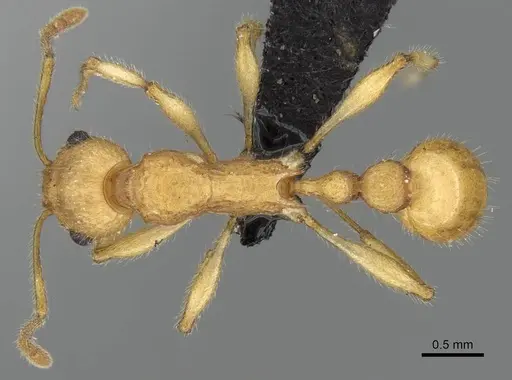
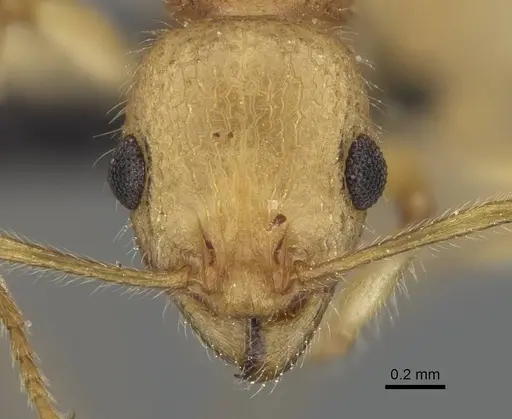
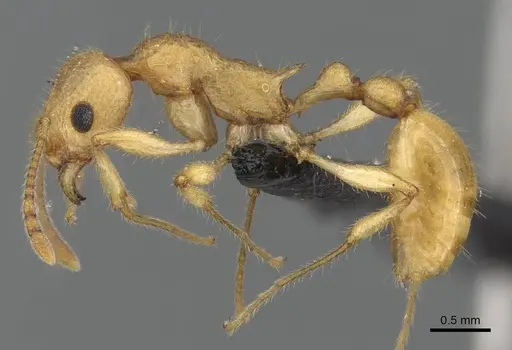
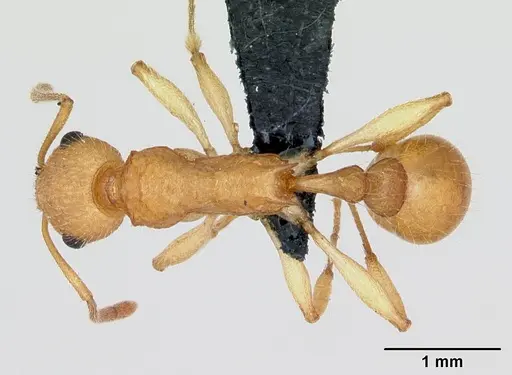
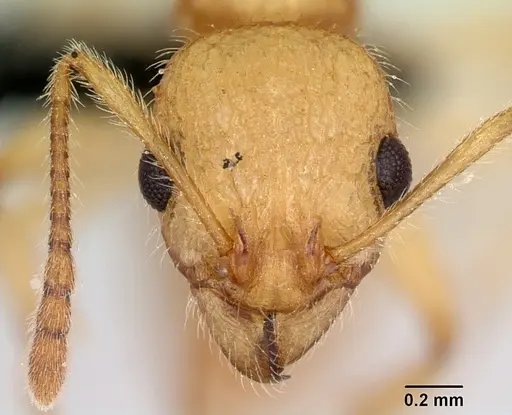
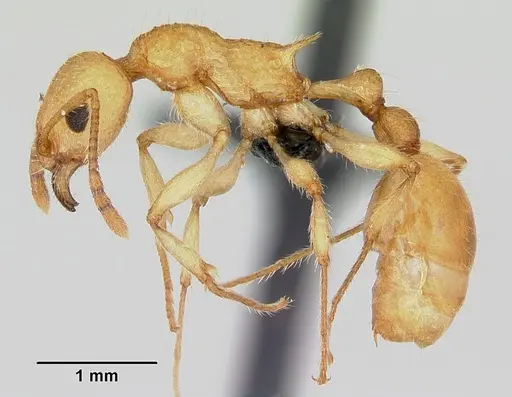
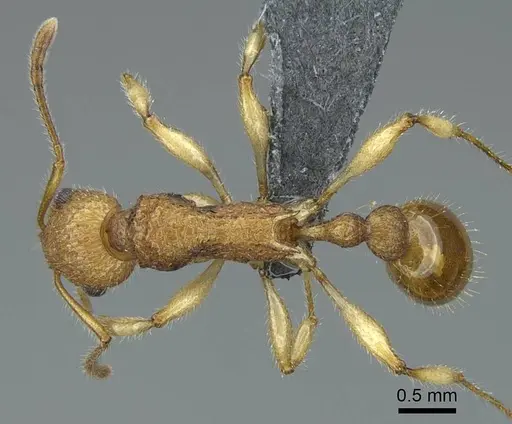
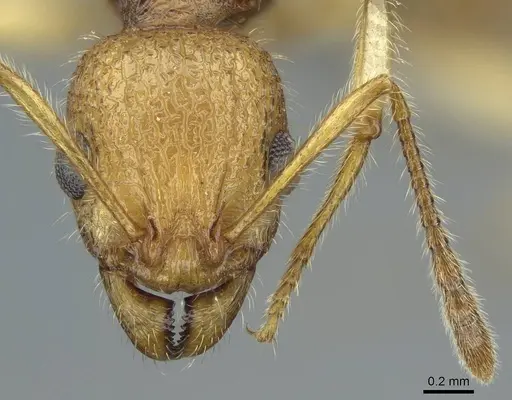
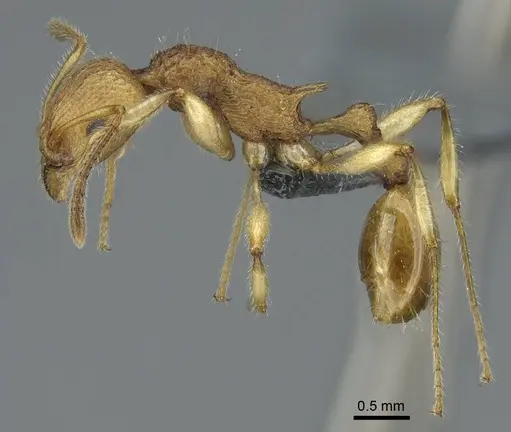
Vitsika brevis is a tiny rainforest ant native to Madagascar, measuring just 4.6-5.1 mm in total length . Workers are yellow to light brownish yellow and have a distinctive three-segmented antennal club . The species was originally described as Myrmisaraka brevis in 2014 before being moved to the genus Vitsika in 2016 . It is very similar to Vitsika producta but can be distinguished by its shorter antennal scapes and relatively broader head . These ants are found exclusively in Madagascar's rainforest habitats, particularly in the Marojejy National Park region at elevations around 775 m . They nest in dead twigs on the forest floor and have been collected from leaf litter and low vegetation . Foraging has been observed on low vegetation, suggesting they hunt or collect honeydew from plants nearby . This is a rarely encountered species known only from the worker caste - no queens or males have been documented .
Quick Summary
- Difficulty: Unknown, likely Moderate to Hard
- Origin & Habitat: Madagascar, Antsiranana Province, Marojejy National Park, rainforest at approximately 775 m elevation [1].
- Colony Type: Unknown, colony structure has not been documented [1].
- Size & Growth:
- Queen: Unknown, only worker caste has been described [1].
- Worker: 4.6-5.1 mm total length [1].
- Colony: Unknown, no colony size data available.
- Growth: Unknown, no development data available.
- Development: Unknown, no direct measurements. Based on typical Myrmicinae patterns, estimate 6-10 weeks at optimal temperature. (Development timeline is unconfirmed. Related Crematogastrini species suggest several months from egg to first worker.)
- Antkeeping:
- Temperature: Infer warm rainforest conditions around 22-26 °C based on habitat [1]. Create a thermal gradient and observe.
- Humidity: High humidity required. Keep nest substrate consistently moist but not waterlogged. Provide a gradient with some drier areas.
- Diapause: Unknown, no seasonal data. Given tropical origin, strong diapause likely not required. A slight cool period (3-5 °C drop) during winter may be optional.
- Nesting: Natural nesting in dead twigs on forest floor [1]. In captivity, use small test tubes for founding, then small Y‑tong (AAC) or plaster nests with tight chambers scaled to their tiny size. Avoid large open spaces.
- Behavior: Behavior is poorly documented. They forage on low vegetation, suggesting activity in the open. As a member of the Crematogastrini tribe, they likely use a modified stinger to smear venom onto enemies rather than sting. Escape prevention is critical due to their 4-5 mm size, use fine mesh and tight barriers.
- Common Issues: escape prevention is critical due to tiny size, use fine mesh and tight-fitting barriers., no documented colony structure makes founding success uncertain., humidity management is challenging, too wet causes mold, too dry kills brood., limited availability in the antkeeping hobby makes acquisition difficult., no known temperature or humidity preferences from research, keepers must experiment.
Natural History and Distribution
Vitsika brevis is endemic to Madagascar, known only from the Marojejy National Park in northern Antsiranana Province [1]. The original collection was made at 775 m elevation in pristine rainforest in November 2003 [1]. Workers were found nesting in dead twigs on the forest floor and from leaf litter samples [1]. This suggests they prefer humid, shaded microhabitats typical of Madagascar's eastern rainforest belt.
The species was first described in the genus Myrmisaraka in 2014 and transferred to Vitsika in 2016 [1]. It remains known only from the worker caste, no queens or males have been collected [1]. Related Vitsika species are also endemic to Madagascar, indicating an ancient Malagasy radiation within the Crematogastrini tribe [2].
Identification and Distinguishing Features
Vitsika brevis workers measure 4.6-5.1 mm in total length, making them quite small ants [1]. Their body color is yellow to light brownish yellow throughout [1]. The most distinctive feature is the three-segmented antennal club at the tip of the antenna [1].
Within the club, the segment just before it (funiculus segment 8) is relatively short and broad, while the following segment (segment 9) is noticeably longer, about 1.7 to 2 times the length of segment 8 [1]. The antennal scape (the first elongated segment) is relatively short compared to the similar Vitsika producta [1]. The head is relatively broad, and in profile the petiole node has a shallowly sloping front face [1]. These features distinguish V. brevis from V. producta, which has longer scapes and a narrower head [1].
Housing and Nesting
In their natural habitat, Vitsika brevis nests in dead twigs on the rainforest floor [1]. This indicates they prefer tight, enclosed spaces with high humidity. In captivity, you should replicate these conditions using small-scale housing.
Test tubes with cotton barriers work well for founding colonies, use a water reservoir on one end and keep the cotton consistently moist [1]. For established colonies, small Y‑tong (AAC) or plaster nests with appropriately tight chambers scaled to their 4-5 mm size are ideal. Avoid large, open formicaria designed for bigger ants, these tiny ants can become stressed in spaces they cannot properly occupy.
The nest should maintain high humidity without becoming waterlogged. Keep the nest substrate consistently moist but not flooded. Provide a water gradient by having one area of the nest slightly moister than another, allowing ants to self‑regulate. Use a substrate like coconut fiber or fine soil in outworld areas to help maintain moisture.
Feeding and Diet
The natural diet of Vitsika brevis is not documented [1]. However, based on their foraging on low vegetation and small size, they likely combine honeydew collection with small prey items [1].
For captive feeding, offer sugar sources (honey water, sugar water) and small protein sources such as fruit flies, pinhead crickets, or tiny mealworms. Given their tiny size, prey should be appropriately scaled, even small fruit flies may need to be broken up for founding colonies.
Feed small amounts every 2-3 days and remove uneaten prey after 24 hours to prevent mold. Sugar water can be provided continuously on a cotton wick or in a small test tube. Monitor acceptance, if workers ignore a food source, try alternatives.
Temperature and Seasonal Care
No specific temperature requirements have been documented for Vitsika brevis [1]. But they come from Madagascar's rainforest at about 775 m elevation, where temperatures are warm year‑round [1].
Infer a temperature range of 22-26 °C based on this habitat. Use a heating cable on one side of the nest to create a gentle thermal gradient, allowing ants to move between warmer and cooler areas. Avoid temperatures above 30 °C or below 18 °C.
Regarding diapause, no data exists [1]. Madagascar does not have harsh winters, so a strong diapause is likely not required. Keepers may optionally reduce temperature by 3-5 °C during winter months, but this is unconfirmed and not necessary. Monitor colony activity.
Acquisition and Availability
Vitsika brevis is extremely rare in the antkeeping hobby and not commonly available from commercial suppliers. This species is known only from a few specimens collected in Madagascar's Marojejy National Park [1].
If you encounter this species for sale, be cautious about the source. Wild‑caught colonies from Madagascar may carry parasites or diseases. Captive‑bred colonies are preferable.
Given the lack of documented captive care information, this species is best suited for experienced antkeepers who enjoy experimenting with novel species. Beginners should start with more established species.
Frequently Asked Questions
How big do Vitsika brevis ants get?
Workers measure 4.6-5.1 mm in total length, making them quite small ants [1]. The queen size is unknown, only workers have been described [1].
Where does Vitsika brevis live in the wild?
This species is endemic to Madagascar, found only in Marojejy National Park in northern Madagascar. They live in rainforest at about 775 m elevation, nesting in dead twigs on the forest floor [1].
What do Vitsika brevis ants eat?
Their exact diet is not documented, but they likely feed on honeydew from aphids and small insects [1]. In captivity, offer sugar water or honey water alongside small protein sources like fruit flies or tiny mealworms.
Can I keep Vitsika brevis in a test tube?
Yes, small test tubes work well for this species. Use a water reservoir with a cotton plug, keeping the cotton consistently moist to maintain high humidity. The small chamber size is appropriate for their tiny workers [1].
Do Vitsika brevis ants need hibernation?
Diapause requirements are unknown [1]. Madagascar does not have harsh winters, so strong diapause is likely not required. A slight temperature reduction (3-5 °C) during winter may be optional.
How long does it take for Vitsika brevis to develop from egg to worker?
The development timeline is unconfirmed, no direct measurements exist [1]. Based on typical Myrmicinae patterns, estimate 6-10 weeks at optimal temperature (22-26 °C).
Are Vitsika brevis good for beginners?
No, this species is not recommended for beginners. Care requirements are undocumented, colony structure is unknown, and they are extremely rare in the hobby [1]. More established species are better choices for those starting out.
Do Vitsika brevis ants sting?
Stinging capability is not documented for this species. As a member of the Crematogastrini tribe, they likely use a modified stinger to smear venom rather than pierce. Exercise normal caution when handling.
What temperature should I keep Vitsika brevis at?
Infer a temperature range of 22-26 °C based on their Madagascar rainforest habitat [1]. Use a heating cable on one side of the nest to create a gentle gradient. Avoid temperatures above 30 °C or below 18 °C.
Why are Vitsika brevis so rarely available?
This species is known only from a few specimens collected in Madagascar's Marojejy National Park [1]. They have never been commonly collected and remain one of the more obscure ant species in the hobby.
Report an Issue
The current care sheet is based fully on literature. See inconsistencies, or something that's incorrect? Please , it will be resolved after review from an admin. Contributing to the blogs tab also helps providing information, to make us be able to further improve the caresheets. Thank you for your support!
References

This caresheet is licensed under CC BY-SA 4.0 .
Community Blogs
Literature
Loading distribution map...Loading products...