
Typhlomyrmex prolatus
- Sci. Name
- Typhlomyrmex prolatus
- Tribe
- Ectatommini
- Subfamily
- Ectatomminae
- Author
- Brown, 1965
- Distribution
- Found in 2 countries
Introduction
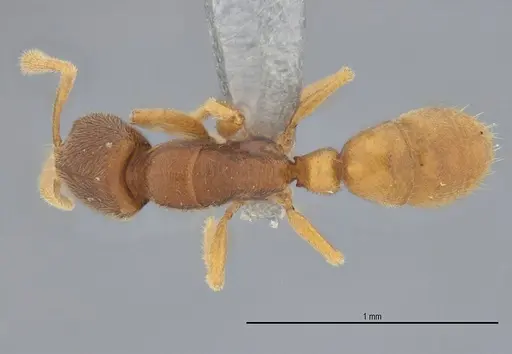
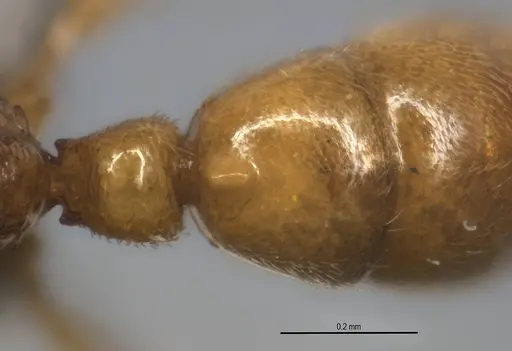
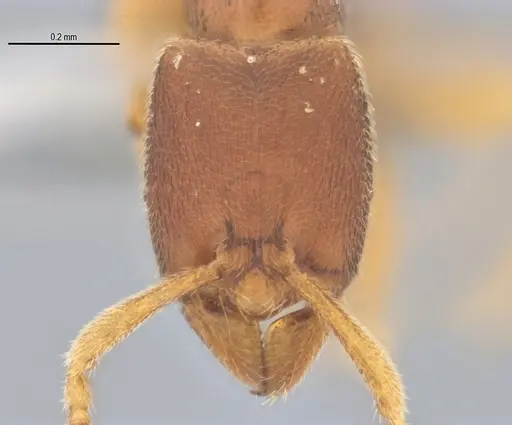
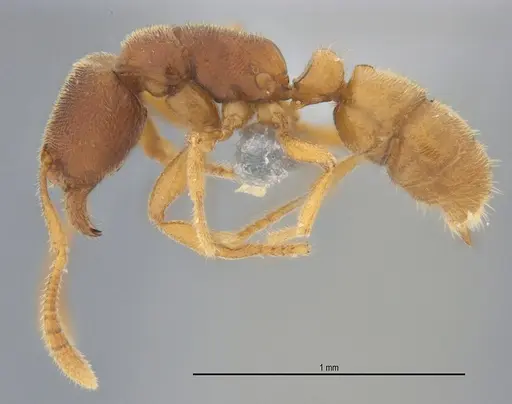
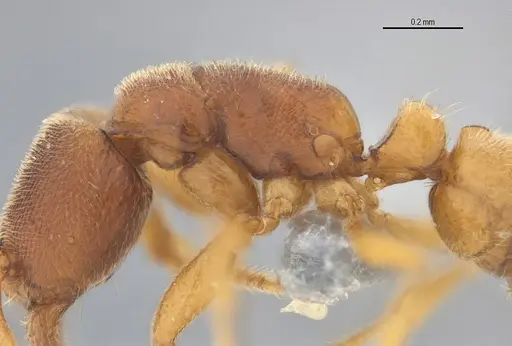
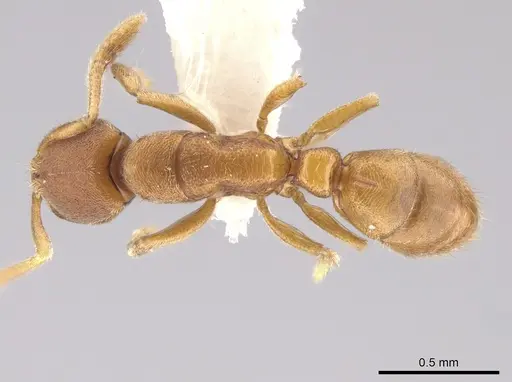
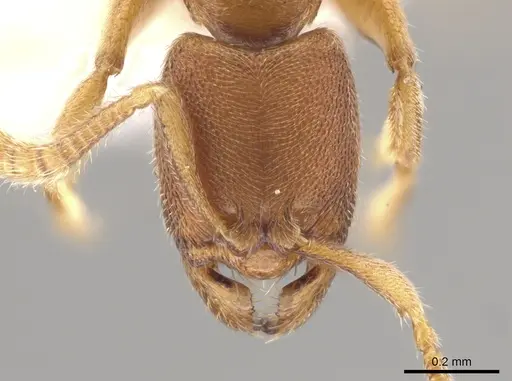
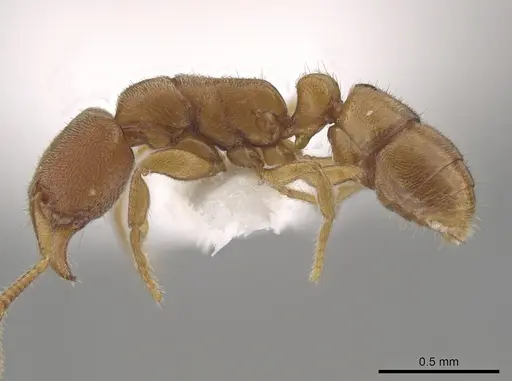
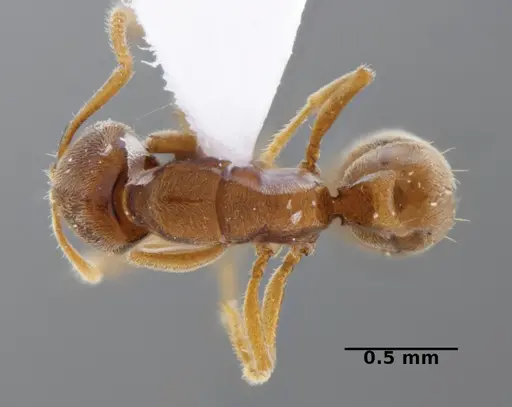
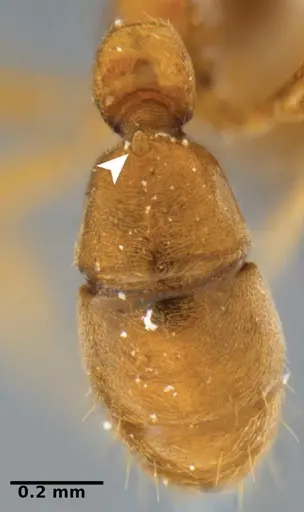
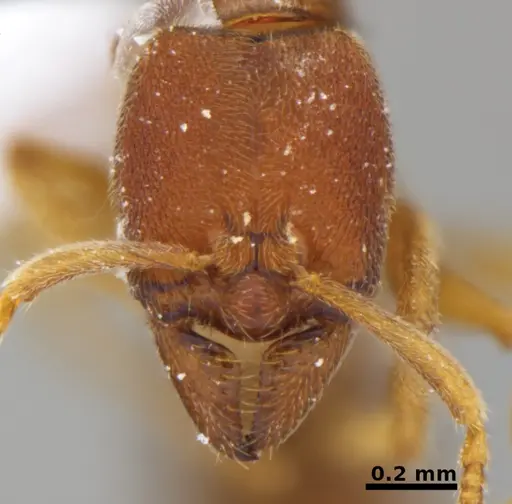
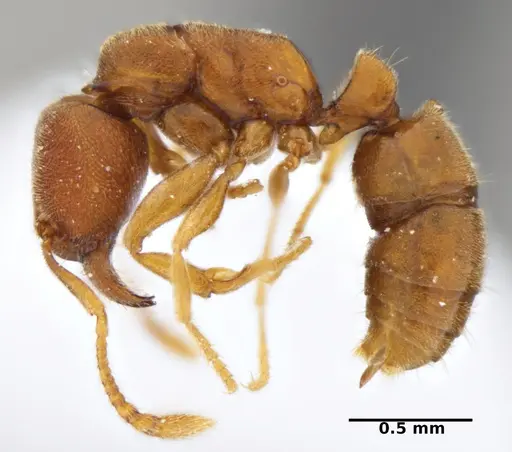
Typhlomyrmex prolatus is a tiny, soil-dwelling ant from the subfamily Ectatomminae. Workers are just 1.85 mm in total length, making them one of the smallest ant species people keep . They have a reddish-brown body with lighter antennae and legs, and you can identify them by a unique short protruding carina on the front of their first metasomal tergum – a feature no other Typhlomyrmex species has . This ant is blind or nearly blind, with eyes reduced to a single ommatidium on each side of the head . Originally described from Costa Rica, recent records confirm their presence in South America (Colombia), with a distribution from Mexico to Colombia at elevations between 50 m and 1,200 m . They live exclusively in soil at shallow depths (0–10 cm) and have been found sharing underground galleries with termites .
Quick Summary
- Difficulty: Medium
- Origin & Habitat: Neotropical region – fragmented rain forests in piedmont areas of Costa Rica, Colombia, Mexico, Nicaragua, and Venezuela [1]. They live exclusively in soil at shallow depths (0–10 cm), often sharing galleries with termites [1].
- Colony Type: Colony structure is unconfirmed. Workers have been collected from soil, and the species has been found living alongside termites in shared underground galleries [1].
- Size & Growth:
- Queen: Unconfirmed – only the holotype queen was described in 1965 from Costa Rica [2].
- Worker: 1.85 mm total length (TL) [1].
- Colony: Unknown – no colony size data available in literature.
- Growth: Unknown – development timeline has not been documented.
- Development: Unknown – no direct measurements available. Based on typical poneromorph ant patterns, estimate 2–4 months at optimal temperature. (Growth rate is unconfirmed. Poneromorph ants typically develop slower than many Formicinae or Myrmicinae species.)
- Antkeeping:
- Temperature: Keep at 24–28°C, matching their Neotropical lowland forest habitat [1]. Provide a gentle gradient with a warmer nest area and cooler foraging area.
- Humidity: High humidity is essential – they live in soil at shallow depths in rain forests. Keep the substrate consistently moist but not waterlogged. Provide a humidity gradient with a damp nest area and slightly drier foraging area [1].
- Diapause: No – as a tropical species from low elevations, they do not require hibernation. Maintain stable warm conditions year-round [1].
- Nesting: Soil-dwelling species that needs a naturalistic setup with moist substrate. Use a digging setup with fine soil or a plaster nest with high humidity. They prefer tight, enclosed spaces similar to their natural soil galleries [1].
- Behavior: This predatory ant has reduced eyes, so it relies heavily on chemical and tactile senses rather than vision. They are slow-moving and secretive, hunting small soil arthropods in the wild. Workers are only 1.85 mm – this makes them a high escape risk even through tiny gaps. Ensure a tight-fitting lid with fine mesh or silicone seals. They are not aggressive toward colony members but will defend against intruders [1].
- Common Issues: blind or nearly blind ants may have difficulty navigating open spaces – provide cluttered foraging areas with leaf litter and small stones., soil-dwelling species needs constant moisture – substrate drying out is a common cause of death., predatory diet may be hard to meet – small live prey like springtails and fruit flies is essential and can be tricky to culture., tropical species is sensitive to temperature drops – cold can kill colonies quickly., overly wet conditions may promote mold growth – balance moisture with small ventilation openings.
Housing and Nest Setup
Typhlomyrmex prolatus needs a naturalistic setup that mimics its soil-dwelling habitat. A digging setup with a deep layer of moist, fine substrate works best – they naturally live in soil at 0–10 cm depth [1]. Use a mix of soil and sand that holds moisture without becoming waterlogged. The nest chamber should be enclosed and dark, similar to the underground galleries they share with termites. A Y-tong (AAC) nest with very small chambers can also work, but make sure humidity stays high. Because they are nearly blind, add different textures and materials in the outworld to help them navigate – pieces of leaf litter, small stones, and other structures give them landmarks. Keep the foraging area simple and easy to clean, with a small water tube for drinking.
Feeding and Diet
As a poneromorph ant, Typhlomyrmex prolatus is predatory and needs live small prey. In the wild they likely hunt springtails, mites, and tiny insects. In captivity, feed them live small prey like springtails, fruit flies, and other tiny insects. They probably won't accept sugar water or honey, as that's not part of their natural diet. Some keepers have success offering tiny pieces of mealworm or other small protein sources, but live prey is always better. Feed small amounts 2–3 times per week, removing any uneaten prey after 24 hours to prevent mold. Because they are nearly blind, place prey close to the nest entrance where foragers are likely to find it.
Temperature and Humidity
Maintain temperatures between 24–28°C, which matches their Neotropical lowland forest habitat in Costa Rica and Colombia [1]. Room temperature in most homes works, but a heating cable on one side of the nest helps keep it stable. They are sensitive to temperature drops, so avoid placing the colony near windows or air conditioning vents. Humidity is critical – keep the nest substrate consistently moist. The soil should feel damp but not have standing water. A water tube connected to the nest helps maintain humidity through evaporation. Check regularly and rehydrate when the surface starts drying. Good ventilation is necessary to prevent mold, but avoid too much airflow that dries out the nest.
Behavior and Colony Care
This is a secretive, slow-moving ant that spends most of its time in the nest or right around it. Their reduced eyes mean they rely heavily on chemical pheromone trails and vibrations to navigate – typical of soil-dwelling ants. Workers are small (1.85 mm [1]), and the colony likely stays small even when mature. They are not aggressive and will retreat rather than fight. The colony may consist of only a few dozen workers at maximum, based on typical poneromorph colony sizes. Be patient with growth – these ants develop slowly compared to many common species. Avoid disturbing the nest often, as they prefer stability and may abandon brood if stressed. The queen probably won't look much larger than the workers.
Unique Identification Features
Typhlomyrmex prolatus has a key feature that sets it apart from all other Typhlomyrmex species: a short protruding carina (ridge) on the front top of the first metasomal tergum [1]. This was first described in the queen by Brown in 1965 and is now confirmed in all workers examined. The function of this structure is unknown. Workers are reddish-brown with lighter antennae and legs, have a 12-segmented antenna with a 3-segmented club, and the scape is visibly bent ventrally at one-third of its length. Their eyes are reduced to a single ommatidium on each side, making them effectively blind or nearly blind [1].
Frequently Asked Questions
How long does it take for Typhlomyrmex prolatus to develop from egg to worker?
The exact development timeline is unknown for this species. Based on typical poneromorph ant patterns and their small colony size, estimate 2–4 months from egg to first worker at optimal temperature (24–28°C). They likely develop slower than many common ant species.
What do Typhlomyrmex prolatus ants eat?
They are predatory ants that need live small prey. Feed them springtails, fruit flies, and other tiny insects. Sugar water and honey are unlikely to be accepted. Live prey is essential for their survival and reproduction.
Are Typhlomyrmex prolatus good for beginners?
This species is rated medium difficulty. They need specific conditions (high humidity, warm temperatures, live prey) that can be challenging for beginners. Their predatory diet and constant moisture needs make them more demanding than common species like Lasius or Camponotus.
Do Typhlomyrmex prolatus ants sting?
As members of the subfamily Ectatomminae, they have functional stingers. While not documented specifically for T. prolatus, they can likely sting if threatened. Given their small size and secretive nature, stings are rare and mild.
What size do Typhlomyrmex prolatus colonies reach?
Colony size is undocumented in scientific literature. Based on typical poneromorph patterns, colonies likely stay small – probably under 100 workers at maturity. They are not a fast-growing species.
Can I keep Typhlomyrmex prolatus in a test tube?
A test tube is not ideal for this soil-dwelling species. They need a naturalistic setup with moist substrate for digging and creating galleries. A digging setup or humidified artificial nest (like Y-tong with small chambers) works better.
Do Typhlomyrmex prolatus need hibernation?
No – they are a tropical species from low elevations in the Neotropics. They do not require hibernation and should be kept warm year-round at 24–28°C [1].
Why are my Typhlomyrmex prolatus not moving much?
This is normal – they are secretive, slow-moving ants that spend most of their time in the nest. Their reduced eyes also make them less active than visually-oriented ants. If healthy, they will emerge to forage but at a slow pace [1].
What makes Typhlomyrmex prolatus different from other ants?
They are nearly blind (eyes reduced to a single ommatidium), exclusively soil-dwelling, and have been found living alongside termites. They also have a unique carina on their first metasomal tergum not found in any other Typhlomyrmex species. At just 1.85 mm, they are one of the smallest ant species kept in captivity [1].
How do I set up a nest for Typhlomyrmex prolatus?
Use a naturalistic digging setup with moist, fine substrate at least 5–10 cm deep – they naturally live in soil at 0–10 cm depth [1]. Include materials like leaf litter for them to navigate by. Keep the nest dark and enclosed to mimic their underground galleries. Maintain high humidity.
Report an Issue
The current care sheet is based fully on literature. See inconsistencies, or something that's incorrect? Please , it will be resolved after review from an admin. Contributing to the blogs tab also helps providing information, to make us be able to further improve the caresheets. Thank you for your support!
References

This caresheet is licensed under CC BY-SA 4.0 .
Community Blogs
Literature
Loading distribution map...Loading products...