
Typhlomyrmex encanto
- Sci. Name
- Typhlomyrmex encanto
- Tribe
- Ectatommini
- Subfamily
- Ectatomminae
- Author
- Fernández <i>et al.</i>, 2023
- Distribution
- Found in 1 countries
Introduction
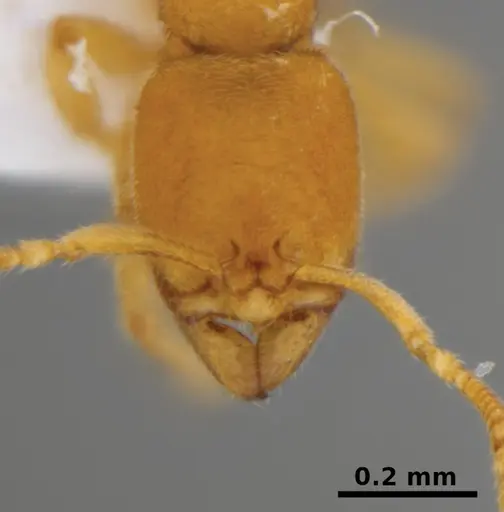
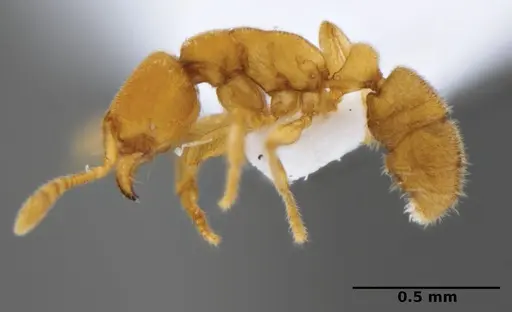
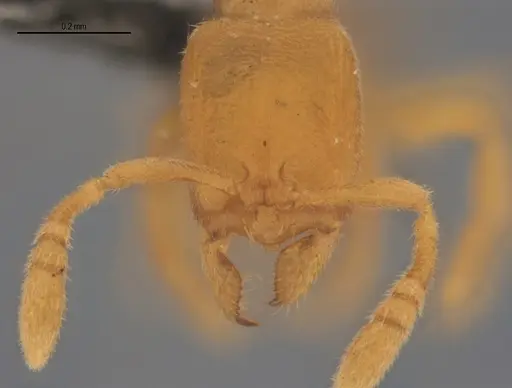
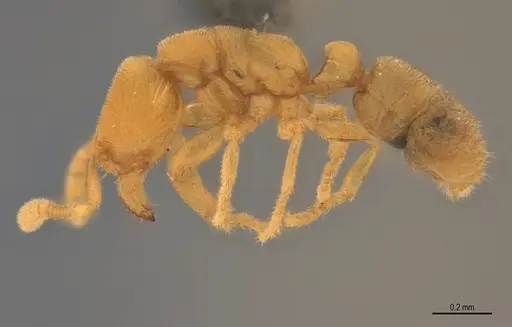
Typhlomyrmex encanto is a tiny ant species measuring just 1.57mm in total length - it is not only the smallest in its genus but probably the smallest Ectatomminae ant in the world . Workers are light brown with a rectangular head longer than wide, reduced eyes (just a single light-sensing ommatidium), and a unique median projection on the clypeal lamella that sets it apart from all other Typhlomyrmex species . This species lives in the leaf litter of primary rain forests in the Colombian Amazon, and appears restricted to the Amazon basin of South America .
Quick Summary
- Difficulty: Expert
- Origin & Habitat: Colombian Amazon (El Encanto, Amazonas region) at around 156m elevation, in primary rain forest leaf litter with a high degree of conservation. Also reported from Brazil and Peru but those records lack vouchers, the confirmed range is the Amazon basin of Colombia [1].
- Colony Type: Unconfirmed, colony structure has not been documented. Based on genus patterns, likely single-queen colonies typical of Ectatomminae.
- Size & Growth:
- Queen: Unknown, queen has not been described [1]
- Worker: 1.57mm total length (TL) [1]
- Colony: Unknown, no colony data available
- Growth: Unknown
- Development: Unknown, no development data. Based on their tiny size and typical Ectatomminae patterns, development may take 4-10 weeks at optimal temperature, but this is an estimate. (No direct data on development. Keep temperature stable and observe for cues.)
- Antkeeping:
- Temperature: Based on Amazon rainforest habitat, keep warm at 24-28°C. This is an estimate, adjust based on colony activity. Avoid temperatures below 22°C or above 30°C.
- Humidity: High humidity required, think damp rainforest floor. Keep the nest substrate consistently moist but not waterlogged. Provide good ventilation to prevent mold.
- Diapause: Unknown, Amazon species likely do not require true hibernation, but they may slow down during cooler or drier periods. No data available.
- Nesting: Natural nesting: leaf litter and upper soil layers. In captivity, use a small test tube setup with a tight cotton plug for founding. For larger colonies, a plaster or Y-tong nest with very small chambers works. Avoid large open spaces, their tiny size means they can get lost or stressed.
- Behavior: Behaviour is largely unstudied. Typhlomyrmex ants are typically subterranean, slow-moving, and likely predatory or omnivorous. Workers have reduced eyes but rely on chemical and tactile senses. They belong to Ectatomminae, a subfamily that possesses a functional sting, though stinging behaviour in this species hasn't been observed. Escape prevention is critical due to their 1.57mm size, they can squeeze through gaps invisible to the naked eye. Use fine mesh (0.5mm or smaller) and seal all openings.
- Common Issues: extremely small size makes escape prevention critical, they can fit through nearly invisible gaps, no biological data available makes care a guessing game, this is an unstudied species, high humidity needs can lead to mold if ventilation is poor, Amazon origin suggests they need warm, stable temperatures year-round, prey must be tiny: fruit flies, springtails, and other micro-arthropods only
Discovery and Naming
Typhlomyrmex encanto was described in 2023,making it one of the newest ant species. It was discovered in the Colombian Amazon at a locality called El Encanto, 'encanto' is Spanish for 'charm', also referencing the Disney movie Encanto set in Colombia [1]. The type specimens were collected using the Winkler method, which sifts leaf litter to extract tiny arthropods [1]. This species was previously reported as 'Typhlomyrmex sp. A' by researchers in 2008 who had seen specimens from Brazil, Colombia, and Peru, but no formal description was published then [1].
Size and Morphology
This species holds a record: it is probably the smallest Ectatomminae ant in the world, with workers measuring just 1.57mm total length [1]. Workers are light brown and have a rectangular head longer than wide. Their eyes are extremely reduced, just a single ommatidium, which suggests they rely more on touch and smell than sight [1]. The most unusual feature is a median projection on the clypeal lamella, a small face structure not seen in any other Typhlomyrmex species [1]. Antennae are 12-segmented with a well-defined 3-segmented club at the tip [1].
Habitat and Distribution
Typhlomyrmex encanto is known from the Colombian Amazon, specifically El Encanto in Amazonas at about 156m elevation [1]. The type locality is primary rainforest with a high conservation status [1]. The species was collected from leaf litter. While Lacau et al. (2008) mention it also from Brazil and Peru, those records lack specifics, so the confirmed range is in Colombia [1]. The Amazon basin provides a warm, humid environment year-round. In the wild, these ants live in the leaf litter layer, a dark, moist, stable microhabitat packed with tiny prey.
Housing and Care
Keeping this species is challenging because of their tiny size and lack of data. Housing must be small-scale: a test tube with a tight cotton plug works for a founding colony, and a plaster or Y-tong nest with tiny chambers suits an established colony. Avoid acrylic nests, they don't hold humidity well and the ants are too small to grip smooth surfaces. The nest should be kept humid, like a damp sponge or moist soil that never dries out completely. Ventilation is important to stop mold. Temperature should be warm, around 24-28°C, which matches their Amazon home. Escape prevention is the biggest challenge, these ants can walk through standard mesh. Use fine mesh (0.5mm or smaller) or completely sealed containers. Check all joints, lids, and tubes for gaps. A thin layer of PTFE (fluon) around the outworld rim adds extra security.
Feeding and Diet
The diet of Typhlomyrmex encanto hasn't been studied, but the genus is likely predatory or omnivorous, hunting small invertebrates in leaf litter. In captivity, offer live prey that matches their size: springtails, fruit flies, and other micro-arthropods. They may also accept honey or sugar water, but this is unconfirmed. Feed small amounts 2-3 times per week and remove uneaten prey to prevent mold. Their reduced eyes mean they probably hunt using chemical cues rather than sight.
Challenges and Considerations
This is an expert-level species, not for beginners. The main problem is the lack of biological data, we know almost nothing about their temperature needs, humidity preferences, colony size, founding method, or diet. Everything must be guessed from their habitat and related species [1]. Their tiny size makes all care tasks harder: you need special escape-proof enclosures, microscopic prey, and good magnification to observe them. If you keep them, document everything, any info you gather is scientifically valuable. Expect a lot of trial and error.
Frequently Asked Questions
How long do Typhlomyrmex encanto workers live?
Worker lifespan is unknown, no biological studies have been done on this newly described species.
What do Typhlomyrmex encanto ants eat?
Diet is unconfirmed, but based on genus patterns they are likely predatory on micro-arthropods. Offer live springtails, fruit flies, and other tiny invertebrates. Sugar acceptance is unknown.
How big do Typhlomyrmex encanto colonies get?
Colony size is unknown, no colony data exists. Based on their tiny size and related Ectatomminae species, colonies likely remain small (dozens to low hundreds of workers), but this is speculative.
Do Typhlomyrmex encanto ants sting?
Ectatomminae ants have a functional sting, but stinging behaviour in this species has not been observed. Handle with care.
Are Typhlomyrmex encanto good for beginners?
No, this is an expert-level species. They are newly described with no biological data, extremely tiny (requiring specialised equipment), and tricky to keep. Not recommended for anyone without substantial antkeeping experience.
What temperature do Typhlomyrmex encanto need?
Based on their Amazon origin, keep them warm at 24-28°C. This is an estimate, no specific temperature data exists for this species.
Do Typhlomyrmex encanto need hibernation?
Diapause requirements are unknown. As an Amazon species, they likely do not need true hibernation but may show reduced activity during cooler or drier periods.
How do I house Typhlomyrmex encanto?
Use small-scale setups with appropriately sized chambers. Standard nests are too large, start with a small test tube. Excellent escape prevention is critical due to their 1.57mm size. Fine mesh or PTFE barriers are required.
Why are Typhlomyrmex encanto eyes so small?
Their eyes are reduced to a single ommatidium, typical of subterranean and leaf-litter dwelling ants. They rely on chemical and tactile senses rather than vision for foraging in dark microhabitats [1].
Where is Typhlomyrmex encanto found in the wild?
They are known from the Colombian Amazon (El Encanto) at around 156m elevation, in primary rainforest leaf litter. Reports from Brazil and Peru exist but are unconfirmed [1].
When was Typhlomyrmex encanto discovered?
This species was formally described in 2023 by Fernández, Fiorentino, and Castro. It was previously known as 'Typhlomyrmex sp. A' in unpublished reports [1].
Can I keep multiple Typhlomyrmex encanto queens together?
Colony structure is unconfirmed, queen behaviour has not been documented. Do not attempt combining unrelated queens without specific knowledge of this species' social structure.
Report an Issue
The current care sheet is based fully on literature. See inconsistencies, or something that's incorrect? Please , it will be resolved after review from an admin. Contributing to the blogs tab also helps providing information, to make us be able to further improve the caresheets. Thank you for your support!
References

This caresheet is licensed under CC BY-SA 4.0 .
Community Blogs
ICN103630
View on AntWeb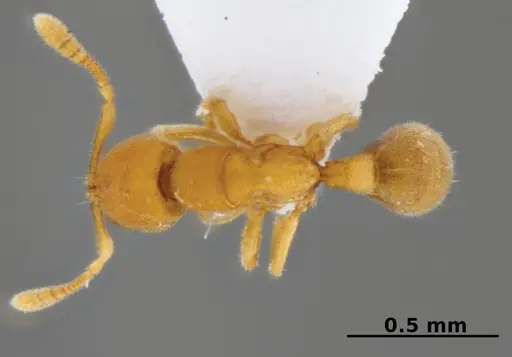
UFV-LABECOL-006034
View on AntWeb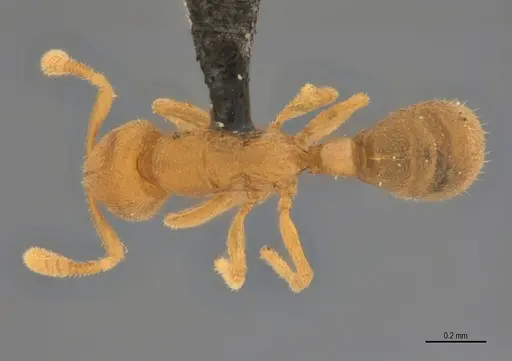
Literature
Loading distribution map...Loading products...