
Typhlomyrmex clavicornis
- Sci. Name
- Typhlomyrmex clavicornis
- Tribe
- Ectatommini
- Subfamily
- Ectatomminae
- Author
- Emery, 1906
- Distribution
- Found in 3 countries
Introduction
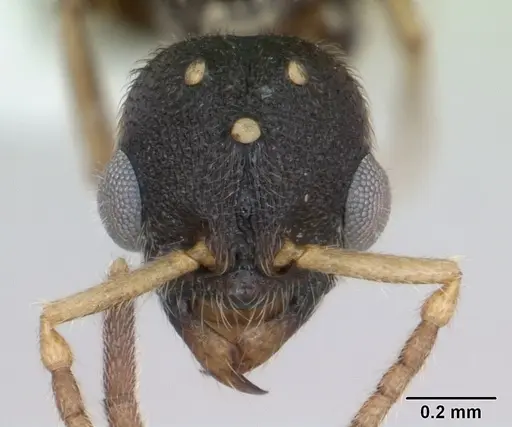
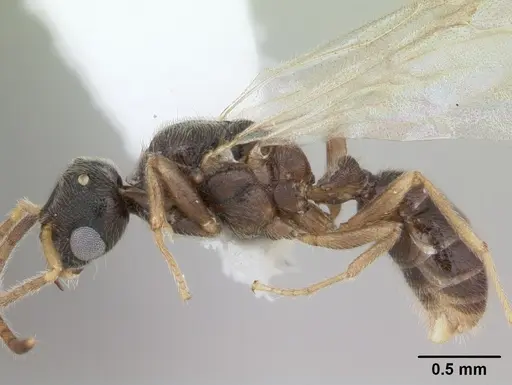
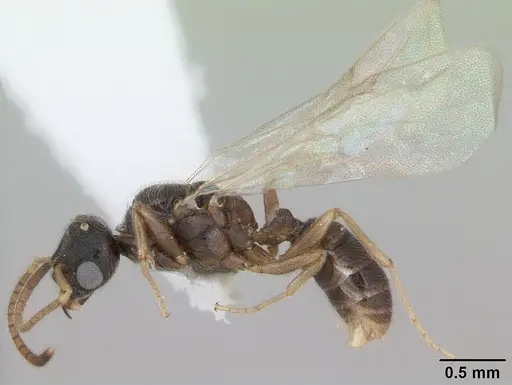
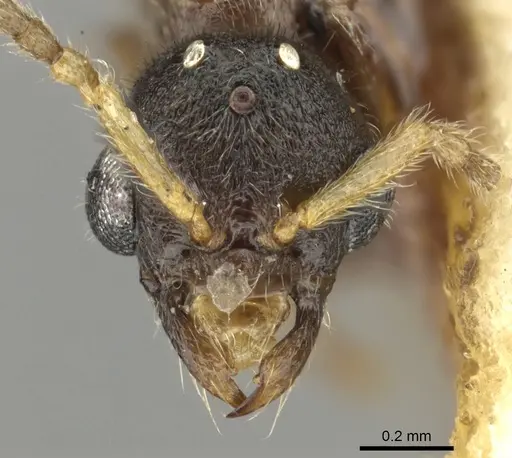
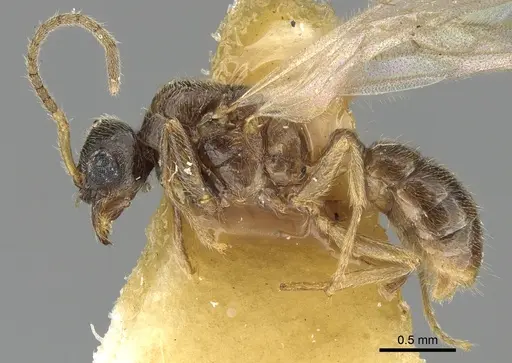
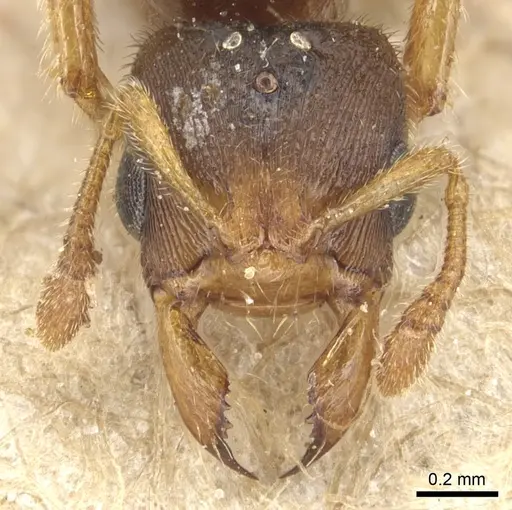
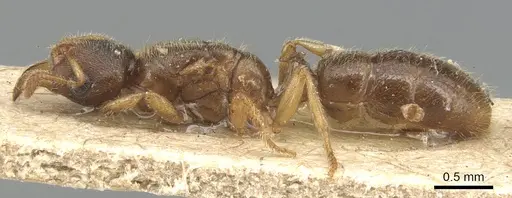
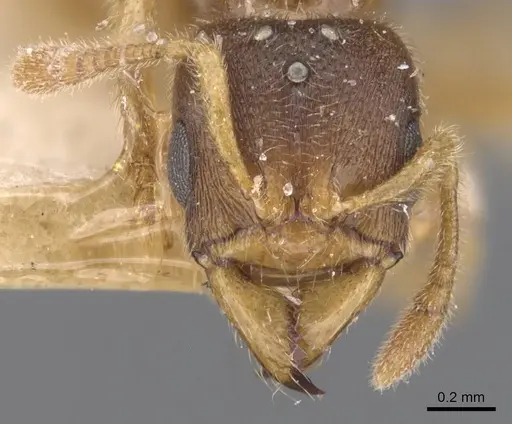
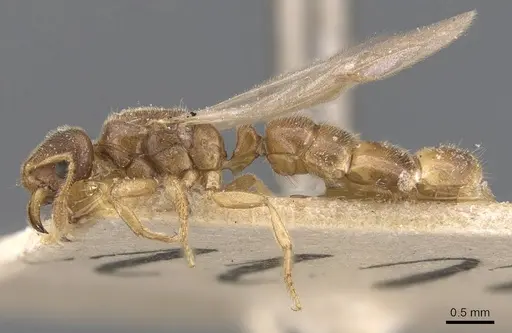
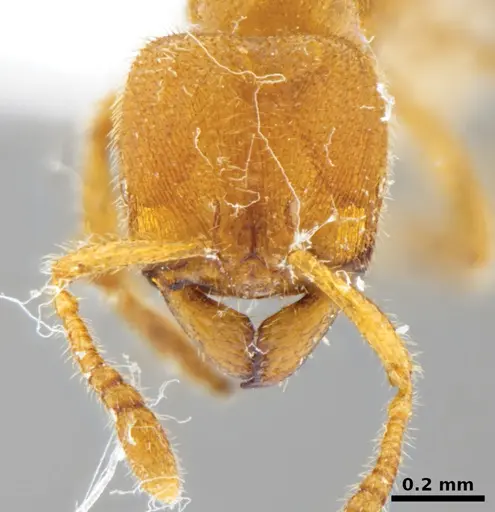
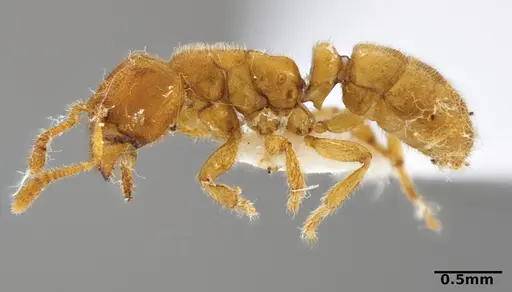
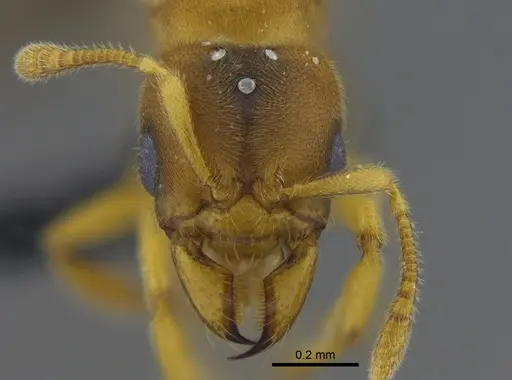
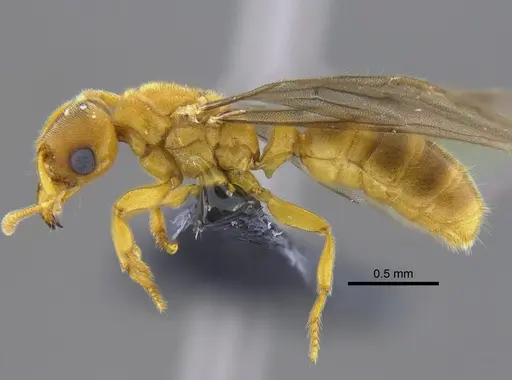
Typhlomyrmex clavicornis is a small, ground-dwelling ant native to the Neotropical region of South America. Workers measure around 3.3mm in total length, with a distinctive light brown coloration and a prominent 3-segmented antennal club that gives the species its name 'clavicornis' . The genus name Typhlomyrmex literally means 'blind ant' - these ants have extremely reduced eyes, with just a single ommatidium (light-sensing unit) on the side of the head . This makes them nearly blind, similar to other subterranean ants. Their head is quadrated (square-shaped), slightly wider than long, and the body has a dense, short pubescence with longer erect hairs on the clypeus and petiole . The queen measures about 4mm in total length . This species lives primarily underground, found mostly in deep soil strata between 10 and 30 cm below the surface, with the highest numbers recorded at 20-30 cm depth . They occur in a variety of habitats across their range, from pastures to secondary and primary forests, at elevations from 182m to 1500m .
Quick Summary
- Difficulty: Hard
- Origin & Habitat: Neotropical South America, Argentina, Bolivia, Brazil, Colombia, French Guiana, Guyana, Paraguay, and Suriname. Found in soil and leaf litter, predominantly in deep soil layers (10-30 cm depth), in pastures, secondary forests, and primary forests [1] [3].
- Colony Type: Unconfirmed, colony structure has not been documented. Based on related Ectatomminae, likely single-queen (monogyne) colonies.
- Size & Growth:
- Queen: ~4 mm [2]
- Worker: 3.31 mm total length (TL) [1]
- Colony: Unknown, likely small (up to a few hundred workers) based on related subterranean Ectatomminae
- Growth: Moderate, inferred from related Ectatomminae
- Development: 6-10 weeks at tropical temperatures, estimated based on related Ectatomminae (Development time is unconfirmed for this species. Estimate based on genus-level patterns for small tropical ants.)
- Antkeeping:
- Temperature: 24-28°C, these are tropical/subterranean ants requiring warm, stable conditions.
- Humidity: High humidity, they naturally live in deep, damp soil. Keep the substrate consistently moist but never waterlogged.
- Diapause: Unlikely, being tropical/subterranean, they probably do not need a diapause period. Activity may slow down slightly during cooler periods.
- Nesting: Y-tong (AAC) or plaster nests with deep chambers (at least 2-3 cm) work well to mimic their natural deep-soil habitat. These ants are blind and prefer dark, humid conditions, avoid bright lighting.
- Behavior: Generally docile and non-aggressive. They possess a functional sting (typical of Ectatomminae) but rarely use it against humans. As nearly blind ants, they rely heavily on chemical pheromone trails and tactile cues. Workers are small (3.3 mm) but not particularly escape-prone compared to very tiny species, however, good escape prevention is still recommended due to their small size. They spend most of their time inside the nest and are not visually responsive, they explore boundaries using chemical cues. Moderate escape risk.
- Common Issues: maintaining high humidity is critical, these deep-soil ants desiccate easily in dry conditions, blind ants may have trouble finding food in open spaces, place food directly on the substrate near the nest entrance, colonies may be slow to establish because founding requirements are unknown, subterranean species are sensitive to light, minimize nest exposure to bright light, wild-caught colonies may carry parasites, given their soil-dwelling lifestyle
Housing and Nest Setup
Typhlomyrmex clavicornis needs a dark, humid environment that mimics its natural deep-soil habitat. Y-tong (AAC) or plaster nests are good choices. Make the nest chambers at least 2-3 cm deep since they naturally live 10-30 cm below ground [1]. Keep the nest in darkness or very low light, these ants have extremely reduced eyes and are stressed by bright light. The outworld should be simple and easy to keep humid. Add a water reservoir or keep the outworld substrate moist to help maintain high humidity levels. Avoid test tube setups unless you can keep humidity very high consistently, these ants are adapted to stable, moist underground conditions and can dry out quickly in dry environments. Use Fluon or a tight lid to prevent escapes, they are small enough to squeeze through tiny gaps.
Feeding and Diet
Based on related Ectatomminae ants, Typhlomyrmex clavicornis is likely a predator of small invertebrates. Offer small live prey like fruit flies, pinhead crickets, or small mealworms. They may also accept protein-rich commercial ant foods. Because they are nearly blind, place food directly on the substrate near the nest entrance so they can detect it chemically. Sugar sources are probably not a primary food for this genus. Feed protein 2-3 times a week and remove any uneaten prey after 24-48 hours to prevent mold. Since they are subterranean, they are not heavy foragers and may take only small amounts of food.
Temperature and Humidity Requirements
Keep temperatures between 24-28°C. These are tropical ants from the Amazon region and nearby Neotropical areas [1]. They need stable, warm conditions, avoid big temperature swings. If room temperature falls below 24°C, use a heating cable on one side of the nest to create a gentle gradient. Humidity should be high, they naturally live in damp soil at depths where moisture is stable [1]. Keep the nest substrate consistently moist but never waterlogged. Check moisture levels regularly and rehydrate when the surface starts to dry out. Good ventilation is important to prevent mold while maintaining humidity, avoid both stagnant air and strong drying airflow.
Behavior and Colony Care
Typhlomyrmex clavicornis is a docile, non-aggressive species. Workers are small (3.3 mm) and move relatively slowly. As nearly blind ants, they rely heavily on chemical pheromone trails rather than visual cues. They are not aggressive, they have a functional sting (typical of Ectatomminae) but it is mild and rarely used defensively. Colonies are likely small to moderate in size, probably under a few hundred workers based on related subterranean Ectatomminae. These ants are not traditional escape artists (they cannot see to navigate visually), but their small size means they can still slip through tiny gaps, use standard escape prevention (Fluon on container edges, tight-fitting lids). Avoid disturbing the nest frequently, subterranean ants prefer stability and low vibration. Colony growth is probably moderate, with founding colonies taking several months to produce the first workers. [1]
Acquiring and Establishing Colonies
This species is rarely available in the antkeeping hobby because of its subterranean habits and limited distribution. Wild colonies can be found by sifting soil from their natural habitat in the Neotropical region, especially in pastures and forest edges at depths of 10-30 cm [1]. When collecting in the wild, follow local regulations regarding ant collection. Quarantine any wild-caught colony for several weeks to watch for parasites or diseases. These ants may be stressed by transport and initial captivity, give them time to settle into a dark, humid environment before expecting normal activity. Founding colonies may be slow to establish because founding requirements are unknown. If you obtain a queen, provide her with a small, humid chamber and wait patiently for her to lay eggs and raise the first workers.
Frequently Asked Questions
How long does it take for Typhlomyrmex clavicornis to produce first workers?
The exact development time is unconfirmed, but based on related Ectatomminae, expect 6-10 weeks from egg to first worker at optimal temperatures (24-28°C). Founding colonies may take several months to become established.
Can I keep Typhlomyrmex clavicornis in a test tube?
Test tubes are not ideal for this species. They naturally live in deep soil (10-30 cm depth) and need high, stable humidity. A Y-tong or plaster nest with deep chambers is better suited. If you must use a test tube, you need to maintain very high humidity consistently.
Do Typhlomyrmex clavicornis sting?
Yes, they belong to the subfamily Ectatomminae, which has a functional stinger. However, they are small and docile, their sting is not aggressive and would be very mild to humans. They rely on the sting mainly for subduing prey.
Are Typhlomyrmex clavicornis good for beginners?
This species is rated as Hard difficulty. While not aggressive, they need very high humidity and dark conditions, and their founding and colony structure are unknown. They are also rarely available. Beginners may struggle with the humidity requirements, consider starting with a more forgiving species first.
How big do Typhlomyrmex clavicornis colonies get?
Colony size is unconfirmed. Based on related subterranean Ectatomminae, they likely reach at most a few hundred workers. They are not among the large colony-forming ants.
Do Typhlomyrmex clavicornis need hibernation?
No, they are tropical ants from the Neotropical region and do not require diapause or hibernation. Activity may slow a bit during cooler periods in captivity, but no cold period is needed.
Why are my Typhlomyrmex clavicornis not coming out of the nest?
This is normal, they are subterranean ants adapted to dark, deep-soil environments. They prefer to stay inside their humid, dark chambers and may only come out briefly to collect food. Their tiny eyes also make them reluctant to move into brighter areas of the outworld. Keep the nest area dark and be patient.
What do Typhlomyrmex clavicornis eat?
Based on related Ectatomminae, they are likely predatory. Offer small live prey (fruit flies, small crickets, mealworms) and protein-rich foods. Place food directly on the substrate near the nest entrance since they are nearly blind and may not find food in the open. They might accept sugar occasionally, but protein is far more important.
Can I keep multiple queens together?
Colony structure is unconfirmed for this species. Combining unrelated queens is not recommended because it has not been documented. If you obtain multiple founding queens, keep them separate until you can confirm whether they are monogyne or polygyne.
Why is my colony dying?
Common causes include: low humidity (they need high moisture and die quickly in dry conditions), too much bright light (they are nearly blind and stressed by light), temperatures below 24°C, or poor nutrition. Check humidity first, ensure the nest is dark, and verify temperatures stay in the 24-28°C range.
Report an Issue
The current care sheet is based fully on literature. See inconsistencies, or something that's incorrect? Please , it will be resolved after review from an admin. Contributing to the blogs tab also helps providing information, to make us be able to further improve the caresheets. Thank you for your support!
References

This caresheet is licensed under CC BY-SA 4.0 .
Community Blogs
CASENT0173388
View on AntWeb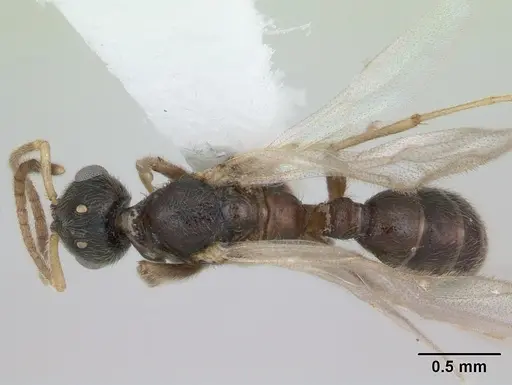
CASENT0902406
View on AntWeb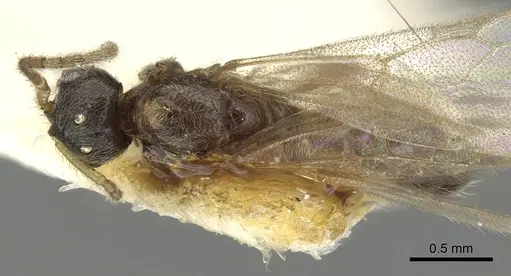
CASENT0903808
View on AntWeb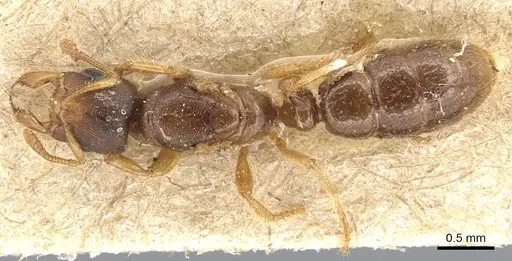
CASENT0907129
View on AntWeb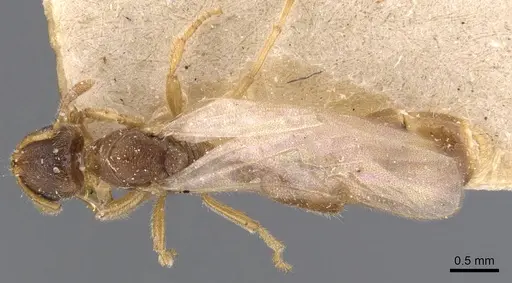
CATAC-02562
View on AntWeb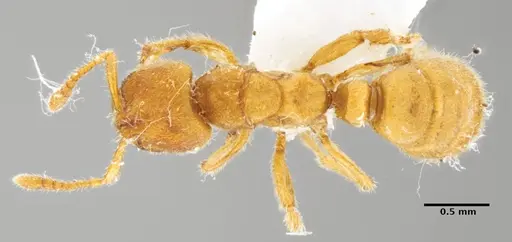
IAVH-E-254893
View on AntWeb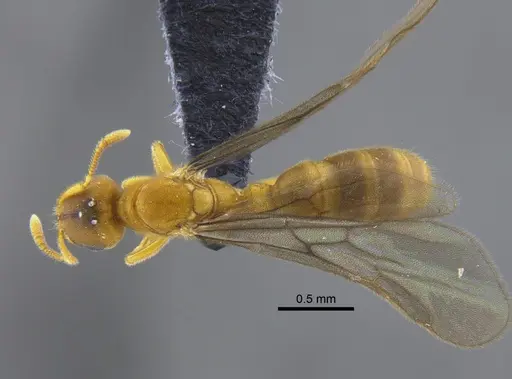
Literature
Loading distribution map...Loading products...