
Tropidomyrmex elianae
- Sci. Name
- Tropidomyrmex elianae
- Tribe
- Solenopsidini
- Subfamily
- Myrmicinae
- Author
- Silva <i>et al.</i>, 2009
- Distribution
- Found in 1 countries
Introduction
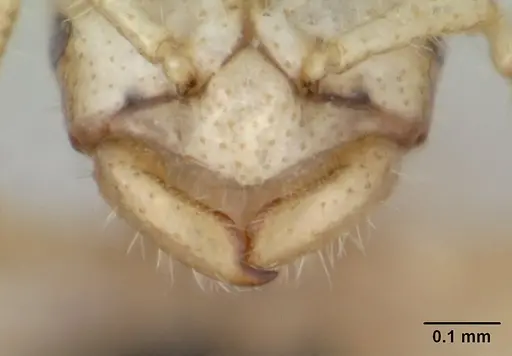
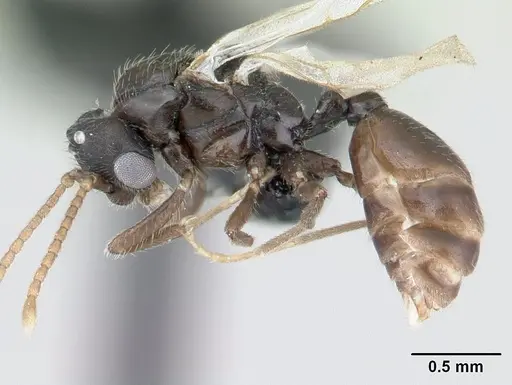
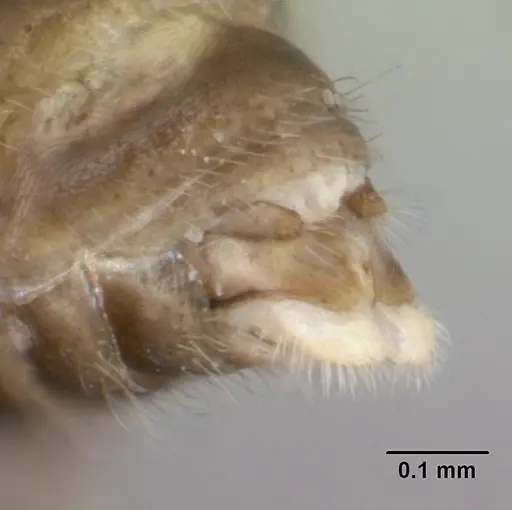
Tropidomyrmex elianae is the only species in its genus. Workers are tiny at 2.4-2.6 mm, with a pale yellowish body and extremely thin, almost see-through skin . The genus is easy to spot by its bilobed subpostpetiolar process (a split structure under the waist) and mandibles with only one curved tip . It lives in southeastern and central Brazil (Minas Gerais and Tocantins) . This ant's lifestyle is its most striking trait: it lives right inside termite nests without fighting. The type colony was found sharing chambers with the termite Anoplotermes pacificus, where ants and termites even touched each other with their antennae . Unlike most ant guests in termite nests, which keep to separate rooms, these ants mix freely with their hosts .
Quick Summary
- Difficulty: Expert
- Origin & Habitat: Southeastern and central Brazil (Minas Gerais and Tocantins states). Found in montane rocky scrubland at 1267 m elevation, and in leaf litter from secondary gallery forest and altered Cerrado [1].
- Colony Type: Ergatoid queen system, queens are wingless and look almost identical to workers, differing only in having small simple eyes and wing stubs [1]. Multiple ergatoid queens suggest a multi-queen colony structure.
- Size & Growth:
- Queen: 2.24-2.95 mm (ergatoid gyne) [1]
- Worker: 2.42-2.57 mm [1]
- Colony: Small, only a few workers known from field collections [1]
- Growth: Unknown, no captive breeding data available
- Development: Unknown, no development data exists for this species (No captive breeding has been documented. Development cannot be estimated from related species due to unique biology.)
- Antkeeping:
- Temperature: Unknown, based on Brazilian tropical to subtropical distribution (Minas Gerais, Tocantins), aim for 22-28°C and monitor activity.
- Humidity: Likely requires moderate to high humidity given its life in underground termite chambers. Keep substrate consistently moist but not waterlogged.
- Diapause: Unknown, no overwintering data. Brazil's mild winters make significant dormancy unlikely.
- Nesting: Cannot be recommended for captive keeping. This species has never been kept and depends on living with termites, a requirement impossible to replicate in a formicarium.
- Behavior: No observations from captivity exist. In the wild they are peaceful symbionts, living alongside termites without aggression [1]. They have a sting (typical of Solenopsidini) [1]. Workers forage in leaf litter [1]. Their tiny size raises escape risk, but escape behaviour is unknown.
- Common Issues: never kept in captivity, no husbandry protocols exist, dependent on living with termites (Anoplotermes pacificus), cannot be replicated in a captive setup, extremely rare in the wild, only a handful of specimens ever collected, ergatoid queens mean no nuptial flights to catch alates, no captive breeding data exists, no guidance on colony establishment or growth
The Termite Relationship
Tropidomyrmex elianae lives in peaceful association with the termite Anoplotermes pacificus. The type colony was found inside small chambers (about 2 × 1 cm) of a ground termite nest in Serra de São José, Minas Gerais, Brazil [1]. Unlike most ant inhabitants of termite nests, which keep to separate cavities, these ants share the exact same chambers [1]. Researchers saw ants and termites interact without any aggression, they even antennated each other, a sign of chemical communication [1]. This symbiosis has never been replicated in captivity. The colony contained workers, ergatoid queens, males, and brood all living with termite hosts [1]. The relationship appears obligate: no independent nests have ever been found.
Unique Morphology
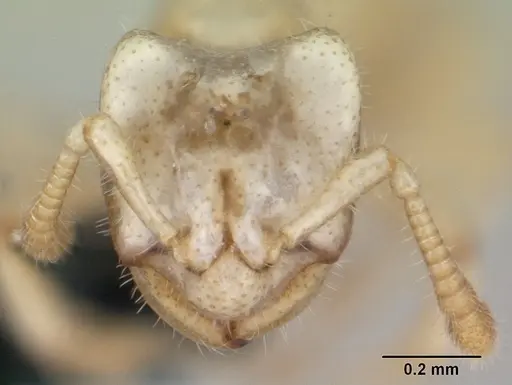
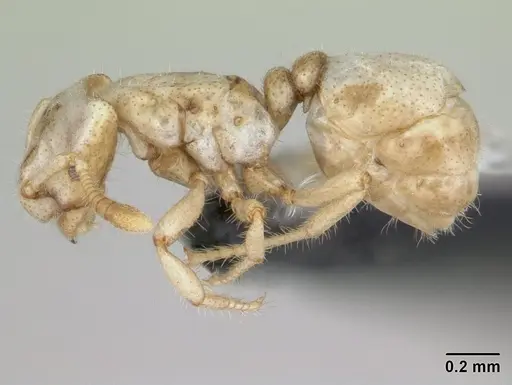
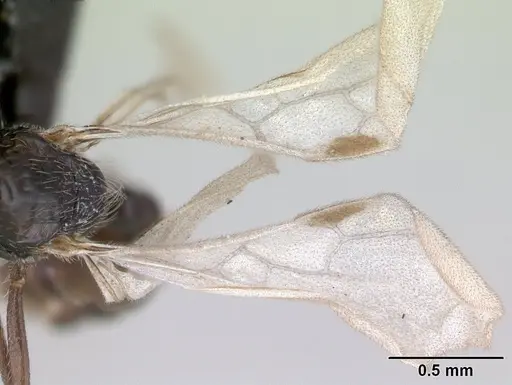
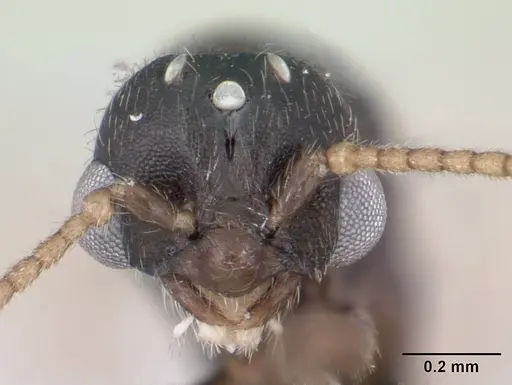
Tropidomyrmex is marked by extreme reductions that are probably adaptations to its specialized lifestyle [1]. Workers are tiny (2.4-2.6 mm) with a very thin, pale yellowish skin that looks almost see-through [1]. The genus can be told from all other ants by its bilobed subpostpetiolar process, a split structure under the postpetiole [1]. Within Solenopsidini it is also the only one with mandibles that have a single curved tip [1]. The eyes are strongly reduced, with only about four tiny lenses [1]. Queens are ergatoid: wingless and almost identical to workers, except they have three small simple eyes and tiny wing stubs [1]. This means colonies probably reproduce without typical mating flights. The sting apparatus is well developed, with a sclerotized sting [1].
Distribution and Rarity
T. elianae is known only from Brazil, two widely separated regions: Minas Gerais (southeast) and Tocantins (central‑north) [1]. The type locality is Serra de São José, at 1267 m in montane rocky scrubland [1]. Two more workers came from leaf litter in Tocantins: one from deep leaf litter along a dirt road by a gallery forest, another from heavily altered forest next to open Cerrado [1]. With only five workers ever collected, this is one of the rarest ant species in the world [1].
Captive Keeping Status
Tropidomyrmex elianae cannot be kept in captivity. The main problem is its need to live with termites, the ants have never been found without their Anoplotermes pacificus hosts, so captive survival seems impossible [1]. The species is also extremely rare. There is no information on diet, temperature, humidity, or any care details. Ergatoid queens suggest colony reproduction happens without flying, so catching new queens is not an option. For all these reasons, this ant is best appreciated through scientific study, not in a formicarium.
Frequently Asked Questions
Can I keep Tropidomyrmex elianae as a pet ant?
No. This species has never been kept and cannot be recommended. It requires living with termites (Anoplotermes pacificus), which is impossible to replicate in captivity [1].
Where does Tropidomyrmex elianae live?
Only in Brazil, in Minas Gerais and Tocantins states. The type colony was found in montane rocky scrubland at 1267 m elevation in Serra de São José [1].
How big are Tropidomyrmex elianae workers?
Workers are tiny: 2.42-2.57 mm in total length [1].
Why are they so special?
T. elianae is the only species in its genus and lives in peace with termites, sharing the same nest chambers without aggression. This is extremely rare among ants. They also have unique features like a split waist process and single‑toothed mandibles [1].
Do Tropidomyrmex elianae queens have wings?
No. Queens are ergatoid, wingless and nearly identical to workers, differing only in having small simple eyes and wing stubs [1].
How many workers do colonies have?
Colonies appear very small. The type colony fragment had only 3 workers along with 6 ergatoid queens,10 males, and brood [1]. Only 5 workers have ever been collected worldwide.
What do they eat?
Unknown. No feeding observations exist. Their tiny size and reduced eyes suggest they may be specialised predators or scavengers in leaf litter [1].
Are they aggressive?
They appear peaceful toward their termite hosts, no aggression was seen, and they antennated each other [1]. Behaviour toward other species is unknown.
Can I catch a queen to start a colony?
Extremely unlikely. Queens are ergatoid (no wings) so there are no nuptial flights. The species is among the rarest ants, with only a handful of specimens ever collected [1].
Do they need hibernation?
Unknown. Brazil has mild tropical to subtropical climates, so significant dormancy is unlikely, but no overwintering data exists [1].
What makes this genus unique?
Tropidomyrmex is the only ant genus with a bilobed subpostpetiolar process and the only Solenopsidini with single‑toothed mandibles. It shows extreme reductions that may be adaptations to its termite‑nest life [1].
Is this a good beginner ant?
Absolutely not. It has never been kept, requires termites to survive, is incredibly rare, and nothing is known about its care. Appreciate it through scientific literature only [1].
Report an Issue
The current care sheet is based fully on literature. See inconsistencies, or something that's incorrect? Please , it will be resolved after review from an admin. Contributing to the blogs tab also helps providing information, to make us be able to further improve the caresheets. Thank you for your support!
References

This caresheet is licensed under CC BY-SA 4.0 .
Community Blogs
CASENT0173620
View on AntWeb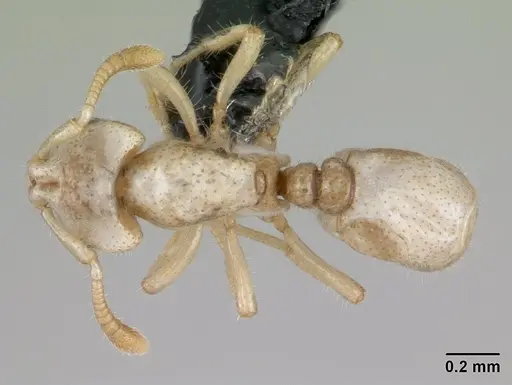
CASENT0189192
View on AntWeb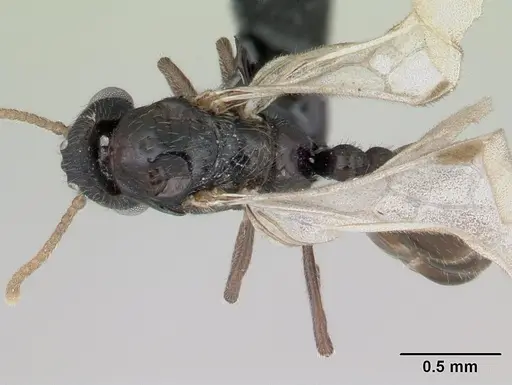
Literature
Loading distribution map...Loading products...