
Trichomyrmex scabriceps
- Sci. Name
- Trichomyrmex scabriceps
- Tribe
- Crematogastrini
- Subfamily
- Myrmicinae
- Author
- Mayr, 1879
- Distribution
- Found in 2 countries
Introduction
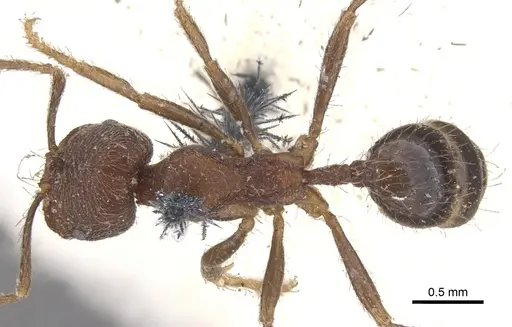
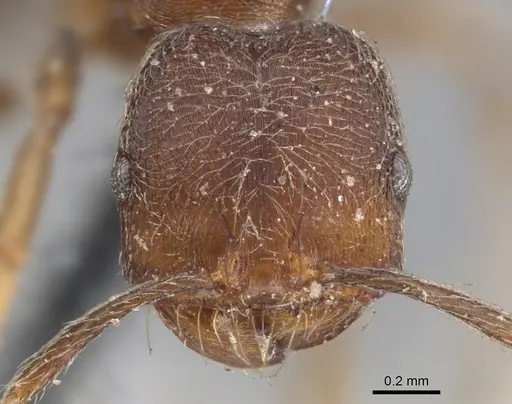
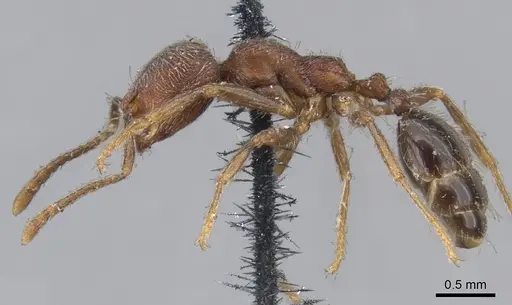
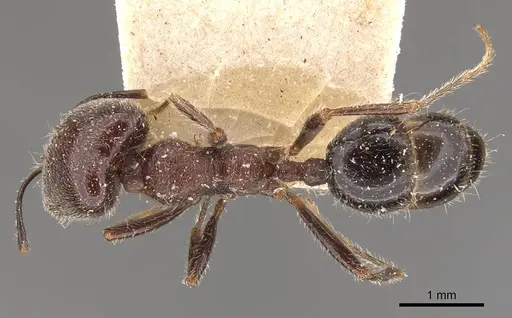
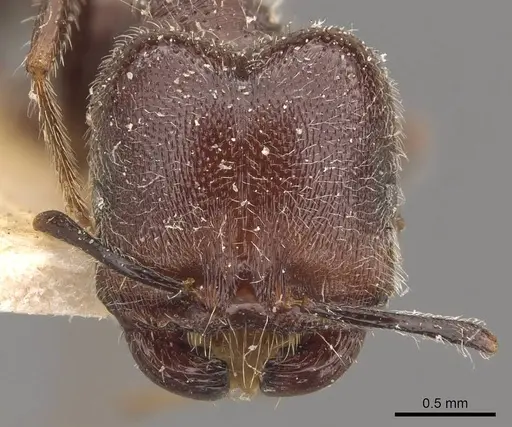
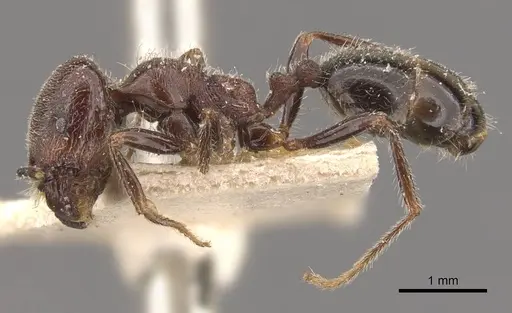
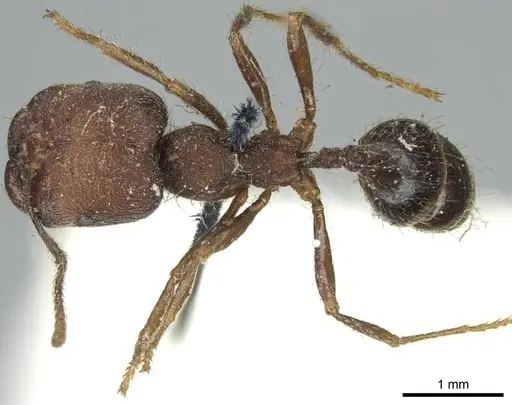
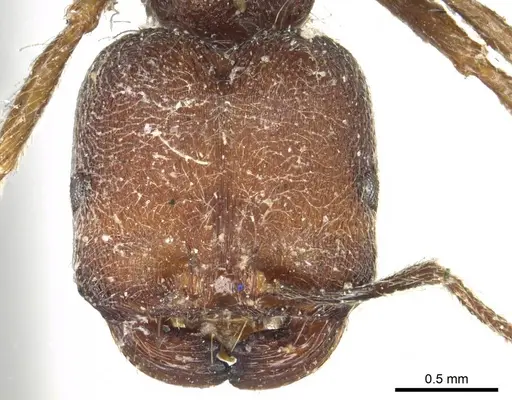
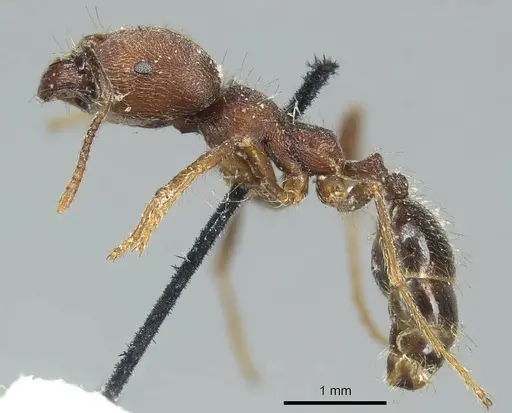
Trichomyrmex scabriceps is a medium-sized harvester ant native to India and Pakistan. Workers range from 3.5 to 7 mm long, with a reddish-ferruginous head and thorax, and a dark brown to black abdomen. The head has fine longitudinal striations, while the thorax and pedicel are more coarsely transversely rugose-striate. Queens are much larger at 12 mm, with a deep red head and a dark brown to black body. This species was formerly placed in Monomorium but was moved to Trichomyrmex in 2015 . Males measure 7 mm . What makes these ants interesting is their seed-harvesting behavior - they collect and store seeds, and build characteristic mounds of seed husks around their nest entrances . They are widespread across the Indian subcontinent, found in agriculture, grassland, forest, and human habitats . They commonly associate with extra-floral nectary (EFN) plants such as castor bean, cotton, and sesame .
Quick Summary
- Difficulty: Easy
- Origin & Habitat: Native to India and Pakistan, recorded from many Indian states (Arunachal Pradesh, Assam, Bihar, Delhi, Goa, Gujarat, Haryana, Himachal Pradesh, Jammu & Kashmir, Karnataka, Kerala, Maharashtra, Orissa, Punjab, Rajasthan, Sikkim, Tamil Nadu, Uttarakhand, West Bengal) and Pakistan (Rawalpindi, Swabi) [7][8]. Nests in hard, sun-baked earth, roads, and near grassland [3].
- Colony Type: Unconfirmed. Likely monogyne (single-queen) based on related species, but no specific data available.
- Size & Growth:
- Queen: 12 mm [2]
- Worker: 3.5-7 mm [2], this range includes both minor and major workers.
- Colony: Likely several hundred workers (estimated based on similar species, actual colony size unknown).
- Growth: Moderate, estimated 6-10 weeks from egg to first worker based on related Monomorium species.
- Development: 6-10 weeks (estimated based on related Monomorium species, no specific data for Trichomyrmex scabriceps). (Development speed depends on temperature. At optimal 26-28°C, faster, at room temperature, slower.)
- Antkeeping:
- Temperature: Keep at 24-28°C year-round. These are tropical ants from warm regions of India and Pakistan. A temperature gradient is beneficial. Avoid prolonged temperatures below 20°C.
- Humidity: Moderate humidity (50-70%). Provide a drier nest with a moist area. Their natural nests are in sun-baked earth, so avoid overwatering. Allow substrate to dry partially between waterings [3].
- Diapause: No, they come from tropical and subtropical regions where temperatures stay warm year-round. Keep them active without hibernation.
- Nesting: Y-tong (AAC) or plaster nests work well because they can maintain drier conditions. Test tubes are suitable for founding. Avoid overly humid setups. Provide a dark, quiet nest area.
- Behavior: These ants are docile and non-aggressive. They focus on foraging for seeds, tending aphids, and collecting small insects. Their defense mechanism is smearing venom using a modified stinger (typical of their tribe Crematogastrini). Despite having a stinger, they are not aggressive towards humans. Their small size (workers 3.5-7 mm) means escape prevention is critical, use fine mesh (0.5 mm or smaller) and ensure no gaps larger than 1 mm.
- Common Issues: escape prevention is critical due to small worker size, they can squeeze through tiny gaps., overwatering can kill colonies, they prefer drier conditions than many ants., seed storage behavior may make them ignore fresh protein, offer variety and remove old seeds., wild-caught colonies may have parasites, quarantine and monitor new colonies., slow initial founding, be patient during the first few months after queen capture.
Housing and Nest Setup
Trichomyrmex scabriceps does well in standard ant housing. Y-tong (AAC) nests are excellent because they stay dry and stable, matching the ants' natural sun-baked earth nests. Plaster nests are also a good option, as you can control moisture. Test tubes work for founding and small colonies.
For the outworld (foraging area), provide a shallow space with a water source and feeding dish. Since these are seed harvesters, adding a small sand or soil area lets them manipulate seeds, it's good enrichment. They are not strong climbers on smooth surfaces, but because workers are small, make sure gaps are less than 1 mm. Fluon barriers on the rim of the outworld add security.
Keep the nest dark, cover test tubes or use the dark side of a Y-tong nest. These ants naturally nest in hard, sun-baked earth, so they prefer drier conditions than many tropical ants [3].
Feeding and Diet
As harvesting ants, Trichomyrmex scabriceps has a varied diet centered on seeds. Offer small seeds like millet, chia, or grass seeds, they will store them in the nest. They also readily accept protein sources like small insects (fruit flies, pinhead crickets, mealworms) and will scavenge dead insects.
These ants are also known to visit extra-floral nectaries of plants such as Ricinus communis (castor bean), Croton bonplandianus, Gossypium hirsutum (cotton), and Sesamum species [5]. So they appreciate sugar water or honey water, offer a drop once or twice a week. For protein, offer small live or dead insects 2-3 times per week, depending on colony size. Remove uneaten seeds after several weeks if they show signs of mold.
A balanced diet is important: seeds for long-term storage, protein for brood development, and sugars for energy. Observe what your colony prefers and adjust accordingly.
Temperature and Seasonal Care
Keep your colony at 24-28°C year-round. These ants come from the warm regions of India and Pakistan, where temperatures rarely drop significantly. They do not need hibernation or diapause. Maintaining consistent warmth helps brood development and colony growth.
A heating cable or mat on one side of the nest creates a temperature gradient, allowing ants to choose their preferred temperature. This mimics their natural environment of sun-baked earth patches. Room temperature (20-24°C) is acceptable but colonies will be more active in the warmer range.
Avoid temperatures below 20°C for long periods, it slows development and weakens the colony. Also, avoid direct sunlight on the nest, as excessive heat can dry out the setup too quickly. [7][8]
Colony Founding and Early Care
If you acquire a founding queen, she will likely be claustral, sealing herself in a chamber and raising the first brood alone without foraging. Provide her with a test tube setup with a water reservoir and a small area of soil. Keep the setup dark and undisturbed for 4-8 weeks.
The queen will lay eggs, which develop through larvae and pupae before emerging as the first workers (nanitics). These first workers are typically smaller than mature workers. Once workers appear, you can begin offering tiny amounts of food, a small piece of protein or a few seeds.
Founding colonies need patience. It typically takes 2-3 months before the first workers appear, and several more months before the colony reaches 10-20 workers. Do not disturb the queen or expose the founding chamber to light, as this can cause her to abandon or eat her brood.
Behavior and Temperament
Trichomyrmex scabriceps is a docile, non-aggressive species. Workers go about their foraging activities without bothering humans or other ants. They have a stinger (modified for smearing venom, typical of tribe Crematogastrini), but they rarely use it defensively against handlers. Their small size means even a bite would be barely noticeable.
The most notable behavior is their harvesting activity, workers collect seeds and bring them back to the nest, where they remove and store the husks. This creates the characteristic seed husk mounds mentioned in early natural history observations [3]. They also forage for small insects and tend aphids for honeydew, and they visit extra-floral nectaries [5].
These ants are not aggressive defenders and do not form large swarms when their nest is disturbed. However, their small size means they can escape through tiny gaps. Always use fine mesh (0.5 mm or smaller) for ventilation and ensure all connections are tight.
Growth and Development
Colony growth is moderate. Based on related Monomorium species, expect 6-10 weeks from egg to worker at optimal temperatures around 26-28°C. Cooler temperatures extend this significantly, development can take 3-4 months at room temperature.
A mature colony likely reaches several hundred workers over 1-2 years under good conditions. The queen can live for several years, continuing to lay eggs. Brood development is temperature-dependent: warmer speeds development but also requires more food and attention to humidity.
Nanitics (first workers) are smaller than mature workers but are fully functional. They immediately begin foraging to support the colony. As the colony grows, larger workers (majors) may appear, though this species does not have a pronounced major/minor polymorphism, all workers fall within the 3.5-7 mm range.
Frequently Asked Questions
How long does it take for Trichomyrmex scabriceps to produce first workers?
Expect 6-10 weeks from egg to first worker at optimal temperature (26-28°C). This is based on related Monomorium species, as specific development data for T. scabriceps is not available. Cooler temperatures extend this to 3-4 months.
Do Trichomyrmex scabriceps ants sting?
They have a stinger, but they are not aggressive and are not known to sting humans. Their defense mechanism is smearing venom, typical of their tribe. Their bite is barely noticeable.
What do Trichomyrmex scabriceps eat?
They are seed harvesters that also eat protein and sugar. Offer small seeds (millet, chia), small insects (fruit flies, pinhead crickets), and sugar water or honey water. They will store seeds and tend aphids for honeydew. They also visit extra-floral nectaries on plants like castor bean and cotton [5].
Can I keep multiple queens together?
This is likely a monogyne species (single-queen), so multiple queens will fight. Keep only one queen per colony. If you find a queen during nuptial flights, house her alone in a test tube setup.
Do Trichomyrmex scabriceps need hibernation?
No, they come from tropical and subtropical India where temperatures remain warm year-round. Keep them at 24-28°C consistently. No diapause or hibernation is required.
What is the best nest type for Trichomyrmex scabriceps?
Y-tong (AAC) nests or plaster nests work well because they provide the dry, stable conditions these ants prefer. Test tubes are suitable for founding colonies. Avoid overly humid setups, they naturally nest in sun-baked earth [3].
How big do Trichomyrmex scabriceps colonies get?
Based on similar species, colonies likely reach several hundred workers over 1-2 years under good conditions. The queen can live for several years, continuing to produce brood. Actual colony size in the wild is not documented.
Are Trichomyrmex scabriceps good for beginners?
Yes, they are considered easy to keep. They are docile, do not require hibernation, and are not aggressive. The main challenges are escape prevention (due to their small size) and avoiding overwatering. They are a good choice for someone new to antkeeping.
Why are my ants dying outside the nest?
Some worker death is normal, ants have short lifespans. However, if many die, check for: overwatering (they prefer drier conditions), temperature stress (too cold or too hot), mold in the nest, or poor nutrition. Also ensure they are not escaping due to gaps in the setup.
When should I move my colony to a formicarium?
Wait until the colony has at least 50-100 workers before moving to a larger formicarium. For founding colonies in test tubes, you can add a small outworld once workers emerge. Full formicarium transfer is usually unnecessary unless the test tube becomes too crowded or dries out too quickly.
Why are my ants ignoring the protein I offer?
If they have stored seeds, they may be less interested in fresh protein. Try removing old seeds or offering different protein sources. Also ensure the protein is appropriately sized, tiny fruit flies or small cricket pieces work better than large mealworms for small workers.
Report an Issue
The current care sheet is based fully on literature. See inconsistencies, or something that's incorrect? Please , it will be resolved after review from an admin. Contributing to the blogs tab also helps providing information, to make us be able to further improve the caresheets. Thank you for your support!
References

This caresheet is licensed under CC BY-SA 4.0 .
Community Blogs
Literature
Loading distribution map...Loading products...