
Trichomyrmex mayri
- Sci. Name
- Trichomyrmex mayri
- Tribe
- Crematogastrini
- Subfamily
- Myrmicinae
- Author
- Forel, 1902
- Distribution
- Found in 11 countries
Introduction
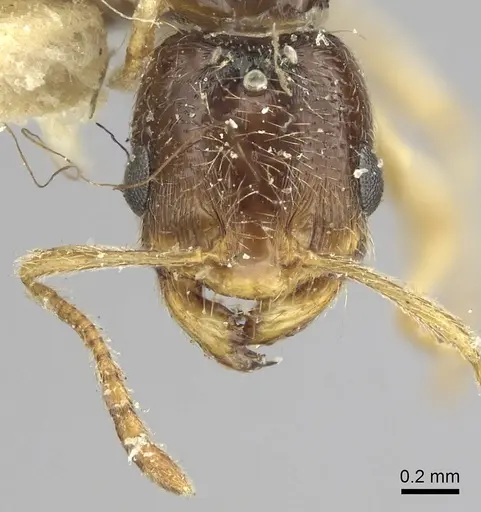
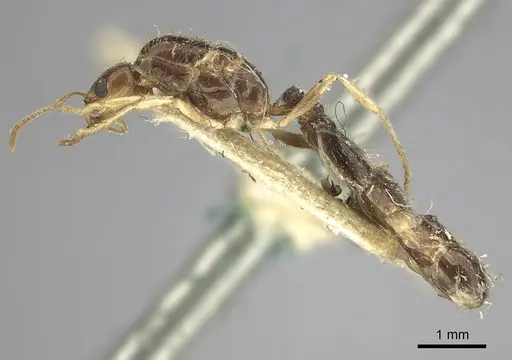
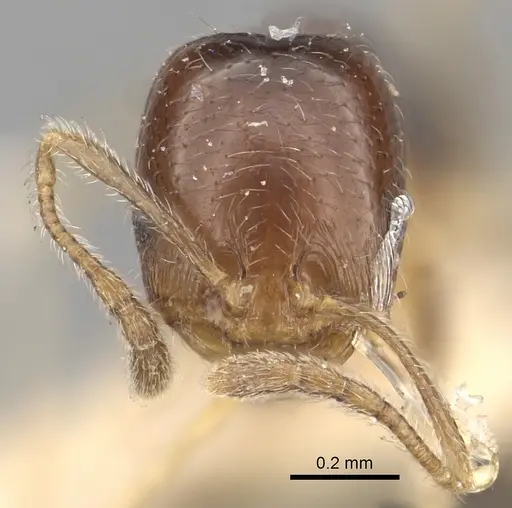
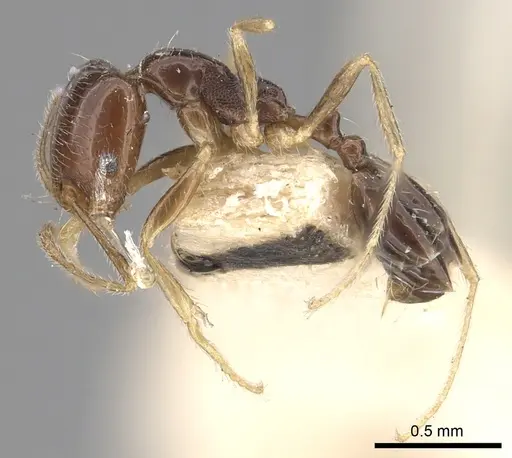
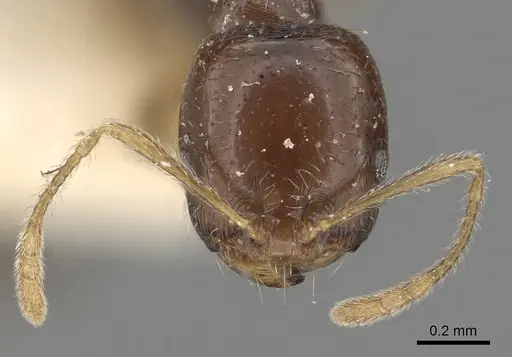
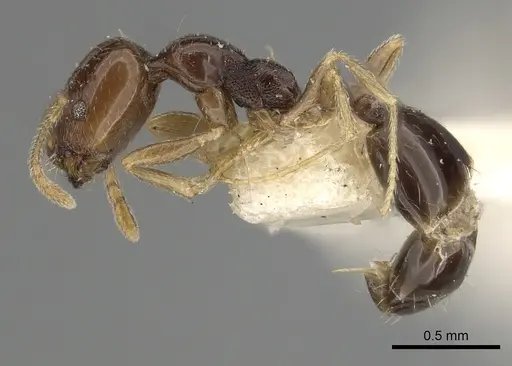
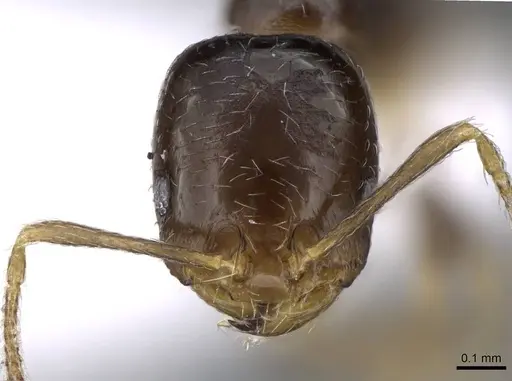
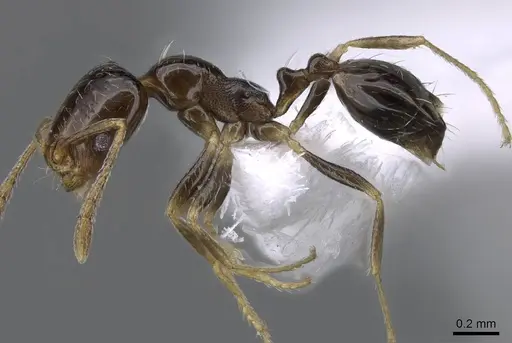
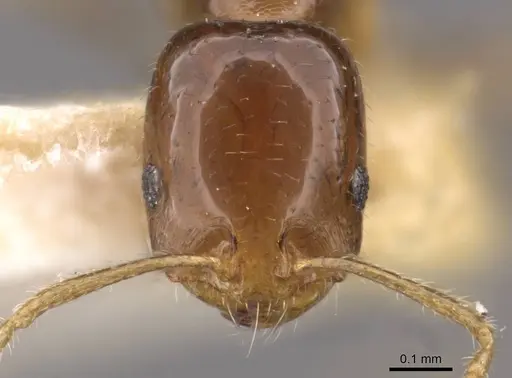
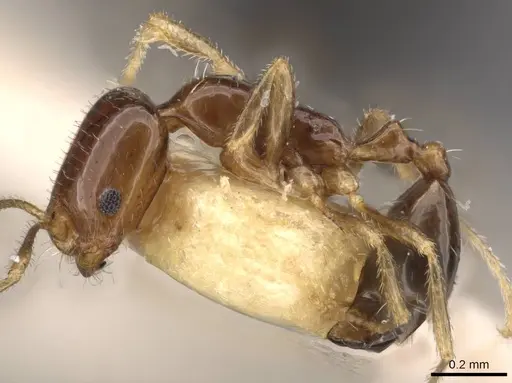
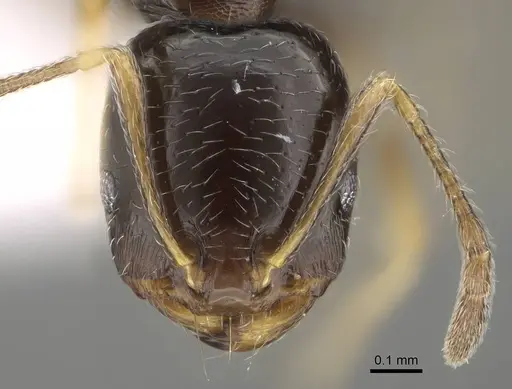
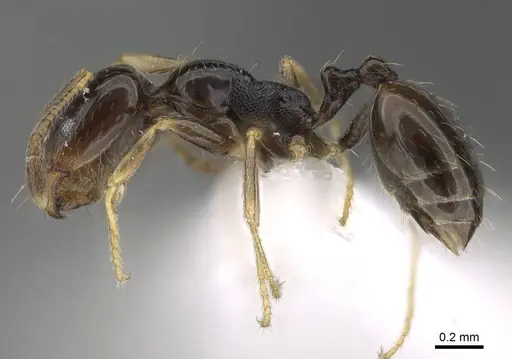
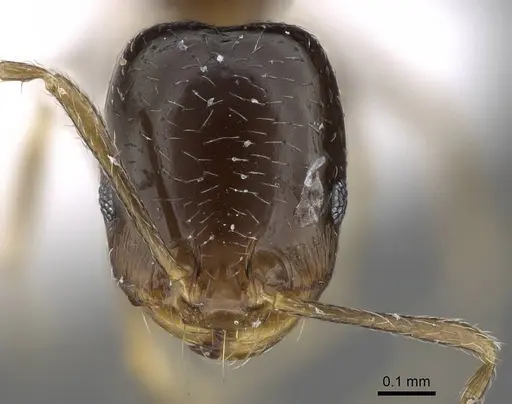
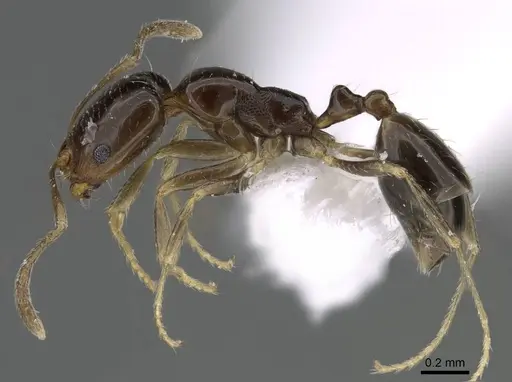
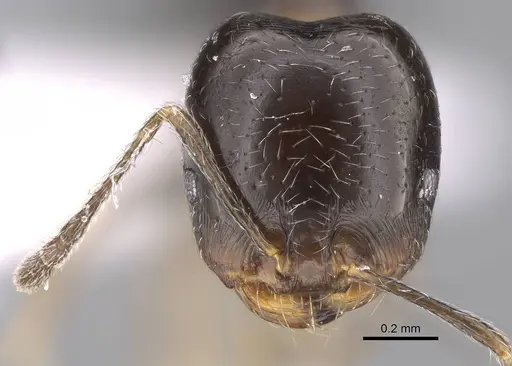
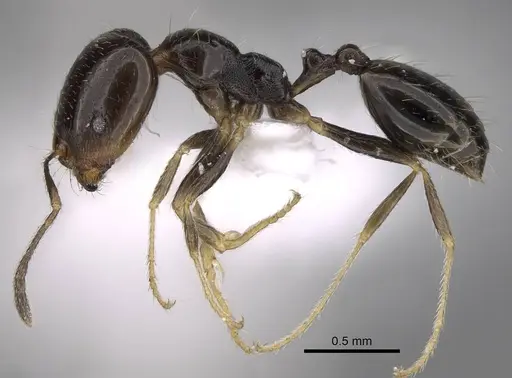
Trichomyrmex mayri is a small, uniformly dark brown to black ant species native to the Indian subcontinent that has spread across much of the tropics as an invasive species . Workers are estimated at about 2-3 mm, based on related species, and can be distinguished from similar Trichomyrmex destructor by their solid dark color, T. destructor has a bicolored body with a yellow head and mesosoma . This ant is one of the most common species in the Arabian Peninsula and thrives in a wide range of habitats, from agricultural fields and deserts to urban areas . It nests in soil under stones, in leaf litter, under tree bark, and in rotting wood, often near decaying organic matter . As a member of the subfamily Myrmicinae (tribe Crematogastrini), its primary defense is smearing venom using a flattened, spatulate stinger instead of piercing.
Quick Summary
- Difficulty: Expert
- Origin & Habitat: Native to the Indian subcontinent, has established invasive populations in many tropical and subtropical regions, including Africa (Egypt, Mali, Niger, Nigeria, Sudan, Tanzania), the Middle East (Iraq, Israel, Oman, Saudi Arabia, UAE, Qatar), Asia (India, Philippines, Singapore, Sri Lanka, Thailand, Malaysia, China, Indonesia, Myanmar, Vietnam), and Europe (Spain, temporarily) [1][5][4][7]. Occupies diverse habitats from deserts and agricultural areas to urban settings and pristine forests, usually nesting in moist or dry soil under stones, in leaf litter, under bark, or in wood [4][6].
- Colony Type: Unconfirmed, likely monogyne (single-queen) based on typical patterns in the genus, but no direct studies have confirmed colony structure.
- Size & Growth:
- Queen: Estimated ~5-6 mm (no direct measurements available)
- Worker: Estimated ~2-3 mm (no direct measurements available, based on related species)
- Colony: Up to several thousand workers in established colonies (estimated)
- Growth: Moderate to fast (estimated)
- Development: Estimated 5-8 weeks at optimal tropical temperatures (Development timeline has not been directly studied, estimate is based on related tropical Myrmicinae species.)
- Antkeeping:
- Temperature: Keep at 24-30°C year-round. This is a tropical species and does not tolerate prolonged cold. Room temperature (22-26°C) is acceptable but will slow development.
- Humidity: Provide a moisture gradient. The nest should have a moist area (not waterlogged) and a drier area for workers to choose from. In the wild they nest in both moist and dry soils [4][6].
- Diapause: No. As a tropical species, Trichomyrmex mayri does not require hibernation. Keep warm all year.
- Nesting: Test tubes work for founding colonies. Once established, use Y-tong (AAC), plaster, or soil nests with a moisture gradient. Avoid acrylic nests. Ensure good ventilation to prevent mold.
- Behavior: Generalist forager and scavenger. Workers actively search for protein (insects, carrion) and sugar sources. They are not particularly aggressive and often coexist with other ant species in the wild [4]. Their defense mechanism is smearing venom using a modified spatulate stinger (typical of Crematogastrini). Due to their small size (workers ~2-3 mm), escape prevention must be tight, they can get through tiny gaps.
- Common Issues: colonies may decline if kept below 20°C for extended periods, overfeeding can cause mold, remove uneaten food within 24 hours, small worker size means they can escape through standard gaps, use tight-fitting lids and apply fluon or oil barriers, wild-caught colonies may carry parasites or pathogens, this species is invasive: never release colonies into non-native environments, extreme precautions to prevent escape are mandatory
Housing and Nest Setup
Trichomyrmex mayri adapts well to a variety of captive setups. For founding queens, a simple test tube setup with a water reservoir (cotton plug) works well, keep the tube dark and undisturbed. Once the colony reaches about 30-50 workers, move them to a Y-tong (AAC) nest, a plaster nest, or a naturalistic soil setup. Because these ants nest in both moist and dry conditions in the wild [4][6], the ideal captive nest provides a moisture gradient: one moist chamber and one dry chamber, both with good ventilation. Avoid acrylic nests, as they do not allow proper moisture regulation. Always ensure the enclosure is escape‑proof, workers are small and can squeeze through cracks smaller than 1 mm.
Feeding and Diet
Trichomyrmex mayri is a generalist feeder that accepts a wide range of food. Provide protein sources such as fruit flies, small crickets, or mealworms 2-3 times per week, and keep a constant supply of sugar water, honey, or diluted nectar available. This species is a strong scavenger and has been recorded visiting carcasses in all decomposition stages [8]. It will also take dead insects. Remove uneaten food within 24-48 hours to prevent mold growth. The colony will grow faster if you vary the protein sources.
Temperature and Seasonal Care
As a tropical species, Trichomyrmex mayri requires warmth year‑round and does not undergo diapause. Keep the nest at 24-30°C. A heat cable placed on top of the nest (not underneath) can create a gentle gradient, but avoid temperatures below 20°C for more than a few hours. If your room is cooler, a small heat mat on a thermostat works well. No hibernation or cooling period is needed.
Colony Founding
The founding behavior of Trichomyrmex mayri has not been directly studied, so we can only infer from related Myrmicinae species. It is likely that newly mated queens are claustral, they seal themselves in a chamber and raise the first workers on stored fat reserves. Provide a founding queen with a test tube setup containing a moist cotton ball at one end, and keep it warm (24-26°C) and undisturbed. Do not feed during the founding stage. Once the first workers (nanitics) emerge, you can begin offering tiny drops of honey water and small protein pieces.
Behavior and Foraging
Workers are active foragers that search for food on the ground and on vegetation. In the wild they have been found foraging on moist soil under trees, in leaf litter, on plant twigs, and even on rocks [4][2]. They are not aggressive toward humans and rarely try to sting, though they do possess a stinger that smears venom (typical of the Crematogastrini tribe). The species has strong scavenging instincts, they are attracted to decaying organic matter and have been collected at carcasses in both agricultural and desert habitats [8]. Captive colonies will quickly recruit to food sources. They are not particularly territorial and often coexist with other ant species in nature.
Legal and Ethical Considerations
Trichomyrmex mayri is an invasive species in many parts of the world, including Africa, the Middle East, Southeast Asia, and the Philippines [1][5][7]. It has also been recorded temporarily in Spain. Because of its potential to become established and cause ecological damage, it is strongly recommended that this species be kept only by experienced hobbyists who can guarantee that no ants will escape. Never release any ants or colonies into the environment. If you can no longer keep your colony, give it to another keeper or humanely euthanize it.
Frequently Asked Questions
How long does it take for Trichomyrmex mayri to go from egg to first worker?
The exact development time has not been studied, but based on related tropical Myrmicinae species, expect approximately 5-8 weeks at warm temperatures (26-28°C). Cooler conditions will slow development.
What do Trichomyrmex mayri ants eat?
They are generalist feeders. Offer small insects (fruit flies, small crickets, mealworms) for protein and always keep sugar water, honey water, or diluted honey available. They also scavenge dead insects and organic matter [9][8].
Do Trichomyrmex mayri ants sting?
They belong to the subfamily Myrmicinae, which has a stinger, but in this species it is modified to smear venom rather than pierce. They are not aggressive toward humans and stinging incidents are very rare. The venom is mild.
Are Trichomyrmex mayri good for beginners?
No. They are an invasive species and require extreme precautions to prevent escape, so they are better suited for experienced keepers. Their care itself is not difficult, but the responsibility of containment makes them unsuitable for beginners.
Can I keep multiple Trichomyrmex mayri queens together?
The colony structure is not well studied, but most Trichomyrmex species are monogyne (single-queen). It is best to assume each colony has a single queen. Do not attempt to combine unrelated queens, as they will likely fight.
How big do Trichomyrmex mayri colonies get?
Based on their abundance in the wild and invasive success, mature colonies can contain several thousand workers. No exact colony size has been published.
Do Trichomyrmex mayri need hibernation?
No. As a tropical species, they do not require diapause. Keep them warm year-round at 24-30°C.
What temperature is best for Trichomyrmex mayri?
Keep them at 24-30°C. Room temperature (22-26°C) is acceptable but will slow development. Avoid temperatures below 20°C.
Why are my Trichomyrmex mayri dying?
Possible causes include: temperatures too low (below 20°C), excessive humidity causing mold, protein starvation, or stress from frequent disturbance. Wild-caught colonies may also carry diseases. Ensure warm temperatures, provide a varied diet, and maintain cleanliness.
When should I move my Trichomyrmex mayri colony to a formicarium?
Keep founding colonies in test tubes until they reach 30-50 workers. Once they regularly forage in the outworld, move them to a Y-tong, plaster, or soil nest with a moisture gradient.
How is Trichomyrmex mayri different from Trichomyrmex destructor?
Trichomyrmex mayri is uniformly dark brown to black, while T. destructor has a bicolored body: head, mesosoma, petiole, and postpetiole are yellow to brownish-yellow, and the gaster is dark brown. T. destructor is also more aggressive and has a greater invasion capability [2][3][5].
Report an Issue
The current care sheet is based fully on literature. See inconsistencies, or something that's incorrect? Please , it will be resolved after review from an admin. Contributing to the blogs tab also helps providing information, to make us be able to further improve the caresheets. Thank you for your support!
References

This caresheet is licensed under CC BY-SA 4.0 .
Community Blogs
ANTWEB1041908
View on AntWeb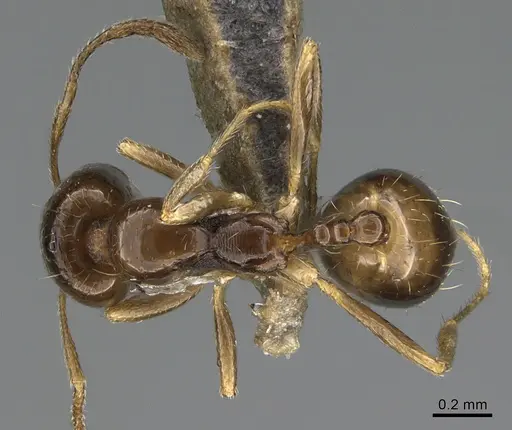
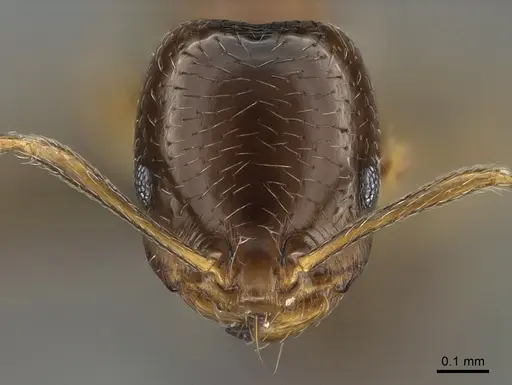
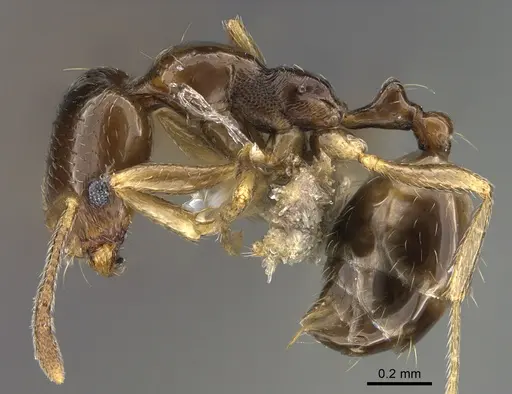
CASENT0249902
View on AntWeb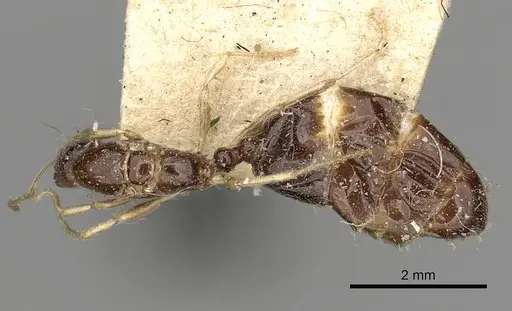
CASENT0249903
View on AntWeb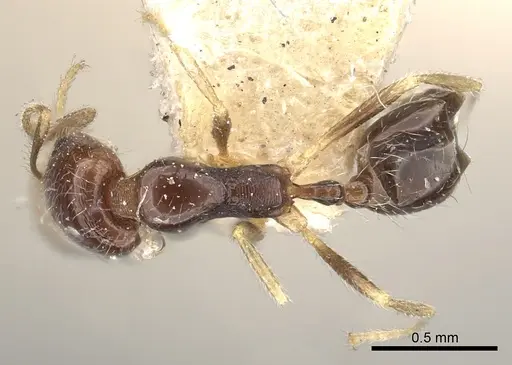
CASENT0249904
View on AntWeb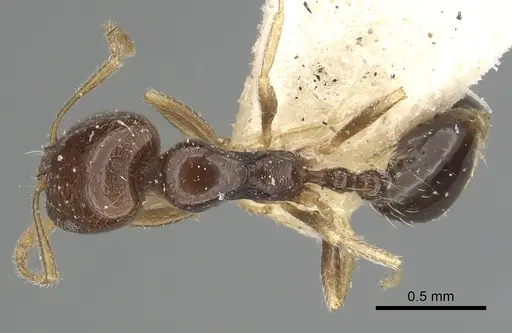
CASENT0746625
View on AntWeb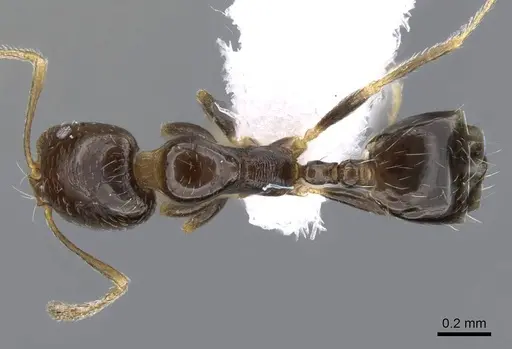
CASENT0908753
View on AntWeb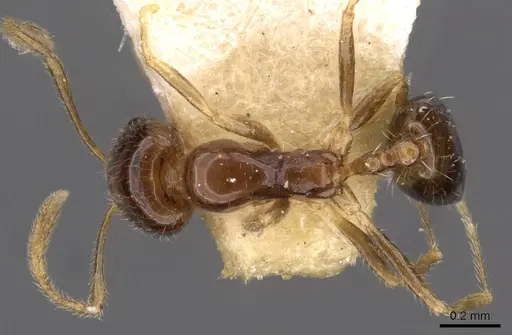
CASENT0919809
View on AntWeb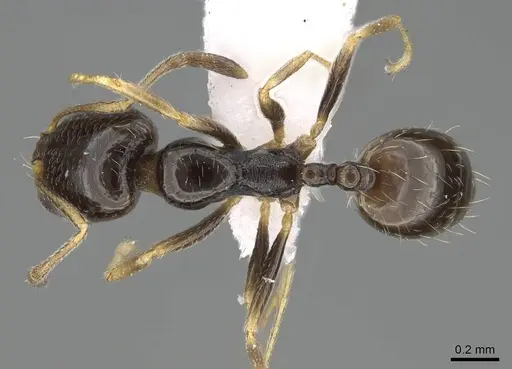
CASENT0922297
View on AntWeb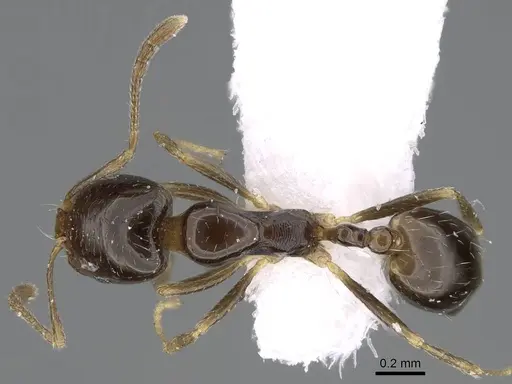
CASENT0922869
View on AntWeb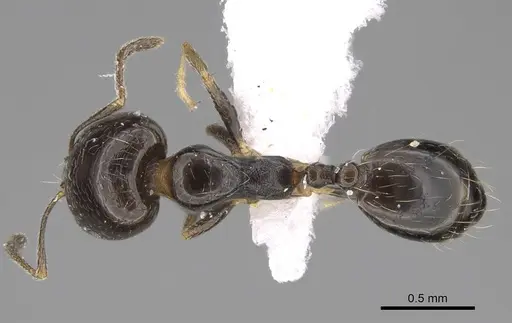
Literature
Loading distribution map...Loading products...