
Trichomyrmex almosayari
- Sci. Name
- Trichomyrmex almosayari
- Tribe
- Crematogastrini
- Subfamily
- Myrmicinae
- Author
- Sharaf & Aldawood, 2016
- Distribution
- Found in 1 countries
Introduction
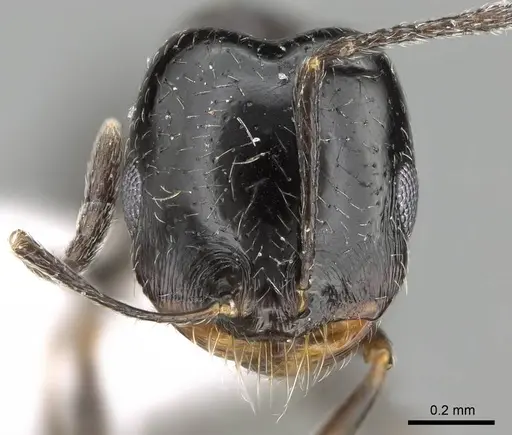
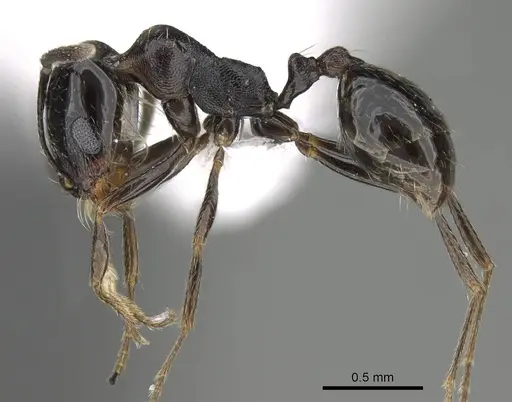
Trichomyrmex almosayari is a tiny ant from Saudi Arabia, first described in 2016. Workers are 2.6-2.9 mm long, dark brown to blackish brown with brownish mandibles, antennae, and legs . They have large kidney-shaped (reniform) eyes and short antennae that don’t reach the back of their head . The species is named after the late Egyptian Islamic writer Dr. Mohammed Sayed Almosayar . This ant is known from only two locations in central Saudi Arabia: Rawdhat Khorim natural protectorate near Riyadh and Rawdhat Al Sabalah near Al Zulfi . They forage on dry sandy soil around shrubs of Rhazya stricta, a desert plant . Their head has a psammophore, a brush of J-shaped hairs for carrying sand grains, a clear adaptation to their sandy environment . Despite several attempts, researchers have found very few specimens, making it a rare species in the wild .
Quick Summary
- Difficulty: Expert
- Origin & Habitat: Central Saudi Arabia, Riyadh Province. Found in Rawdhat Khorim (25.38°N,47.28°E,560-670 m elevation), a 24 km² protected area with 153 plant species, and Rawdhat Al Sabalah near Al Zulfi [1][2]. They forage on dry sandy soil around Rhazya stricta shrubs in desert scrubland.
- Colony Type: Unknown, colony structure has not been documented. The genus Trichomyrmex includes both single-queen and multi-queen species, but specific data for T. almosayari is not available.
- Size & Growth:
- Queen: Not yet described, queen measurements are unavailable [1][2]
- Worker: 2.60-2.92 mm [1]
- Colony: Unknown, only small numbers have ever been collected [2]
- Growth: Unknown
- Development: Unknown, no development data exists. Based on typical Myrmicinae patterns and their small size, expect roughly 4-8 weeks at warm temperatures, but this is an estimate. (No direct observations of colony development exist. The very small colony sizes found in the wild suggest slow growth.)
- Antkeeping:
- Temperature: Inferred from native habitat: aim for 26-30°C with a warm gradient. Native Saudi Arabian summers often exceed 40°C. Provide a heating cable on one side creating a warm zone around 28-30°C [1].
- Humidity: Keep relatively dry, these ants live in arid, sandy conditions. The nest area should be dry to slightly moist, never wet. Provide a water tube for drinking but avoid high humidity. Think desert conditions, not tropical rainforest [1].
- Diapause: Likely minimal or none, Saudi Arabia has mild winters with temperatures rarely below 10°C. A short rest period (4-6 weeks at 15-18°C) may be beneficial but is not strictly required. Monitor colony activity [1].
- Nesting: Based on their natural habitat: dry, sandy soil with sparse vegetation. In captivity, a naturalistic setup with dry sandy substrate works. Y-tong (AAC) nests with minimal moisture are also suitable given their desert origins. Avoid damp, mold-prone setups.
- Behavior: These are tiny, non-aggressive ants that forage individually on the ground. Their small size (under 3 mm) means they cannot sting effectively, they have a stinger but it is too small to penetrate human skin. Escape prevention is critical, they can squeeze through standard barrier gaps. Use fine mesh and tight-fitting lids. They are not aggressive and will flee rather than fight when threatened. Likely omnivorous, scavenging small insects, honeydew, and seeds like other Trichomyrmex [1].
- Common Issues: extreme rarity makes obtaining this species nearly impossible, only a handful of specimens have ever been collected, tiny size means escapes are likely without fine mesh barriers and proper sealing, no captive breeding data exists, wild-caught colonies may struggle in captivity, desert species is sensitive to excess moisture and may develop mold in damp setups, lack of published care information means keepers are essentially pioneering husbandry
Discovery and Rarity
Trichomyrmex almosayari was first described in 2016,making it a very recent addition to the antkeeping hobby [1]. The species is known from just two locations in central Saudi Arabia: Rawdhat Khorim (type locality) and Rawdhat Al Sabalah near Al Zulfi [1]. Despite multiple collecting attempts, researchers have been unable to find additional specimens, suggesting it is genuinely rare in the wild [2]. If you acquire this species, you may be working with one of the few captive colonies worldwide.
The species was named to honor Dr. Mohammed Sayed Almosayar (1948-2008), an Egyptian Islamic writer [2]. The type specimens were collected from sandy soil around Rhazya stricta, a tough desert shrub [1].
Natural Habitat and Adaptations
In the wild, Trichomyrmex almosayari lives in desert scrubland of central Saudi Arabia at elevations around 560-670 meters [1]. Rawdhat Khorim, where they were first found, is a protected area with diverse plant life (153 species across 32 families) despite the arid conditions [1]. These ants forage on dry sandy soil, often around the base of shrubs where some shade and moisture accumulate.
One adaptation is their psammophore, a brush of specialized J-shaped hairs under the head that helps carry sand grains [1]. Their large reniform (kidney-shaped) eyes are also distinctive, with a concave lower edge and convex upper edge that helps separate them from related species [1].
For captive care, replicate these desert conditions: dry, well-draining substrate, warm temperatures, and minimal humidity. They coexist in the wild with other desert ants including Camponotus sericeus, Cataglyphis semitonsa, Messor ebeninus, Messor minor, Monomorium venustum, Monomorium abeillei, and Trichomyrmex mayri [1].
Housing and Setup
Given their desert origins, Trichomyrmex almosayari needs a dry, warm setup. A naturalistic terrarium with sandy substrate works well, use fine sand or a sand-soil mix that drains quickly. Avoid compact, damp soil that can cause mold. A Y-tong (AAC) formicarium with minimal water is also appropriate.
Because they are extremely small (under 3 mm), escape prevention is critical. Standard test tube barriers may not hold them, use fluon-coated barriers and seal all connections. An outworld with a tight-fitting lid is essential. Provide a shallow water dish or damp cotton ball for drinking.
Temperature should be warm: 26-30°C in the nest area with a gradient. A small heating cable on one side works well. Keep humidity low, the nest should be dry, with only a small water source for drinking [1].
Feeding and Diet
While specific feeding observations don't exist for Trichomyrmex almosayari, related Trichomyrmex species are omnivorous scavengers. In the wild, they likely forage for small insects, honeydew from aphids, and seeds. For captivity, offer a varied diet: small insects (fruit flies, pinhead crickets, tiny mealworms), occasional honey or sugar water, and protein-rich foods.
Feed small prey items appropriate to their tiny size, fruit flies and springtails are ideal. Remove uneaten prey after 24-48 hours to prevent mold. Sugar water or honey can be offered occasionally, but protein should form the bulk. Feed every 2-3 days, adjusting based on colony size. Start with small amounts and observe what they accept [1].
Temperature and Seasonal Care
As desert ants from central Saudi Arabia, Trichomyrmex almosayari prefers warm conditions. Keep the nest at 26-30°C during the active season, with a slight temperature gradient. Summer temperatures in their native range regularly exceed 40°C, so they handle warmth well. Always provide cooler areas so workers can regulate.
Winter care is straightforward, Saudi Arabia has mild winters. A brief rest period at 15-18°C for 4-6 weeks during winter months may be beneficial but is not strictly required. Reduce feeding during this period. Monitor colony activity: if workers become sluggish, they may want cooler conditions. Avoid temperatures below 15°C for extended periods [1].
Frequently Asked Questions
How big do Trichomyrmex almosayari workers get?
Workers are tiny at 2.6-2.9 mm in total length [1]. This makes them one of the smaller ant species commonly kept, similar to some small Pheidole or Monomorium. Their small size requires fine mesh barriers for escape prevention.
Where is Trichomyrmex almosayari native to?
Central Saudi Arabia, specifically Riyadh Province. Known from only two locations: Rawdhat Khorim (about 95 km northeast of Riyadh) and Rawdhat Al Sabalah near Al Zulfi [1]. This extremely limited distribution makes the species very rare in the wild.
Can I keep Trichomyrmex almosayari in a test tube?
Yes, test tubes work for founding, but you must use excellent escape prevention. Their tiny size (under 3 mm) means they can squeeze through standard gaps. Apply fluon to barrier edges and consider wrapping the setup in fine mesh. A small outworld with a tight lid is essential for feeding.
Do Trichomyrmex almosayari ants sting?
No, these ants are too small to sting humans effectively. As Myrmicinae, they do have a stinger, but at 2.6-2.9 mm they lack the size to penetrate human skin. They are completely harmless to keepers.
What temperature do Trichomyrmex almosayari need?
Keep them warm at 26-30°C in the nest area. They come from the hot Saudi Arabian desert where summer temperatures exceed 40°C, so they handle warmth well. A heating cable on one side of the nest creates a gradient. Avoid temperatures below 15°C for extended periods [1].
How long does it take for Trichomyrmex almosayari to develop from egg to worker?
Unknown, no development data exists for this species. Based on typical Myrmicinae patterns and their very small size, expect roughly 4-8 weeks at optimal warm temperatures (around 28°C). This is an educated guess, not confirmed data [1].
Are Trichomyrmex almosayari good for beginners?
No. This is an expert-level species due to extreme rarity, no published care information, sensitivity to moisture, and the need for excellent escape prevention because of their tiny size. Only experienced antkeepers should attempt this species [2].
What do Trichomyrmex almosayari eat?
While not directly studied, they are likely omnivorous like other Trichomyrmex species. Offer small insects (fruit flies, springtails, tiny mealworms), occasional honey or sugar water, and small protein sources. Remove uneaten food promptly to prevent mold in their dry setup.
Do Trichomyrmex almosayari need hibernation?
Probably not a true hibernation. Their native Saudi Arabia has mild winters where temperatures rarely drop below 10°C. A brief cool period at 15-18°C for 4-6 weeks during winter may be beneficial but is not strictly required. Reduce feeding during this rest period.
How big do Trichomyrmex almosayari colonies get?
Unknown, only small numbers have ever been collected in the wild, and colony size has not been documented [2]. The limited specimens suggest relatively small colonies, likely under 100 workers based on similar desert-dwelling Myrmicinae. Established captive colonies may reveal more about their potential maximum size.
Why is Trichomyrmex almosayari so rare in the antkeeping hobby?
This species was only described in 2016 and has an extremely limited natural range in central Saudi Arabia. Despite multiple collecting attempts, researchers have been unable to find additional specimens [2]. Combined with the species being newly described, this means very few colonies have ever entered the antkeeping trade.
Can I keep multiple Trichomyrmex almosayari queens together?
Unknown, colony structure (single-queen vs multi-queen) has not been documented for this species. Related Trichomyrmex species show various colony structures, but specific data for T. almosayari does not exist. Do not attempt combining unrelated queens without evidence they can coexist.
Report an Issue
The current care sheet is based fully on literature. See inconsistencies, or something that's incorrect? Please , it will be resolved after review from an admin. Contributing to the blogs tab also helps providing information, to make us be able to further improve the caresheets. Thank you for your support!
References

This caresheet is licensed under CC BY-SA 4.0 .
Community Blogs
CASENT0914921
View on AntWeb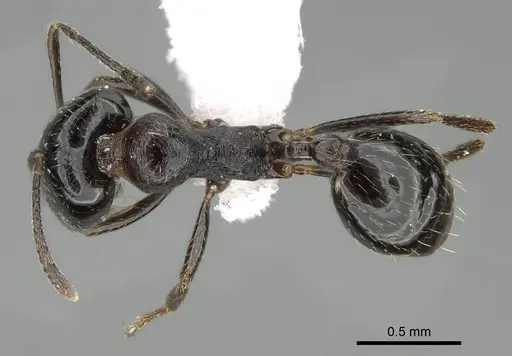
Literature
Loading distribution map...Loading products...