
Thaumatomyrmex nageli
- Sci. Name
- Thaumatomyrmex nageli
- Tribe
- Ponerini
- Subfamily
- Ponerinae
- Author
- Baroni Urbani & De Andrade, 2003
- Distribution
- Found in 0 countries
Introduction
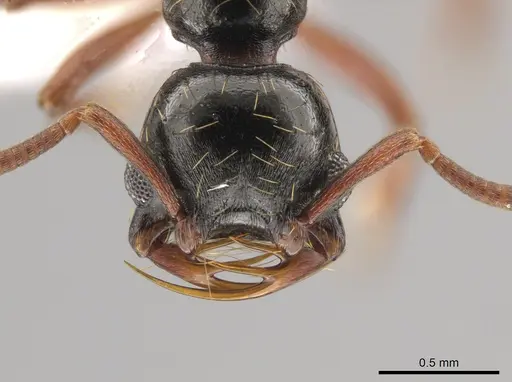
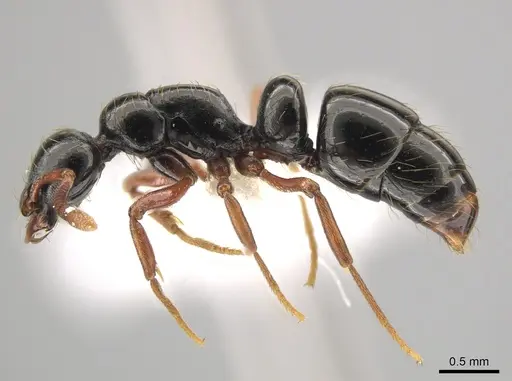
Thaumatomyrmex nageli is an extremely rare ant known only from Cuba, where it was discovered through leaf litter sampling in the Viñales region . Workers are small at 4.12–4.28 mm, with a broad head, large eyes, and mandibles carrying three long spiniform teeth . The body is black with ferruginous-brown antennae, frontal lobes, mandibles, and legs. This species belongs to the cochlearis group, which has unique features like dense canaliculation on the petiole and gaster . Thaumatomyrmex nageli is one of the least studied ants in the Caribbean – only two type specimens have ever been collected (in 2000), and no additional individuals have been found since . The entire Thaumatomyrmex genus is a specialized predator of millipedes (Diplopoda Penicillata) . This extreme rarity, combined with a highly specialized diet and a restricted Cuban distribution, makes T. nageli a challenging species for antkeeping.
Quick Summary
- Difficulty: Expert
- Origin & Habitat: Cuba – specifically the Viñales region in Pinar del Rio province. Specimens were collected from leaf litter in tropical limestone forests using Winkler sieving [1]. The species has never been found anywhere else [2].
- Colony Type: Unknown – colony structure has never been documented. Only two worker specimens exist [1][2].
- Size & Growth:
- Queen: Unknown – queen has never been described or collected [1]
- Worker: 4.12–4.28 mm [1]
- Colony: Unknown – colony size has never been documented
- Growth: Unknown
- Development: Unknown – no development data exists for this species (Development timeline is completely unstudied. Related Ponerine species typically take 6–12 weeks at similar temperatures, but this is unconfirmed for T. nageli.)
- Antkeeping:
- Temperature: No specific data – based on its Cuban tropical habitat, aim for 22–26 °C. Start in the mid‑20s and adjust based on colony activity if specimens are ever obtained.
- Humidity: Likely requires high humidity, similar to other tropical forest Ponerines – aim for consistently moist substrate (70–80 % relative humidity).
- Diapause: Unknown – Cuba has mild winters, so a true diapause may not be needed.
- Nesting: In nature they live in leaf litter and likely make shallow nests in cavities or rotting wood. In captivity, a naturalistic setup with moist substrate and small chambers would be appropriate, though no captive colonies have ever been established.
- Behavior: Behavior is unstudied in captivity. In the wild, Thaumatomyrmex species are cryptic, surface‑active predators that hunt millipedes in leaf litter [3]. They likely have typical Ponerine traits: moderate aggression, good vision (large eyes), solitary foraging, and a functional stinger. Given their tiny size (4 mm), escape prevention must be excellent.
- Common Issues: extreme rarity – virtually no captive specimens exist, this is not a species you will find for sale., specialized millipede diet – may be very difficult to replicate in captivity., no information on founding behavior or colony development – every aspect is guesswork., wild‑caught colonies, if ever found, may carry parasites or fail to adapt to captive conditions., cryptic lifestyle and small size make individuals easy to lose.
Rarity and Collection History
Only two worker specimens of Thaumatomyrmex nageli have ever been collected, both in December 2000 in Cuba [1]. The holotype comes from El Moncada (~17 km from Viñales), and the paratype from the road between Viñales and Pinar del Rio. Both were obtained by sifting leaf litter through a Winkler sieve – a method that shows they live hidden in the forest‑floor litter layer [1]. No additional specimens have turned up since 2000,despite ant surveys in Cuba [2]. This species is a gap in ant biology: we know almost nothing about its colony structure, queen, reproduction, or wild behavior.
Millipede Specialist Predators
The entire Thaumatomyrmex genus is a strict predator of millipedes in the order Diplopoda, specifically the Penicillata group [3]. Their distinctive mandibles – with three long spiniform teeth – are adapted for capturing and holding these elongated prey [1]. This dietary specialization is highly unusual, most ants are generalist predators or scavengers. For captive care, you would need to culture or obtain small millipedes as a primary food source, which is much harder than standard foods like fruit flies or mealworms. Related species have been observed hunting millipedes in the lab, confirming this diet [3]. If you ever obtain this species, expect its main food requirement to be small live millipedes.
Taxonomy and Identification
Thaumatomyrmex nageli belongs to the cochlearis species group, defined by Kempf in 1975 [1]. It can be told apart from its close relative T. cochlearis by several worker traits: a broader head width behind the eyes, a minutely punctate‑reticulate mesosoma side (instead of large sparse punctures), denser canaliculation on the petiole and gaster, and shorter, sparser body hairs [1]. The genus Thaumatomyrmex is part of the subfamily Ponerinae, tribe Thaumatomyrmecini. Workers have large eyes (nearly 1/3 of head length), elongated legs, and the unique three‑toothed mandible structure. The genus is known from only a handful of species, all in the Neotropics, making T. nageli a key part of Caribbean ant biodiversity.
Cuban Habitat and Conservation
The only known specimens come from the Viñales region in western Cuba, famous for its limestone karst landscape and mogotes (steep‑sided hills) [1]. This area supports tropical deciduous forest with a thick leaf‑litter layer – perfect habitat for litter‑dwelling ants. The December collection date suggests ants are active year‑round in Cuba’s mild climate. The species has never been found elsewhere, so it may be endemic to this small area [2]. Its conservation status is unknown, but given its extreme rarity, any populations are probably highly localized and potentially vulnerable.
Frequently Asked Questions
Can I keep Thaumatomyrmex nageli as a pet ant?
This species is essentially unavailable to antkeepers. Only two specimens have ever been collected since its description in 2003,and no live colonies have ever been documented. You will not find this species for sale – it remains a scientific curiosity known only from museum specimens [2].
What do Thaumatomyrmex nageli ants eat?
Based on genus‑level research, Thaumatomyrmex species are specialized predators of millipedes (Diplopoda Penicillata) [3]. Their unique three‑toothed mandibles are adapted for capturing these prey [1]. In captivity you would need to culture small millipedes as a primary food source – much harder than standard ant foods. Sugar sources are unlikely to be accepted given their specialized diet.
How big do Thaumatomyrmex nageli colonies get?
Unknown – colony size has never been documented. Only two worker specimens have ever been collected [1]. Related species in the genus probably form small colonies (dozens to low hundreds of workers), but this is purely speculative for T. nageli.
Do Thaumatomyrmex nageli ants sting?
Yes. As members of the subfamily Ponerinae, they possess a functional stinger. Ponerine ants can sting, though the pain level and effects for T. nageli have never been documented. Given their tiny size (4 mm), any sting would likely be mild.
What temperature do Thaumatomyrmex nageli ants need?
No specific temperature data exists. Based on their Cuban tropical habitat, aim for 22–26 °C. The Viñales region has a warm, humid tropical climate year‑round. Start in the mid‑20s and adjust based on colony activity if you ever obtain specimens.
Are Thaumatomyrmex nageli good for beginners?
No. This species is not only extremely difficult to obtain but also completely unstudied in captivity. The specialized millipede diet and total lack of captive care information make it unsuitable for any keeper. Even experienced antkeepers would struggle due to the knowledge gaps. This is an expert‑only species that may never be kept in captivity.
Where does Thaumatomyrmex nageli live in the wild?
Only known from the Viñales region in Pinar del Rio province, western Cuba. Specimens were collected from leaf litter in forested areas at two locations: El Moncada (~17 km from Viñales) and the road between Viñales and Pinar del Rio [1]. The species has never been found anywhere else [2].
How long do Thaumatomyrmex nageli ants live?
Unknown – no life‑history data exists. Development timeline, queen lifespan, and worker longevity have never been studied. Even basic colony demographics are completely undocumented.
Can I breed Thaumatomyrmex nageli ants?
Breeding this species would require obtaining specimens first, which has proved essentially impossible since only two workers were ever collected in 2000. No captive breeding programs exist, and no live colonies have ever been documented in captivity. This species remains for scientific study rather than antkeeping.
Do Thaumatomyrmex nageli queens fly?
Unknown – the queen has never been described or collected. Without specimens we cannot determine wing presence, nuptial flight behavior, or any other reproductive biology. This is one of many fundamental gaps in our knowledge about this species.
Report an Issue
The current care sheet is based fully on literature. See inconsistencies, or something that's incorrect? Please , it will be resolved after review from an admin. Contributing to the blogs tab also helps providing information, to make us be able to further improve the caresheets. Thank you for your support!
References

This caresheet is licensed under CC BY-SA 4.0 .
Community Blogs
CASENT0652032
View on AntWeb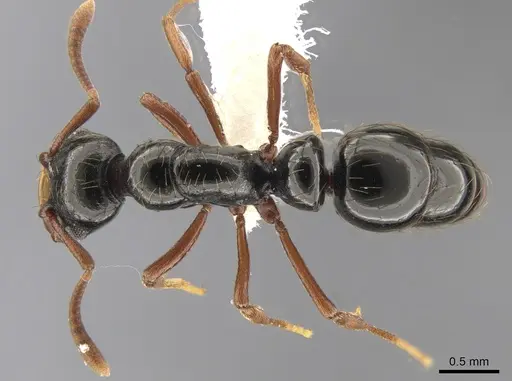
Literature
Loading distribution map...Loading products...