
Thaumatomyrmex mandibularis
- Sci. Name
- Thaumatomyrmex mandibularis
- Tribe
- Ponerini
- Subfamily
- Ponerinae
- Author
- Baroni Urbani & De Andrade, 2003
- Distribution
- Found in 1 countries
Introduction
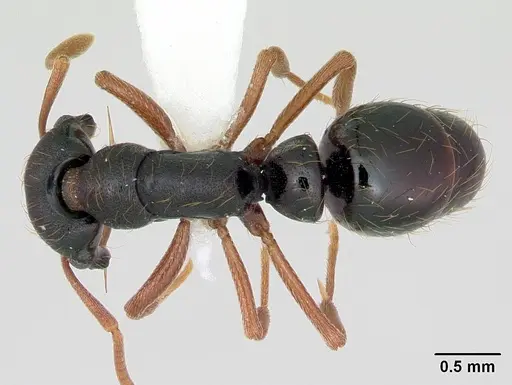
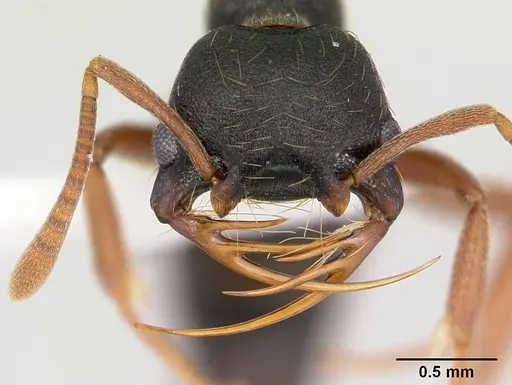
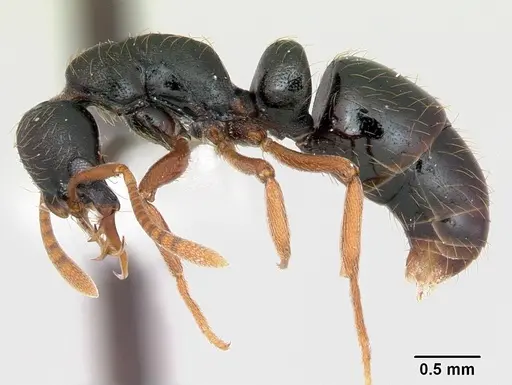
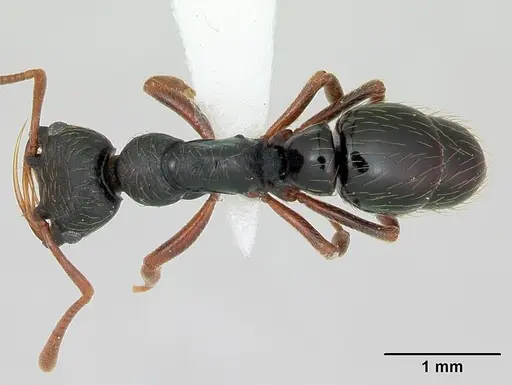
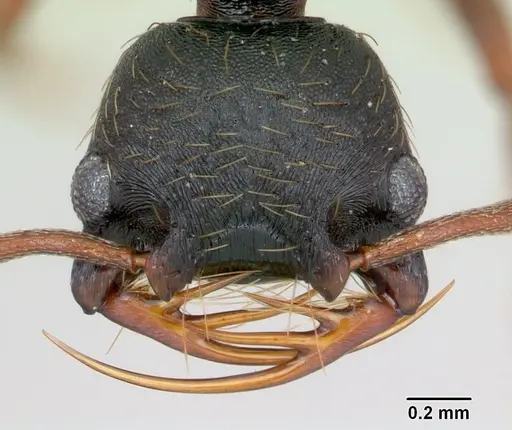
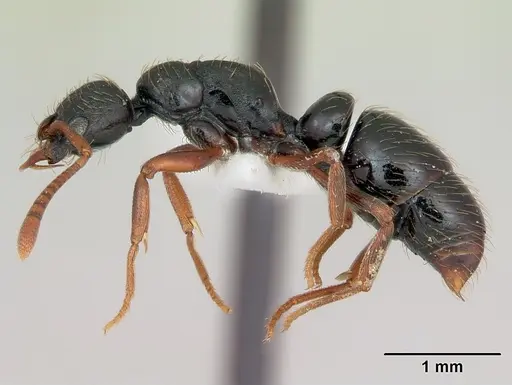
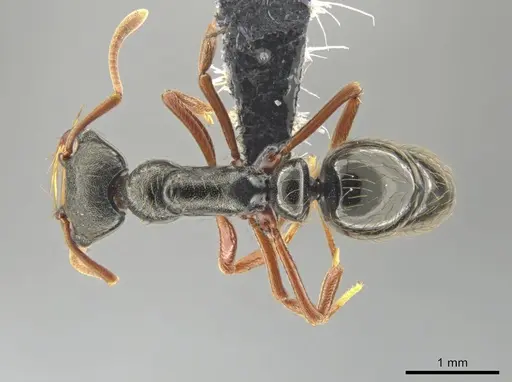
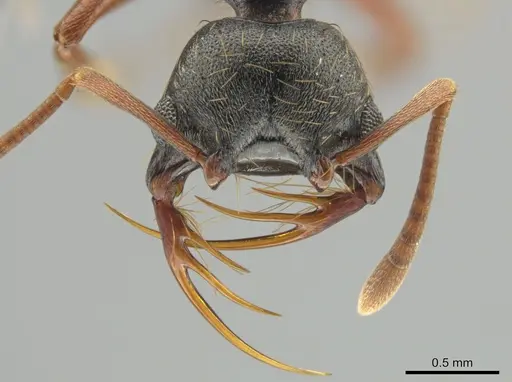
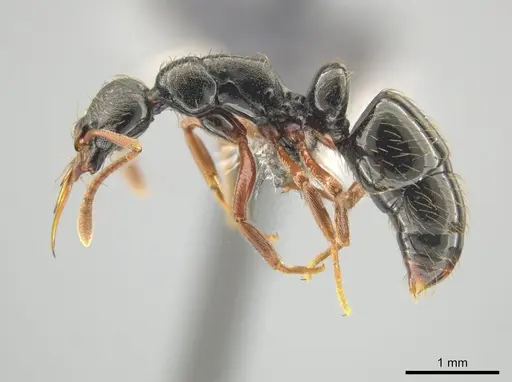
Thaumatomyrmex mandibularis is a rare ant found only in Cuba, specifically the Sierra Maestra mountain range . Workers measure 4.87-5.47 mm and have remarkably long mandibles - the longest of any Cuban Thaumatomyrmex species. They use these to capture their specialized prey. This species is part of the cochlearis group, characterized by long mandibles and scapes and strongly sculptured head and mesosoma . It has a dark appearance with black head, mesosoma, petiole and gaster, while antennae, frontal lobes, mandibles and legs are brown. What makes this ant unusual is its extremely specialized diet: it is a specialist predator of polyxenid millipedes (tiny, soft-bodied millipedes). This prey specialization defines much of what we know about the genus. The species forms very small colonies and lives in leaf litter at higher elevations (around 1100 m). It is one of the most elusive ants in the Caribbean .
Quick Summary
- Difficulty: Expert
- Origin & Habitat: Endemic to the Sierra Maestra mountains in eastern Cuba. Found at 1100 m elevation in leaf litter samples from elfin forest [1][2].
- Colony Type: Colony structure is unconfirmed, only known from workers collected in leaf litter samples. Forms very small colonies based on collection data [2].
- Size & Growth:
- Queen: Unknown, no queens have been described in scientific literature
- Worker: 4.87-5.47 mm [2]
- Colony: Very small, likely under 100 workers based on collection data [2]
- Growth: Unknown
- Development: Unconfirmed, no development data exists for this species. Based on general Ponerinae patterns, development may take 6-10 weeks at optimal temperatures. (Development timeline has not been studied.)
- Antkeeping:
- Temperature: Keep around 24-28°C, this species comes from a warm Cuban tropical environment at mid-elevation. Start in this range and observe colony activity.
- Humidity: High humidity required, they live in leaf litter in humid forest understory. Keep the nest substrate consistently moist but not waterlogged, with some drier areas for choice.
- Diapause: Unlikely, Cuba has no cold winter, so this species probably remains active year-round.
- Nesting: Naturalistic setup with moist leaf litter or soil works best. A small plaster or soil nest with high humidity chambers would suit their tiny colony size. They are litter-dwelling ants that prefer tight, humid spaces.
- Behavior: These ants are specialized predators with extremely long mandibles adapted for capturing tiny millipedes. They are likely solitary foragers that hunt individually in the leaf litter layer. Workers are small but active, searching the forest floor for their specific prey. Escape risk is moderate due to their small size, use standard barriers, fine mesh is not critical since they aren't as tiny as some litter ants.
- Common Issues: specialized diet makes feeding extremely difficult, they require live polyxenid millipedes or similar tiny soft-bodied prey, which are nearly impossible to culture in captivity., very small colony size means any losses have a major impact on the colony., extremely rare in the hobby, captive colonies are essentially unavailable., high humidity requirements can lead to mold issues if ventilation is poor., wild-caught colonies may have parasites or fail to adapt to captive conditions.
Housing and Nest Setup
Thaumatomyrmex mandibularis needs a naturalistic setup that mimics the humid leaf litter environment of Cuban forests. Use a small plaster or soil nest with tight chambers, these ants feel secure in snug spaces. The nest should have a water reservoir to maintain high humidity without frequent misting. A small outworld area allows for hunting. Use a substrate mix of moist soil and decaying leaves to provide humidity and hunting ground for their millipede prey. Keep the setup away from direct sunlight and drafts, they prefer stable, shaded conditions. [2]
Feeding and Diet - The Critical Challenge
This is the biggest challenge in keeping Thaumatomyrmex. They are extreme specialists that feed almost exclusively on polyxenid millipedes, tiny, soft-bodied millipedes that live in leaf litter [2][3]. This prey specialization is nearly unique in the ant world. In captivity, you would need to culture these specific millipedes, which is extremely difficult. Other small soft-bodied arthropods might be accepted experimentally, but success is uncertain. Do not expect them to accept standard ant foods like sugar water, mealworms, or honey. This species is NOT suitable for anyone unless you have access to their specific prey.
Temperature and Humidity
As a Cuban species from mid-elevation (1100 m), Thaumatomyrmex mandibularis prefers warm, humid conditions. Keep temperatures in the 24-28°C range, stable warmth without major fluctuations. Humidity should be high, around 70-80%, mimicking the moist leaf litter environment where they live. The nest substrate should feel consistently damp but never soggy. Provide a water source in the nest setup to maintain humidity through evaporation. Good ventilation is essential to prevent mold while maintaining moisture. [2]
Behavior and Foraging
Based on the genus and their specialized morphology, Thaumatomyrmex mandibularis workers are likely solitary foragers that hunt individually through the leaf litter. Their extraordinarily long mandibles are specialized tools for capturing tiny, soft-bodied millipedes, they likely seize their prey and hold them securely. Workers are probably most active during humid periods when their prey is most active in the litter layer. They are not aggressive ants and would not defend territories or raid other colonies. Their small colony size suggests a quiet, unobtrusive lifestyle.
Availability and Collection
Thaumatomyrmex mandibularis is one of the rarest ants in the world, it has only been collected a handful of times from leaf litter samples in Cuba's Sierra Maestra mountains [2][1]. There are essentially no captive colonies in the antkeeping hobby. If you wanted to keep this species, you would need to collect them yourself in Cuba, which requires permits and expertise. This species is NOT a practical choice for antkeepers and is best appreciated through scientific literature. Even serious ant collectors rarely encounter this species.
Frequently Asked Questions
Can I keep Thaumatomyrmex mandibularis in a test tube?
A test tube setup would be too dry for this leaf-litter species. They need high humidity naturalistic housing with moist substrate. A small plaster or soil nest with a water reservoir is more appropriate.
What do Thaumatomyrmex mandibularis eat?
They are extreme specialists that eat only polyxenid millipedes, tiny soft-bodied millipedes. This prey is nearly impossible to culture in captivity, making this species essentially unkeepable for hobbyists [2][3].
How big do Thaumatomyrmex mandibularis colonies get?
Colony size is very small, likely under 100 workers based on collection data and the 'very small colonies' description. Only a handful of workers have ever been collected [2].
Where does Thaumatomyrmex mandibularis live?
This species is only found in Cuba's Sierra Maestra mountains, at around 1100 m elevation in elfin forest leaf litter. It is endemic to this region [1][2].
Are Thaumatomyrmex mandibularis good for beginners?
No, this species is completely unsuitable for beginners. They have an extremely specialized diet that is nearly impossible to provide, are one of the rarest ants in existence, and require specific humidity conditions. This is an expert-only species that is essentially unavailable in the hobby.
How long until first workers in Thaumatomyrmex mandibularis?
The development timeline is unconfirmed, no scientific data exists on their egg-to-worker time. Related Ponerinae species typically take 6-10 weeks at optimal temperatures, but this has not been studied for this specific species.
Do Thaumatomyrmex mandibularis need hibernation?
No, Cuba has a tropical climate with no cold winter. This species likely remains active year-round and does not require any diapause or hibernation period.
Why are Thaumatomyrmex mandibularis so rare?
They have an extremely specialized diet (only polyxenid millipedes), live in a very limited geographic area (only the Sierra Maestra in Cuba), form tiny colonies, and live hidden in leaf litter. They are among the rarest ants in the world with only a handful of specimens ever collected [2][1].
Can I buy Thaumatomyrmex mandibularis ants?
No, captive colonies essentially do not exist in the antkeeping hobby. This is one of the rarest ants in the world, known only from a few specimens collected in Cuba. Even scientific collections have very few individuals.
Report an Issue
The current care sheet is based fully on literature. See inconsistencies, or something that's incorrect? Please , it will be resolved after review from an admin. Contributing to the blogs tab also helps providing information, to make us be able to further improve the caresheets. Thank you for your support!
References

This caresheet is licensed under CC BY-SA 4.0 .
Community Blogs
Literature
Loading distribution map...Loading products...