
Thaumatomyrmex ferox
- Sci. Name
- Thaumatomyrmex ferox
- Tribe
- Ponerini
- Subfamily
- Ponerinae
- Author
- Mann, 1922
- Distribution
- Found in 7 countries
Introduction
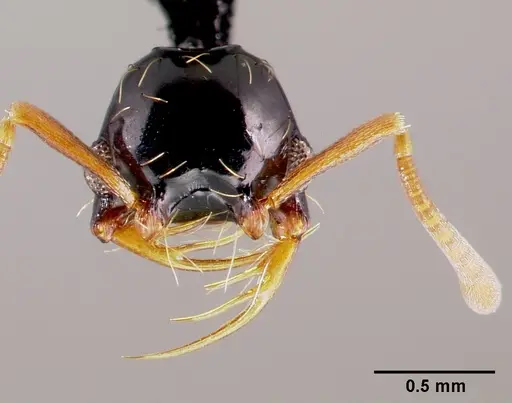
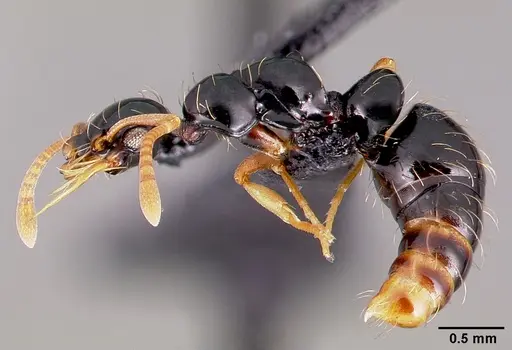
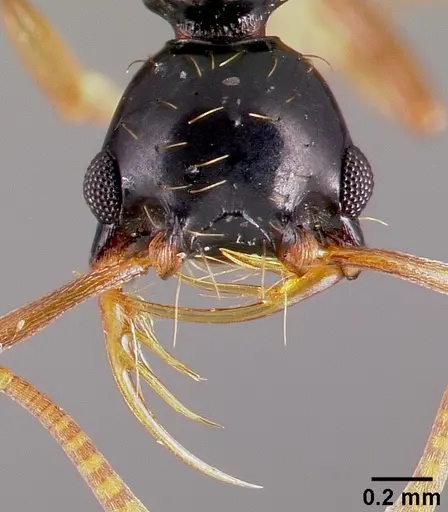
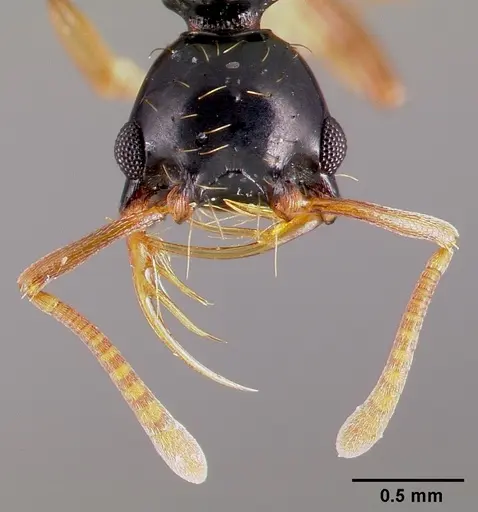
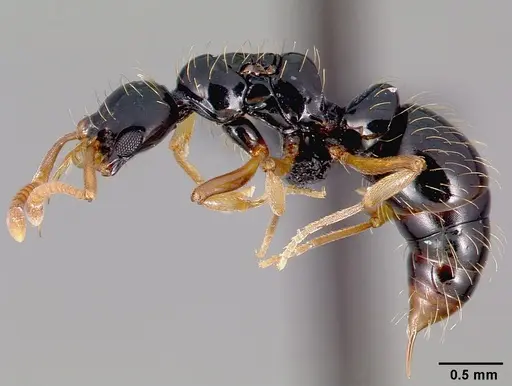
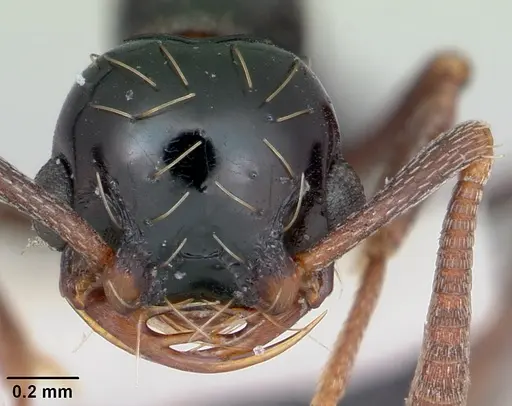
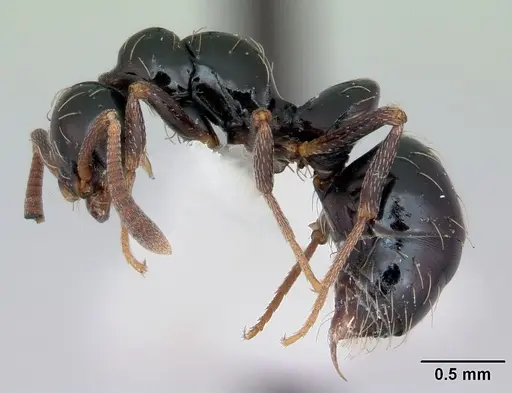
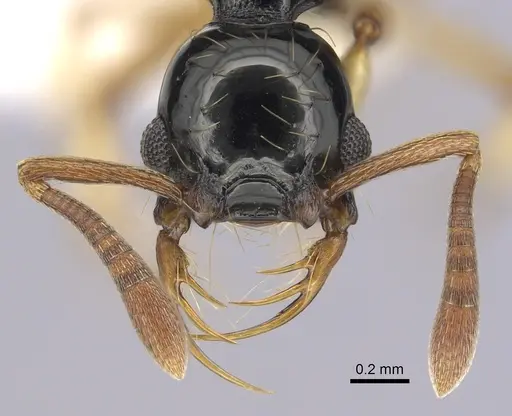
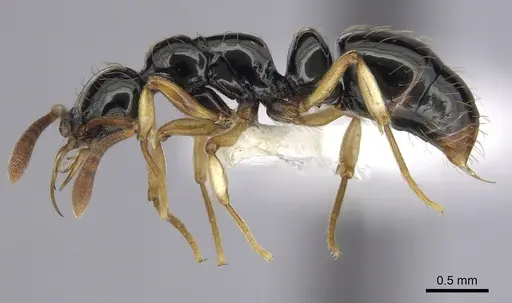
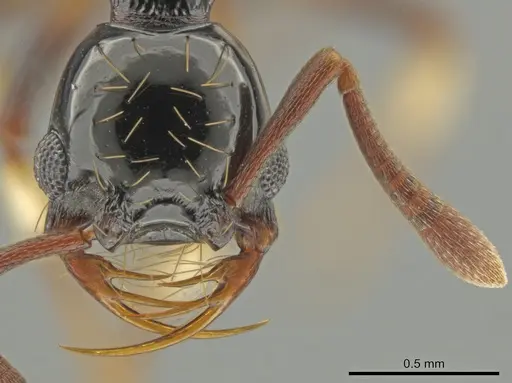
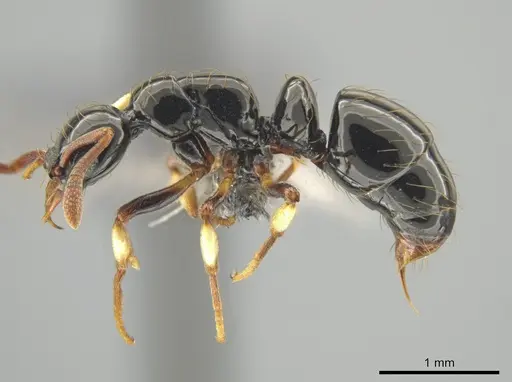
Thaumatomyrmex ferox is a rare ponerine ant known for its extraordinarily long, curved mandibles that form a distinctive fork-like shape with three sharp teeth . Workers measure 4.1 to 4.7 mm in total length, making them one of the smaller ponerine ants . Their smooth, glossy body is dark brown to black with golden-yellow markings, and their head is distinctly trapezoidal, wider at the front than the back . This species has one of the most specialized diets of any ant: they exclusively hunt polyxenid millipedes (tiny millipedes with stinging hairs), carefully shaving off the defensive bristles before feeding the prey to their larvae . Colonies are tiny, typically containing 3 to 12 individuals, and they nest in leaf litter and among plant roots in humid Neotropical forests from Mexico to Brazil .
Quick Summary
- Difficulty: Expert
- Origin & Habitat: Neotropical rainforests from Mexico (Veracruz) through Central America to Brazil, typically found in low to mid-elevation humid forest leaf litter at 150–1029 m elevation where annual rainfall exceeds 1200 mm [2][5].
- Colony Type: Small colonies of 3–12 workers with gamergate reproduction, workers can become reproductive and lay eggs, creating 'mini-societies without queen' [6]. Single-queen colonies also occur, both queenright and queenless colonies are possible.
- Size & Growth:
- Queen: 4.51 mm total length [7]
- Worker: 4.1–4.7 mm total length [2][3]
- Colony: Up to 12 workers [2][5]
- Growth: Slow
- Development: Likely 8–12 weeks at 24–26°C, based on typical Ponerinae patterns, exact timeline not directly studied (Temperature and humidity strongly influence development, see antkeeping requirements.)
- Antkeeping:
- Temperature: 24–26°C, they inhabit areas with mean annual temperatures of 23–24°C [2]. Provide a gentle gradient for thermoregulation.
- Humidity: High humidity, keep the nest substrate consistently moist but not waterlogged. They live in leaf litter of humid rainforests with 1200–4500 mm annual rainfall [2].
- Diapause: No, as a tropical species, they do not require hibernation. Maintain warm conditions year-round.
- Nesting: Tiny colonies nest in leaf litter and among plant roots. In captivity, provide a small test tube setup with moist substrate (e.g., coco peat) and plenty of hiding spaces. A small naturalistic setup with leaf litter and small chambers works well.
- Behavior: Solitary hunters that patrol leaf litter searching for their exclusive prey: polyxenid millipedes [8]. They use their long mandibles to capture and manipulate prey, shaving off defensive bristles before feeding [1]. Workers are not aggressive toward each other and the colony operates with minimal individuals. They have a functional sting but are too small to pose any meaningful threat to humans. Escape prevention is important due to their tiny size.
- Common Issues: extreme dietary specialization makes captivity nearly impossible, they refuse all standard ant foods and require live polyxenid millipedes, tiny colony size means any loss of workers is significant and can collapse the colony, extreme rarity in the wild makes wild-collection nearly impossible and expensive, very small size requires fine mesh barriers to prevent escapes, high humidity requirements can lead to mold if ventilation is poor
The Millipede Specialist
Thaumatomyrmex ferox has the most specialized diet of any ant species in the hobby. These ants are obligate predators that exclusively hunt and consume only polyxenid millipedes (order Polyxenida), tiny millipedes that possess urticating (stinging) bristles as their only defense [2][5]. When they capture a millipede, workers use their front tarsi to carefully shave off all the defensive bristles before carrying the denuded prey back to the nest to feed to larvae [1]. This extraordinary specialization means they will not accept any standard ant foods: no fruit flies, no mealworms, no honey, no seeds. In captivity, they would require a constant supply of live polyxenid millipedes, which are themselves extremely difficult to source and maintain. This extreme dietary specialization makes T. ferox essentially impossible to keep successfully in captivity for any length of time.
Tiny Colonies and Unique Reproduction
T. ferox forms some of the smallest ant colonies known, typically just 3 to 12 individuals per nest [2][5]. What makes them even more unusual is their reproductive system. Research by Jahyny et al. (2002) documented 'mini-societies without queen' in this genus, colonies where workers themselves become reproductive (gamergates) and lay eggs to sustain the colony [6]. This means the colony does not necessarily need a queen to survive and reproduce. The winged queen has been described (Vazquez et al. 2010) [7], but in established colonies, gamergate reproduction appears to be common [6]. This social structure is rare among ants and makes their colony dynamics fascinating from a biological perspective, though it presents challenges for keepers expecting traditional queen-right colonies.
Natural History and Distribution
This species ranges from Mexico (Veracruz) through Central America (Guatemala, Honduras, Costa Rica, Panama) down to South America (Colombia, Venezuela, Peru, Brazil) [7][5]. They are found in low to mid-elevation humid forests between 150 and 1029 m altitude, in areas with high annual rainfall (1200–4500 mm) and mean temperatures of 23–24°C [2]. The type specimens were collected from a depression in a half-rotten log near a stream in forest [6]. They are leaf-litter dwellers, hunting solitarily through the forest floor's decomposing material [8]. T. ferox is extraordinarily rare, fewer than 200 specimens exist in museum collections worldwide, and they are rarely collected even using specialized methods like Winkler extraction from leaf litter [2][5].
Temperature and Care
As a Neotropical species from humid lowland forests, T. ferox requires warm, stable temperatures around 24–26°C with high humidity [2]. They should never be allowed to cool below room temperature. Provide a small moisture reservoir (a test tube setup works well for such tiny colonies) and maintain damp substrate without flooding. Because they nest in leaf litter and rotting wood in the wild, a naturalistic setup with moist coco peat or soil, plus small hiding spots like cork bark or leaf litter, helps them feel secure. Avoid excessive ventilation that dries them out, but ensure some airflow to prevent mold. Given their extreme rarity and specialized needs, only experienced antkeepers with access to their specific prey should attempt this species.
Why This Species Is Not Recommended for Most Keepers
Despite their fascinating biology, Thaumatomyrmex ferox is one of the most difficult, arguably impossible, ants to keep in captivity. The single biggest challenge is their exclusive diet: they will only eat polyxenid millipedes, a prey item that is itself rarely available and difficult to culture. Unlike most ants that can adapt to accepting various protein sources, T. ferox has evolved such specialized hunting techniques that they simply will not recognize other insects as food. Additionally, their colonies are tiny (3–12 workers), meaning any stress or loss is catastrophic. They are also among the rarest ants in the world to find, with fewer than 200 specimens in global collections. Unless you have a dedicated source of live polyxenid millipedes and extensive experience with difficult tropical species, this ant should be appreciated only from a distance, through observation of the excellent photographs and research papers rather than attempted husbandry. [2][5]
Frequently Asked Questions
Can I keep Thaumatomyrmex ferox in a test tube?
Yes, a test tube setup works well for their tiny colony size. Provide a water reservoir and keep the substrate moist. However, the bigger question is what to feed them, test tubes won't help with their impossible dietary needs.
What do Thaumatomyrmex ferox ants eat?
They eat ONLY polyxenid millipedes, tiny millipedes with stinging bristles. They will not accept any other food. This extreme specialization makes them essentially impossible to keep in captivity.
How long does it take for Thaumatomyrmex ferox to develop from egg to worker?
The exact timeline is unconfirmed, but based on typical Ponerine development, likely 8–12 weeks at optimal temperature (24–26°C). Their tiny colony size suggests slow growth.
How big do Thaumatomyrmex ferox colonies get?
They remain very small, typically only 3 to 12 workers even in mature colonies. This is one of the smallest colony sizes known in ants.
Are Thaumatomyrmex ferox good for beginners?
No. They are rated Expert difficulty due to their extreme dietary specialization (only accepting live polyxenid millipedes), tiny colony size, high humidity needs, and extreme rarity. Most antkeepers cannot source their required food.
Do Thaumatomyrmex ferox need hibernation?
No. As a Neotropical species from humid tropical forests, they do not require diapause. Keep them warm (24–26°C) year-round.
Why are Thaumatomyrmex ferox so rarely kept?
Their exclusive diet of polyxenid millipedes makes captivity essentially impossible. Additionally, they are among the rarest ants in the world, fewer than 200 specimens exist in museum collections.
Can I keep multiple queens together?
This has not been documented. While some colonies function with gamergate (worker) reproduction, the natural colony structure typically involves either a single queen or queenless colonies with reproductive workers. Combining unrelated queens is not recommended.
Where does Thaumatomyrmex ferox live in the wild?
From Mexico (Veracruz) through Central America to Brazil, in humid Neotropical forests at 150–1029 m elevation. They nest in leaf litter and among plant roots, hunting solitarily on the forest floor.
Report an Issue
The current care sheet is based fully on literature. See inconsistencies, or something that's incorrect? Please , it will be resolved after review from an admin. Contributing to the blogs tab also helps providing information, to make us be able to further improve the caresheets. Thank you for your support!
References

This caresheet is licensed under CC BY-SA 4.0 .
Community Blogs
CASENT0006627
View on AntWeb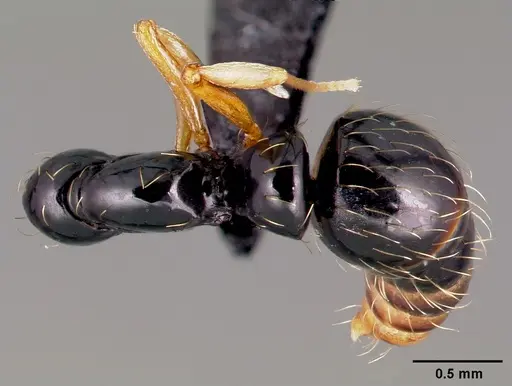
CASENT0006628
View on AntWeb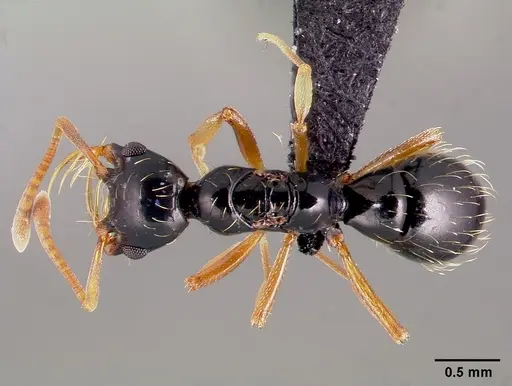
CASENT0173035
View on AntWeb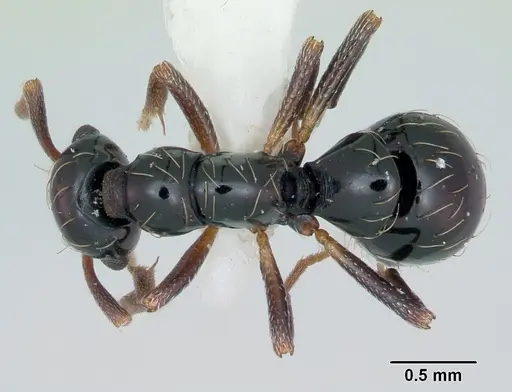
CASENT0249251
View on AntWeb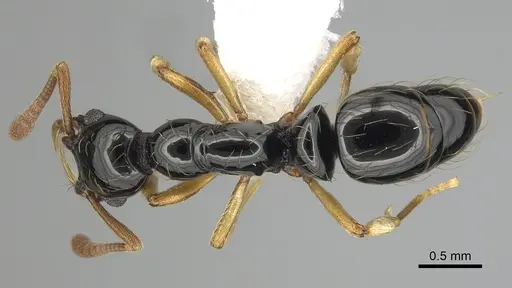
CASENT0649093
View on AntWeb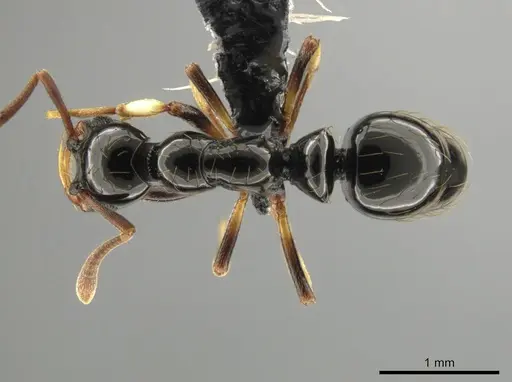
Literature
Loading distribution map...Loading products...