
Tetraponera tessmanni
- Sci. Name
- Tetraponera tessmanni
- Tribe
- Pseudomyrmecini
- Subfamily
- Pseudomyrmecinae
- Author
- Stitz, 1910
- Distribution
- Found in 5 countries
Introduction
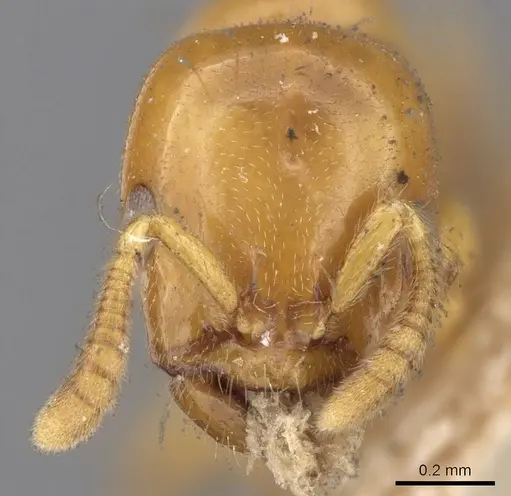
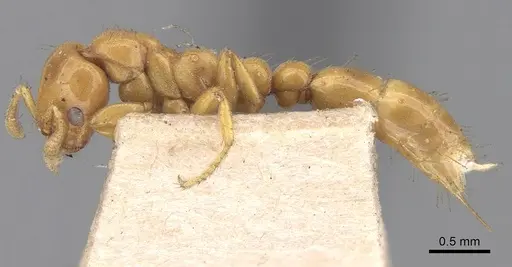
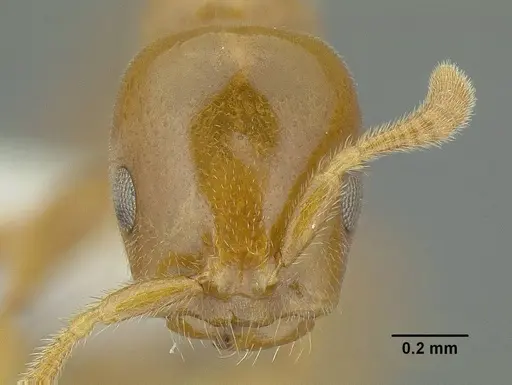
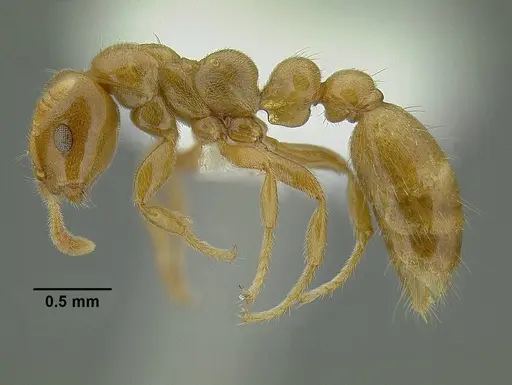
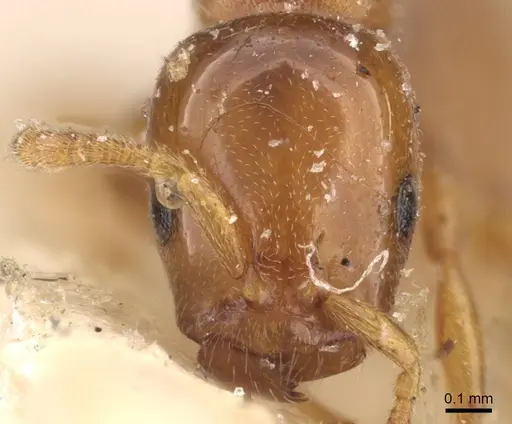
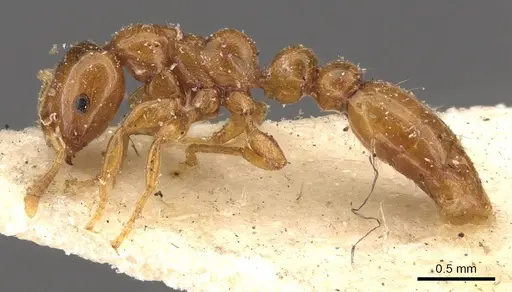
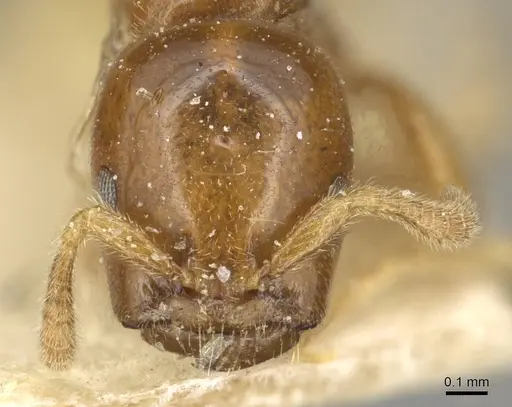
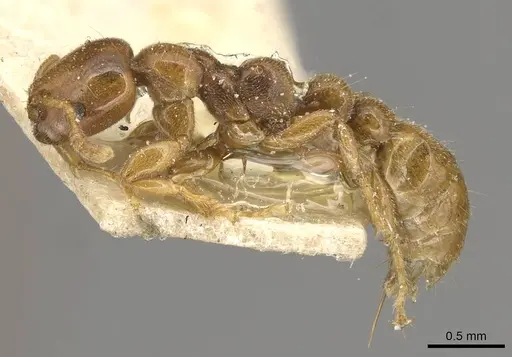
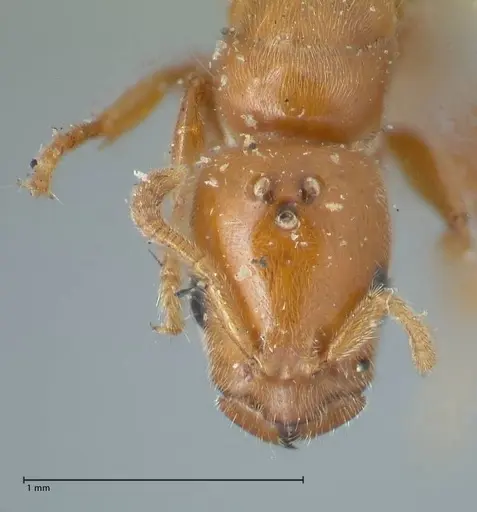
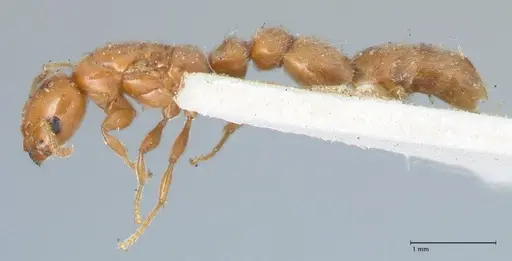
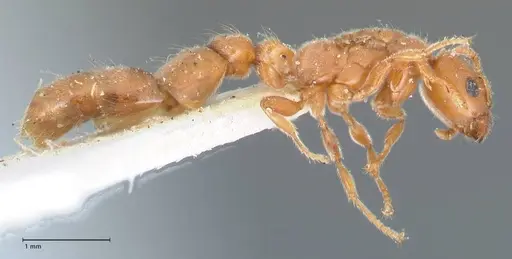
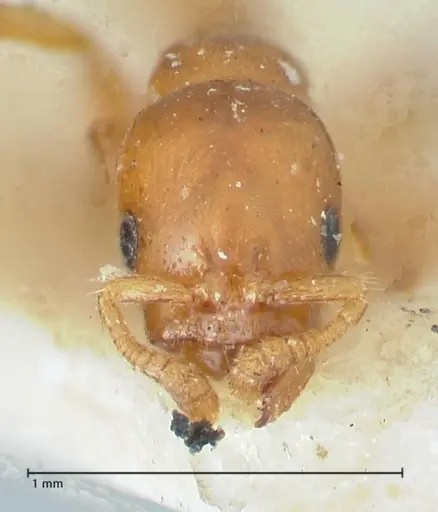
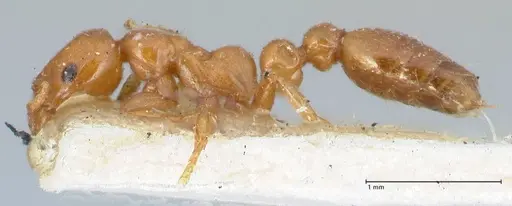
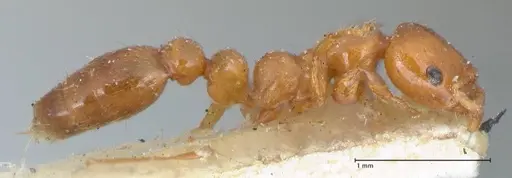
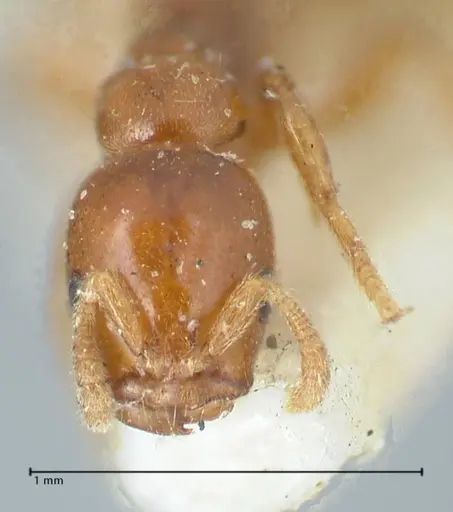
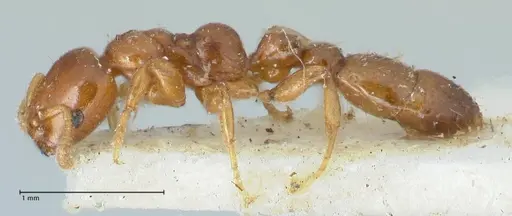
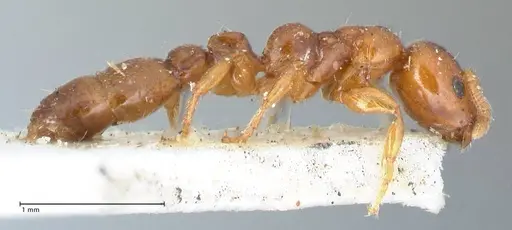
Tetraponera tessmanni is a small African ant measuring about 3.5mm, with a slender amber-yellow to reddish body, smooth and shiny surface, and black eyes . It belongs to the Pseudomyrmecinae subfamily and is found across the Afrotropical region: Cameroon, Central African Republic, Democratic Republic of Congo, and Equatorial Guinea . What makes T. tessmanni special is its exclusive partnership with the climbing liana Vitex thyrsiflora – this ant is the only species that lives inside that plant's hollow stems . Unlike most plant-ants, T. tessmanni does not prune surrounding vegetation because its host depends on contacts with other plants for support . Workers are extremely aggressive and possess a painful sting that can raise blisters on skin, making them highly effective plant guards .
Quick Summary
- Difficulty: Hard
- Origin & Habitat: Tropical West and Central Africa. This ant lives exclusively inside Vitex thyrsiflora lianas, a climbing plant found in lowland rainforest [3][5]. The plant provides domatia – specialized hollow cavities – where the whole colony lives, forages, and raises brood.
- Colony Type: Polygynous – colonies contain multiple egg-laying queens, including both fully winged morphs and wingless ergatoid (worker-like) females. One queen morph has fully functional wings while another has reduced, functionless wing nubs. Established colonies include numerous apparently functional egg-laying queens of both morphs [2].
- Size & Growth:
- Queen: Size data unavailable – considerable variation documented, including macrogynes, microgynes, and ergatoid forms [2].
- Worker: Approximately 3.5mm [1]
- Colony: Unconfirmed – but colonies can become large, monopolizing extensive territories within host plants [2].
- Growth: Moderate (estimated)
- Development: 6–10 weeks (estimated from related Pseudomyrmecinae species) (Development time not directly studied. These estimates are based on other arboreal ants in the same subfamily.)
- Antkeeping:
- Temperature: 24–28°C (inferred from tropical rainforest habitat). Keep warm and stable year-round – avoid drops below 20°C.
- Humidity: High humidity required. Keep the nest substrate consistently moist but not waterlogged. Mist the outworld regularly and ensure good ventilation to prevent mold.
- Diapause: No – tropical species, no hibernation needed. Maintain warm conditions all year.
- Nesting: These ants are specialized plant-dwellers. Use test tubes or small enclosed chambers that mimic plant domatia – narrow, dark spaces. Provide vertical climbing surfaces (twigs, bark). Avoid open, dry nests. Y-tong or plaster nests can work if kept humid. Acrylic nests are not recommended.
- Behavior: Extremely aggressive and defensive – workers rush out to confront any disturbance [4]. They have a painful sting that can raise blisters on skin [4]. Workers are constantly active, patrolling galleries. They do not prune vegetation [2]. Escape prevention is important: though not tiny, their slender bodies can squeeze through small gaps. They climb readily on vertical surfaces.
- Common Issues: tropical species requires warm, humid conditions year-round – cold drafts can be fatal., painful sting means handling should be minimized, use gloves when necessary., specialized plant-based diet – may reject typical ant feeds, provide sugar water and fresh plant material (young twigs)., difficulty establishing colonies from wild-caught – they are highly adapted to their host plant., high humidity can lead to mold if ventilation is poor – ensure air circulation., sensitive to temperature fluctuations – maintain stable 24–28°C.
Housing and Nest Setup
T. tessmanni is a specialized plant-dweller, making housing tricky. In the wild they live exclusively inside Vitex thyrsiflora lianas, where the plant's anatomy creates private nesting spaces [2]. For captivity, test tube setups work well for small colonies. Provide narrow, dark chambers that mimic domatia – these ants feel safest in tight spaces. Because they are arboreal, include vertical surfaces like twigs or bark for climbing. Use a water tube for humidity, but avoid flooding. Keep the nest in a warm, humid part of your setup. A small heating cable on one side can create a gentle temperature gradient. Y-tong or plaster nests can work if kept consistently humid, but acrylic nests are not recommended.
Feeding and Diet
T. tessmanni has an unusual diet. In nature, workers eat medullary tissue from young twigs and a nutritive layer produced by the plant inside the domatia galleries [4]. They may also obtain nutrients directly from plant tissue [5]. In captivity, provide sugar water or honey as a constant energy source. Small soft-bodied insects (fruit flies, tiny mealworms) may be accepted occasionally, but they are not active hunters. Offering fresh young twigs or leaves from a non-toxic plant can provide the plant tissue they need. Remove uneaten food promptly to prevent mold in the humid setup. Avoid heavy protein-based feeds – this species leans more toward plant-based nutrition.
Temperature and Humidity Control
As a tropical African species, T. tessmanni needs warm conditions: 24–28°C. Drops below 20°C can slow or stop brood development. Use a small heating cable or mat on one side of the nest to create a gradient, but don't heat directly on the nest – it can dry the colony too fast. Humidity should be high: keep the nest substrate consistently moist but not waterlogged. Mist the outworld regularly. Good ventilation is crucial – stagnant, overly wet conditions lead to mold. The goal is humid air that moves slightly, like a rainforest understory. [5][3]
Behavior and Defense
This species is notably aggressive and defensive. Workers immediately respond to vibrations or disturbances by rushing out to confront the threat [4]. They are described as 'exceedingly vicious and alert, ' making them very effective plant guards [4]. The sting is extremely painful and can produce vesicles on skin – handle with extreme caution [4]. Workers are constantly active, patrolling the galleries and maintaining the colony. They excavate new galleries by chewing through the plant's xylem, creating lateral passages [4]. In captivity, they may try to expand into any available space. Unlike some plant-ants, T. tessmanni does not prune surrounding vegetation because its host liana depends on contact with other plants [2].
Colony Structure and Queens
T. tessmanni has one of the most complex queen systems among ants. Colonies are polygynous, with multiple egg-laying queens of two distinct morphs [2]. One queen morph has fully functional wings for dispersal, while the other has reduced, functionless wing nubs and a narrower thorax – this is unique among all Pseudomyrmecinae ants [2]. Additionally, colonies contain numerous ergatoid (wingless) females that can lay eggs, functioning as replacement reproductives [4]. Founding is claustral – dealate queens seal themselves inside a chamber to raise the first workers without foraging [2]. Established colonies can have many functional queens, allowing the colony to grow large and dominate extensive territories within the host plant.
Seasonal Care
Unlike temperate ants, T. tessmanni does not require a diapause period. It is adapted to year-round warm, humid conditions in African rainforests. Maintain consistent temperatures and humidity throughout the year. If your room temperature drops significantly in winter, use supplemental heating to keep the nest warm. The colony may show slightly reduced activity during cooler periods but should remain otherwise active. Keep the water tube filled year-round, as humidity is critical. These ants have evolved in stable tropical conditions and do not handle temperature fluctuations well. [5]
Frequently Asked Questions
Can I keep Tetraponera tessmanni in a test tube?
Yes, test tubes work well for founding and smaller colonies. Use a small tube with a water reservoir, ensuring the chamber is enclosed and dark – these ants prefer tight spaces that mimic plant domatia. As the colony grows you can add additional tubes or connect to a small Y-tong or plaster nest.
Does Tetraponera tessmanni sting?
Yes, and it is extremely painful. Workers have a potent sting that can produce vesicles on skin [4]. This species is notably aggressive and will readily sting when threatened. Handle with extreme caution – use gloves and avoid disturbing the nest.
How long does it take for Tetraponera tessmanni to produce first workers?
Based on related Pseudomyrmecinae species, expect 6–10 weeks from egg to first worker at optimal temperature (24–28°C). Warmer temperatures speed development, cooler temperatures slow it. Be patient as this species grows moderately.
Are Tetraponera tessmanni good for beginners?
No, this species is not recommended for beginners. They have specialized housing requirements, need high humidity and warm temperatures year-round, and have a painful sting. Their unusual plant-based diet can be challenging to replicate. Best left for experienced antkeepers familiar with tropical species.
What do Tetraponera tessmanni eat?
They have an unusual diet based on plant-derived nutrients. In nature, they feed on medullary tissue from young twigs and nutritive layers produced by their host plant [4]. In captivity, provide sugar water or honey constantly. Small soft-bodied insects may be accepted occasionally. Offering fresh young twigs or leaves can supply the plant tissue they need. Avoid heavy protein-based feeds – this species is more herbivorous than predatory.
Do Tetraponera tessmanni need hibernation?
No. As a tropical species from Central African rainforests, they need warm conditions year-round. Maintain temperatures between 24–28°C throughout the year. Temperature drops or seasonal cooling can stress or kill them.
How big do Tetraponera tessmanni colonies get?
Colonies can become large and monopolize extensive territories within their host plant [2]. The polygynous structure with multiple egg-laying queens supports substantial growth. Exact maximum worker counts are unconfirmed, but established colonies can grow significantly.
Can I keep multiple Tetraponera tessmanni queens together?
Yes, this is normal. T. tessmanni is polygynous – colonies naturally contain multiple egg-laying queens, including both winged and ergatoid forms [2][4]. Queens coexist peacefully and do not fight. Do not attempt to separate them.
Why is my Tetraponera tessmanni colony dying?
Common causes: temperature too low (below 20°C), humidity too low or inconsistent, mold from poor ventilation, or inappropriate food. This species is sensitive to environmental changes. Check temperature, humidity, and ensure they have plant-derived nutrition (sugar water and fresh plant material). Wild-caught colonies often struggle due to their specialized lifestyle.
When should I move Tetraponera tessmanni to a formicarium?
Wait until the colony is well-established and outgrowing its current test tube. Test tubes can work long-term for many colonies. If you move them, choose a nest with tight chambers, high humidity capacity, and vertical climbing surfaces. Many keepers successfully keep established colonies in tube setups indefinitely.
Report an Issue
The current care sheet is based fully on literature. See inconsistencies, or something that's incorrect? Please , it will be resolved after review from an admin. Contributing to the blogs tab also helps providing information, to make us be able to further improve the caresheets. Thank you for your support!
References

This caresheet is licensed under CC BY-SA 4.0 .
Community Blogs
CASENT0281869
View on AntWeb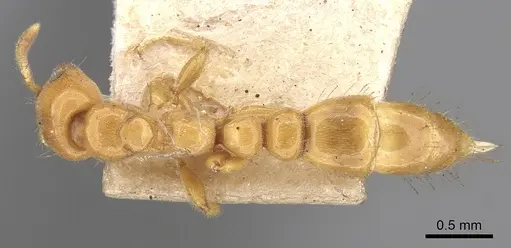
CASENT0794354
View on AntWeb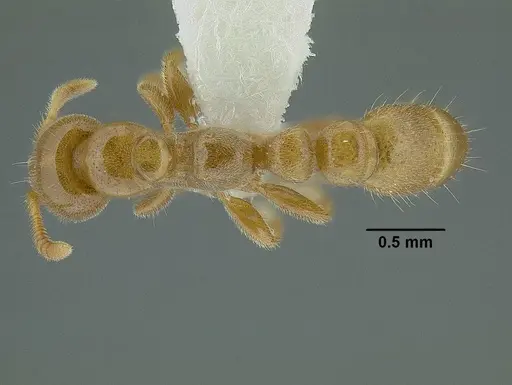
CASENT0907476
View on AntWeb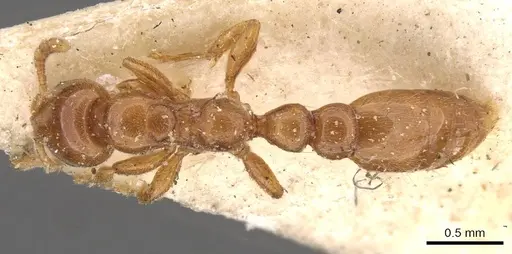
CASENT0915540
View on AntWeb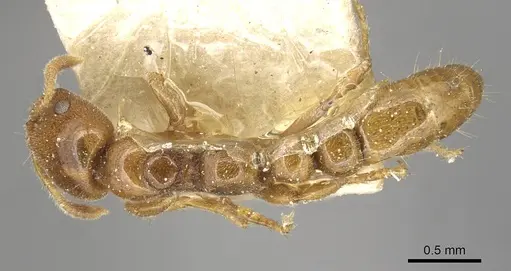
FOCOL1166
View on AntWeb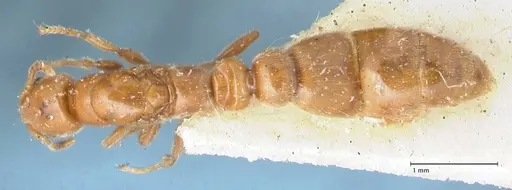
FOCOL1167
View on AntWeb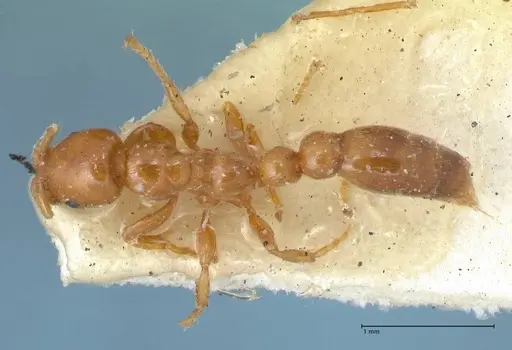
FOCOL1168
View on AntWeb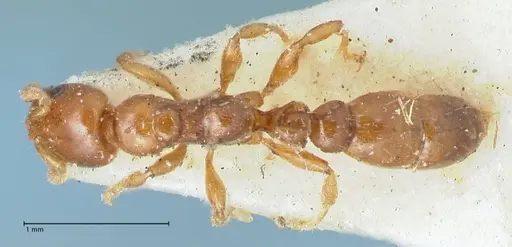
Literature
Loading distribution map...Loading products...